Making unreasonable hospitality, reasonable
Written By: Andrew Liu, Co-Founder

AI agents and the redefinition of guest experience
Every restaurant brand wants to deliver great hospitality. Not average hospitality. Not transactional service. The kind of hospitality that remembers a guest, fixes a bad experience before it becomes a public complaint, recognizes patterns across locations, and turns every interaction into a reason to come back.
In other words: unreasonable hospitality.
But for most restaurant brands, the problem was never the ambition. It was the economics.
Unreasonable hospitality sounded great in a founder story, a training manual, or a leadership keynote. But across hundreds or thousands of locations, millions of guests, dozens of digital channels, and thin operating margins, it quickly became unreasonable to deliver.
The standard was right. The operating model was wrong.
That is what AI agents are beginning to change.
For the first time, restaurant brands can deliver personalized, responsive, always-on guest experience at a cost and scale that actually works. Not by asking already-stretched teams to do more, but by giving every brand an AI-powered service layer that can understand, respond, recover, escalate, analyze, and act across the entire guest journey.
Hospitality was never the unreasonable part.
Delivering it at scale was.
The economics never worked
Restaurants have always known that better guest experience drives better business. The problem was never the ambition. It was the cost-to-serve.
To deliver great guest experience manually, a brand needs people monitoring every channel, responding to guests, handling complaints, issuing refunds, managing escalations, and following up after a poor experience. In industries where the transaction value supports it — a $500 airline ticket, a $1,000 hotel stay — that model makes sense. For a $12 meal or a $15 delivery order, it doesn't.
The result: 54% of all consumer feedback on restaurant listings currently goes unanswered. Not because brands don't care — because the operating model was never built to handle it.
The frequency problem made it impossible
A multi-location brand may serve millions of guests every year across Google, Yelp, TripAdvisor, DoorDash, Uber Eats, Instagram, loyalty apps, and in-store conversations. Every location generates guest signals every day.
Brands could only react to a fraction of them. QSR staff turnover exceeds 130% annually (Black Box Intelligence, 2024) — every time the coordinator who owned the feedback queue left, the process reset. So brands prioritized the loudest reviews and asked managers to check feedback when they had time.
The cost of that gap is measurable. Brands that respond within one hour retain 71% of affected guests. Brands that take 24 hours retain 48% (Ringly.io, 2025). That 23-point gap compounds across every location, every week.
What changes when AI agents do the work
AI agents change the cost curve of guest experience. They can understand a guest issue, respond in the brand's voice, apply recovery policies, escalate sensitive cases, identify repeat issues, and follow up — continuously, across every location and channel.
This doesn't make hospitality less human. It means humans focus on the moments that actually require them. AI removes the operational constraints that made great service impossible to deliver consistently.
The gap is measurable: brands still running the manual model carry an average recovery gap of $125,000–$175,000 per location annually (Momos ROI model, 2025). Brands that have shifted to AI-led guest experience are seeing 128% ROI within the first year.
A new operating model for guest experience
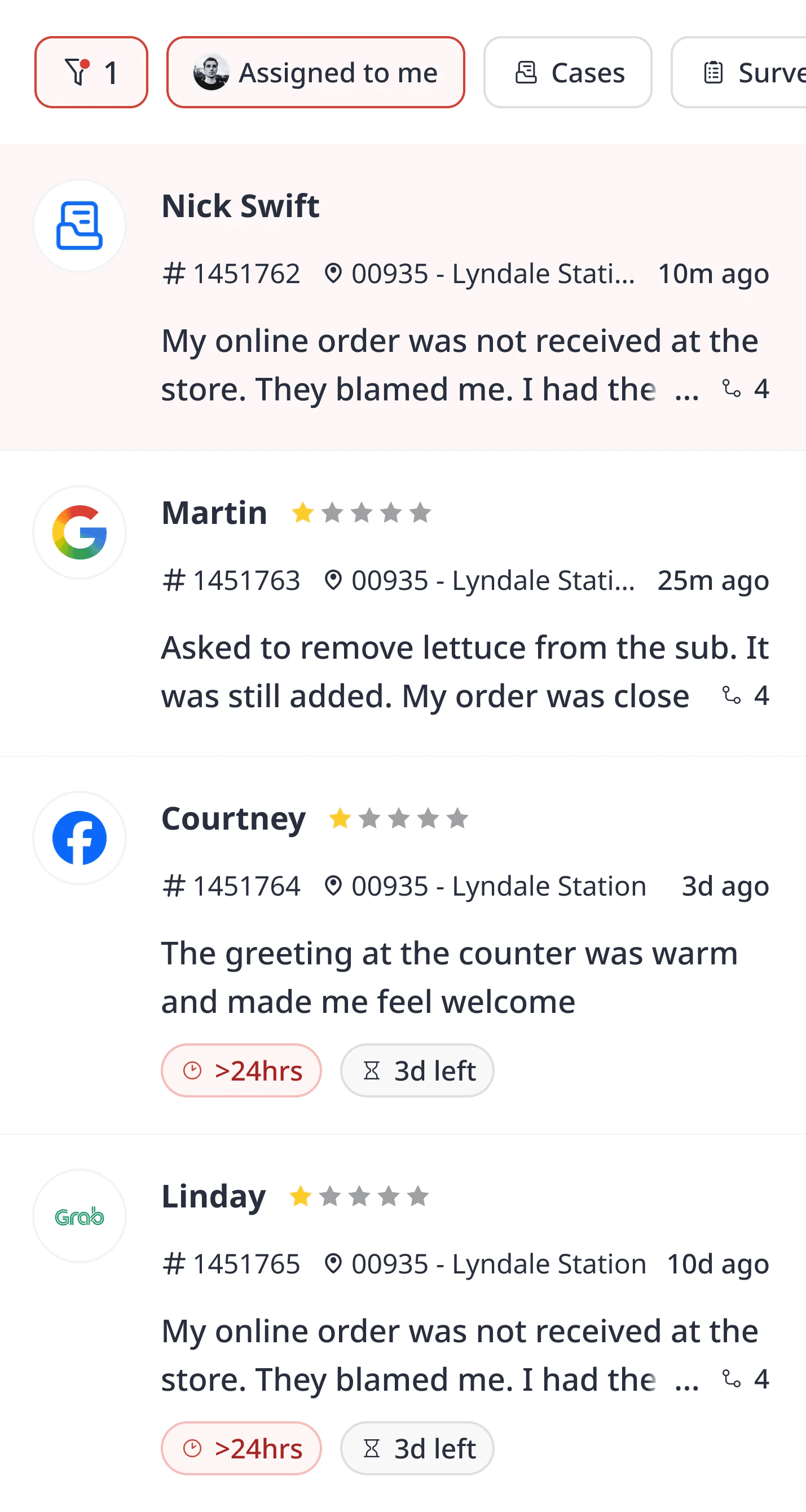
The old model treated guest experience as a set of disconnected functions. Reviews managed by one team. Tickets handled by another. Surveys analyzed somewhere else. Refunds on a separate process. Operational issues going through field teams.
AI agents allow brands to collapse those workflows into one intelligent service layer.
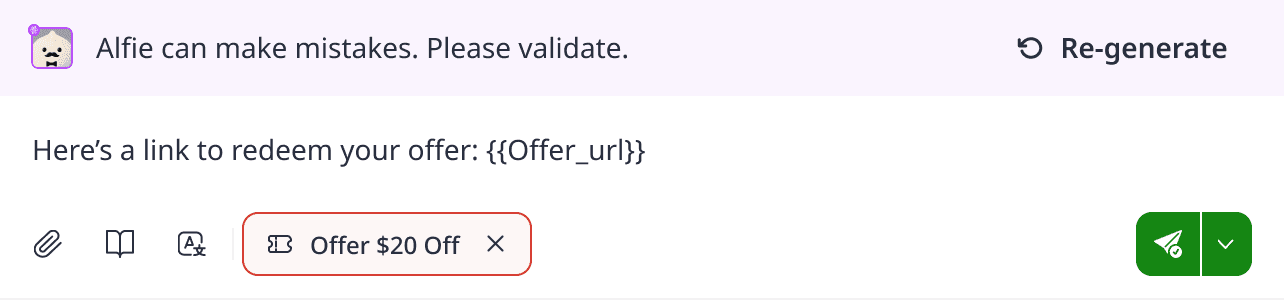
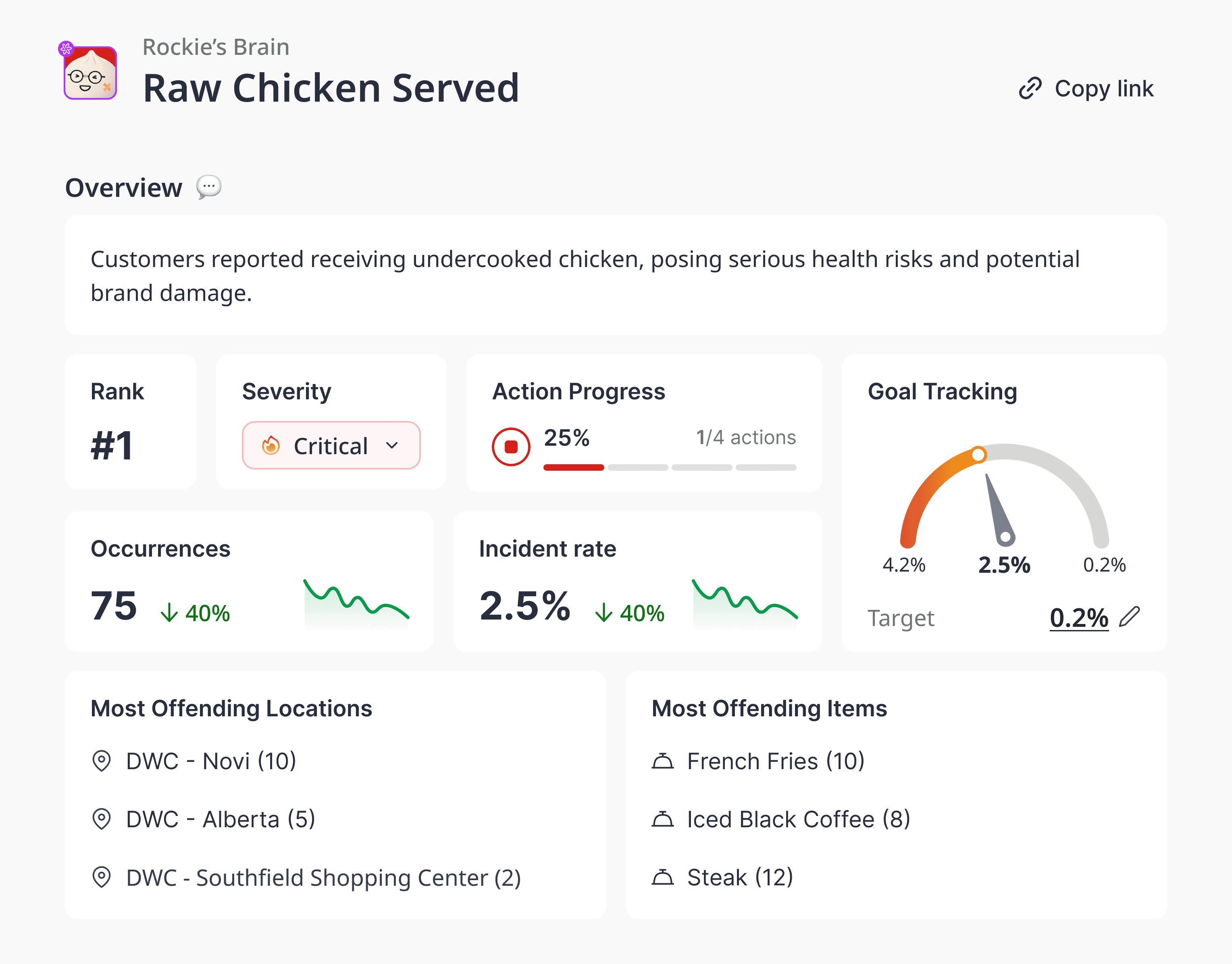
A guest complains that their delivery order was missing an item — the agent understands the issue, applies the recovery policy, responds to the guest, and logs the operational signal. A location starts receiving repeated complaints about slow service — the agent surfaces the trend before it becomes a reputation problem. A guest asks about allergens, loyalty points, or a prior experience — the agent resolves it without forcing the guest to wait for a human team to triage.
This is not just customer support. It is a service infrastructure for the physical world.
The opportunity
The restaurant industry generates $1.1 trillion in annual US revenue (NRA, 2025). Even at conservative estimates of CX spend, the market for AI-led guest experience runs into the tens of billions.
But the real opportunity is larger than replacing existing software spend. AI agents are changing the entire service model — moving a significant portion of the work currently handled by store managers, customer service teams, franchise support, and back-office staff into intelligent, always-on systems.
Momos is building that layer for multi-location restaurant brands. AI agents that respond to guests, resolve common service issues, apply brand-approved recovery policies, escalate sensitive cases, and route operational problems to the right teams — across every location, every channel, every market.
The goal isn't to give restaurant teams another inbox. It's to give every brand an always-on service layer that handles the repetitive, high-volume work that previously required layers of manual coordination — so the humans in the system can focus on the work that actually requires them.
Unreasonable hospitality used to require unreasonable economics.
That's what's changing.
Sources
Black Box Intelligence. Workforce Report, 2024.
Ringly.io. Restaurant Guest Recovery Benchmarks, 2025.
National Restaurant Association (NRA). State of the Restaurant Industry, 2025.
Momos ROI Model. Internal analysis, 2025.
 AI agents automate all guest interactions, 24/7, across all locations of your restaurant.


" transform="translate(3.219 19.212)" width="152.45224485148515px"/><path d="M 0 11.619 C 7.071 11.39 33.491 21.738 40.35 21.268 C 38.499 18.19 37.116 14.915 35.507 11.625 C 33.7 7.867 32.587 3.926 31.702 0" fill="transparent" height="21.28391189647101px" id="I9fuJaf7q" stroke-dasharray="" stroke-linecap="round" stroke-linejoin="round" stroke-width="4.97" stroke="rgb(0, 0, 0)" transform="translate(139.727 55.754)" width="40.34950693069311px"/></svg>)