12 conseils pour améliorer les opérations d'un restaurant
Écrit par : Vincent Nguyen

⟦embed:keyTakeaways⟧
Running a restaurant has never been easy. But, in today's market, it can feel like navigating a maze of delivery apps, social media profiles, and shifting culinary trends.
Rising costs, fierce competition, and rapidly changing customer expectations all demand attention at once, with profit margins leaving little room for error.
To thrive under that pressure, restaurant owners and managers must constantly assess their operations, hunting for ways to cut waste and boost efficiency while finding new ways to keep guests coming back.
Here are 10 tips to help your restaurant perform at its best.
Principles To Improve Restaurant Operations
At its core, to improve restaurant operations is to do three things:
Keep a firm grip on costs: Food waste, overstaffing, and last-minute supply orders are the most common profit eaters. To control costs, you can use real-time inventory tracking, demand-based scheduling, and proactive supplier negotiation to reduce unnecessary spending.
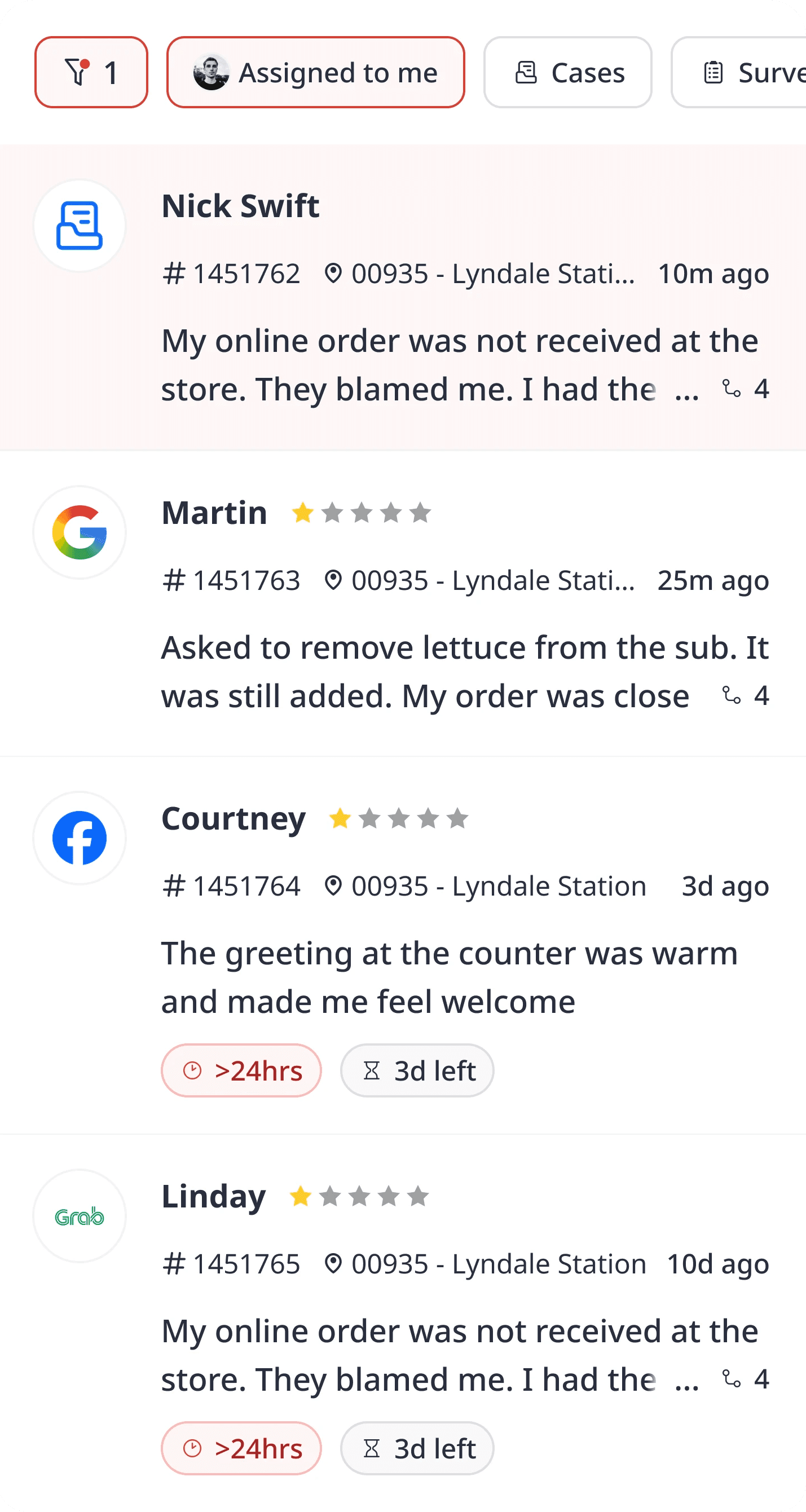
Remove friction from every step of service: Slow tickets, ordering mistakes, and clunky payment processes hurt both revenue and the guest experience. Integrated POS systems, tableside ordering, and efficient kitchen workflows cut down on errors and free staff to focus on guests.
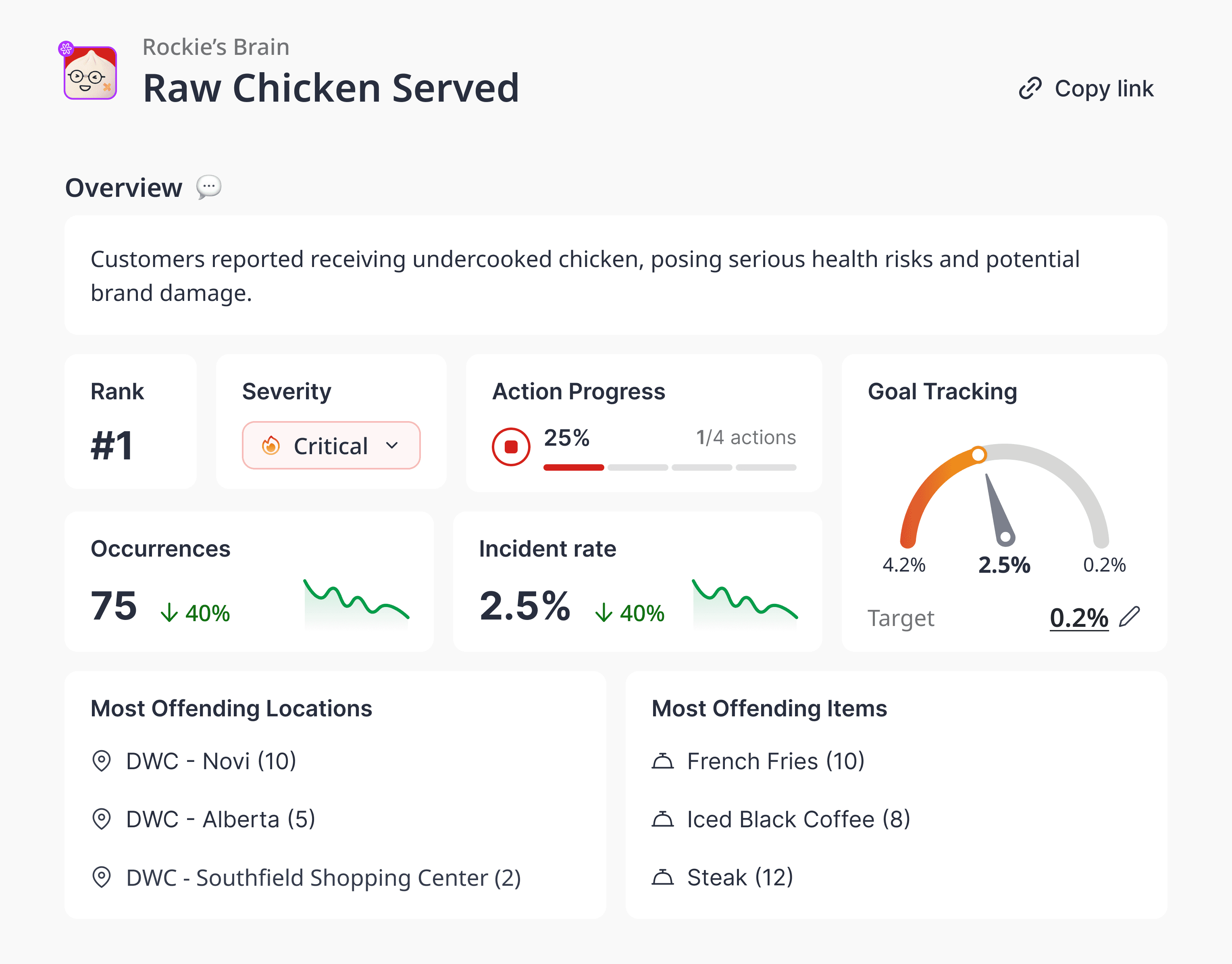
Turn feedback into action: Sales data, guest reviews, staff input all point to something fixable. Which menu items are underperforming? Where do service complaints repeat? Restaurants that treat this information as a regular operational input.
⟦embed:bnRockieAnswer⟧
12 Tips To Improve Restaurant Operations
Most customers only leave reviews when they're really happy or really unhappy. To get reviews, you need to be proactive. And you must do it in the right place, at the right time.
Usually, the best time to ask for feedback is:
⟦embed:g7v256g8j⟧
Unlock Restaurant Business Intelligence With Momos
Momos is an AI-powered guest experience platform built exclusively for restaurants. It has helped leading enterprise brands like Burger King, Papa Murphy's, and Shake Shack scale their operations across 30,000+ locations worldwide.
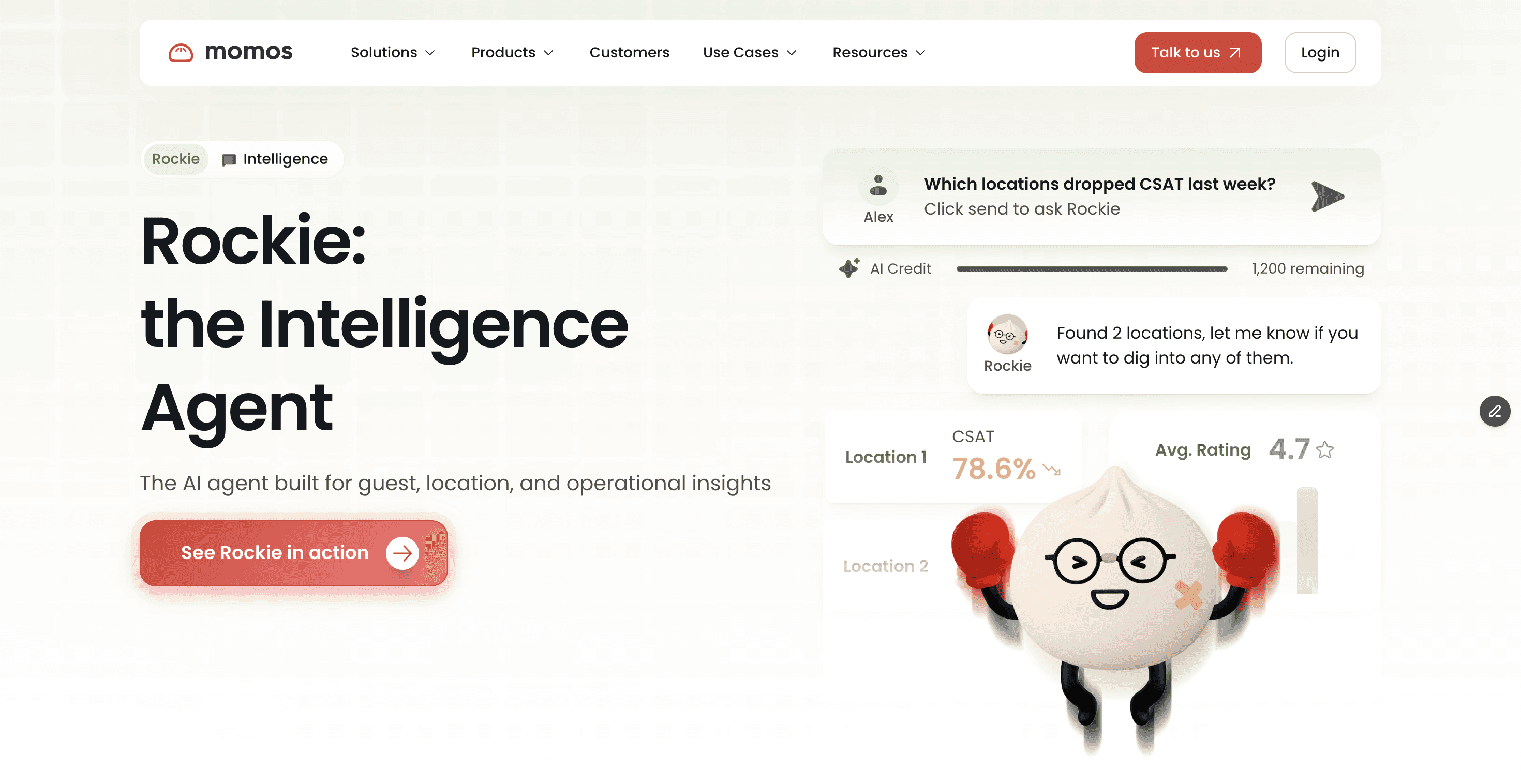
Its AI agent is called Rockie — The Intelligence Agent.
Rockie is purpose-built for restaurant operators who need to stay on top of guest sentiment, location performance, and operational health — without spending hours digging through dashboards.
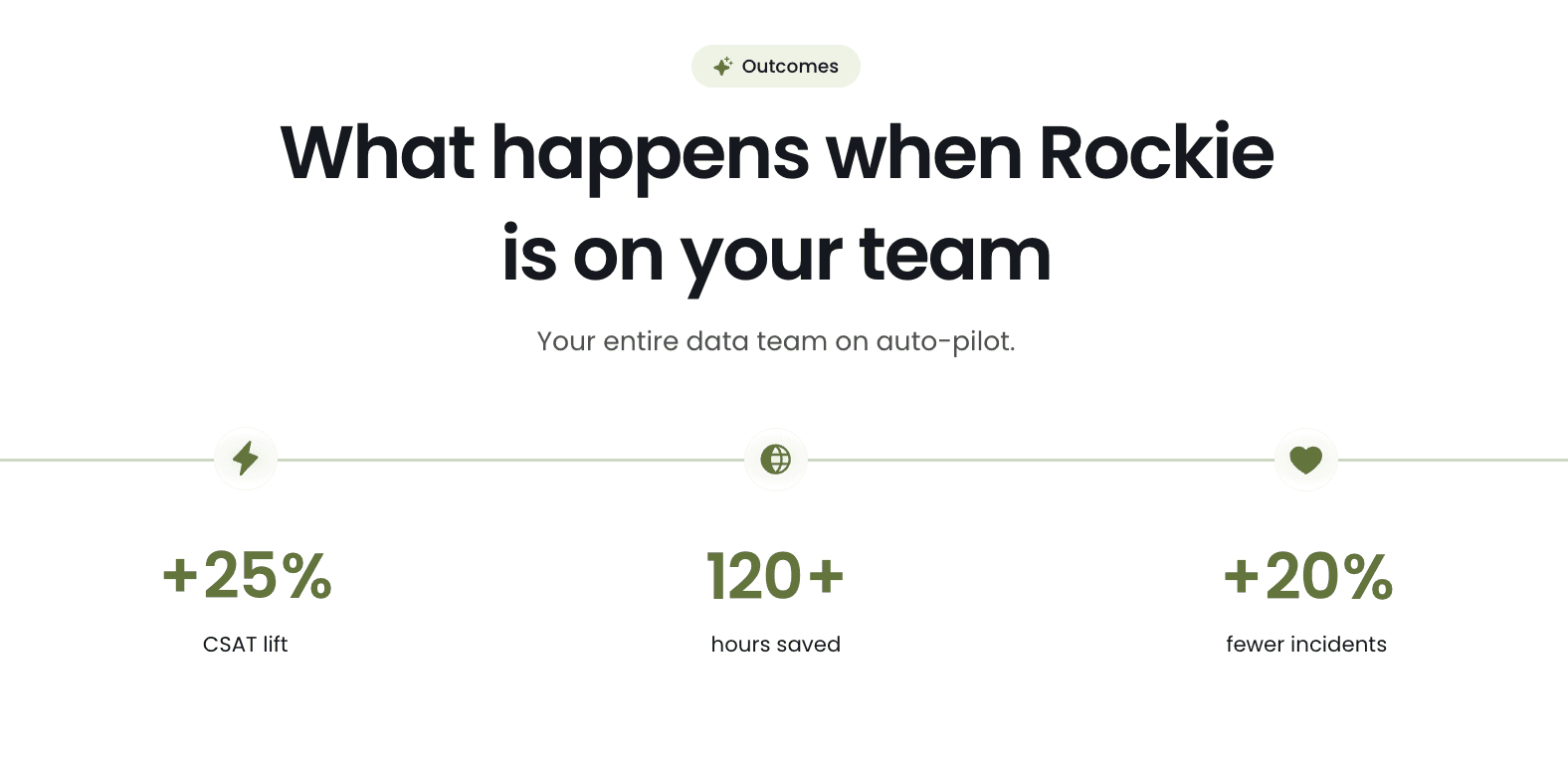
Here's what Rockie does:
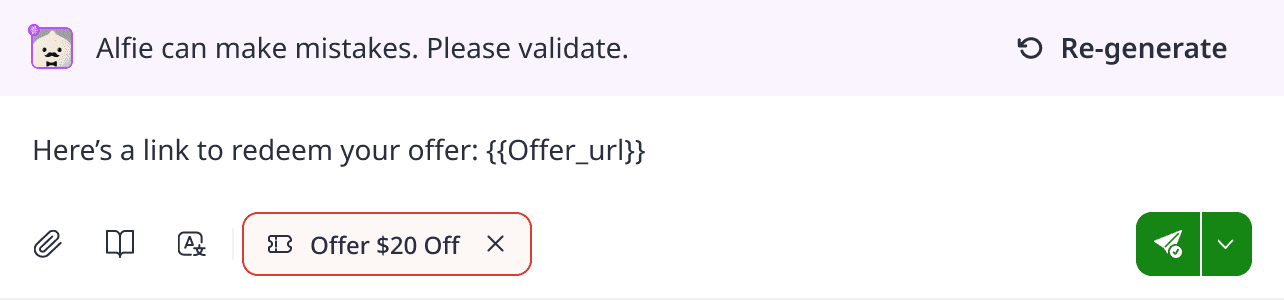
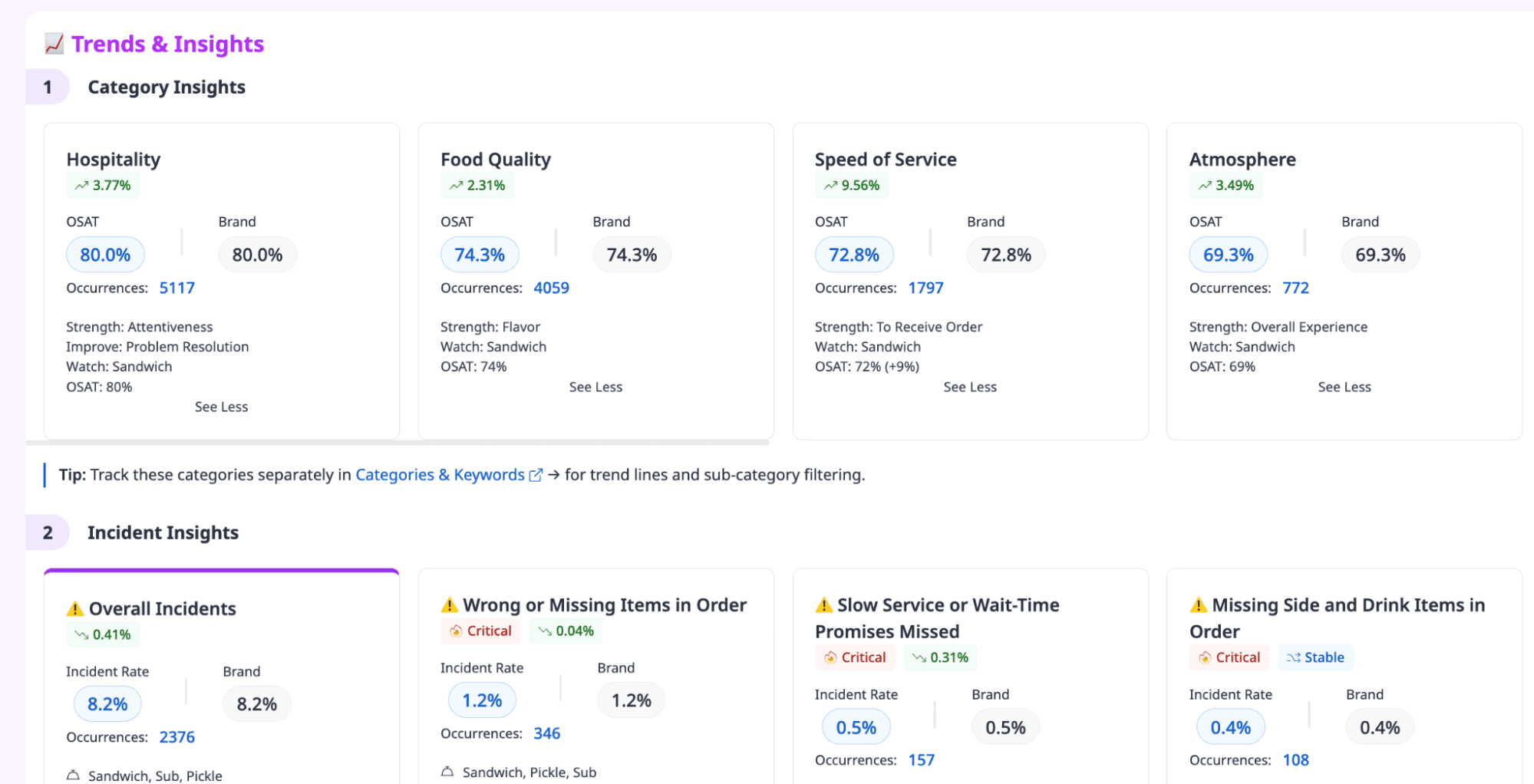
Identifies which locations dropped CSAT, why it happened, and what to do about it — with root cause analysis across every data source, automatically
Benchmarks every location against brand standards and against each other, so HQ always knows where to focus
Surfaces guest sentiment patterns before they become reputation problems — catching issues at the signal stage, not the review stage
Delivers personalized operator reports straight to your phone, every day or week, so intelligence travels with you instead of sitting in a tab
Connects every insight to a clear next step — specific to the location, specific to the issue
Rockie plugs into your full stack — POS, CDP, loyalty platforms, and review channels — and goes live in days, not months. No SQL. No BI tools. No data team required.
The more data Rockie sees, the sharper it gets. Every week of operation makes its intelligence more accurate, with Momos continuously monitoring and refining in the background.
Restaurant Operations: FAQ
What does it mean to improve restaurant operations?
It comes down to three things: keeping a firm grip on costs, removing friction from every step of service, and turning feedback into action. When all three improve together, you waste less, serve guests faster and give them more reasons to come back.
How can I reduce costs in my restaurant without hurting service?
Start with the most common profit eaters: food waste, overstaffing and last-minute supply orders. Real-time inventory tracking, demand-based scheduling and proactive supplier negotiation help you cut spending that guests never notice. The savings go further when you review them regularly instead of once a year.
How do I make restaurant service faster and more accurate?
Look for the friction points, like slow tickets, ordering mistakes and clunky payments. Integrated POS systems, tableside ordering and efficient kitchen workflows cut down on errors. They also free your staff to spend more time with guests, which helps both revenue and the guest experience.
How should I use guest reviews and feedback to run my restaurant better?
Treat sales data, guest reviews and staff input as a regular operational input. Ask which menu items are underperforming and where service complaints keep repeating, then fix the root cause at that location. Since most guests only review when they're very happy or very unhappy, it helps to ask for feedback at the right moment.
How can AI help multi-location restaurants manage operations?
AI can watch guest sentiment and location performance so you don't have to dig through dashboards. Momos' intelligence agent, Rockie, identifies which locations dropped in satisfaction, points to the root cause and benchmarks each store against the others. It also sends operator reports to your phone with a clear next step for each issue.
 Les agents d'IA automatisent toutes les interactions avec vos clients, 24 h/24, 7 j/7, dans tous les établissements de votre restaurant.


" transform="translate(3.219 19.212)" width="152.45224485148515px"/><path d="M 0 11.619 C 7.071 11.39 33.491 21.738 40.35 21.268 C 38.499 18.19 37.116 14.915 35.507 11.625 C 33.7 7.867 32.587 3.926 31.702 0" fill="transparent" height="21.28391189647101px" id="I9fuJaf7q" stroke-dasharray="" stroke-linecap="round" stroke-linejoin="round" stroke-width="4.97" stroke="rgb(0, 0, 0)" transform="translate(139.727 55.754)" width="40.34950693069311px"/></svg>)