16 Best AI For Enhanching Restaurant Customer Service
Written By: Vincent Nguyen

If you're running a restaurant, you probably know the tremendous value of fast, responsive customer communication.
It's easy to respond to guests when you're just a small food store. However, as a multi-location business or a franchise, it becomes increasingly harder.
That's exactly where a customer support software shines through.
The 16 Best AI For Enhancing Restaurant Customer Service
Here’s our recommendation list of the 16 best AI-powered customer support software for your restaurant:
1. Momos
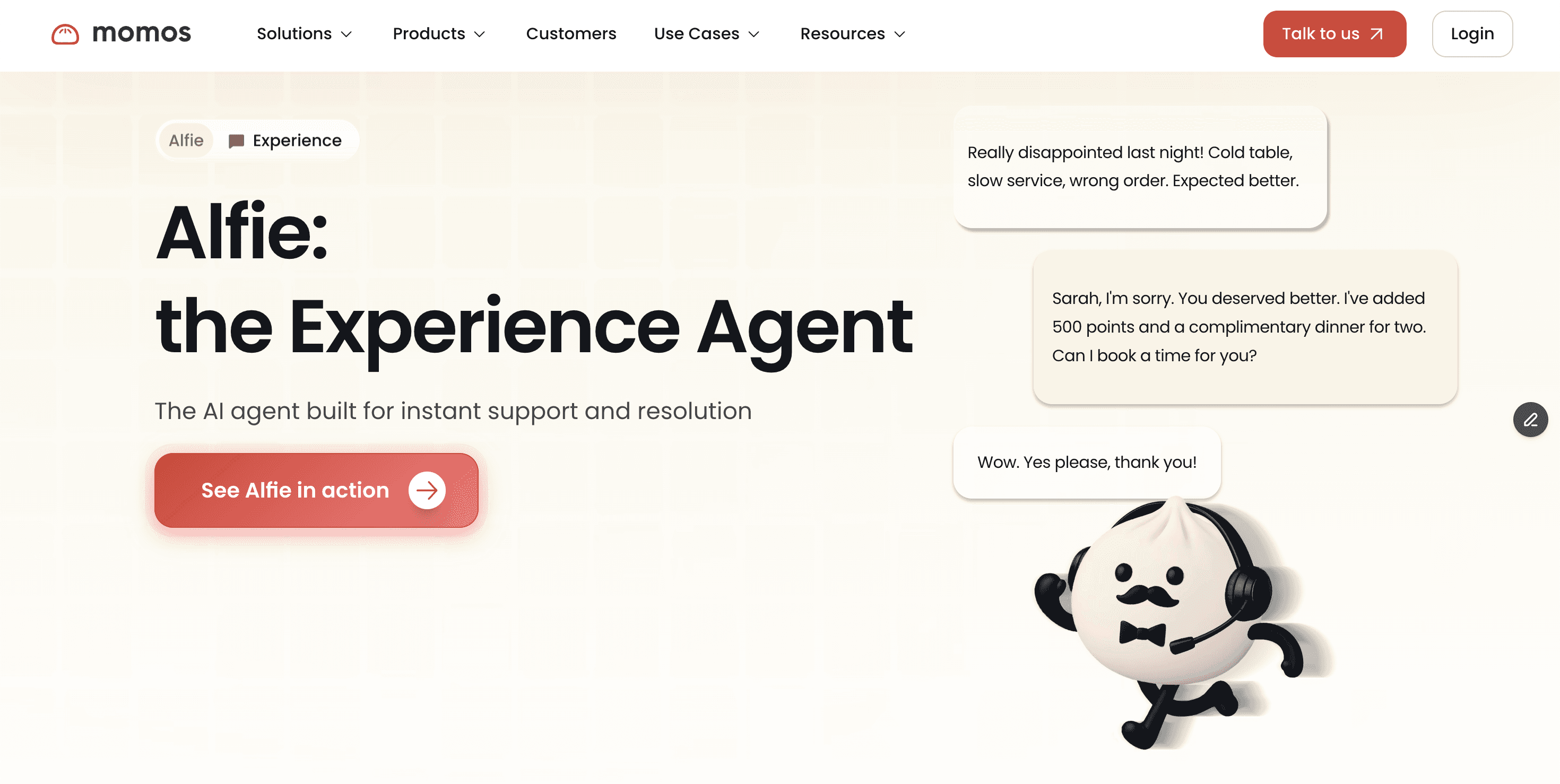
Momos is an AI-powered chatbot solution built only for restaurants. It has helped leading enterprise brands like Burger King, Papa Murphy's, and Shake Shack scale Customer Support across their 30,000+ store locations around the world.
The chatbot feature of Momos is known as Alfie - The Experience Agent.
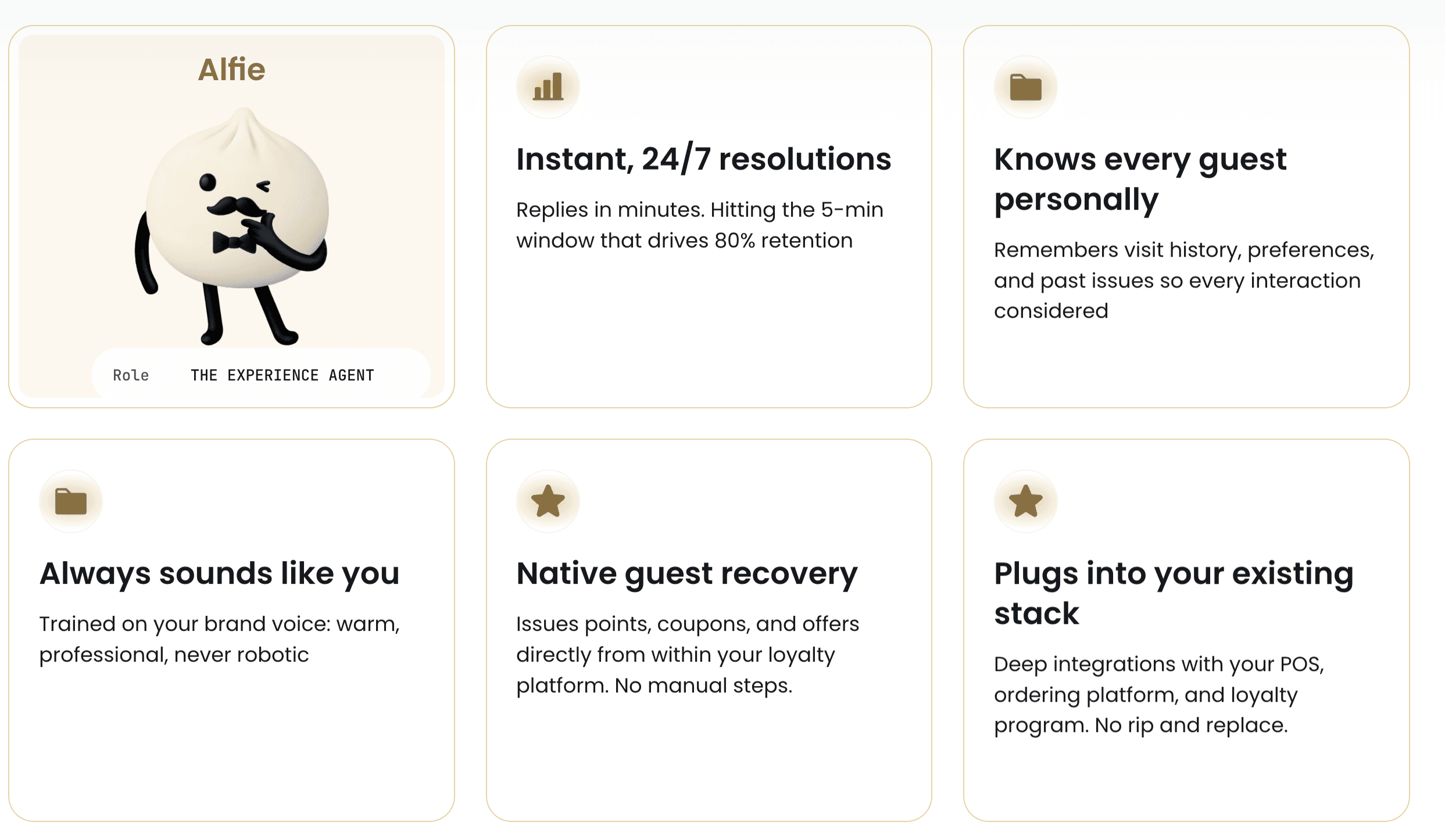
This is how Alfie's workflow looks like:
A guest reports a problem
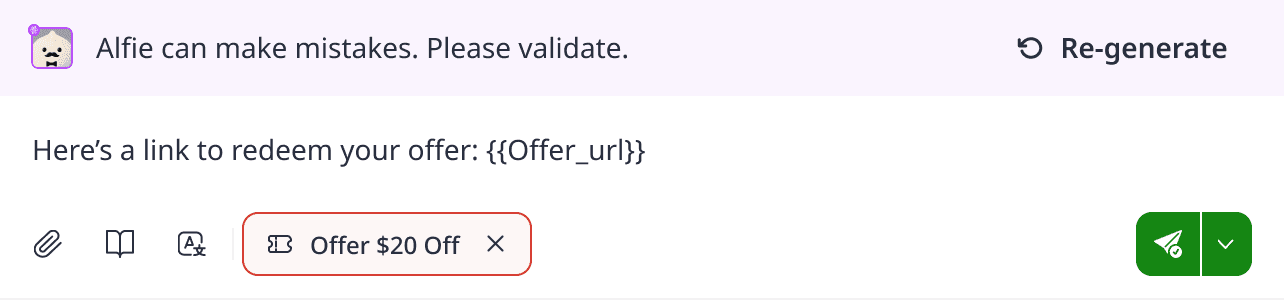
Alfie resolves it end to end: it understands the issue, finds the guest and their order, then either fixes it automatically (loyalty points or an offer) or hands it to a teammate with full context
Recoveries are personalized to the guest and stay within brand guidelines
While Alfie handles the customer service part, Rockie handles the business intelligence part.

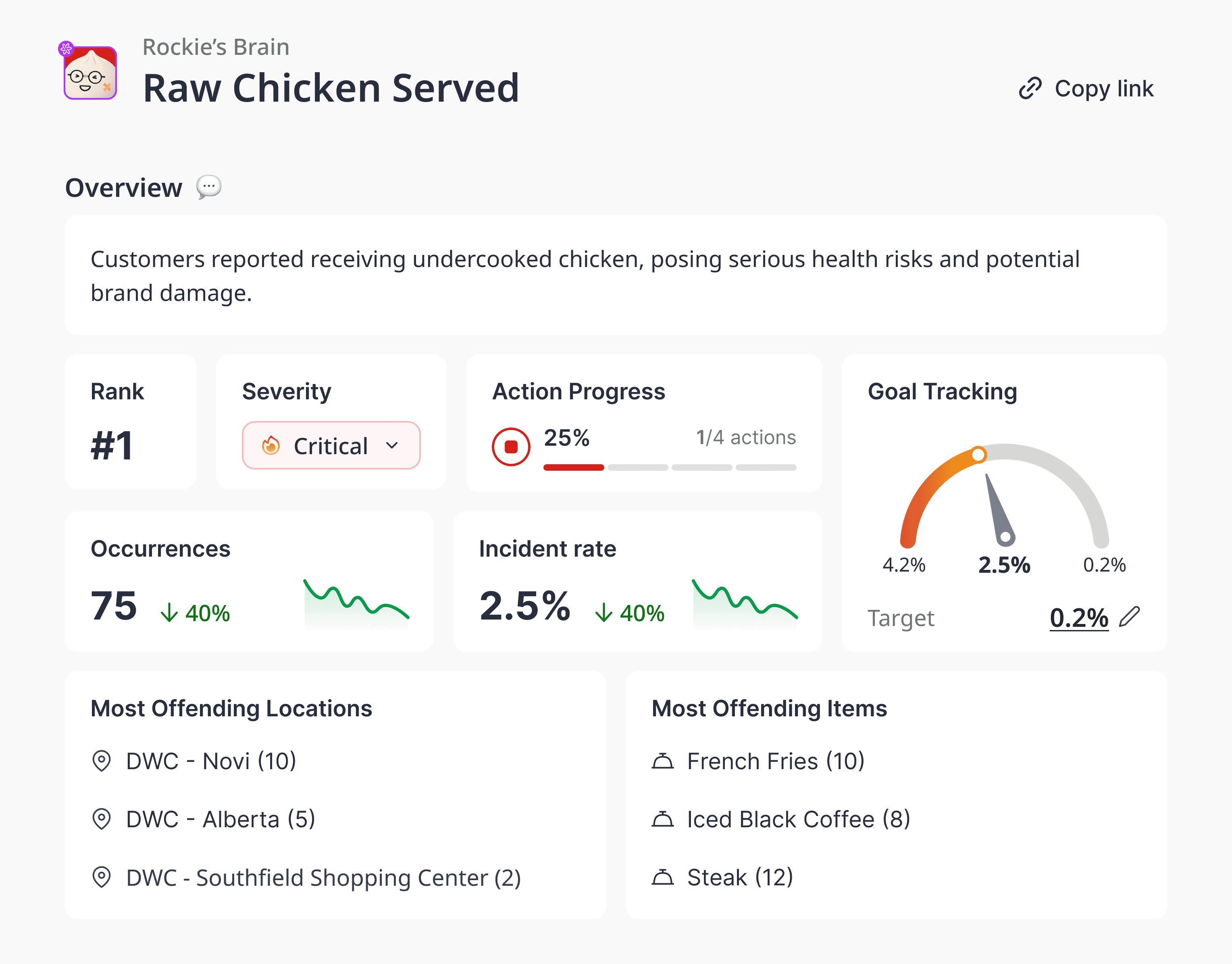
With the wealth of information from reviews and conversations with guests that Alfie provided, Rockie turns it into Actionable Insights.
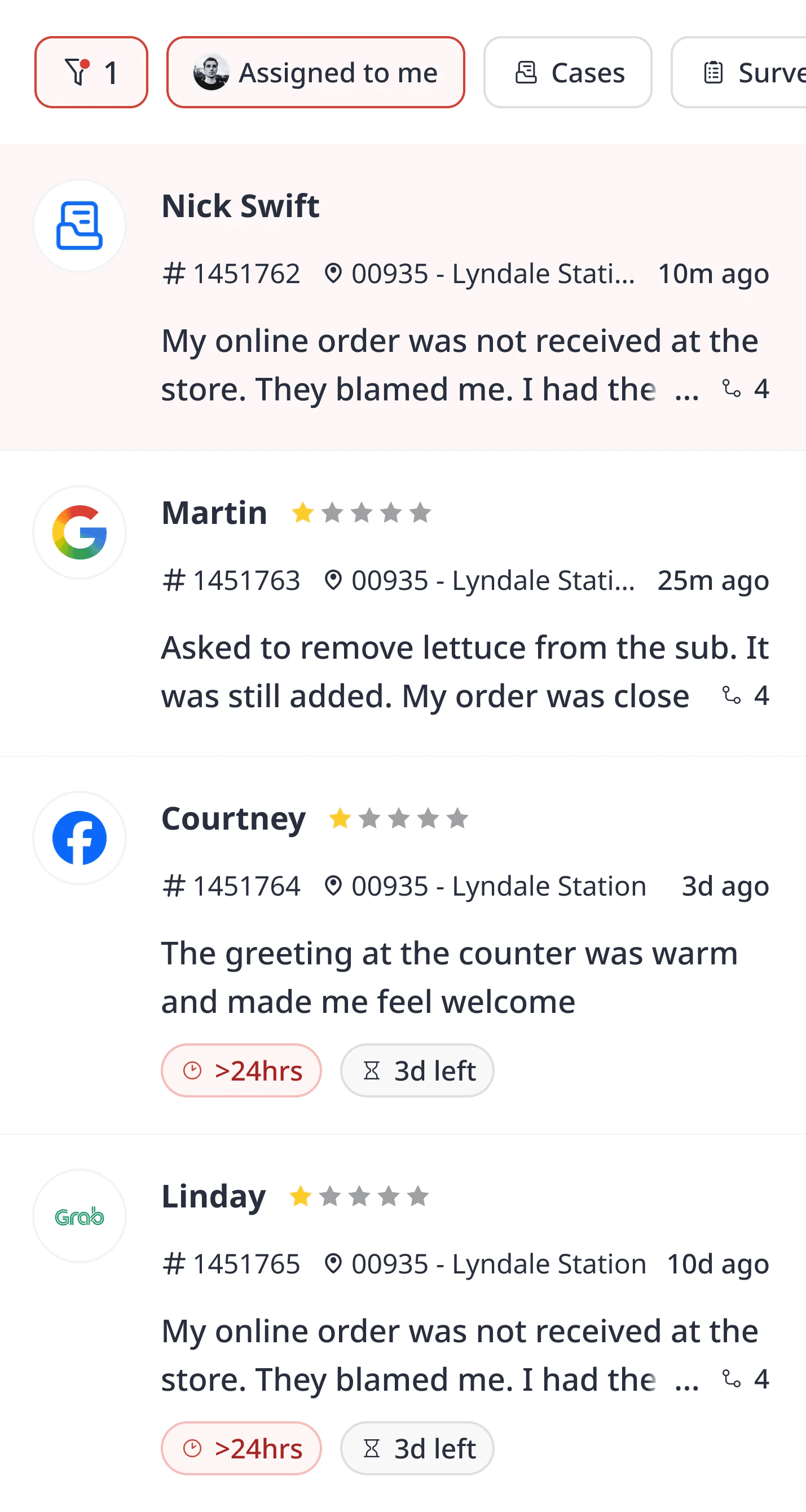
For example, this view shows a demo restaurant's OSAT broken down by category, alongside the major incidents at each location.
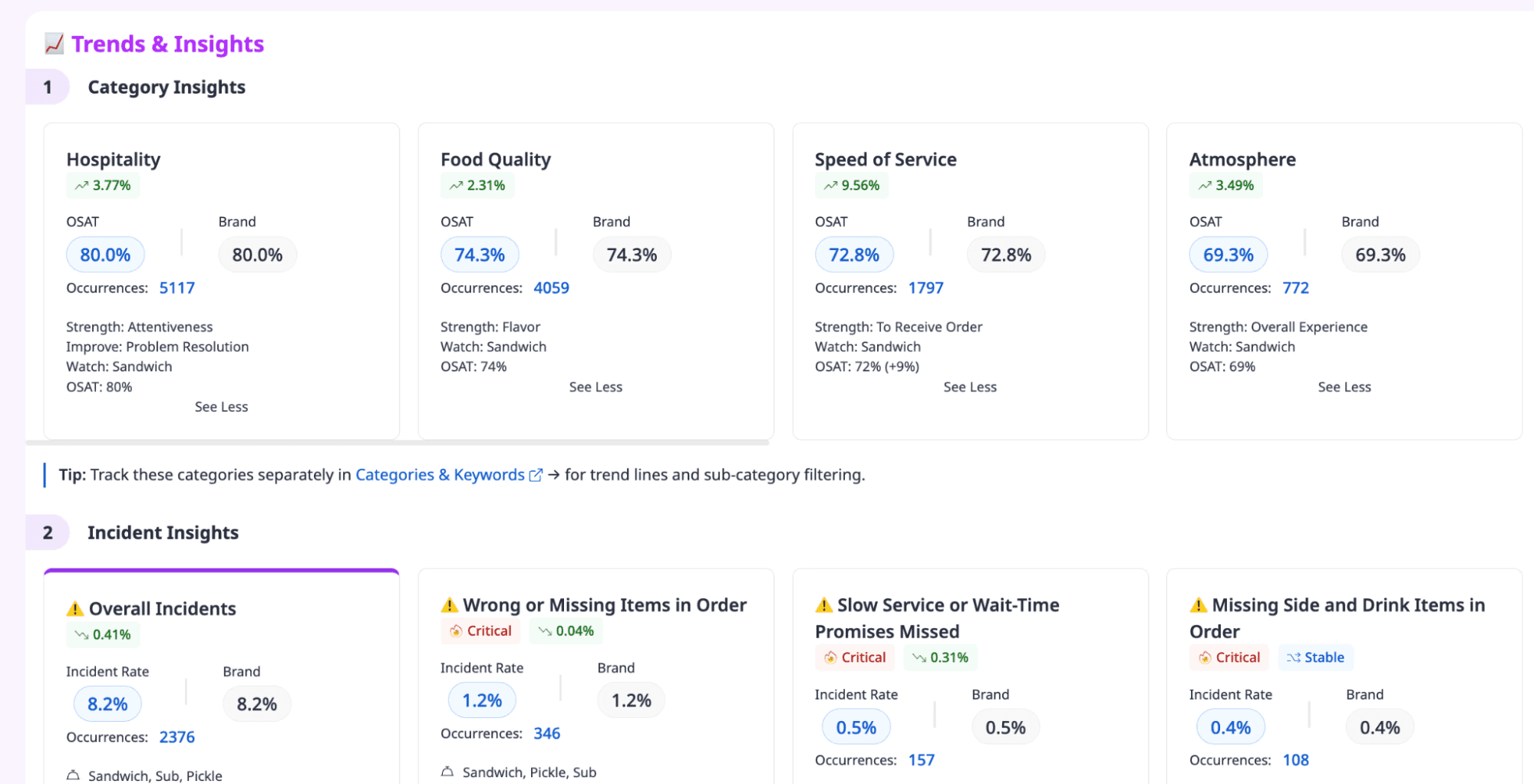
With these insights, you can:
Fix issues before they spread across locations
Build better strategies to improve guest experience, keep customers happy, and grow revenue
Give your Marketing team the direction to tailor campaigns that earn loyalty
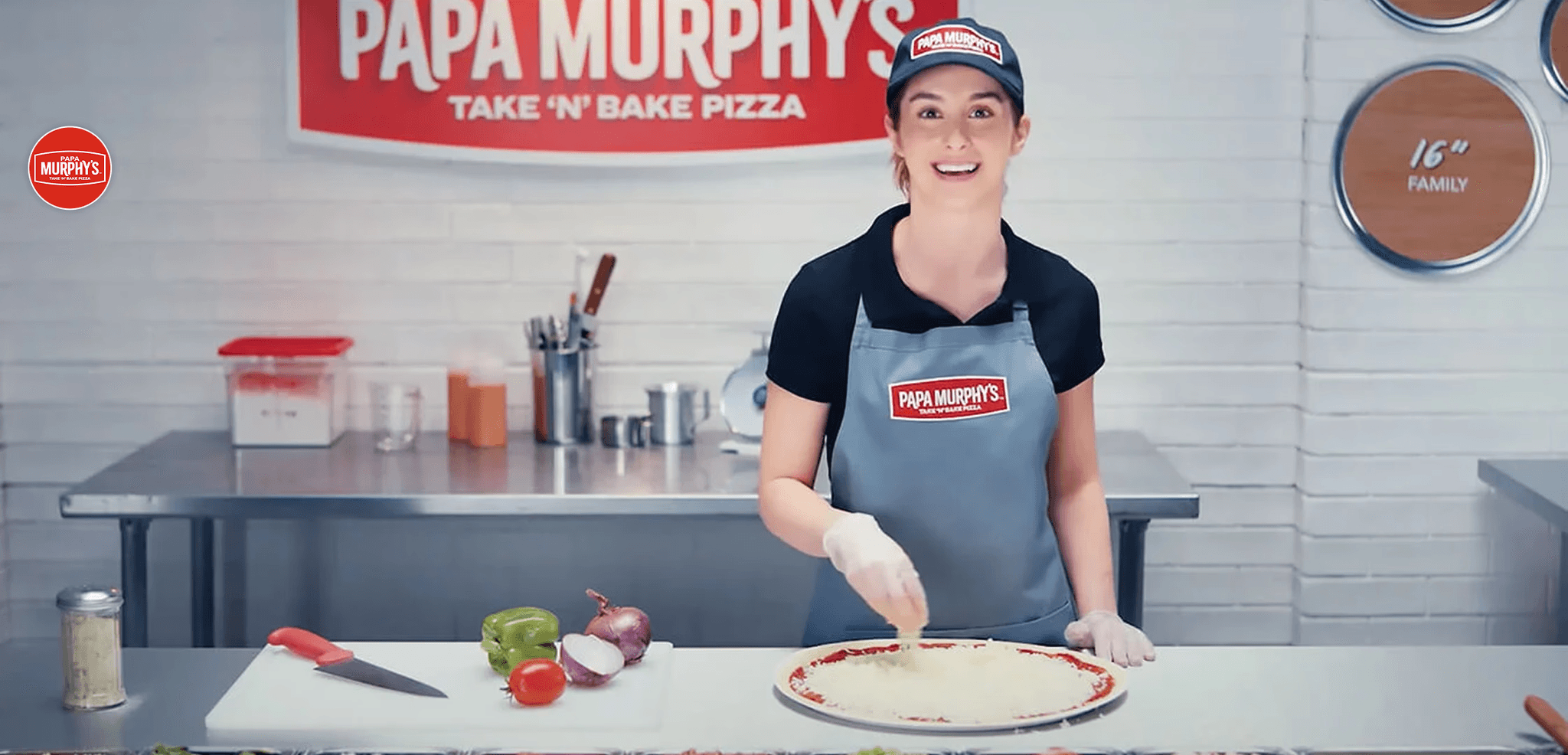
Papa Murphy's, one of the largest take-and-bake pizza chains in North America, wants to keep track of customer sentiment across their massive franchise network. With Momos, they successfully centralized review monitoring across every location — surfacing patterns, flagging underperforming stores, and enabling managers to respond faster than ever before.

2. Zendesk
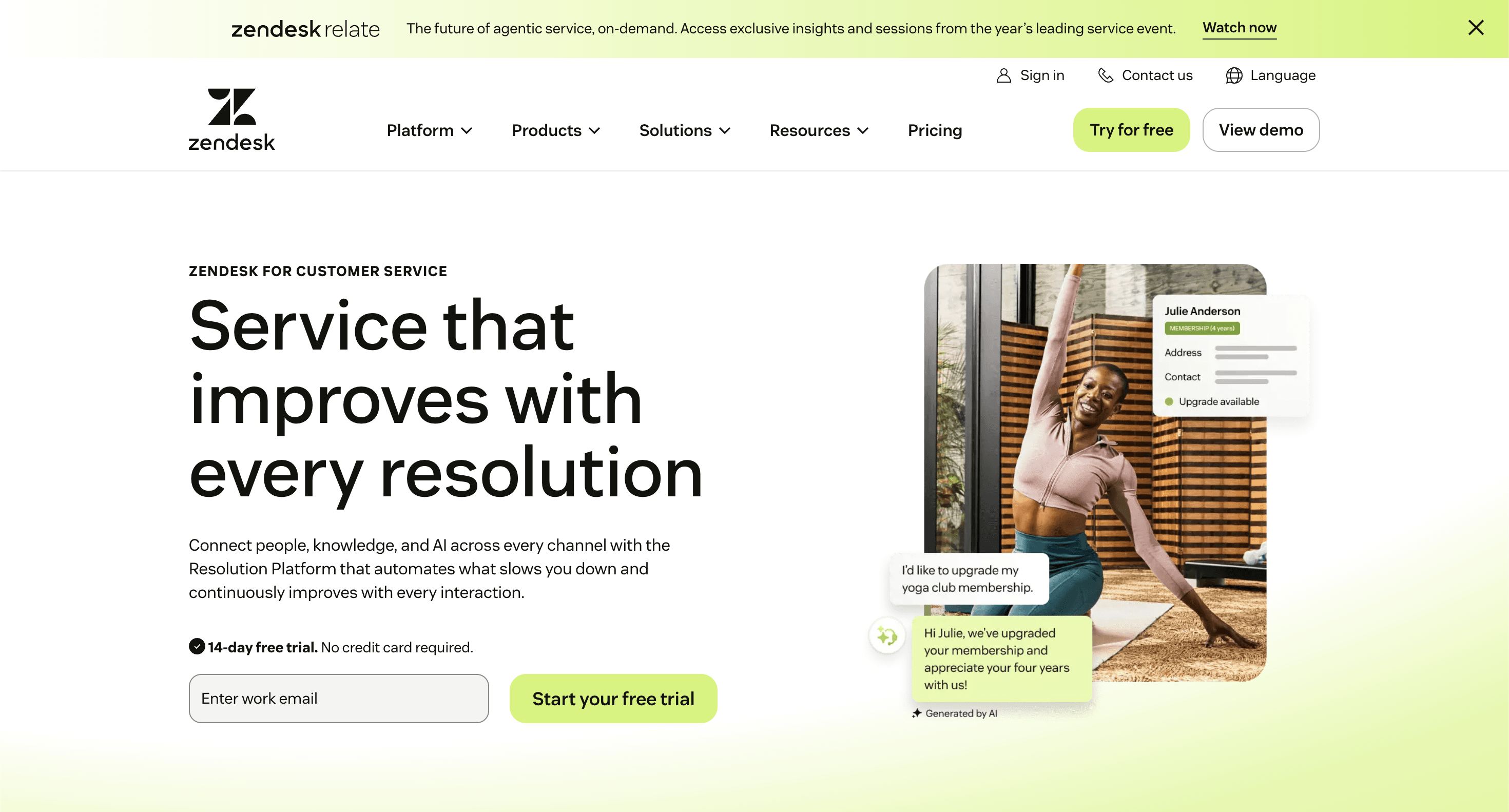
Zendesk is one of the most recognized names in customer support, built for businesses that need a robust, scalable platform to manage high volumes of customer interactions across multiple channels. It combines AI-powered ticketing, omnichannel messaging, and a self-service help center into one enterprise-grade suite.
What you can do with Zendesk: Teams use Zendesk to manage customer conversations coming in from email, chat, social media, voice, and more, all from a single agent workspace. You can automate ticket routing, set up AI-powered bots to handle tier-1 queries, build a branded knowledge base, and track performance with detailed reporting dashboards.
Why Zendesk stands out: Its depth and flexibility are unmatched at the enterprise level. The platform supports complex workflows, hundreds of integrations, and AI agents that can resolve issues without human involvement. It scales easily from a 10-person support team to a global operation handling millions of tickets.
It's best for: Mid-size to large businesses and enterprises across SaaS, e-commerce, and tech that need a fully featured, customizable support platform.
Pricing: Free trial available. Paid plans start from $19/agent/month, billed annually.
Website: Zendesk
3. Freshdesk
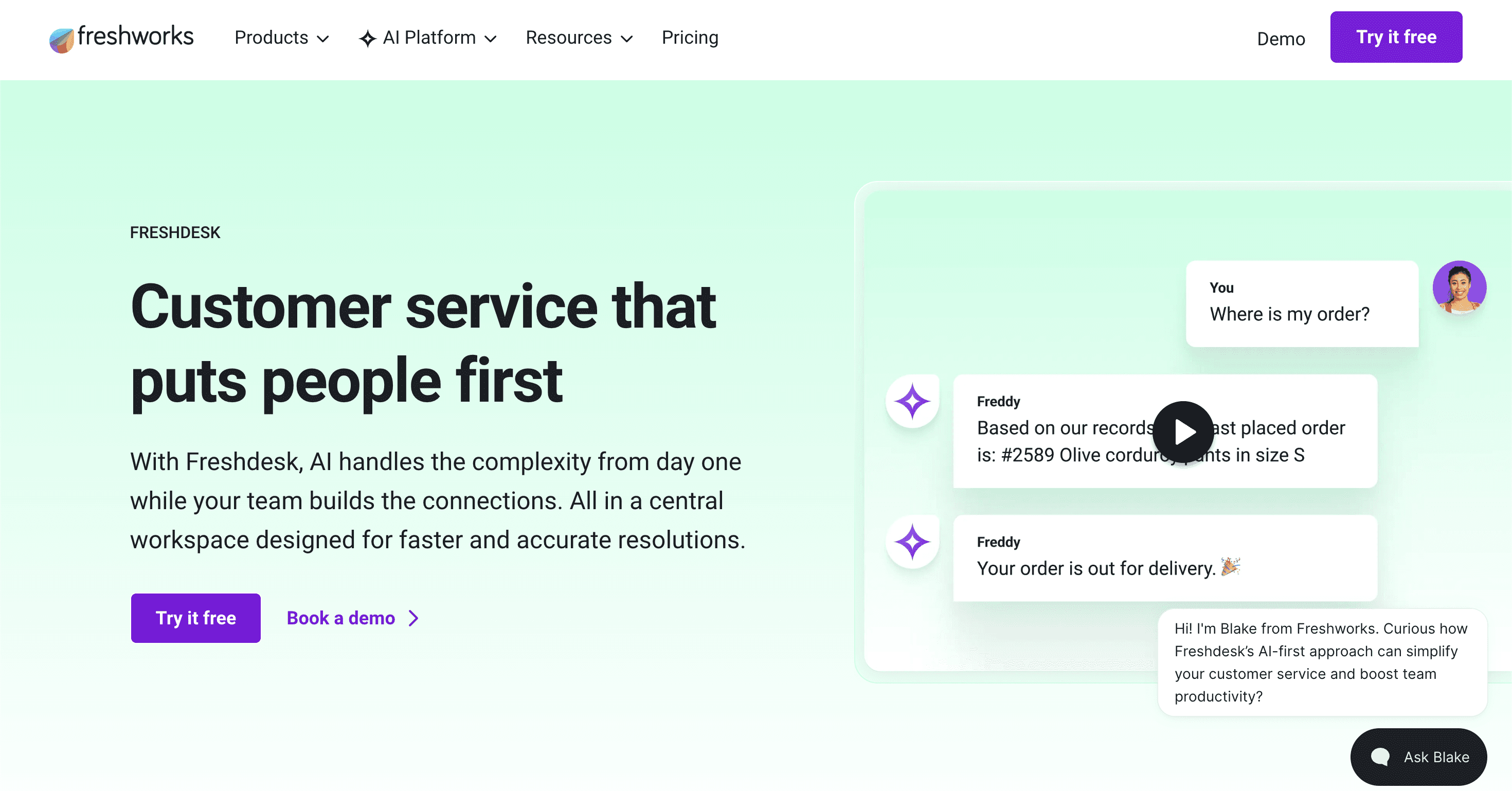
Freshdesk by Freshworks is a popular helpdesk solution designed to make multi-channel customer support accessible and affordable for growing teams. It strikes a strong balance between ease of use and feature depth, making it a go-to choice for businesses that are scaling their support operations.
What you can do with Freshdesk: You can manage support tickets from email, chat, phone, and social media in one place. The platform lets you automate repetitive tasks like ticket assignment and follow-ups, set up a self-service portal with a knowledge base, and collaborate with teammates on complex issues using internal notes and shared views.
Why Freshdesk stands out: It's one of the most cost-effective options for teams that need solid helpdesk functionality without the enterprise price tag. The AI assistant, Freddy, helps with suggested responses and automatic ticket categorization, reducing the manual workload on agents significantly.
It's best for: Small to mid-size businesses in SaaS, e-commerce, and retail that want an affordable, easy-to-deploy helpdesk with room to grow.
Pricing: Free plan available for up to 10 agents. Paid plans start from $15/agent/month, billed annually.
Website: Freshdesk
4. Intercom
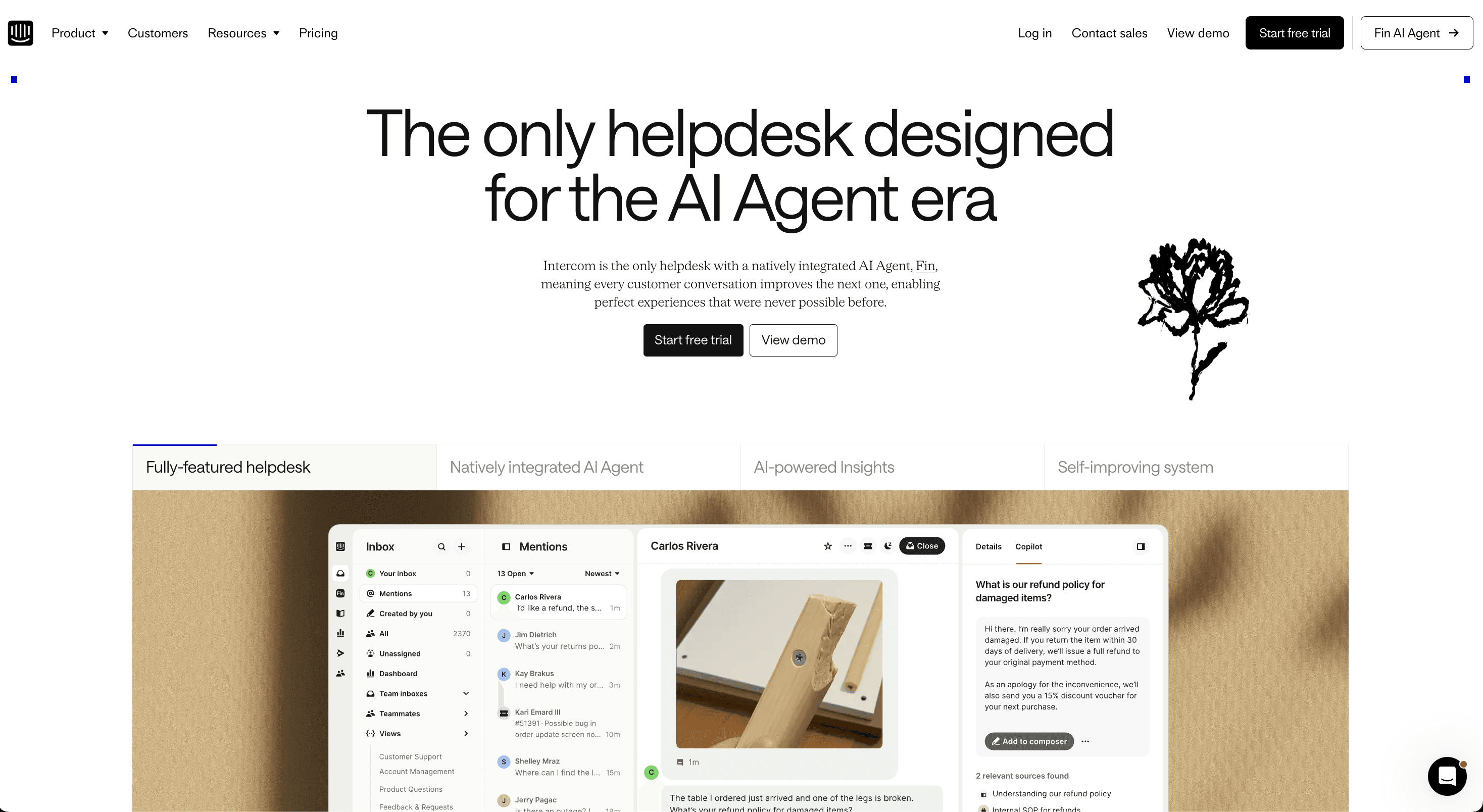
Intercom is a conversational support platform purpose-built for SaaS and digital-first businesses. It focuses on in-product messaging, making it ideal for companies that want to engage and support users directly within their app or website experience.
What you can do with Intercom: You can deploy AI chatbots to resolve common questions instantly, send proactive messages to users based on their behavior, manage support conversations across chat and email, and build a help center your customers can search without contacting your team. It also connects deeply with your CRM to give agents full customer context during every conversation.
Why Intercom stands out: Its AI agent, Fin, is widely regarded as one of the most capable in the industry — it can resolve a significant portion of support queries autonomously using your existing help content. The platform also blends support, onboarding, and customer engagement in a way most helpdesks don't.
It's best for: SaaS companies and digital product teams that want to combine customer support with user engagement and onboarding in one connected platform.
Pricing: Plans start from $29/seat/month, billed annually.
Website: Intercom
5. HubSpot Service Hub
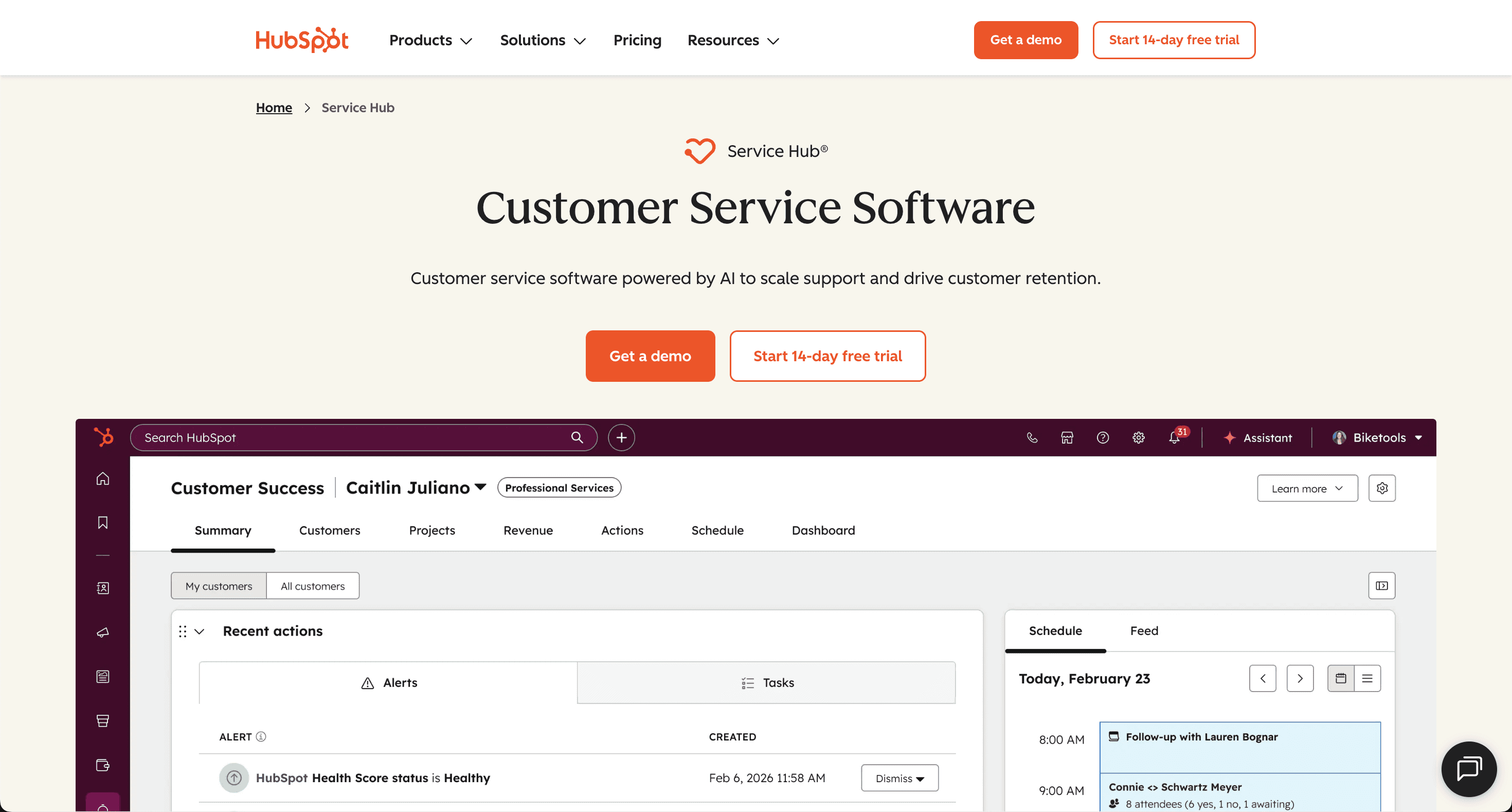
HubSpot Service Hub is the customer service arm of the HubSpot ecosystem, designed for businesses that want their support operations tightly integrated with their marketing and sales CRM. It's a natural fit for teams already using HubSpot who want a unified view of every customer interaction.
What you can do with HubSpot Service Hub: You can manage support tickets, automate follow-ups, build a self-service knowledge base, run customer satisfaction surveys (NPS, CSAT, CES), and have live chat conversations — all tied back to a single customer record in the HubSpot CRM. This gives your team full context on a customer's history before they even respond.
Why HubSpot Service Hub stands out: The native CRM integration is its biggest differentiator. Unlike standalone helpdesks, every support interaction is connected to the customer's full journey — from the first marketing touchpoint to the latest sales deal. This makes it especially powerful for teams focused on retention and upselling.
It's best for: Growing businesses in SaaS and e-commerce that are already in the HubSpot ecosystem and want their support, marketing, and sales data unified in one place.
Pricing: Free tools available. Paid plans start from $15/seat/month, billed annually.
Website: HubSpot Service Hub
6. Salesforce Service Cloud
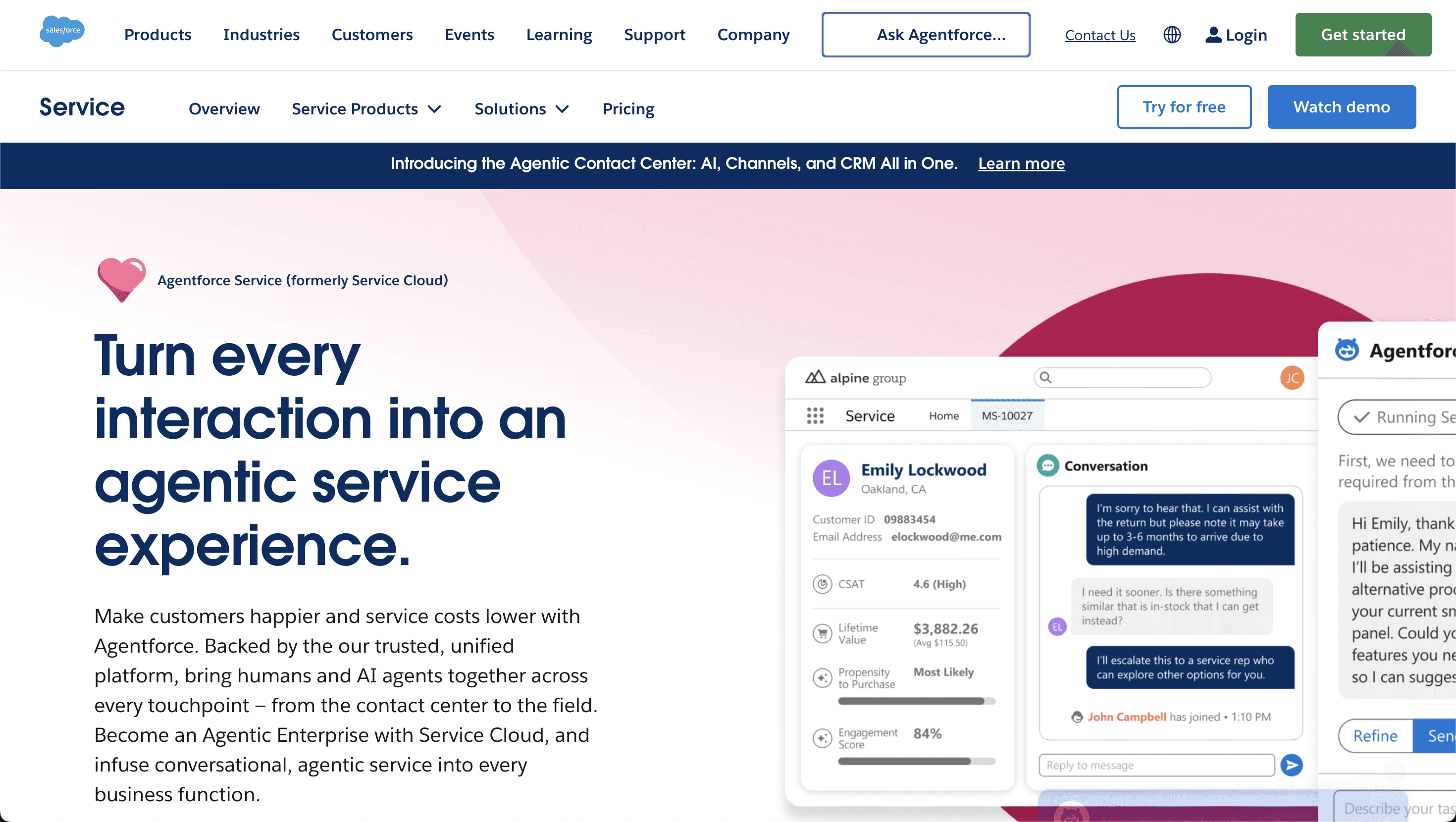
Salesforce Service Cloud is an enterprise-grade customer service platform built on top of the world's leading CRM. It's designed for large organizations that need to manage complex support operations at scale, with deep customization, AI capabilities, and cross-department data visibility.
What you can do with Salesforce Service Cloud: You can handle cases from every channel — phone, email, chat, social, and field service — within a single agent console. Einstein AI helps with case classification, next-best-action suggestions, and automated responses. You can also build self-service communities, manage service-level agreements, and run detailed analytics on team performance.
Why Salesforce Service Cloud stands out: The platform's power lies in its unmatched integration with the broader Salesforce ecosystem. Support agents have instant access to sales history, contracts, and product data, enabling faster and more informed resolutions. For global enterprises managing thousands of interactions daily, few platforms come close to its capability and configurability.
It's best for: Large enterprises in finance, healthcare, manufacturing, and tech that need a deeply customizable, CRM-connected service platform built for scale.
Pricing: Plans start from $25/user/month, billed annually.
Website: Salesforce Service Cloud
7. Gorgias
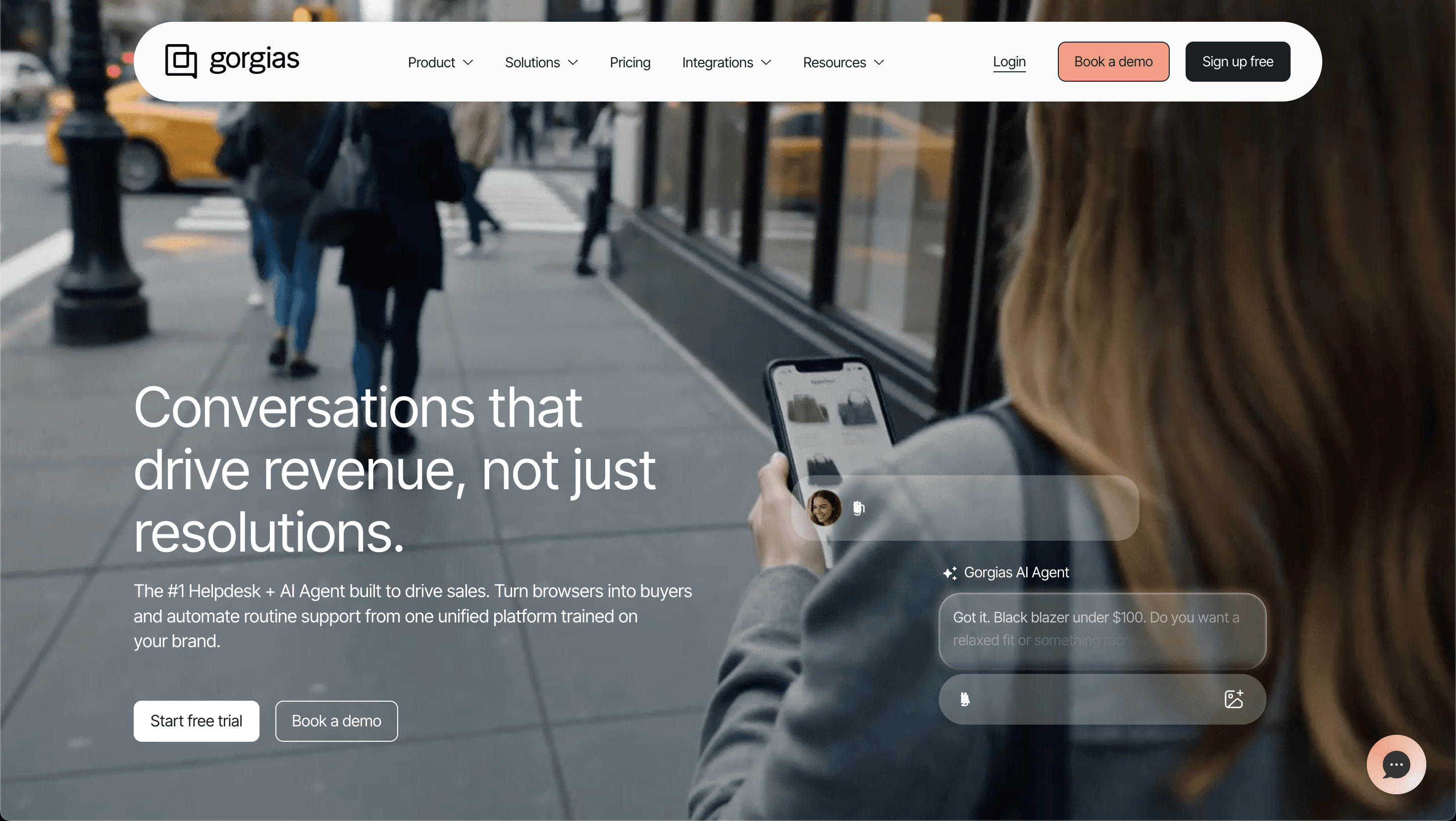
Gorgias is a helpdesk built specifically for e-commerce brands, with deep native integrations into Shopify, BigCommerce, and Magento. It's designed to give support agents the full order and customer context they need to resolve issues quickly without switching between tools.
What you can do with Gorgias: You can manage support tickets from email, live chat, social media, and SMS all in one inbox. Agents can view and edit orders, issue refunds, and apply discounts directly from the support ticket without leaving Gorgias. You can also set up automated responses for common queries like order status, shipping updates, and return policies.
Why Gorgias stands out: Its e-commerce focus means it's built around the workflows DTC brands actually use. The revenue statistics feature ties support interactions directly to sales conversions, helping teams understand the business impact of great customer service. For Shopify merchants especially, it's one of the most tightly integrated options available.
It's best for: Direct-to-consumer e-commerce brands and Shopify merchants that need a support platform built around order management and fast ticket resolution.
Pricing: Plans start from $10/month for up to 50 tickets/month, billed annually.
Website: Gorgias
8. Zoho Desk
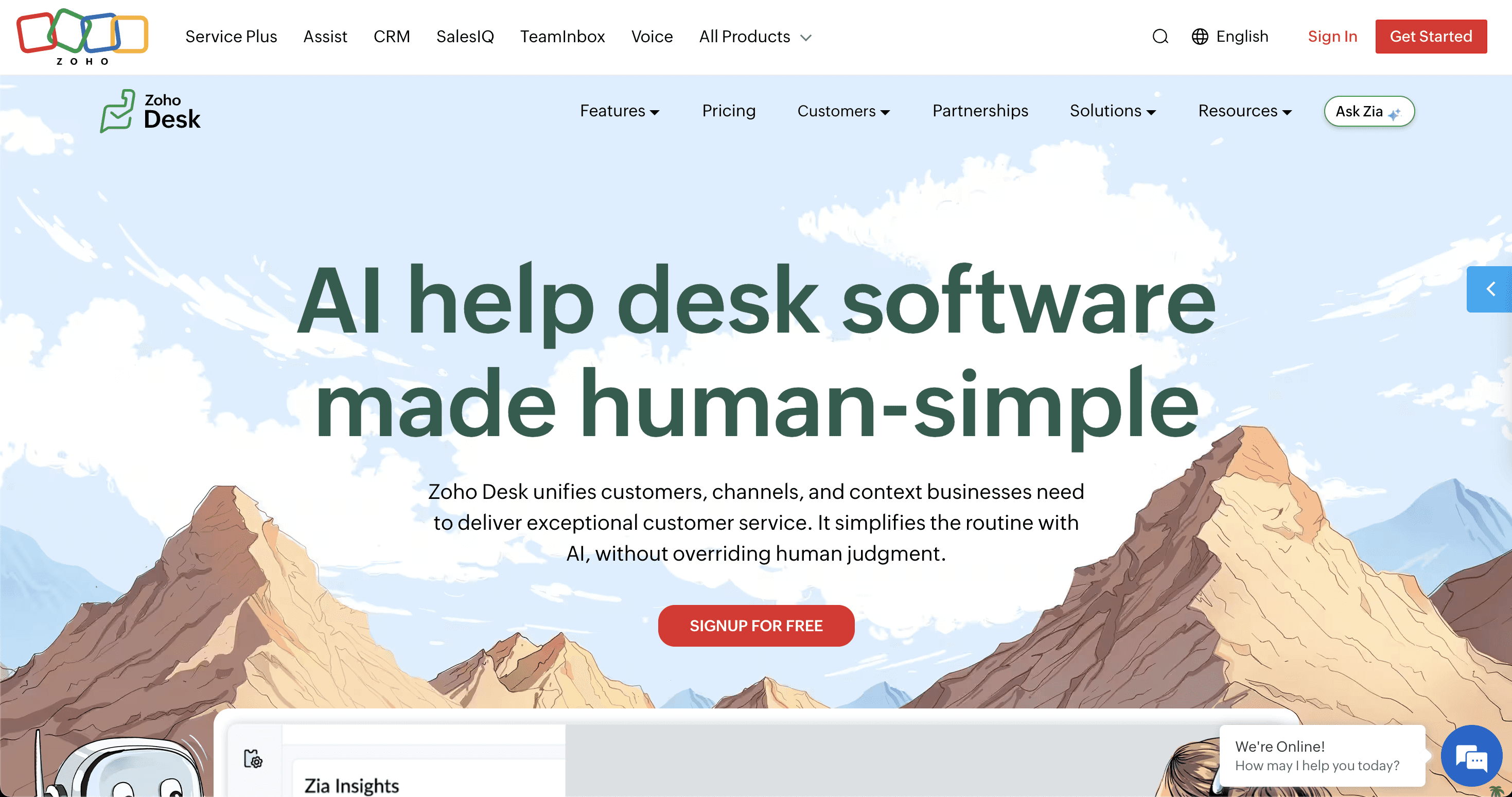
Zoho Desk is a context-aware helpdesk platform that sits within the broader Zoho business suite, making it a natural fit for organizations already using Zoho CRM, Zoho Analytics, or other Zoho products. It brings AI-assisted support, multi-channel ticketing, and deep customization together in an accessible package.
What you can do with Zoho Desk: You can receive and manage tickets from email, phone, live chat, social media, and web forms in one unified dashboard. The AI assistant, Zia, suggests responses, tags tickets automatically, and alerts supervisors to unusual spikes in activity. You can also set up multi-level escalation workflows, branded self-service portals, and CSAT surveys to track agent performance.
Why Zoho Desk stands out: Its tight integration with the Zoho ecosystem is its strongest asset — connecting support data with CRM records, sales pipelines, and business analytics gives teams a fuller picture of each customer. It also offers one of the most generous free plans in the market, making it highly accessible for smaller teams getting started with structured support.
It's best for: Businesses of all sizes that are part of the Zoho ecosystem, as well as budget-conscious teams that need a capable multi-channel helpdesk without a high starting price.
Pricing: Free plan available for up to 3 agents. Paid plans start from $14/agent/month, billed annually.
Website: Zoho Desk
9. LiveAgent
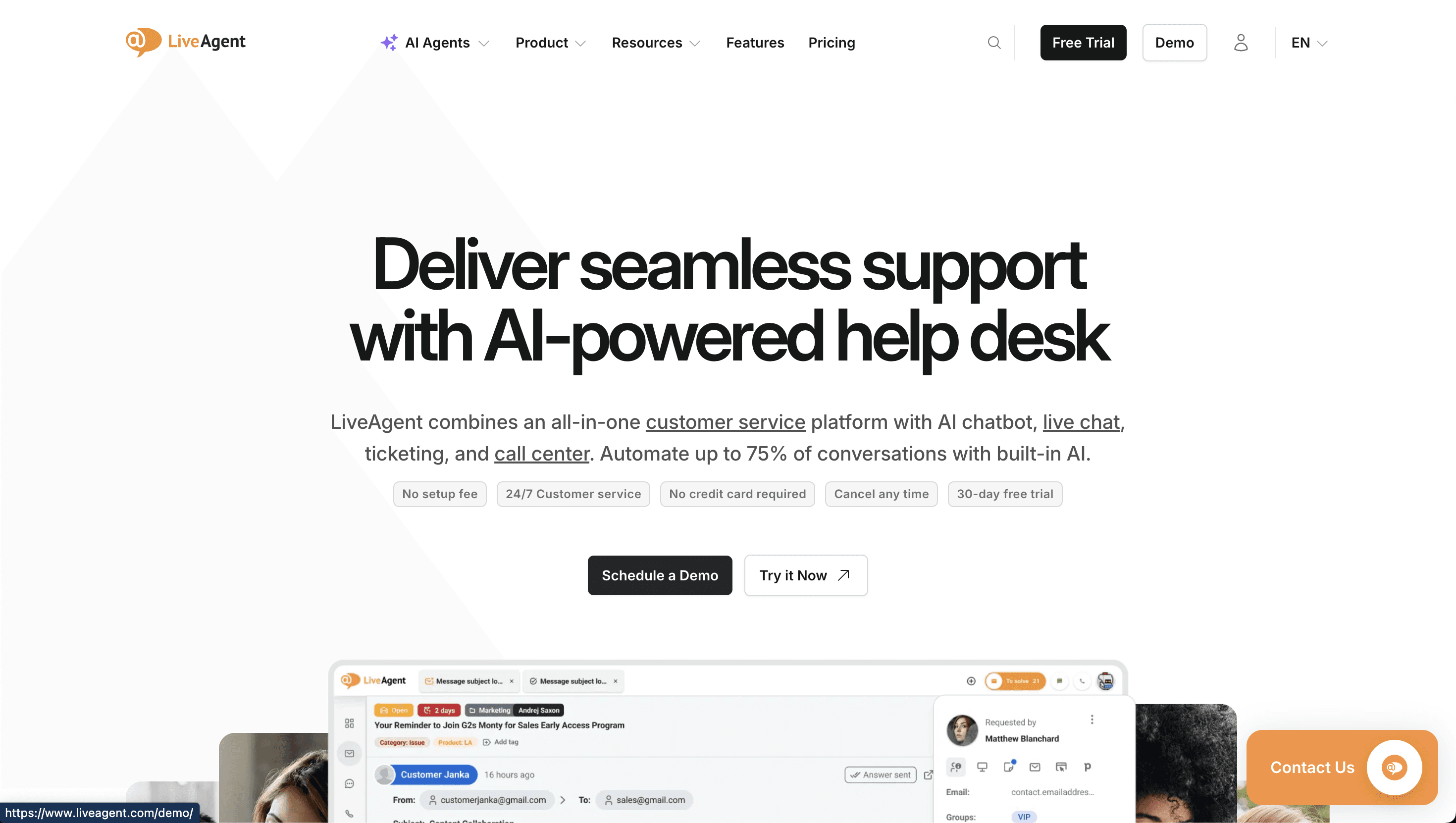
LiveAgent is a feature-rich all-in-one helpdesk platform known for having one of the fastest live chat widgets available on the market. It bundles live chat, ticketing, call center capabilities, and social media support into a single platform at a competitive price point.
What you can do with LiveAgent: You can manage customer conversations from email, live chat, phone, and social media all within one unified inbox. The platform includes a built-in call center with IVR, call recording, and call routing, so voice support doesn't require a separate tool. You can also build a self-service knowledge base, set up automated ticket distribution rules, and monitor agent performance with real-time dashboards.
Why LiveAgent stands out: Its live chat widget is consistently rated among the fastest in terms of load speed and response initiation, which directly impacts customer satisfaction. The breadth of features packed into a relatively affordable price makes it one of the best value propositions in the helpdesk space, particularly for teams that need voice and chat support without stitching together multiple tools.
It's best for: Small to mid-size businesses in e-commerce and SaaS that want a full-featured helpdesk with built-in call center capabilities at an accessible price.
Pricing: Free plan available. Paid plans start from $15/agent/month, billed annually.
Website: LiveAgent
10. Tidio
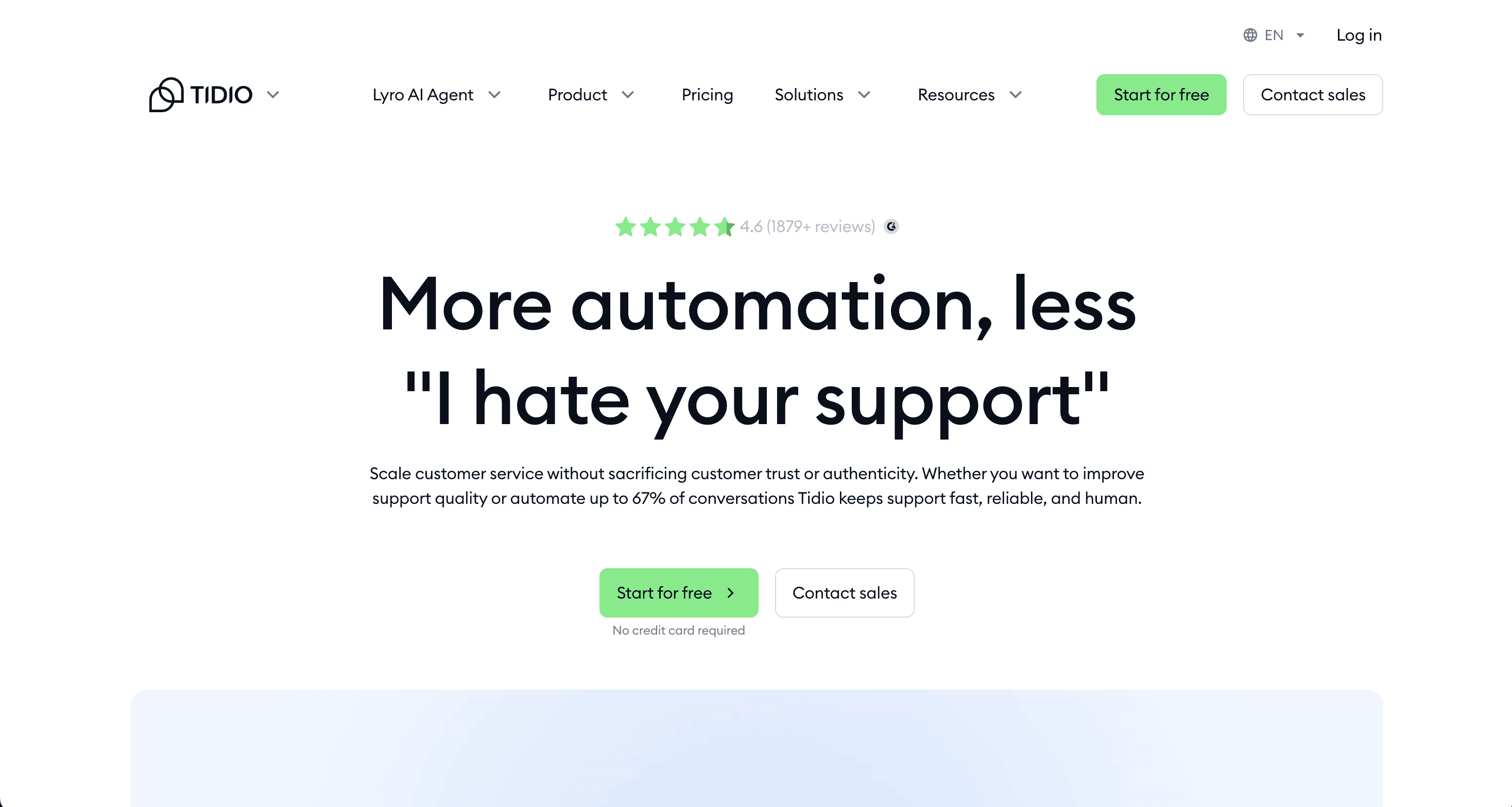
Tidio is a popular chatbot platform built for businesses that want to automate customer conversations without a heavy technical lift. It combines live chat, AI-powered automation, and a visual bot builder in one platform, making it easy for your team to respond to guests instantly.
What you can do with Tidio: Users of Tidio really love how quick it is to set up and start handling conversations. It lets you automate answers to common questions like opening hours, menu inquiries, and reservation availability. It also allows you to hand off conversations to a live team member when a guest needs more personal attention.
Why Tidio stands out: It's a straightforward but capable chatbot platform suited not just for restaurants but also for e-commerce stores, service businesses, and small retail operations. The built-in analytics give your team a clear view of conversation volume, response times, and customer satisfaction.
It's best for: Small to mid-size restaurants that want to add a chatbot to their website quickly and without coding.
Pricing: Tidio has a free plan available. Paid plans start from $24/month, billed annually.
Website: Tidio
11. Gladly
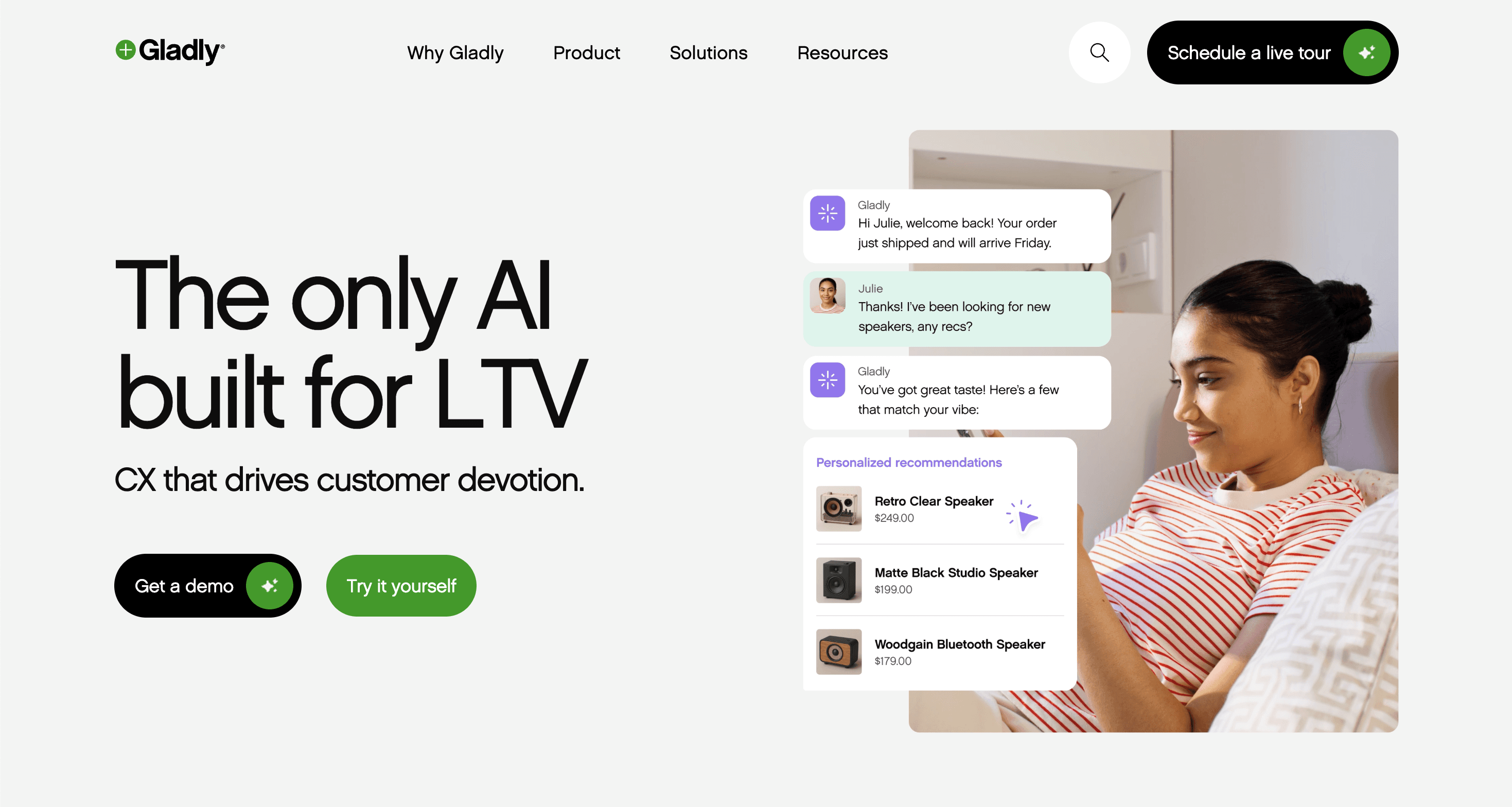
Gladly is a customer service platform built around people rather than tickets. Instead of assigning a ticket number to every interaction, Gladly creates a single, lifelong conversation thread for each customer — giving agents a complete, uninterrupted view of every interaction across every channel, all in one place.
What you can do with Gladly: You can manage voice, email, chat, SMS, and social media conversations from a single agent workspace, all tied to one persistent customer profile. Agents can see the full history of every interaction a customer has ever had with your brand, regardless of which channel it happened on. Built-in AI helps with routing, suggested responses, and self-service deflection, while reporting tools give managers visibility into team performance and customer satisfaction.
Why Gladly stands out: The people-centric model is a genuine philosophical shift from traditional ticketing systems. For premium consumer brands where personalized service is a core part of the brand promise, Gladly's approach means agents can have informed, human conversations rather than treating each contact as an isolated event. Customers also notice the difference — they don't have to repeat themselves every time they reach out.
It's best for: Premium and mid-to-high-end consumer brands in retail, e-commerce, and hospitality that place a high value on personalized, relationship-driven customer service.
Pricing: Available on request. Gladly typically targets mid-market and enterprise customers.
Website: Gladly
12. Sprinklr Service
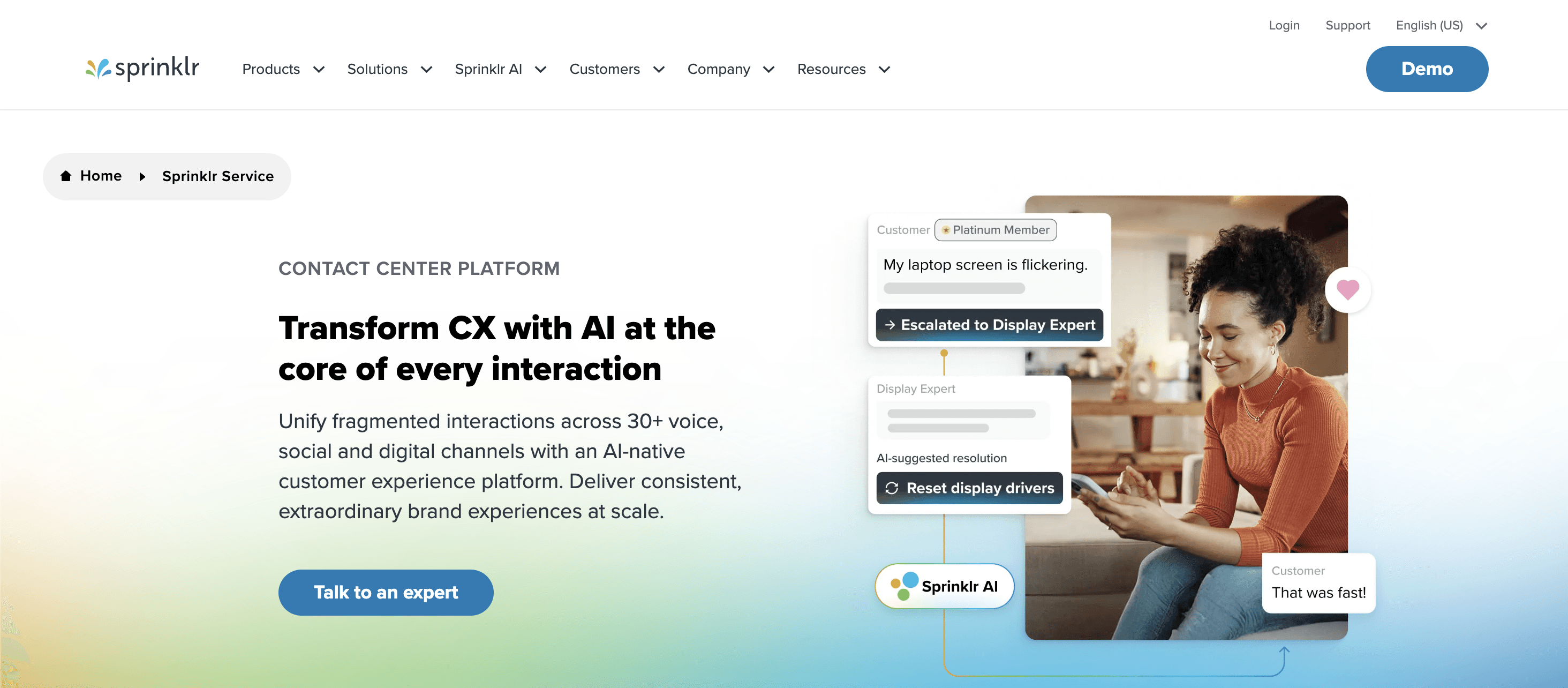
Sprinklr Service is an enterprise customer experience platform that unifies customer interactions across more than 30 digital and social channels into a single AI-powered workspace. It's built for large organizations that need to manage brand presence and customer service at a global scale simultaneously.
What you can do with Sprinklr Service: You can handle customer conversations from social media, messaging apps, email, chat, voice, and review platforms all in one place. AI-powered routing ensures messages reach the right agent or team instantly, while sentiment analysis and voice-of-customer tools help you understand what customers are saying across the entire digital landscape. The platform also includes workforce management, quality management, and contact center analytics built natively into the suite.
Why Sprinklr Service stands out: The sheer breadth of channel coverage — 30+ digital touchpoints — combined with enterprise-grade AI and analytics makes it one of the most comprehensive customer experience platforms available. For global brands managing both reactive support and proactive social engagement, having everything in one unified platform eliminates the data silos and inefficiencies that come from using separate tools for each function.
It's best for: Large enterprises and global brands in retail, technology, and consumer goods that need to manage customer service and brand engagement across a wide range of digital channels at scale.
Pricing: Available on request, with custom enterprise pricing based on team size and channel requirements.
Website: Sprinklr Service
13. Ada
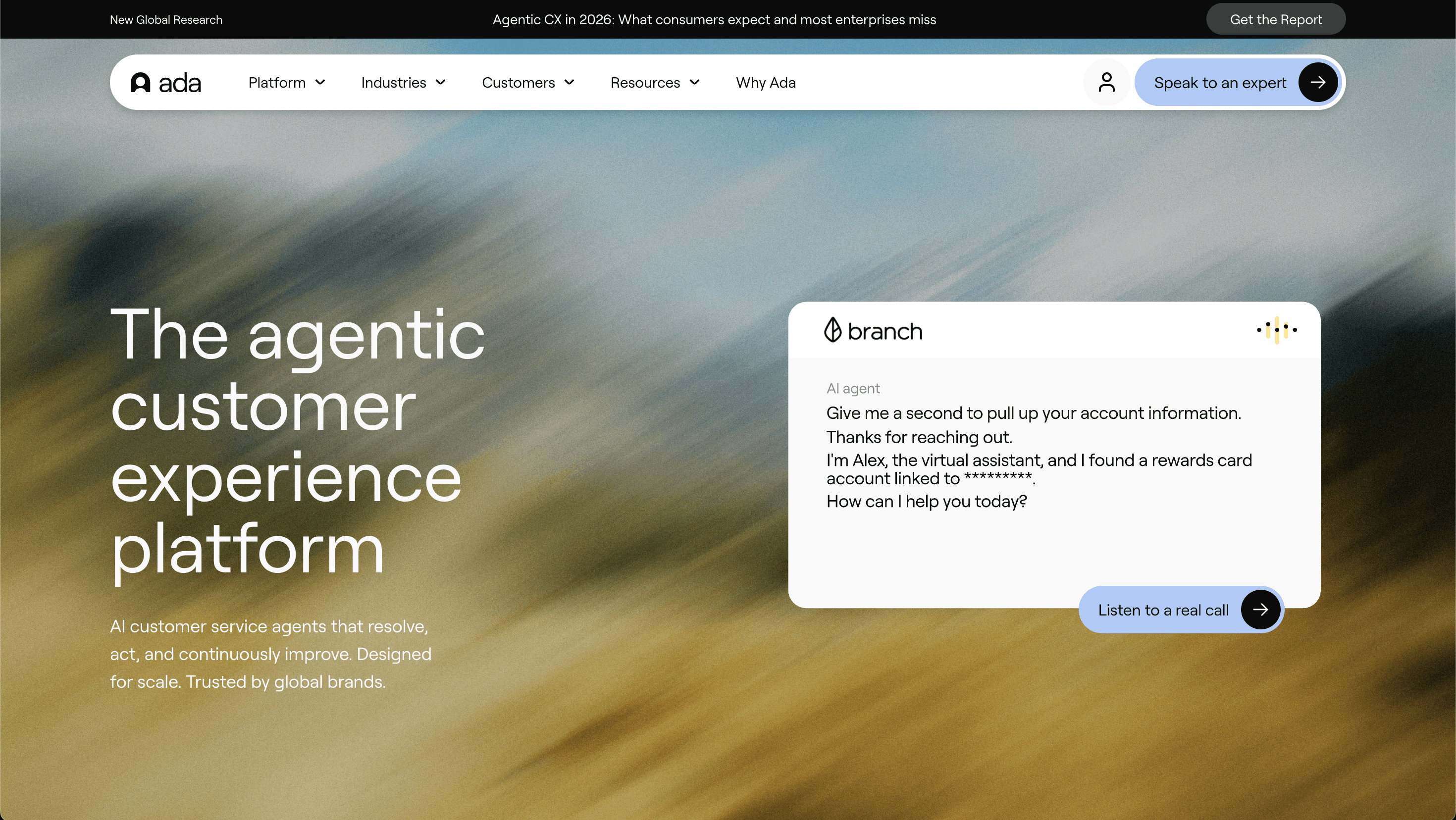
Ada is a no-code AI chatbot platform that enables businesses to automate a large portion of their customer support without writing a single line of code. It's designed to resolve tier-1 queries autonomously at scale, freeing up human agents to focus on more complex, high-value interactions.
What you can do with Ada: You can build and deploy AI-powered chatbots across your website, mobile app, and messaging channels using a visual, no-code builder. Ada connects to your existing knowledge base and backend systems to give the bot the information it needs to resolve issues on its own — from answering FAQs to checking order status and processing simple requests. When a conversation exceeds the bot's capability, it hands off smoothly to a live agent with full context intact.
Why Ada stands out: Its no-code approach dramatically lowers the barrier to deploying sophisticated AI automation — support teams can build, update, and manage the bot without relying on engineering resources. Ada also supports multiple languages out of the box, making it a strong choice for global brands that need consistent automated support across different markets.
It's best for: Mid-size to enterprise businesses in SaaS, e-commerce, and tech that want to automate a significant share of their support volume without a heavy technical implementation.
Pricing: Available on request, with custom pricing based on conversation volume and features required.
Website: Ada
14. Podium
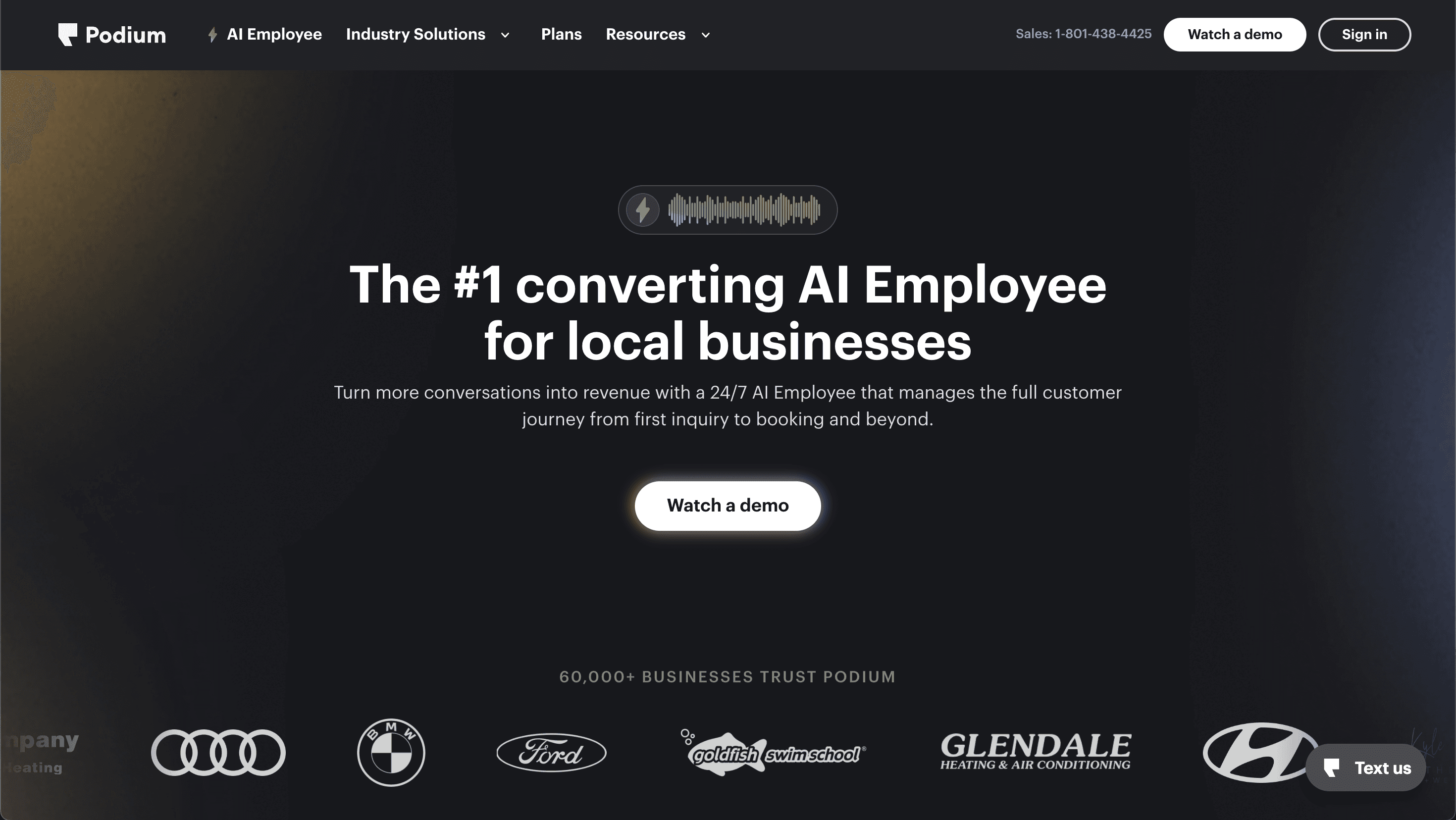
Podium is a messaging and reputation management platform built for local and multi-location businesses that want to centralize customer communication and online reviews in one place. It focuses heavily on SMS-based messaging, recognizing that text is often the fastest and most effective way to reach customers for local service businesses.
What you can do with Podium: You can manage incoming messages from SMS, webchat, Facebook, and Google Business Profile all in a single inbox. The platform makes it easy to send review requests via text after a transaction, helping businesses consistently generate fresh Google and Facebook reviews. You can also collect payments via text message, send bulk promotional campaigns, and automate follow-up messages based on customer actions.
Why Podium stands out: Its combination of messaging, reviews, and payments in one platform is uniquely suited to local businesses — particularly those in healthcare, automotive, home services, and food and beverage. The review automation feature alone delivers measurable business impact, as a steady flow of new reviews directly influences local search rankings and customer trust. It's one of the few platforms that connects operational communication with online reputation management this tightly.
It's best for: Local and multi-location businesses in restaurants, healthcare, automotive, and home services that want to manage customer messaging, collect reviews, and accept payments through a single, SMS-first platform.
Pricing: Plans start from $399/month, billed annually, covering a single location.
Website: Podium
15. Olo
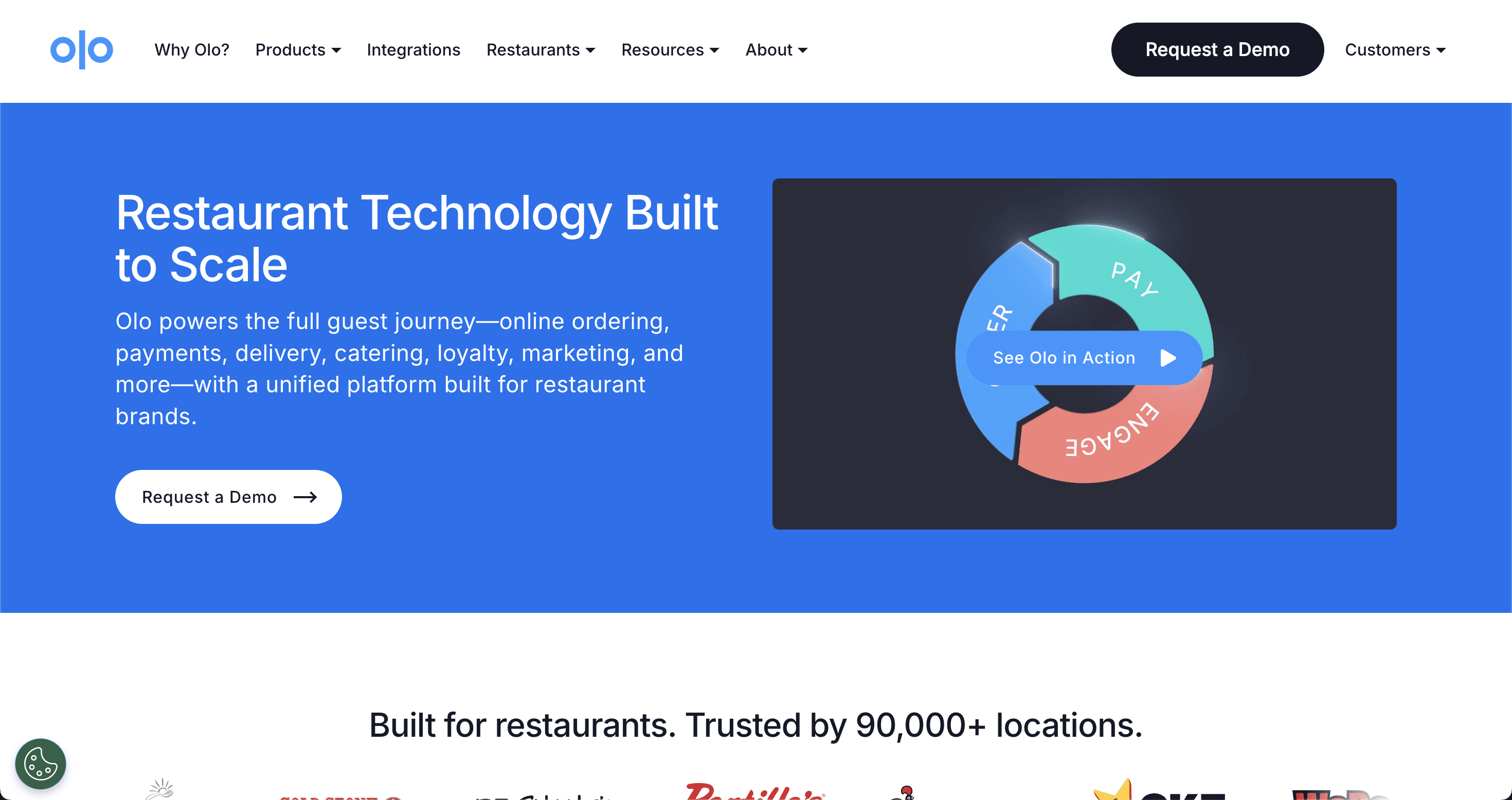
Olo is a digital ordering and guest engagement platform purpose-built for restaurant brands. It powers the online and mobile ordering infrastructure for some of the largest restaurant chains in the world, connecting ordering data with marketing, loyalty, and guest communication tools to help brands build direct relationships with their guests.
What you can do with Olo: You can enable digital ordering across your own website, mobile app, and third-party delivery marketplaces through a single integration layer. Olo's Rails API aggregates orders from platforms like DoorDash, Uber Eats, and Grubhub into your existing POS system, reducing manual entry and errors. Guest data collected through ordering flows feeds into marketing and loyalty tools, letting brands send personalized communications and offers based on real purchase behavior.
Why Olo stands out: Its depth of restaurant-specific functionality is unmatched in the space. Rather than being a generic e-commerce or communication tool adapted for restaurants, Olo was built from the ground up for the operational realities of food service — high order volumes, real-time POS integration, complex menu management, and multi-location scalability. For restaurant groups looking to own their digital guest relationship rather than ceding it to third-party marketplaces, Olo provides the infrastructure to do that effectively.
It's best for: Mid-size to large restaurant chains and franchise groups that want to power and own their digital ordering experience while connecting guest data across ordering, marketing, and loyalty.
Pricing: Custom pricing based on brand size and modules required. Available on request.
Website: Olo
16. Medallia
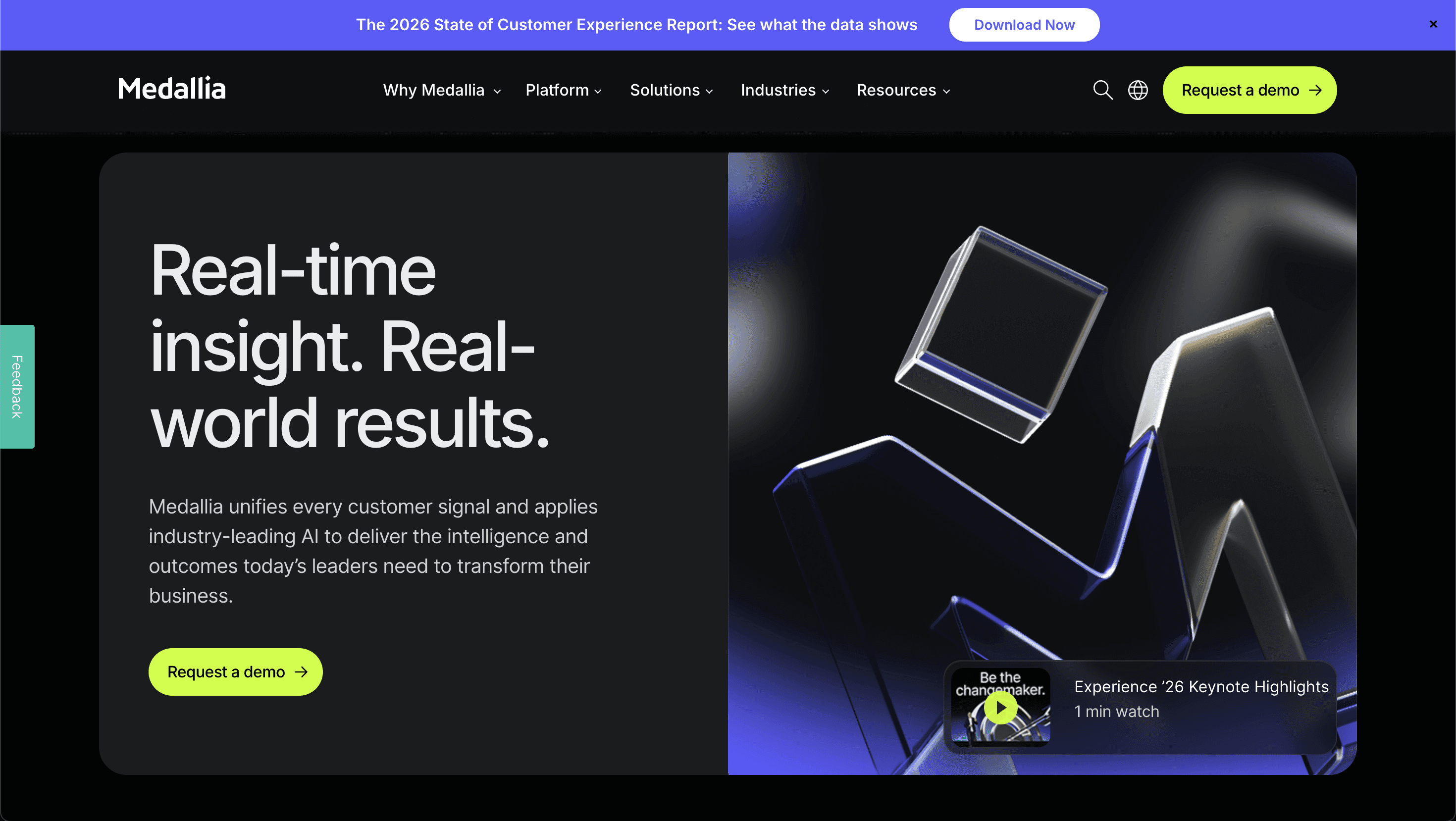
Medallia is an enterprise experience management platform that captures customer signals across every touchpoint — surveys, reviews, call center transcripts, social media, and more — and uses AI to surface actionable insights in real time. It's built for large organizations that need to understand and act on customer feedback at scale.
What you can do with Medallia: You can collect customer feedback through digital surveys, SMS, email, in-app prompts, and point-of-sale interactions, then analyze all of it in a unified platform. AI-powered text analytics automatically identifies themes, sentiment, and urgent issues across thousands of responses, flagging problems before they escalate. The platform also supports closed-loop follow-up workflows, so front-line teams can reach back out to dissatisfied customers quickly and resolve issues directly.
Why Medallia stands out: Its real-time signal detection is what sets it apart from traditional survey tools. Rather than delivering insights weeks after a customer experience, Medallia surfaces issues as they happen — allowing operations teams to act immediately. For multi-location businesses in hospitality, retail, and financial services, the ability to compare experience data across locations, regions, and customer segments makes it a powerful tool for identifying systemic issues and best practices simultaneously.
It's best for: Enterprise organizations in hospitality, retail, finance, and healthcare that need a sophisticated, real-time voice-of-customer platform capable of handling large volumes of feedback across multiple channels and locations.
Pricing: Custom enterprise pricing. Available on request.
Website: Medallia
 AI agents automate all guest interactions, 24/7, across all locations of your restaurant.


" transform="translate(3.219 19.212)" width="152.45224485148515px"/><path d="M 0 11.619 C 7.071 11.39 33.491 21.738 40.35 21.268 C 38.499 18.19 37.116 14.915 35.507 11.625 C 33.7 7.867 32.587 3.926 31.702 0" fill="transparent" height="21.28391189647101px" id="I9fuJaf7q" stroke-dasharray="" stroke-linecap="round" stroke-linejoin="round" stroke-width="4.97" stroke="rgb(0, 0, 0)" transform="translate(139.727 55.754)" width="40.34950693069311px"/></svg>)