8 Best Restaurant Loyalty Program Software (2026)
Written By: Vincent Nguyen

⟦embed:keyTakeaways⟧
Your regulars are your most valuable asset. They visit 20% more often, spend 20% more per check, and are far more likely to recommend you to friends.
A good loyalty program can unlock a whole new revenue stream for your restaurant. And the good news: you don't need a massive tech budget to build something that works.
In this article, I'll walk you through:
Why and how a loyalty program can bring revenue impact to your restaurant business
A list of the leading restaurant loyalty program software trusted by global F&B enterprises
If you want to jump straight to the list of software I'll review in this article, here they are:
⟦embed:pFtdxEESF⟧
The Impact Of A Good Loyalty Program On Your Restaurants
Here are some statistics from industry reports to show you the power of loyalty programs:
⟦embed:jAh15O5L2⟧
How We Choose The Best Restaurant Loyalty Software?
All of the software chosen in this list satisfy the following criteria:
It integrates with your POS and ordering stack: A good loyalty platform should sync with your POS, online ordering, and reservation tools to form a complete ecosystem.
It works consistently across every location: Guests should earn at one location and redeem at another without friction.
It segments guests: A good loyalty should come with segmentation features so you can identify who's about to churn, who's worth winning back, and who's already an advocate, then talk to each group differently.
It surfaces metrics operators can act on: Some of the good metrics are repeat visit rate, days between visits, lifetime value by cohort, and campaign attribution.
1. Toast Loyalty

Toast Loyalty is the points program built into the Toast restaurant POS. It comes in Toast's Marketing Essentials package next to gift cards and email and SMS marketing, so loyalty data lives in the same system as your orders and payments.
Because every check already runs through Toast, points post to the guest's account on their own, and a guest who links a payment card earns without giving a phone number. In May 2026, Toast relaunched its Toast Local guest app with loyalty built in and introduced Toast IQ Grow, a premium package that adds an AI Marketing Agent to Marketing Essentials.
Key features
Flexible sign-up: Guests join with a phone number, an email address or a linked payment card, at the register, at the table, online or in the app.
Two earning models: Choose a visit-based program or an amount-based one that awards points per dollar spent.
Rewards and bonuses: Set up to five cash-discount or item rewards, plus welcome offers, birthday rewards and double-point promotions.
Earning wherever you sell: Points work on the POS, Toast online ordering, kiosks, Toast Go handhelds and the Toast Local app.
Member marketing: Email and SMS campaigns through Toast Marketing reach loyalty members directly.
Loyalty analytics: Loyalty and guest reports sit in the same Toast dashboard you use for sales.
Pros
One guest record: Loyalty, payments and guest marketing share data, so there are no lists to export or points to reconcile between systems.
Hands-free earning: Linked cards collect points with no extra step at checkout, which keeps the program light for servers during a rush.
Shared across locations: Restaurants in the same Gift/Rewards Card Group can run one program and one guest account.
No points ceiling: There's no cap on points per transaction or on a guest's balance.
Cons
Toast POS required: It only works for restaurants that run on Toast.
Delivery apps excluded: Orders through DoorDash, Grubhub and Uber Eats don't earn or redeem points.
One program at a time: Toast supports a single rewards program, with up to five rewards.
No published price: You get the cost from Toast instead of a public price list.
Price and plans
Toast doesn't publish a price for Loyalty. You can buy it in the Marketing Essentials bundle from Toast Shop or ask Toast Care to add the standalone Loyalty subscription, and Toast quotes the cost.
2. Paytronix
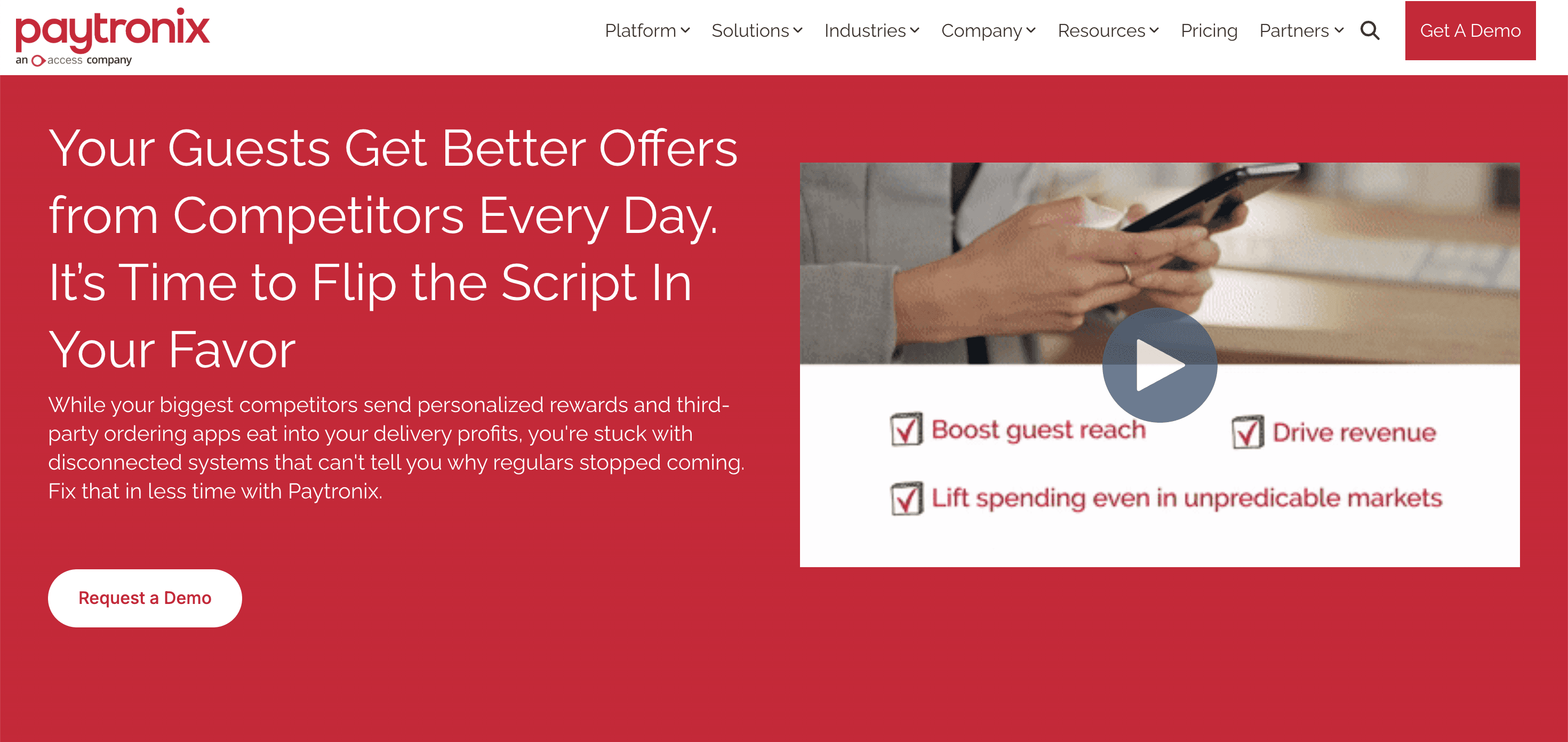
Paytronix is a guest engagement suite for restaurants and convenience stores that combines loyalty, online ordering, gift cards, branded apps and messaging. It has been part of The Access Group since an acquisition announced in November 2024 and still trades under its own name.
Paytronix is strongest when your program needs to do more than hand out points. Loyalty, ordering and stored value share one guest profile, so you can reward app orders and in-store visits alike and use that history to target offers. Peet's Coffee and Bruster's Real Ice Cream run their rewards programs on it.
Key features
Program types: Points, visits, tiers and subscriptions, with comps and limited-time promotions on top of the core earning rules.
Rewards Hub: Released in April 2026, it lets marketers set up rewards, change earning ratios and launch promotions without filing a support ticket.
Journey Builder: An AI-powered, no-code tool launched in October 2025 that sends email, SMS and push messages across multi-step guest journeys.
Branded app and ordering: Members get their own app for ordering, rewards and account details, as Las Palapas did with its LP Club app.
Gift cards with loyalty: Native stored value lets guests pay with a gift card and earn or redeem rewards in the same order.
Pros
One guest database: Loyalty, ordering, gift cards and campaigns draw on the same profiles, so you maintain fewer integrations.
Marketer control: Rewards Hub hands day-to-day program changes to your own team.
Automated journeys: Journey Builder is available to every Paytronix client in Campaign Center.
Wide integration list: Paytronix lists more than 450 integrations, including 30+ native POS integrations such as Qu and Revel.
Cons
Custom quotes: Prices aren't published and depend on brand size, modules and location count.
Enterprise-tier fit: Paytronix's own guide says the smallest single-location operators may find it more extensive than needed.
Rewards Hub limits: At launch it supports only the Bankable Points program type, with tiers, clubs and point multipliers due later in 2026.
Price and plans
Paytronix doesn't publish prices. Quotes are based on brand size, the modules you choose and your number of locations.
3. Punchh

PAR Punchh is an enterprise loyalty, offers and guest engagement platform for restaurant chains, owned by PAR Technology. It's now sold as part of PAR Engagement, which joins Punchh loyalty with marketing, online ordering and guest data in one cloud.
Punchh fits brands whose loyalty program has to work the same way in every store and channel. Krystal, Torchy's Tacos, Church's Texas Chicken and Salsarita's Fresh Mexican Grill run programs on it, and PAR says more than 275 brands use the platform.
Key features
Program types: Choose points, visit-based rewards or membership tiers, and set earning rules to fit your menu and margins.
Offers engine: Build guest segments from order history and let AI-driven rules trigger an offer when a guest qualifies.
Smart Passes: Unveiled in December 2025, they put a loyalty card in Apple Wallet or Google Wallet, with one-tap enrollment and points that update in real time.
PAR Games: Gamified loyalty moments run natively on Punchh data.
Integrations: Loyalty connects to your POS, web and app ordering and kiosks, so rewards apply wherever the guest orders.
Pros
Made for chains: Segments, offers and reporting work across dozens or hundreds of locations from one program.
No app required: Wallet passes reach guests who never download your app.
One vendor: Through PAR Engagement, loyalty, marketing, ordering and guest data come from the same company.
Recent launches: Torchy's Tacos and Krystal both launched loyalty programs on Punchh in 2025.
Cons
Quote-only pricing: PAR doesn't publish prices for Punchh, so you'll need a demo and a quote to compare it.
Enterprise depth: It's built for multi-unit and enterprise brands, so a single-location restaurant may not need this much.
Price and plans
PAR doesn't publish Punchh prices; you get a custom quote after a conversation with its team.
4. SpotOn

SpotOn makes restaurant POS software, and SpotOn Loyalty is the rewards program built into it. Because loyalty shares a system with the register, online ordering and the GoTo Place guest app, every order can count toward a reward and points apply on their own at checkout.
Its appeal is how little staff and guests have to do. Setup happens in the POS, and since July 2026 the deals and campaigns can also go out by text to guests who opted in through loyalty, reservations or online ordering. Bascom's Chop House and Big Dave's Bagels & Deli are among the restaurants SpotOn features.
Key features
Flexible earning: Set points per visit or per dollar spent, and the POS credits them when the check closes.
Sign-up anywhere: Guests join at the POS, through online ordering, on your website, in the GoTo Place app or with a shareable link.
Automated deals: Rewards go out for sign-ups, birthdays, first check-ins and lapsed guests without manual list work.
Email and SMS campaigns: Every loyalty member becomes a contact for targeted promotions from the dashboard.
Loyalty reporting: See spend from loyalty diners, your top customers and which rewards drive results.
Pros
Little work at the counter: Guests check in at the POS, a guest-facing display, handhelds or the app, and redemption doesn't slow service.
Win-back included: Deals for lapsed guests run automatically once you set them up.
Clear price: Loyalty costs a flat $65 a month on top of SpotOn POS.
Well rated POS: SpotOn's POS averages 4.4 out of 5 from G2 reviewers.
Cons
Tied to SpotOn POS: Loyalty is sold as an add-on to SpotOn POS, so a restaurant on another POS would need to switch systems.
No free trial: SpotOn's pricing page offers a demo and no trial.
Contract on the All-In plan: The $0 All-In POS plan comes with a 2-year minimum term and processing minimums.
Price and plans
SpotOn Loyalty is an add-on to SpotOn POS. There's no free trial; you start with a demo.
SpotOn Loyalty: $65 per month, added to SpotOn POS.
All-In POS: $0 per station, per month, hardware included, with a 2-year minimum term and processing minimums.
POS Essentials: $55 per station, per month, month-to-month, with hardware bought separately.
Build Your Own: Custom pricing for multi-unit and enterprise operations.
5. Thanx
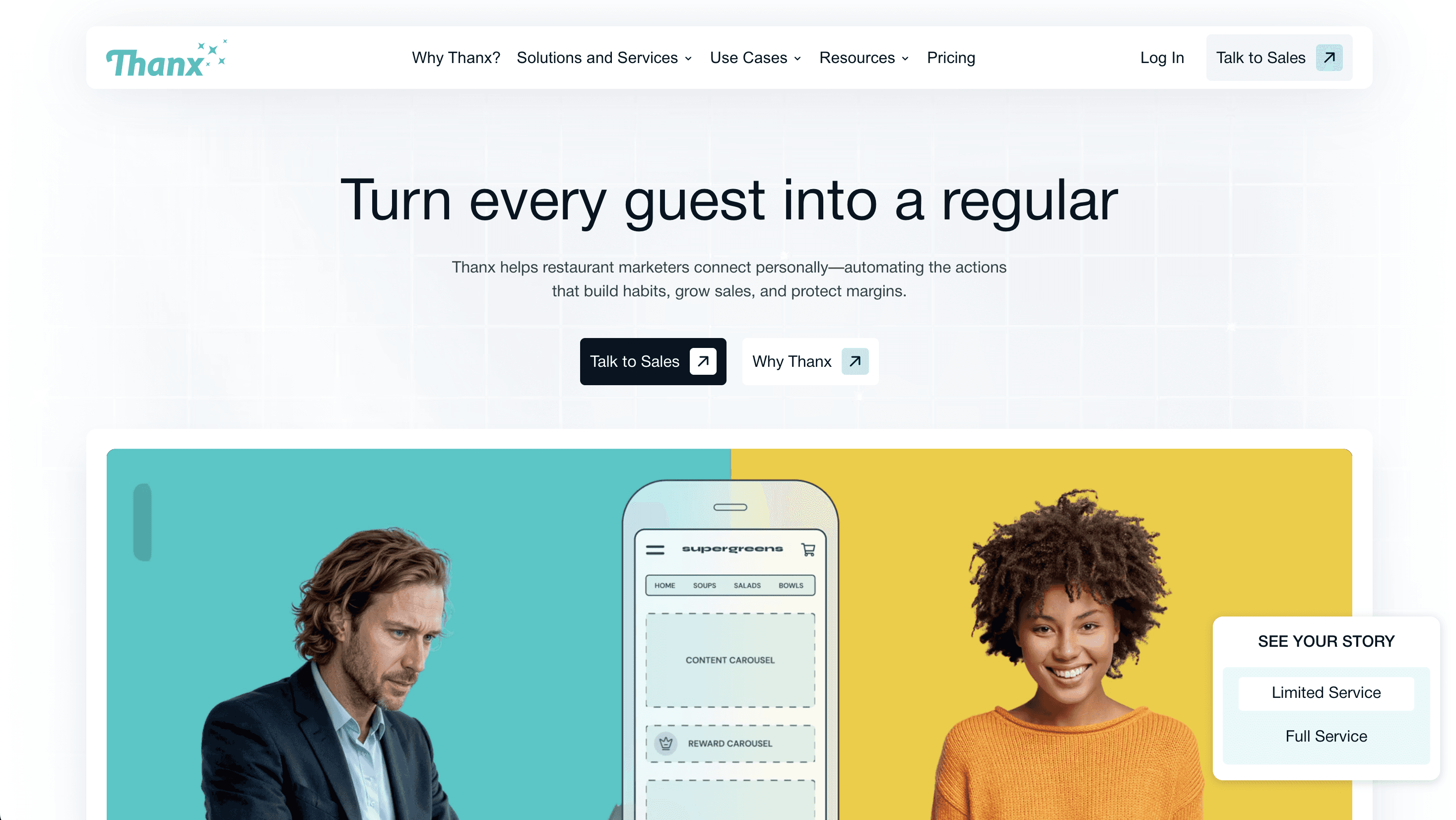
Thanx is a guest engagement platform made only for restaurant brands. It combines loyalty, a guest CRM, automated marketing and first-party web and app ordering, and it adds AI agents that build segments and win back guests after a bad digital order.
Its loyalty approach is designed to protect margin: guests earn through the card they pay with, without scanning anything, and rewards can go well beyond blanket discounts. Velvet Taco, Pokeworks, Sonny's BBQ and Salt & Straw run their programs on Thanx.
Key features
Card-linked loyalty: Guests are recognized by their payment card in store and online, so earning doesn't slow the line at the counter.
Access Pass rewards: Give your top tiers experiences, secret menu items or early access to new launches.
SegmentAI: Describe an audience in plain words, such as lapsed lunch guests at three locations, and it builds the segment for you.
Lifecycle automation: Automated campaigns welcome new members and bring back guests who haven't visited lately.
RecoveryAI: Follows up with guests after a poor digital ordering experience to bring them back.
Owned ordering: A branded app and Thanx Web tie each online order to a guest profile, and integrations with Toast, Deliverect and Kea phone ordering connect other channels.
Pros
Restaurant-only focus: Every part of the platform, from tiers to ordering, is built around how restaurant guests visit and order.
Margin-friendly rewards: Perks that aren't discounts let you thank regulars without training them to wait for a deal.
Self-serve changes: You can adjust rewards, tiers and offers yourself when food costs or results shift.
Pay-for-results recovery: RecoveryAI is priced on performance, so you pay when a recovered guest comes back.
Cons
No public pricing: Quotes depend on your restaurant count, unit volume and the modules you pick.
USA and Canada only: Thanx works only with companies based in those two countries.
Loyalty and ordering scope: Reviews and listings aren't part of the platform, so you'd pair it with a reputation tool.
Built for multi-unit brands: A single-location restaurant may need far less than the full platform.
Price and plans
Thanx doesn't publish prices; you get a quote after a demo. Pricing depends on your restaurant count, average unit volume and the capabilities you need, such as loyalty, CRM, ordering and marketing automation.
6. FiveStars

Fivestars by SumUp is a loyalty and automated texting platform for local businesses in the US. The payments company SumUp bought Fivestars in 2021 and now sells it as SumUp Connect, while members still track their points in the Fivestars by SumUp app.
Guests join by typing a phone number at checkout, so a cafe or counter-service restaurant can offer sign-up on every order without asking anyone to download an app first. Gong cha and Hwy 55 Burgers, Shakes & Fries are among the brands that have run Fivestars programs.
Key features
Phone-number check-in: Customers enter their number on the customer-facing device to earn points, then redeem rewards at the register.
AutoPilot texts: Welcome, birthday and win-back messages go out on their own.
Promotions: Send offers to your list for a slow afternoon or a new menu item; Connect Pro adds unlimited AI-enhanced messaging.
Review Boost: On Connect Pro, happy customers are invited to leave a review and get a reward for it.
Customer directory: Visits and spending are recorded with every transaction, so you can see who your regulars are.
POS choice: Connect runs with SumUp POS and with many third-party POS systems.
Pros
Quick sign-up: No card or app is needed to join, which keeps the line moving.
Little daily effort: AutoPilot campaigns run without anyone writing each message.
Simple terms: SumUp's pricing page promises no complicated contracts.
Lower price with SumUp POS: Bundling the POS brings Connect Plus down to $199 a month.
Cons
High starting price: The current pricing page starts at $269 a month for Connect Plus on its own.
Key tools on Pro: Text-to-join, Review Boost and unlimited AI-enhanced messaging need Connect Pro; Plus includes 2 standard promos a month.
No trial listed: The pricing page shows no free plan or trial.
Made for local shops: It's built for independent cafes and quick-service restaurants, so a multi-brand group with its own app may need a different platform.
Price and plans
SumUp publishes monthly prices for Connect and says there are no complicated contracts. Buying SumUp POS with Connect lowers the price.
Connect Plus: $269 per month.
Connect Pro: $349 per month.
POS with Connect Plus: $199 per month.
POS with Connect Pro: $289 per month.
7. Lightspeed Loyalty

Lightspeed Loyalty is the loyalty add-on for Lightspeed Restaurant, the point-of-sale system used by restaurants, cafes and bars in many countries. Points, rewards and guest profiles live in the system that takes orders and payments.
There are now two versions. The points-based Lightspeed Loyalty for Lightspeed Restaurant L-Series adds email, SMS and push campaigns, and a card-linked version released in Australia in February 2026 tracks spend from repeat card payments with no app or loyalty card. Lightspeed Restaurant customers include Miriam in New York, DOC Group in Melbourne and Gemelli Group in Queensland.
Key features
Points on every order: Guests collect points on each purchase and spend them at the POS or online, so staff never track anything by hand.
Birthday and win-back campaigns: A birthday reward goes out each year, and a Time Away campaign offers bonus points to members who haven't ordered in 30 days.
Segments and VIP tiers: Group members by spend and visit frequency, and give VIP groups a higher earn rate.
Email, SMS and push: Build campaigns with a drag-and-drop editor or set automated flows for first purchases, birthdays and lapsed guests.
Card-linked loyalty (Australia): Spend is tallied from a tokenized card ID, staff get POS prompts to enroll guests and apply rewards, and guests can join by QR code or keep a pass in Apple or Google Wallet.
Pros
No extra system at the counter: Rewards are earned and redeemed inside the normal sale.
One vendor: POS and loyalty share one support team, and the UK page promises free onboarding and 24/7 support.
Works across locations: The card-linked version lets regulars earn and redeem at any of a company's sites.
Cons
Lightspeed POS required: Loyalty works only with Lightspeed Restaurant, and the UK page lists the points-based version for L-Series only.
Newer version limited to Australia: Card-linked loyalty is available only to Australian sites using Lightspeed Payments.
Basic by design: The card-linked version handles earning and redeeming without campaigns, segments or marketing tools.
No US price: Lightspeed's US loyalty pages redirect to its main POS pages, so ask sales how loyalty is sold in your market.
Price and plans
Lightspeed sells Loyalty as a monthly add-on to a Lightspeed Restaurant subscription, and prices vary by country. The US site doesn't list a loyalty price.
Australia: From $39 per month (AUD) for the card-linked Lightspeed Loyalty.
United Kingdom: From £49 per month, according to Lightspeed's UK loyalty pricing page.
8. Stamp Me

Stamp Me is a digital stamp card app that moves the paper punch card onto the customer's phone. It runs as an independent system with no POS integration, so you can launch a card without adding software at the till.
For a cafe or small restaurant, the appeal is speed: Stamp Me says a simple card takes about 5 minutes to set up, and guests join by scanning a QR code or downloading the app. A Stamp Me blog post from August 2026 explains that members can also save their Member Code to Apple Wallet or Google Wallet.
Key features
Digital stamp cards: Customers join by QR code or the Stamp Me app, and each account can publish up to 2 card programs, such as one for coffee and one for sandwiches.
Stamping methods: Stamp Codes, StampTags and single-use OneStamps work on every plan, and Pro adds the StampPod tap device at the counter.
Stamp Business app: Staff scan a member's code with a phone to add stamps or redeem rewards; the app is in beta.
Member messaging: Pro and Elite include unlimited push notifications and SMS, which carries extra fees.
Campaigns and games: Birthday Club and Lapsed Customer messages go out automatically, and Scratch & Win games give members another reason to open the app.
Zapier integrations: Member data can flow to your email or CRM platform.
Pros
Quick to start: The basic card needs no POS integration or new software.
Flexible terms: Plans are monthly, with no lock-in contract and no setup costs.
Free trial: You get 30 days free, starting when you publish your first card, with no credit card.
No member cap: Stamp Me doesn't charge per customer, however many guests join.
Cons
No POS link: Stamp Me doesn't integrate with POS systems, so stamps aren't tied to transactions.
Lite is basic: Messaging, campaigns and the StampPod start on Pro at $79 per month.
One location per plan: Each additional location adds a monthly fee.
SMS costs extra: Text messages carry fees on top of the plan price.
Price and plans
Every plan includes a 30-day free trial, with no setup costs or lock-in contract, and covers one location. Prices are in US dollars per month.
Lite: $49 per month.
Pro: $79 per month.
Elite: $199 per month.
How Momos Improves Your Loyalty Software
At the end of the day, a great restaurant loyalty program is only half the battle.
The other half is what happens when a guest complains about missed points, a bad meal, or a reward they can't use.
That's where Momos fits in.
Momos is a guest experience management platform that works on top of the loyalty software you already have (Paytronix, Punchh, Toast Loyalty, Spendgo, and others), turning loyalty into a service recovery and revenue attribution engine.
Put simply, Momos helps major F&B brands to:
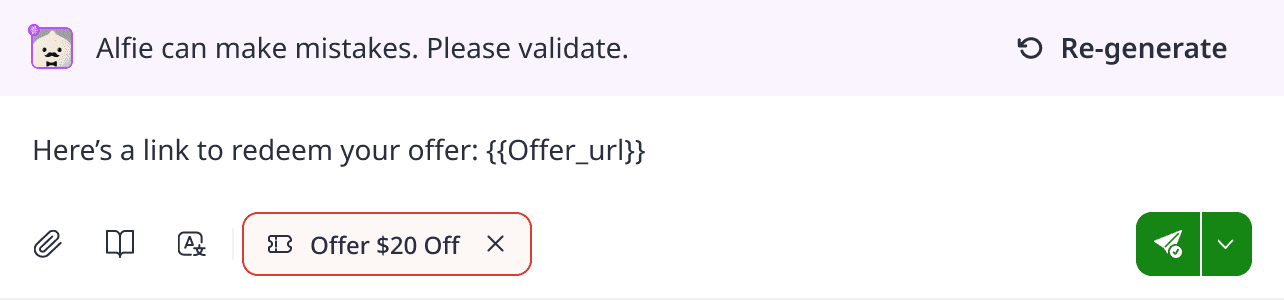
Issue points, rewards, and missed-entry credits directly from the support thread, without agents leaving Momos to log into a separate loyalty console.
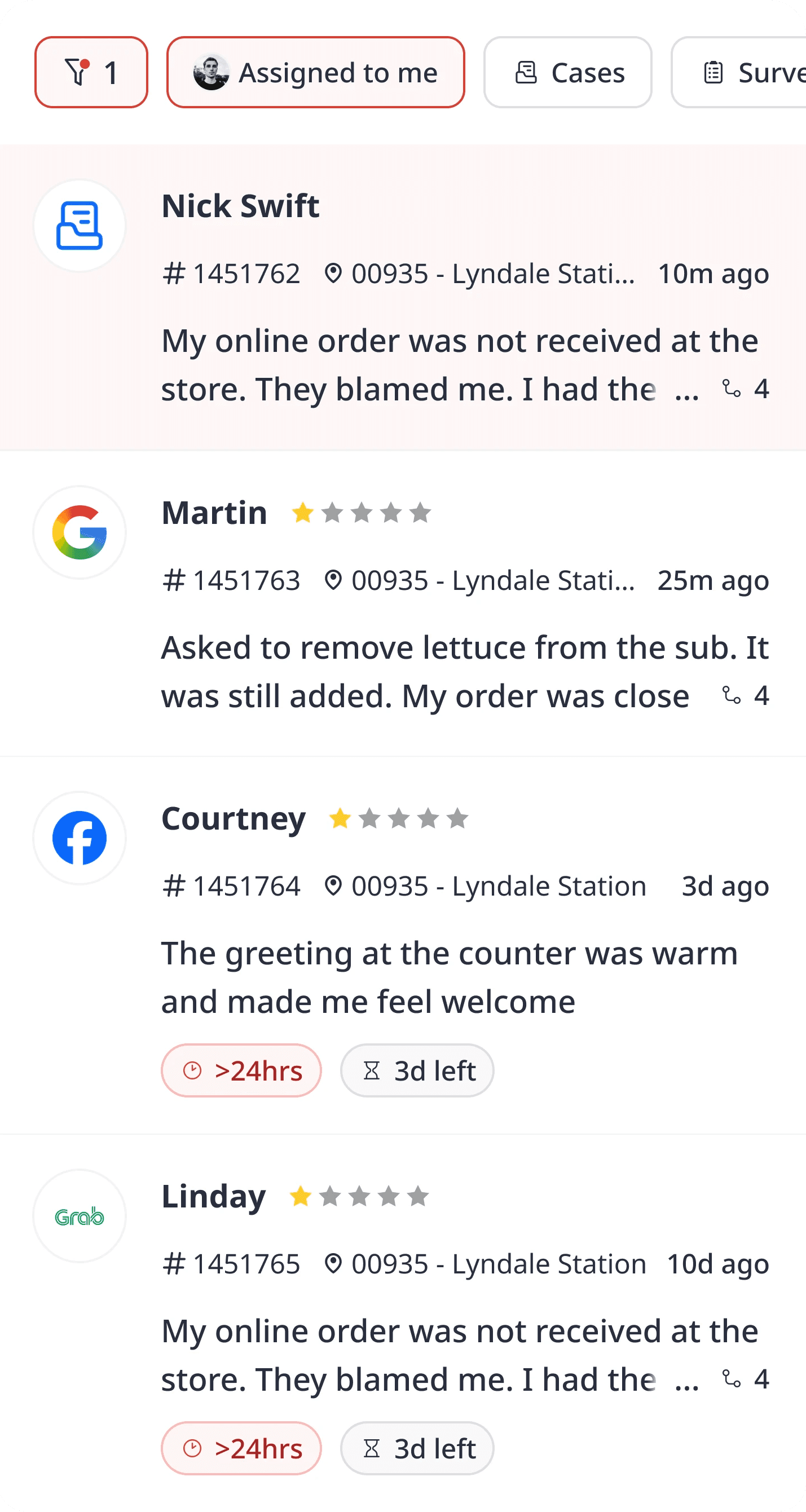
Auto-log every loyalty action back into the Inbox thread, so two agents working the same case never double-comp the same guest.
Enforce brand-level Recovery Policies and per-role permissions, so loyalty spend stays within guardrails and never blows the budget.
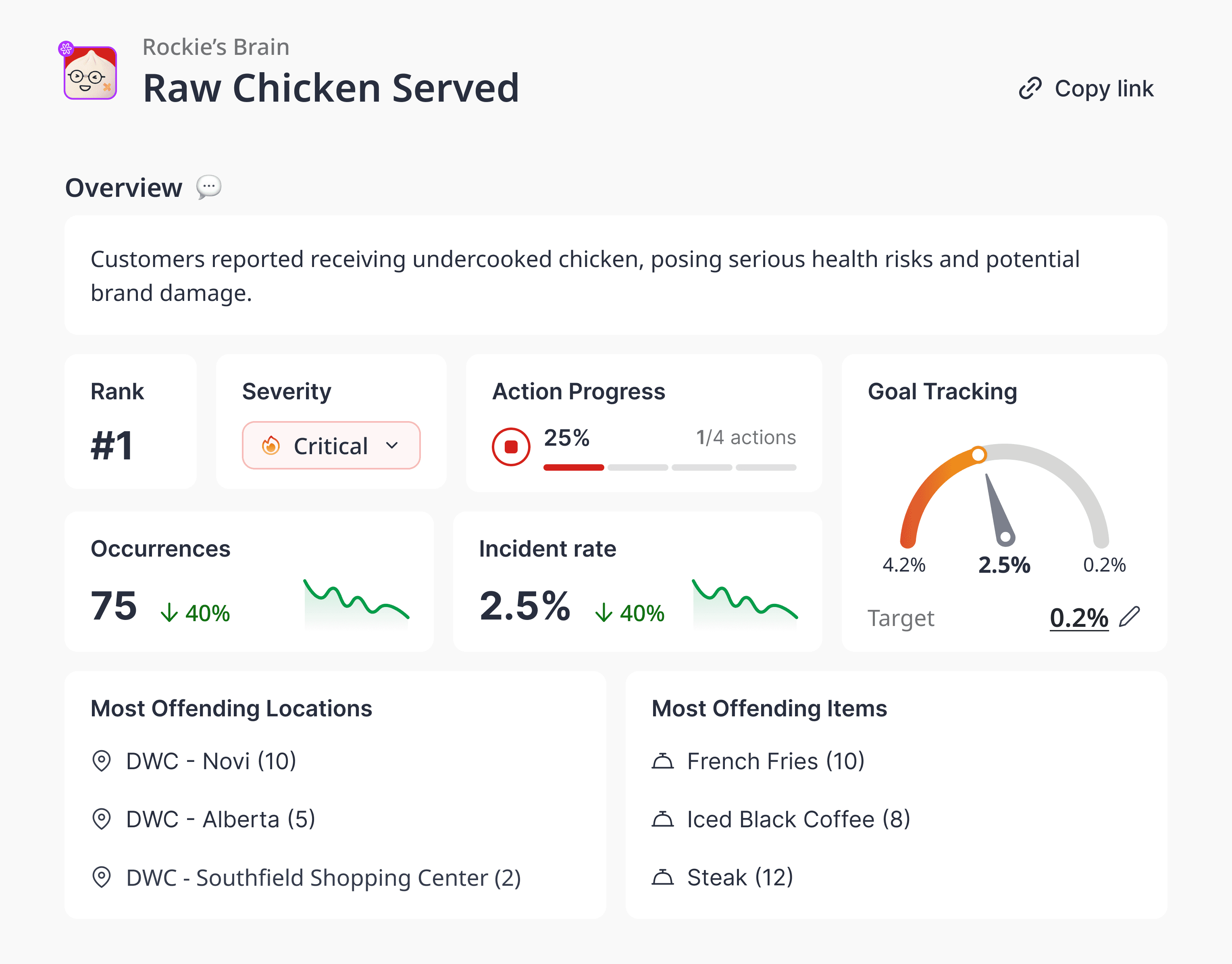
Track the full Loyalty Recovery Journey from Eligible → Issued → Redeemed, so you can finally see whether the points and rewards you issued actually brought the guest back.
Feed every loyalty event into the CDP and Care Analytics, giving you one unified view of guest behavior, recovery ROI, and program performance across every location.
If you already run a loyalty program but can't tell whether your service recovery is actually recovering revenue, that's the gap Momos closes.
Restaurant Loyalty Software: FAQ
What is restaurant loyalty software?
Restaurant loyalty software runs a rewards program that encourages guests to come back. Guests earn points, visits or stamps when they order, then redeem rewards in store or online. Most tools also let you send targeted offers by email, SMS or push to bring quiet regulars back.
Is a loyalty program worth it for a small restaurant?
It often is, because your regulars visit more often, spend more and recommend you to friends. You don't need a big tech budget to start. Small restaurants can use loyalty built into their POS or a simple digital stamp card with no hardware or POS integration.
What should I look for in restaurant loyalty software?
Check that it integrates with your POS, online ordering and reservation tools, and that guests can earn at one location and redeem at another. Segmentation matters too, so you can spot guests who are about to churn and talk to each group differently. Finally, look for metrics you can act on, like repeat visit rate, days between visits and lifetime value.
Should I use my POS's built-in loyalty or a separate platform?
Built-in loyalty is simpler, since there's no second tool to log into and no data to sync. The trade-off is that it only works inside that POS ecosystem. Standalone platforms offer deeper segmentation, subscriptions and personalization, which suits multi-location chains with marketing teams.
What types of loyalty programs work for restaurants?
Common models are spend-based points, visit-based points, tiered memberships and digital stamp cards. Spend-based points suit fine dining, while visit-based points suit a quick-service cafe. Some brands also reward top guests with perks beyond discounts, like reservations or secret menu items, which protects margins.
How can loyalty points help recover unhappy guests?
Issuing points or a reward when a guest complains about a bad meal or missed points can bring them back. Momos works on top of your existing loyalty software so support agents can issue points, rewards and missed-entry credits from the support thread, within brand-level recovery policies. It then tracks whether those rewards were redeemed and the guest came back.
 AI agents automate all guest interactions, 24/7, across all locations of your restaurant.


" transform="translate(3.219 19.212)" width="152.45224485148515px"/><path d="M 0 11.619 C 7.071 11.39 33.491 21.738 40.35 21.268 C 38.499 18.19 37.116 14.915 35.507 11.625 C 33.7 7.867 32.587 3.926 31.702 0" fill="transparent" height="21.28391189647101px" id="I9fuJaf7q" stroke-dasharray="" stroke-linecap="round" stroke-linejoin="round" stroke-width="4.97" stroke="rgb(0, 0, 0)" transform="translate(139.727 55.754)" width="40.34950693069311px"/></svg>)