12 Best Restaurant Automation Software (2026)
Written By: Vincent Nguyen

TLDR: The 12 tools to automate workflows in your restaurants include Momos (for customer support + guest experience), followed by Presto Automation, ConverseNow, SoundHound AI, Deliverect, and Otter for ordering and drive-thru, Miso Robotics for the kitchen, and Restaurant365, Jolt, MarketMan, Apicbase, and MarginEdge for inventory and food cost management.
If you're running a restaurant, you probably know how much smooth day-to-day operations shape your bottom line.
At one location, you may have to handle everything manually. However, the more you scale your operations, the more complex it becomes.
To maintain smooth operations, you need to find areas that can be automated to improve efficiency. Those areas are usually
In this article, we're going to share with you:
How you should approach automation in your restaurants
Good areas to apply automation
Good software that can automate the workflows in those areas
Their key features and pricing (if publicly available)
Let's dive right in!
What To Automate In A Restaurant?
Automation works best when the task is:
Repetitive and monotonous
Predictable
Time consuming to do manually
That's why these areas in restaurant operations saw the most application of automation software:
Ordering and Drive-through
Customer Support
Ticket management
Inventory management
Labor & scheduling
12 Best Restaurant Automation Software In 2026
With that being said, here is our list of 12 best restaurant automation software to consider:
1. Momos
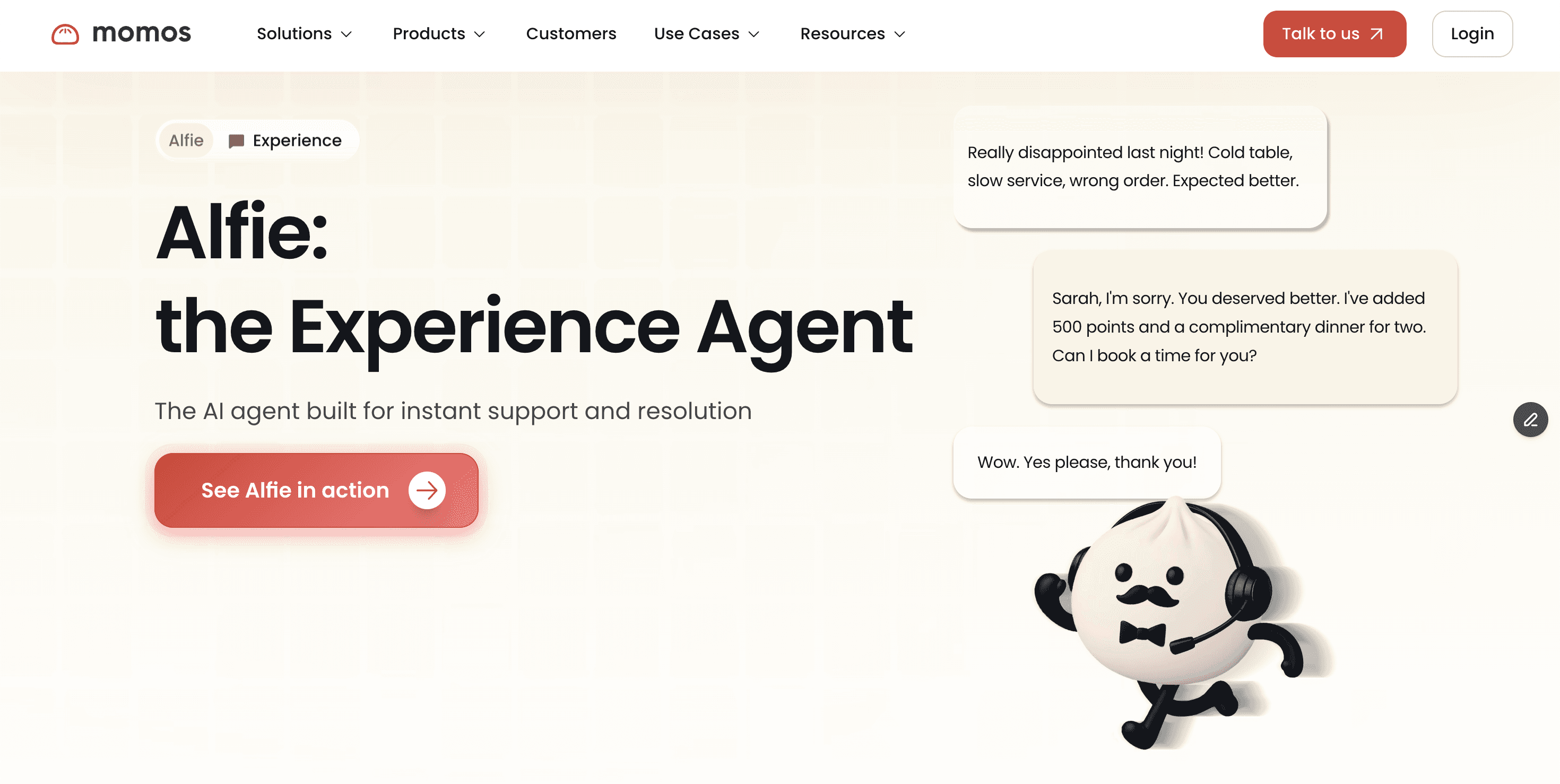
Momos is an AI-powered guest experience solution built for fast food restaurants. It has helped leading enterprise brands like Burger King, Papa Murphy's, and Shake Shack scale customer support across 30,000+ store locations worldwide.
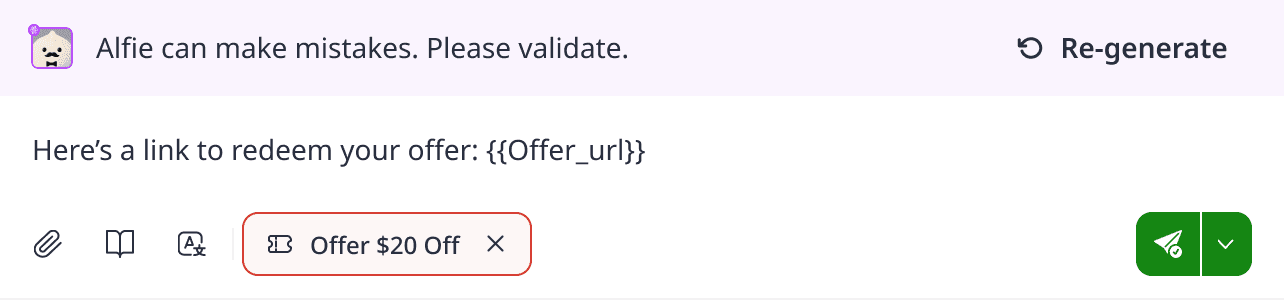
Let's meet Alfie firts. Alfie is Momos AI agent for instant support. Whenever a ticket/review comes in, Alfie immediately reads it, categorizes, and crafts an on-brand response within minutes.
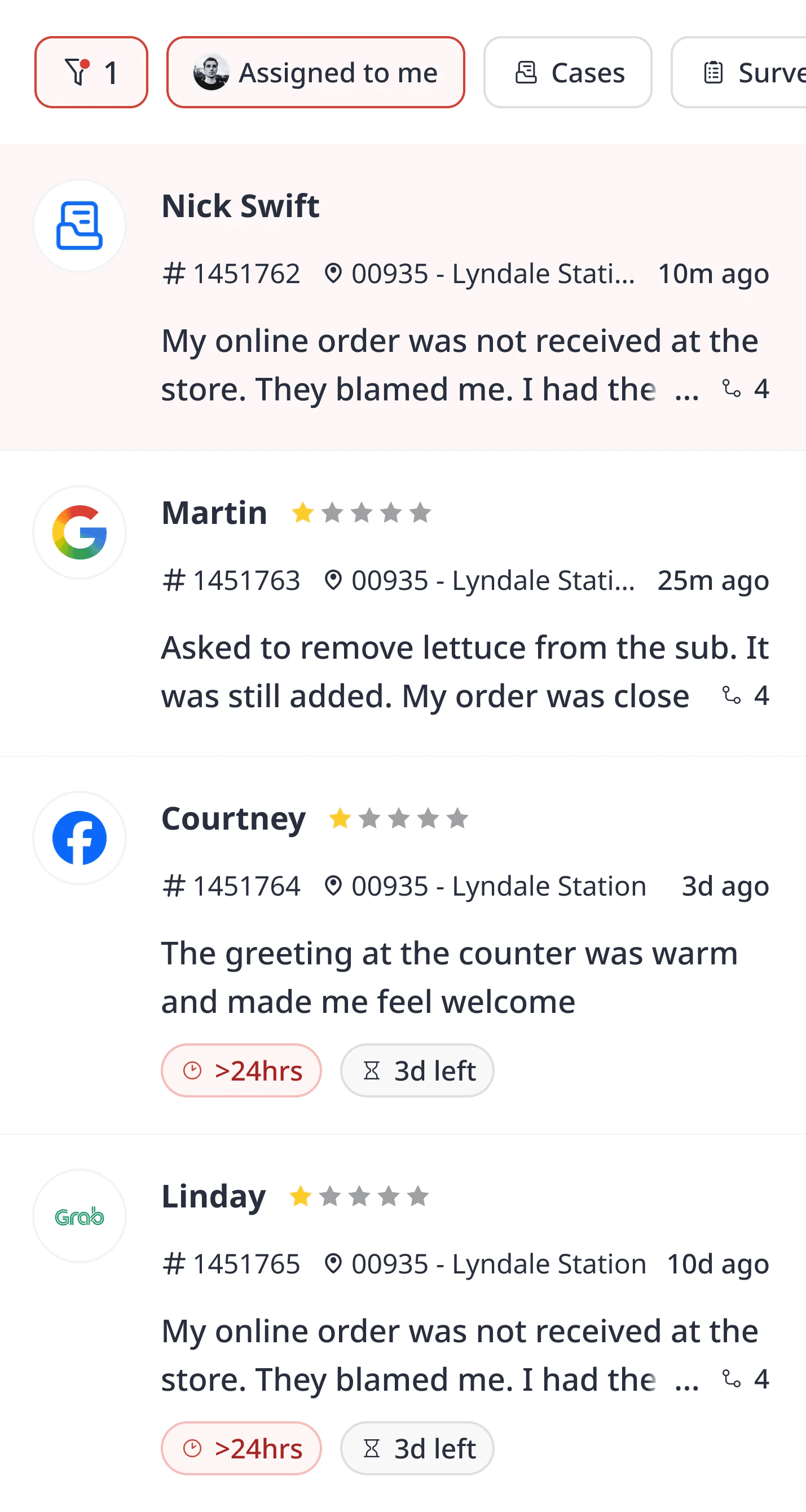
For example, as you can in the Unified Inbox here, Alfie has organized all reviews from Google, Yelp, Instagram, and more into one place. He has crafted a response to a 1-star review from Nick Swift.
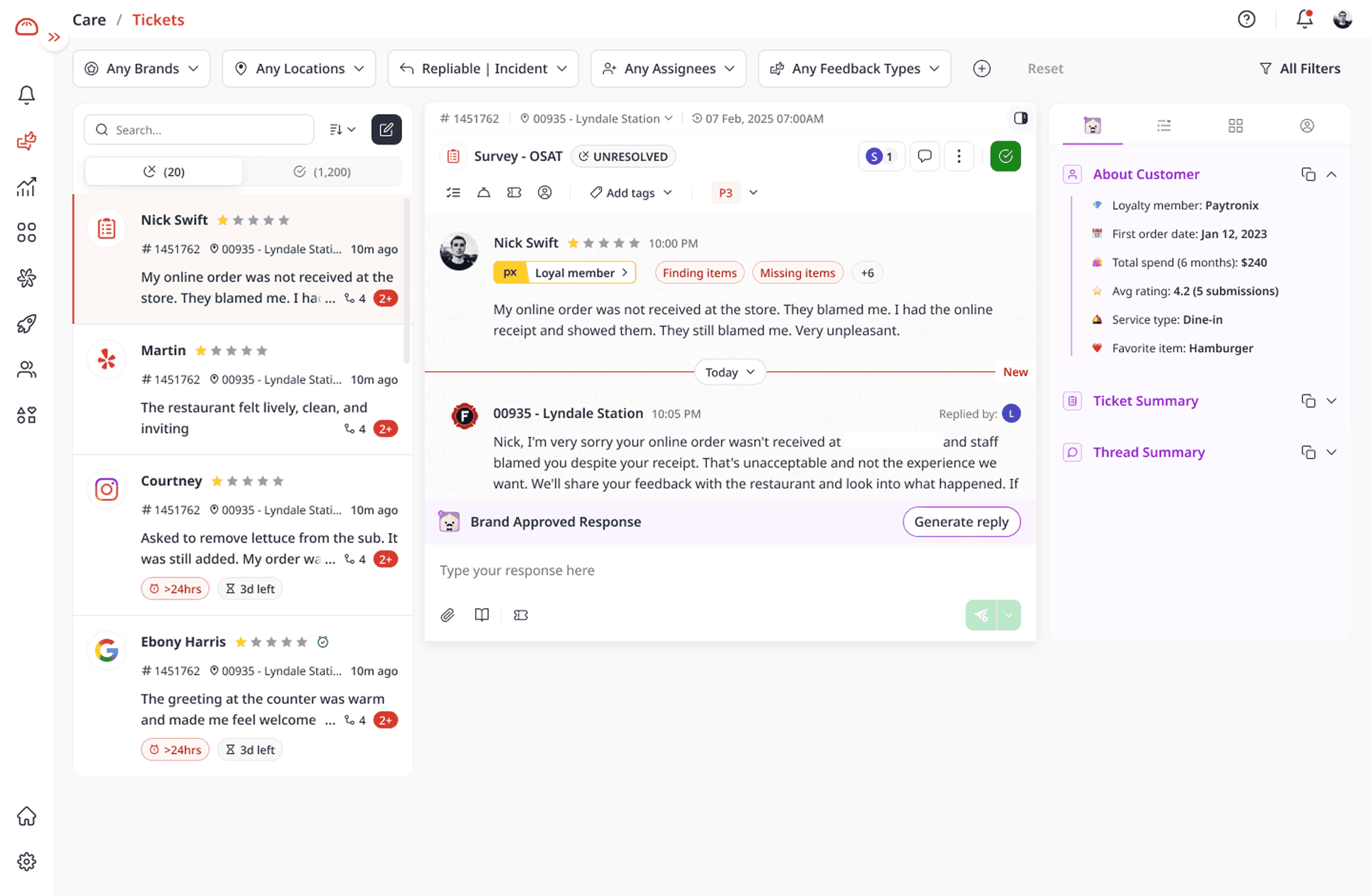
After that, Rockie, the Intelligence Agent for operational insights, steps in.
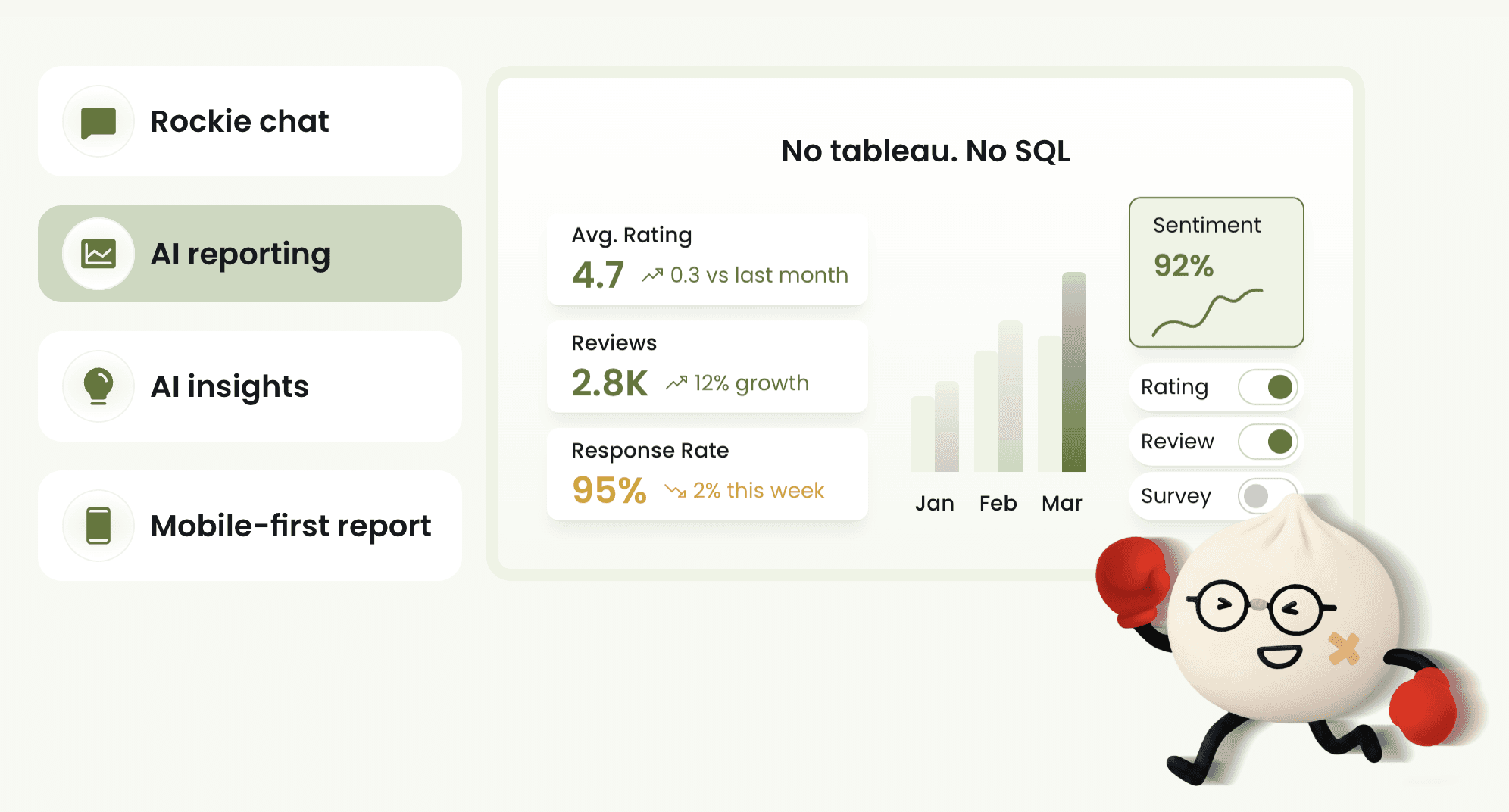
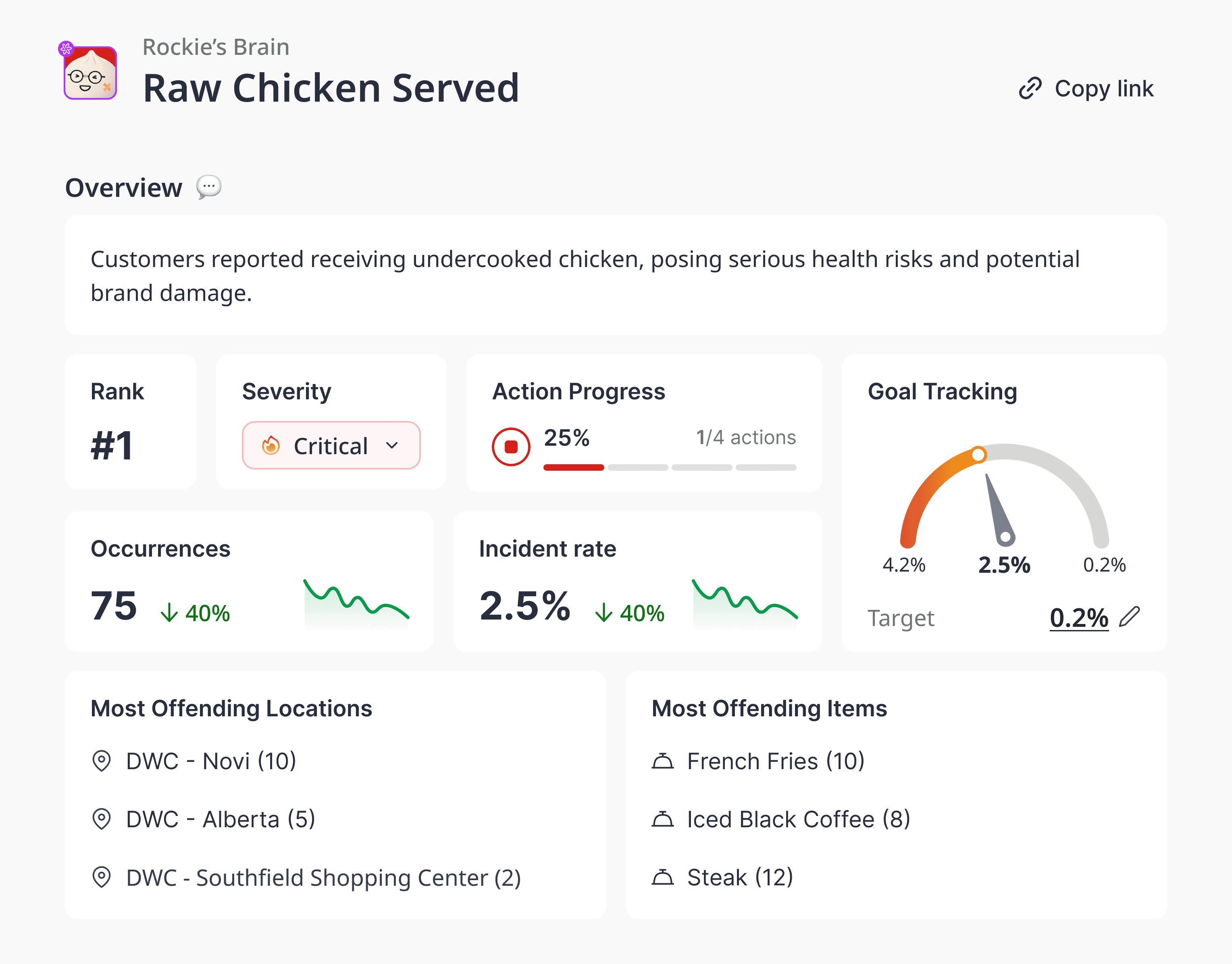
Rockie can read guest sentiments from all of those reviews and surfaces trends.
From his dashboard, you immediately know which location delivers good guest experience and which doesn't. He even ranks locations against brand standards so HQ knows where to focus.
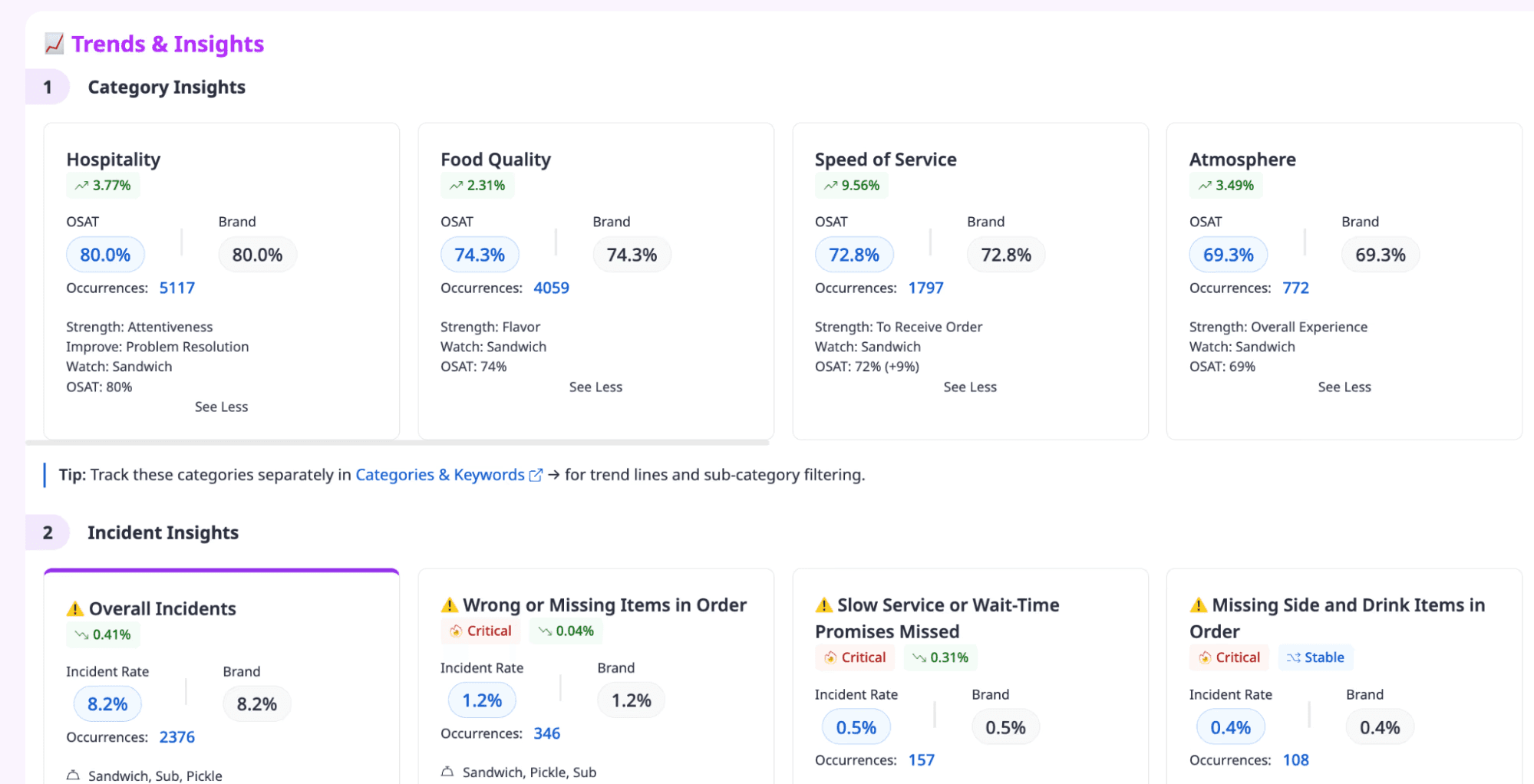
For example, this is a dashboard from a global fast food franchise (we're sure you heard their name before 😉). They have pretty good OSAT (Overall Satisfaction) score across 4 areas of Hospitality, Food Quality, Speed of Service, and Atmosphere. There are incidents here and there, and you can see it all reported in the dashboard:
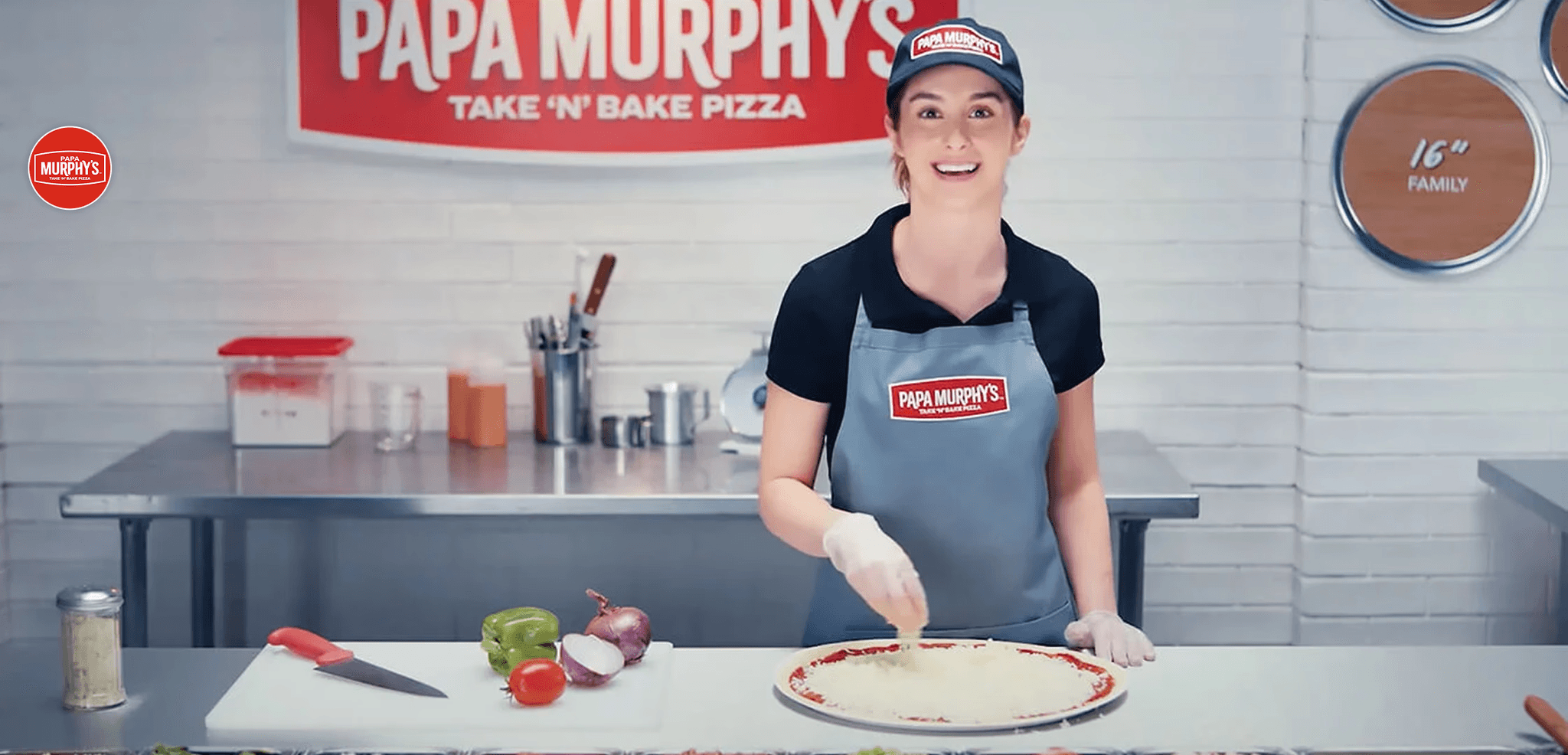
Papa Murphy's, one of the largest take-and-bake pizza chains in North America, wants to keep track of customer sentiment across their massive franchise network. With Momos, they successfully centralized review monitoring across every location — surfacing patterns, flagging underperforming stores, and enabling managers to respond faster than ever before.

2. Presto Automation
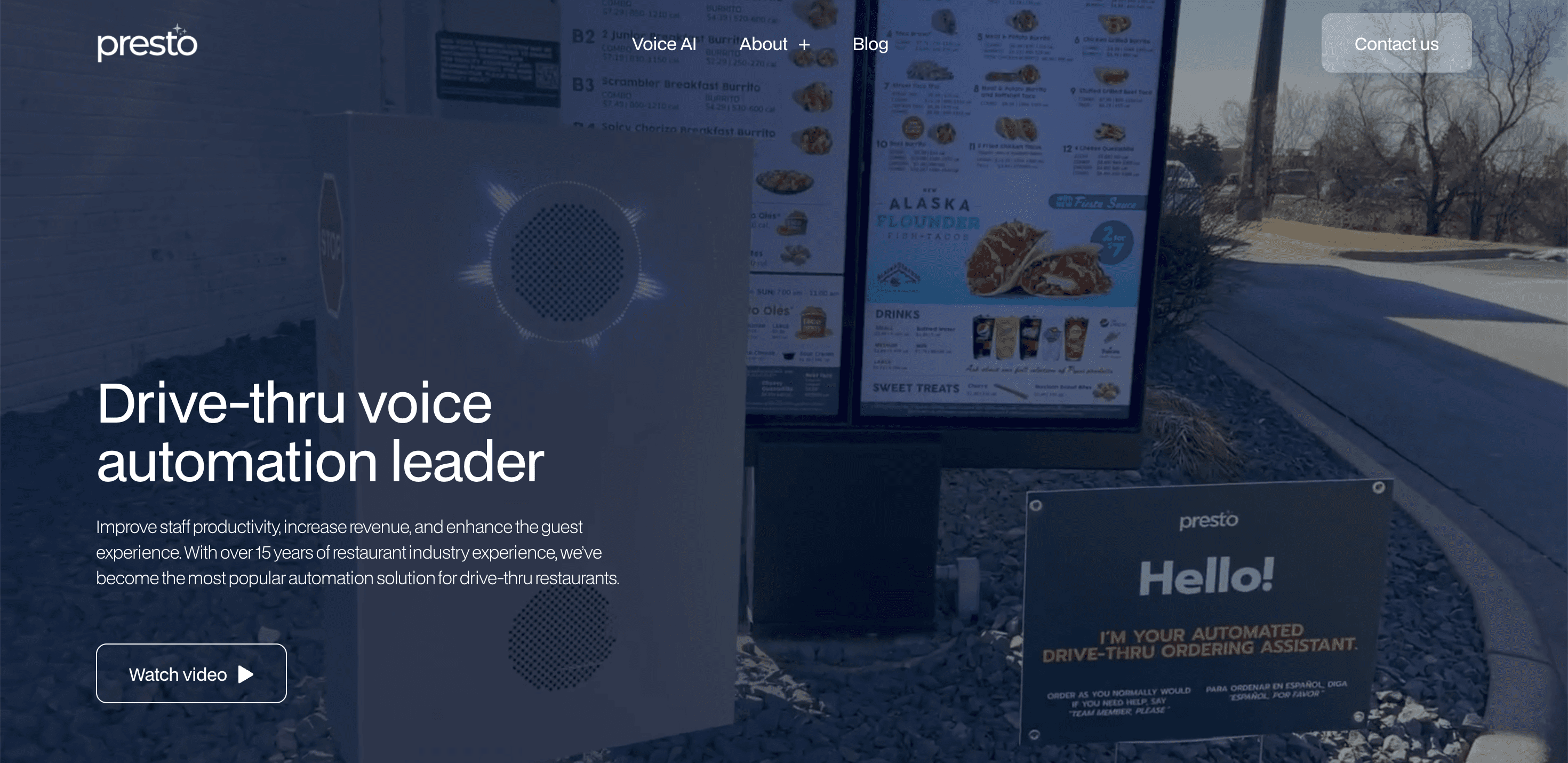
Website: Presto Automation
Category: AI-driven voice ordering for drive-thru
Presto Voice is an automation solution to take drive-thru orders for Quick-service restaurants. It uses in-house NLU and LLM technology that runs through existing headset and POS hardware.
Some of the major customers of Presto Automation include Hardee's, Wienerschnitzel, Captain D's, and Fazoli's, along with Taco John's.
Key features: Multi-language drive-thru voice ordering, context-aware upselling, POS and headset integration, centralized menu management across locations
What makes them stand out: Presto positions itself as the Voice AI market leader for restaurant drive-thrus, and it recently partnered with ElevenLabs to roll out more lifelike voice technology.
Pricing: Custom pricing based on locations.
It's a great fit for: Multi-unit QSR chains looking to automate drive-thru order-taking
3. ConverseNow
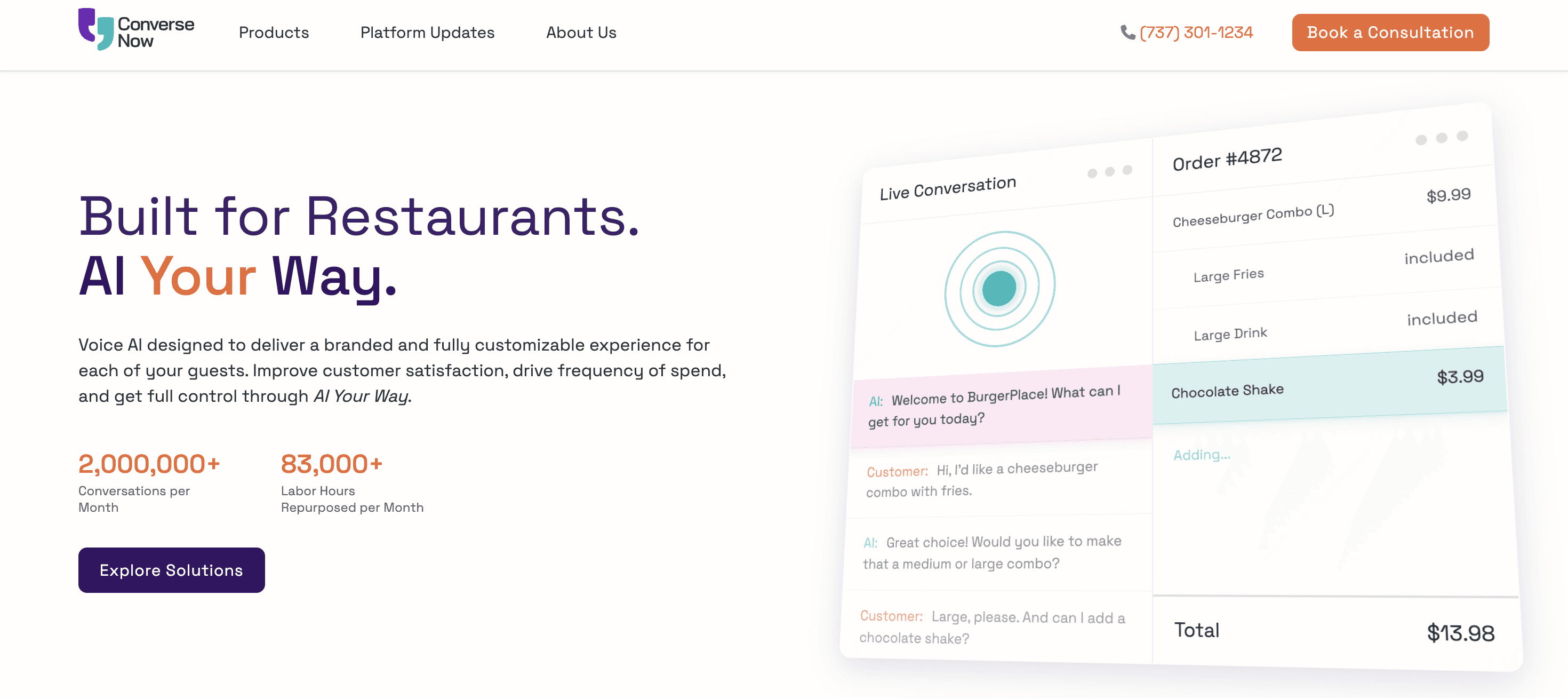
Website: ConverseNow
Category: Conversational voice AI for phone & drive-thru
ConverseNow deploys virtual ordering assistants that handle phone and drive-thru orders in natural, conversational language, pushing orders straight into your POS so staff need no extra training.
Some major clients of ConverseNow include Domino's, Wingstop, Fazoli's, Blake's Lotaburger, and Anthony's Coal Fired Pizza.
Key features: Conversational phone and drive-thru ordering, dynamic upsell, POS integration, English and Spanish support
What makes them stand out: Natural, LLM-powered conversation that has measurably lifted guest satisfaction scores.
Pricing: Custom pricing based on locations.
It's a great fit for: Pizza and QSR brands where phone ordering is a big share of revenue.
4. Soundhound AI
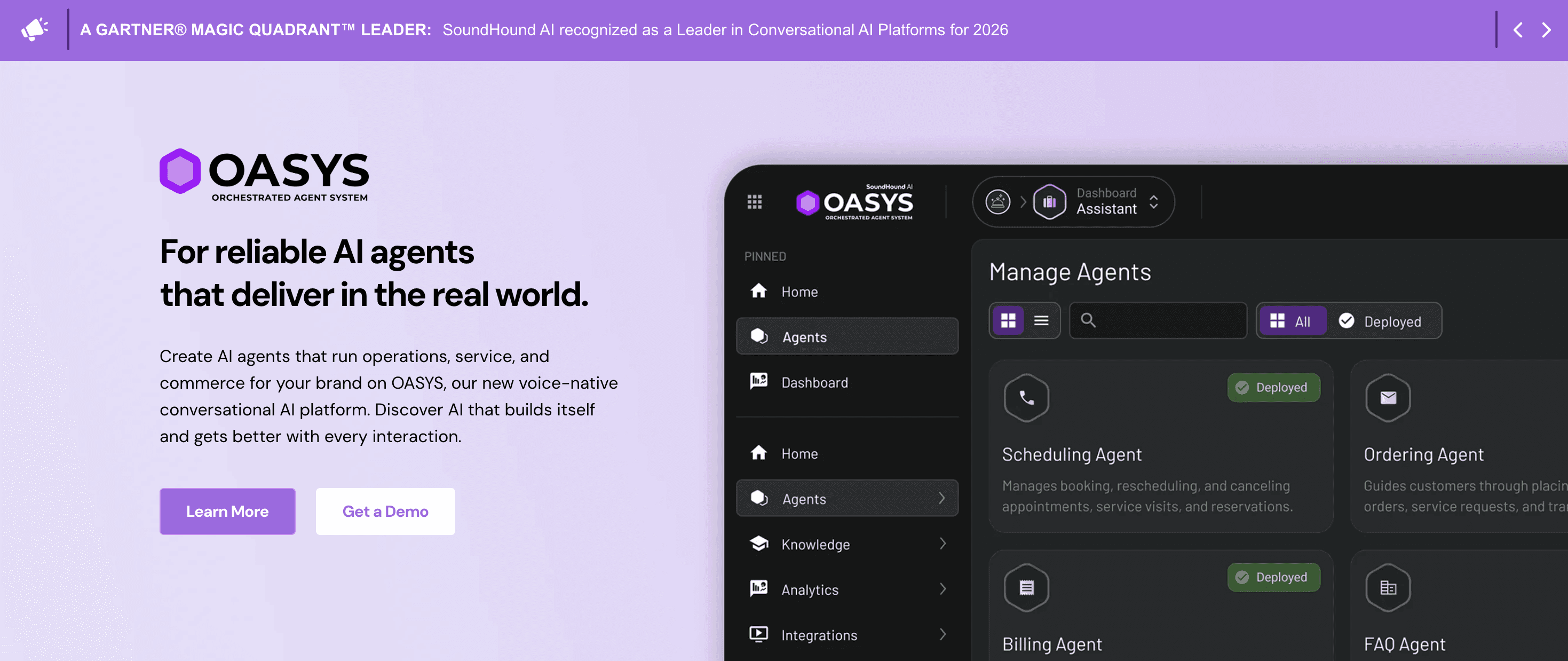
Website: SoundHound AI
Category: Voice AI for ordering & drive-thru
SoundHound AI gives restaurants a fully automated voice assistant that takes orders at the drive-thru, over the phone, and even through in-car systems, with no human in the loop. It has become one of the most widely deployed voice ordering platforms in the industry.
Some major clients of SoundHound include Chipotle, Church's Texas Chicken, Jersey Mike's, and White Castle.
Key features: Drive-thru voice ordering, phone/call-to-order, text and scan-to-order, multilingual support, POS integration
What makes them stand out: End-to-end AI with no human agents, so it scales consistently across locations and channels.
Pricing: Custom pricing based on locations and channels; enterprise-oriented.
It's a great fit for: High-volume QSR brands that want to automate the drive-thru and phone lines at scale.
5. Deliverect
Website: Deliverect
Category: Restaurant order management and delivery automation
Deliverect connects a restaurant's delivery apps, online ordering channels, POS, and kitchen systems in one platform. It automatically sends orders to the right systems, synchronizes menus and item availability across channels, and reduces the manual work required to manage multiple ordering platforms.
Some major customers of Deliverect include McDonald's, Chipotle, Five Guys, and Pret A Manger.
Key features: Multi-platform order aggregation, POS integration, automated menu synchronization, real-time item availability updates, order routing, online ordering, delivery management, and centralized reporting
What makes them stand out: Deliverect acts as a central integration layer between a restaurant's ordering channels and back-office systems. Instead of staff manually entering delivery orders into the POS or updating menus across multiple platforms, Deliverect automates these processes and keeps information synchronized across channels.
Pricing: Not publicly listed; pricing depends on factors such as the number of locations, ordering channels, integrations, and features required.
It's a great fit for: Multi-location restaurants, restaurant groups, franchises, and operators managing multiple third-party delivery and online ordering channels.
6. Otter
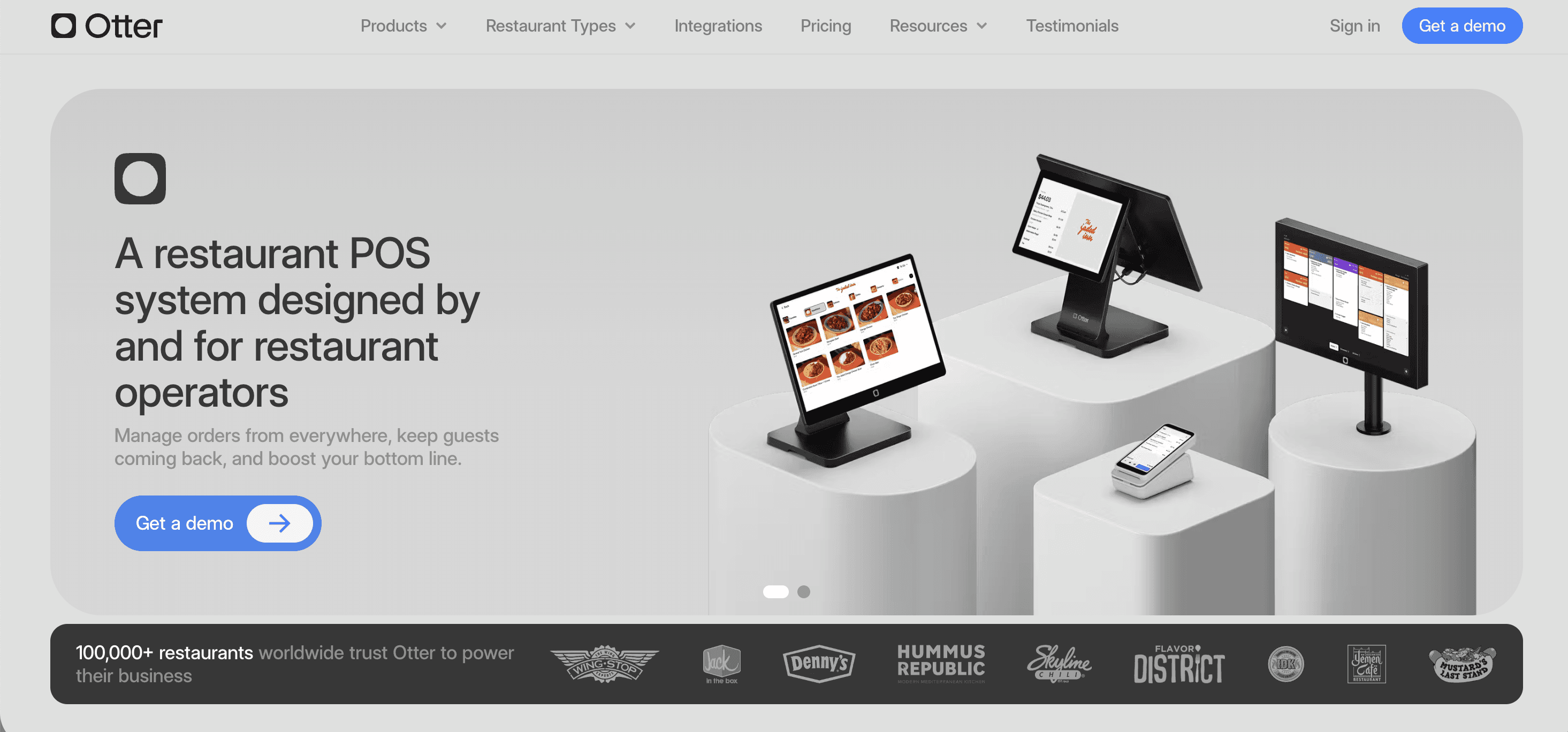
Website: Otter
Category: Order consolidation and POS automation
Otter takes orders coming from delivery apps, online ordering, kiosks, POS, and other channels, consolidates them, and automatically routes them to the right place.
Key features: Centralized order management across delivery platforms, auto-accept and auto-print, POS integration, prep-time and menu availability controls, plus automated marketing and payout insights
What makes them stand out: Otter eliminates manual order entry across multiple delivery apps from one device, with flexible bundles instead of a one-size-fits-all plan
Pricing: Plans start with a one-time $100 setup fee, with monthly or annual billing; pricing varies by bundle
Great fit for: Independent restaurants and small multi-unit operators
7. Miso Robotics
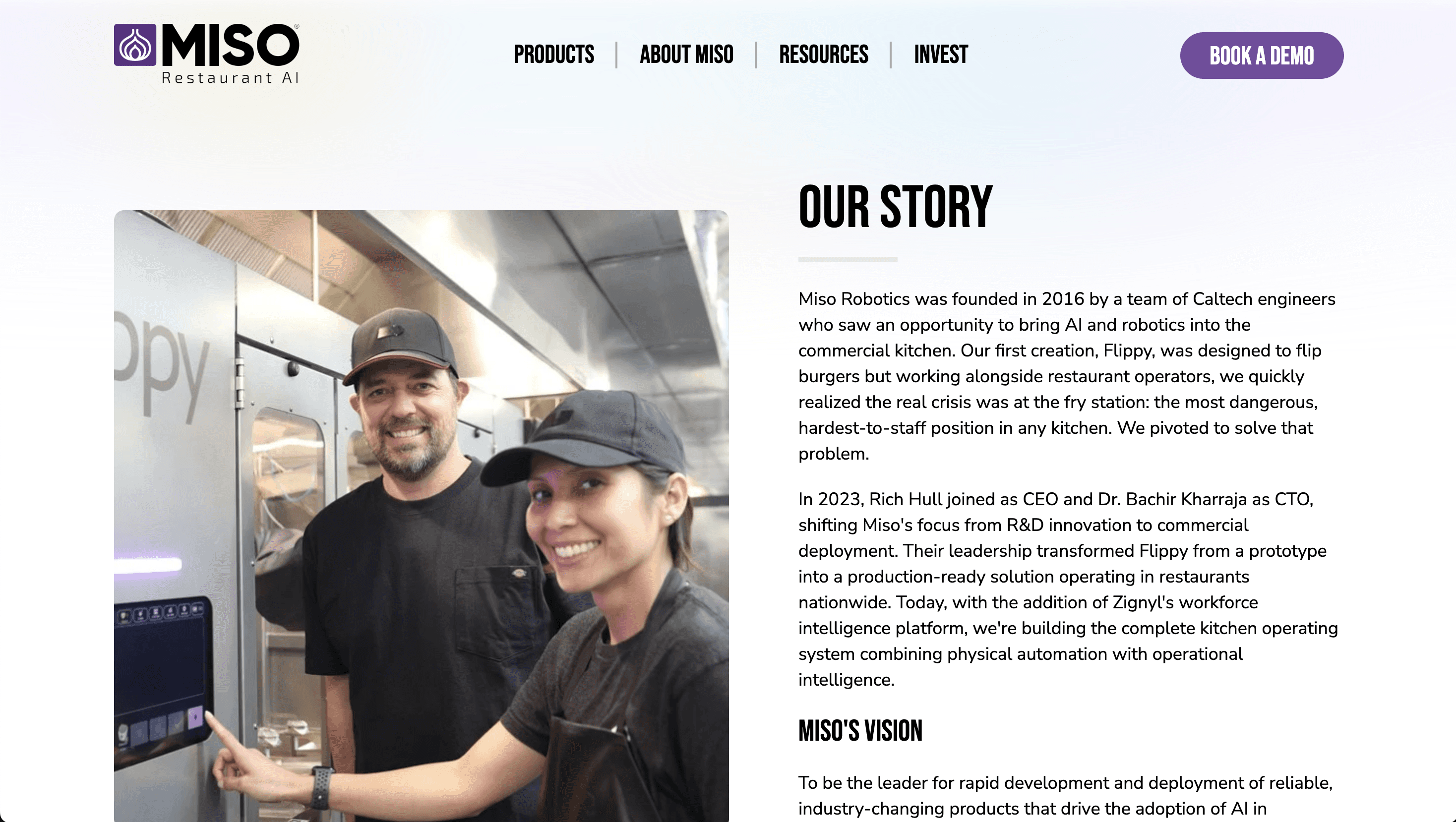
Website: Miso Robotics
Category: AI-powered robotic kitchen automation
Miso Robotics automates repetitive and labor-intensive restaurant kitchen tasks using AI-powered robots.
Its flagship Flippy robotic fry station automates frying and food handling, using computer vision and robotics to cook food consistently while allowing employees to focus on other kitchen tasks. Miso now combines its robotics with kitchen intelligence software to give restaurants greater visibility and control over operations.
Some major restaurant brands using Miso's technology include White Castle, Jack in the Box, Jersey Mike's, QDOBA, Jamba, Cinnabon, and Scooter's Coffee.
Key features: AI-powered robotic fry station, automated frying and food handling, computer vision, automated cooking controls, kitchen analytics, real-time operational visibility, and 24/7 monitoring and support
What makes them stand out: Miso focuses on automating physical kitchen work, rather than simply automating ordering or administrative processes. Flippy can handle the fry station faster and more consistently than manual workflows, while its modular design is built to fit into existing restaurant kitchens with minimal construction.
Pricing: Not publicly listed as a standard price. Miso offers flexible purchasing and leasing models, including monthly payments, with optional recurring fees for additional features and services.
It's a great fit for: Quick-service restaurants, restaurant chains, and high-volume kitchens looking to automate repetitive cooking tasks, improve consistency, increase throughput, and reduce the labor required at difficult kitchen stations.
8. Restaurant365
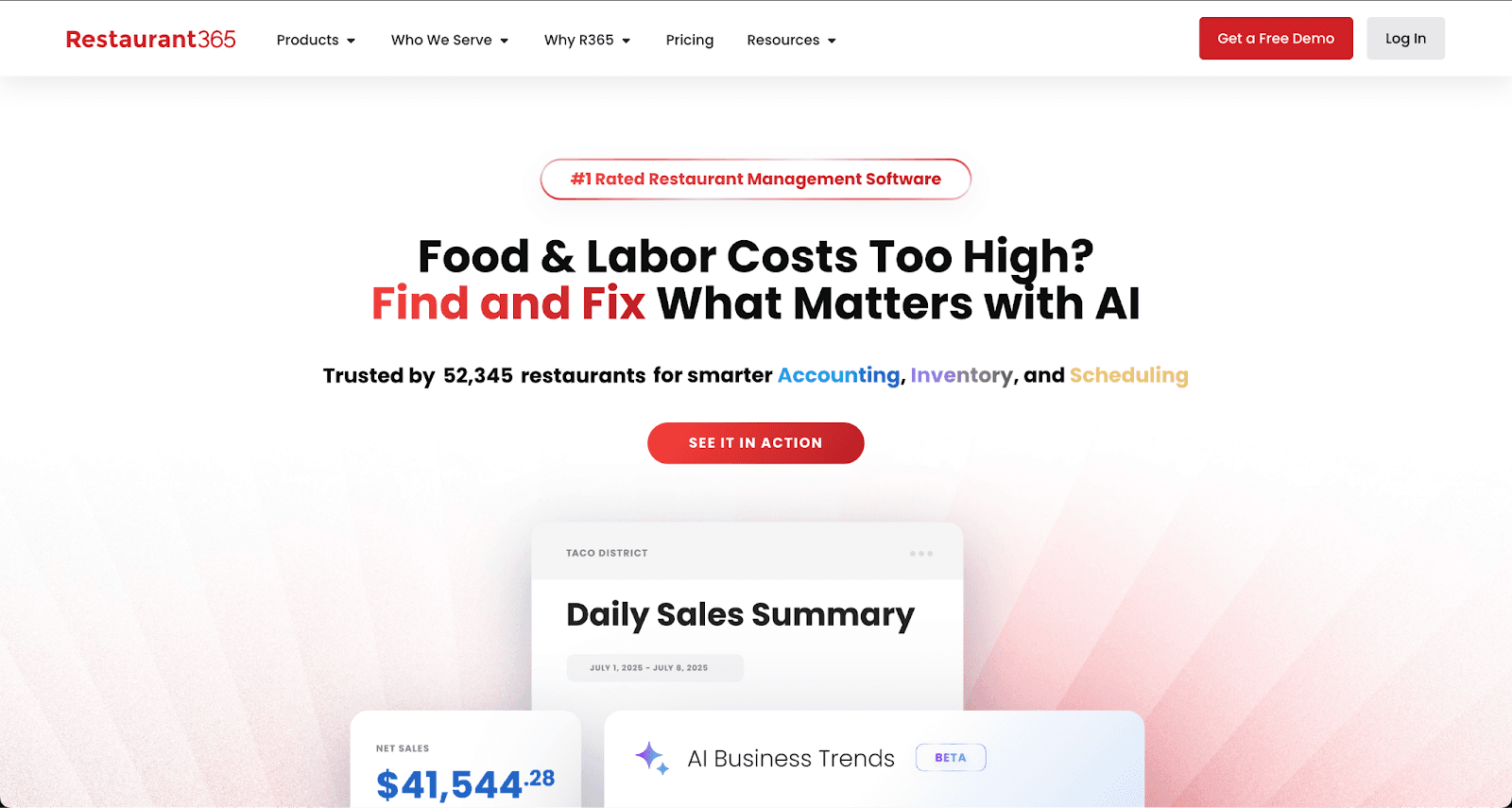
Website: Restaurant365
Category: Food & Labor cost analytics
Restaurant365 combines inventory management with full financial integration, making it a powerful solution for restaurants that want food cost control directly tied to accounting and COGS.
Key features:
Inventory valuation and usage tracking
Automated invoice processing
Real-time COGS and food cost monitoring
General ledger integration
Multi-unit consolidated reporting
Pricing: Modular pricing based on selected solutions (inventory, accounting, workforce). Typically starts in the mid-hundreds per month per location, with enterprise bundles available.
9. Jolt
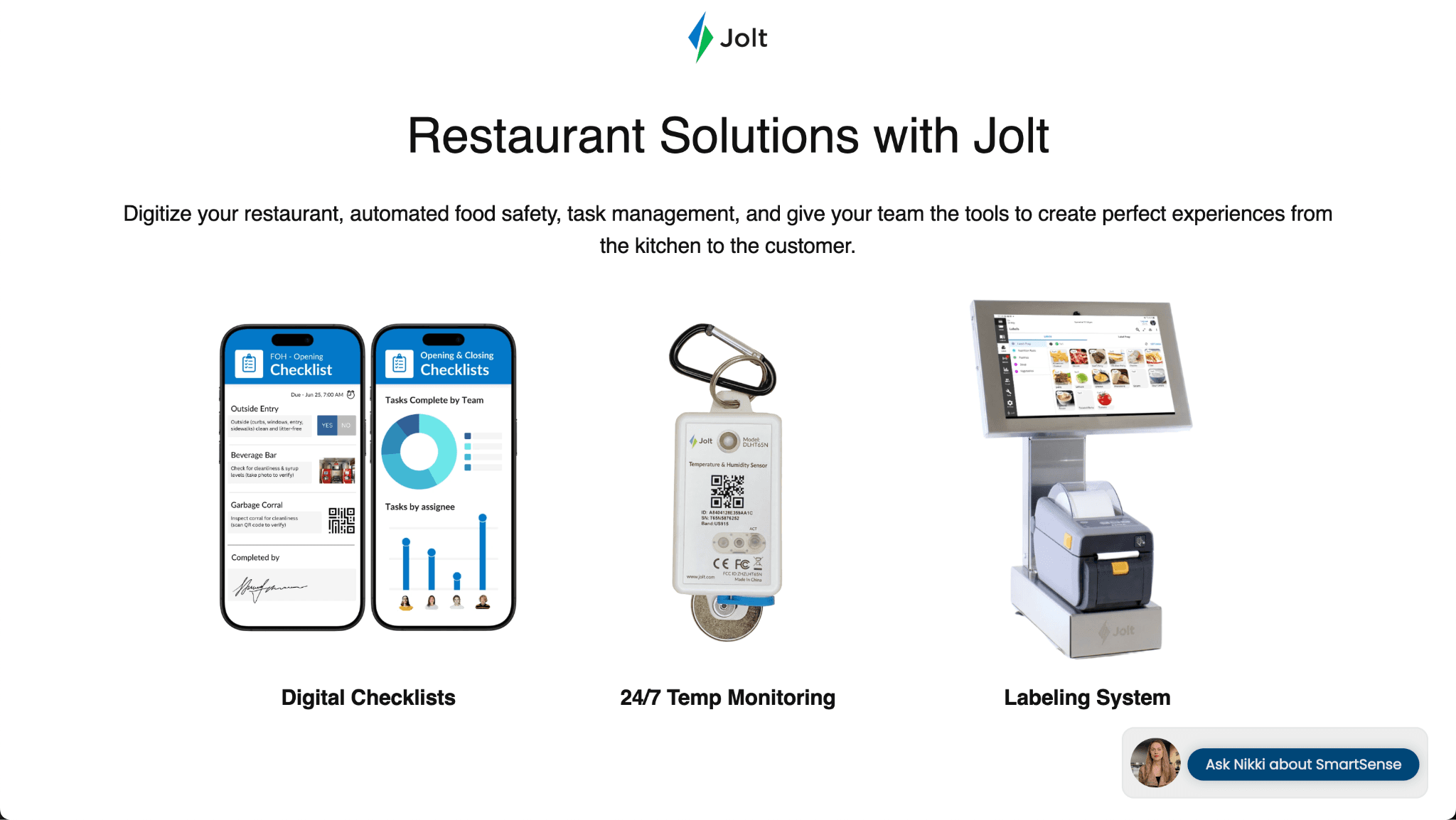
Website: Jolt
Jolt is an operations execution platform built for restaurants and multi-location businesses that need to replace paper processes with digital accountability across every shift.
Used by over 300,000 deskless workers globally, Jolt has completed more than 700 million tasks on its platform. It holds a 4.7/5 rating on Capterra and earns particularly strong marks for ease of use and compliance tools.
Notable restaurant clients include McDonald's, Smoothie King, Jimmy John's, and Buffalo Wild Wings.
Key features: Digital checklists & task management, food safety logs & temperature monitoring, date code labeling, employee scheduling, time & attendance, training library, information hub, performance tracking, and team communication
What makes them stand out: Jolt was founded by a franchise owner who built the tool to solve his own operational problems, and that origin shows in how the platform is designed. It is one of the most intuitive options on this list, with staff and managers typically adopting it with minimal training.
Pricing: Starts at approximately $90/month. A free demo is available.
It's a great fit for: Restaurant franchise groups that want an easy-to-deploy, shift-level operations tool with strong food safety compliance and frontline accountability built in.
10. MarketMan
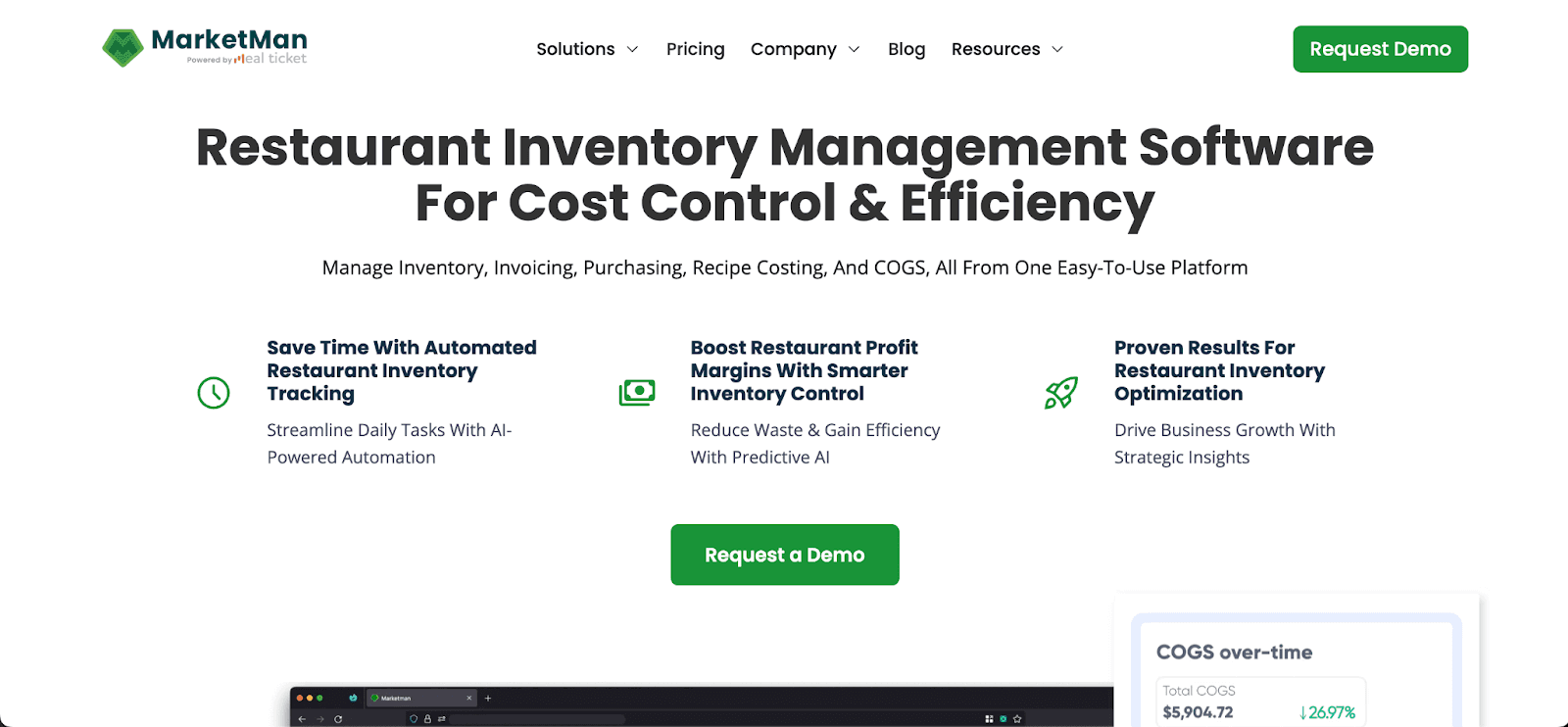
Website: MarketMan
Category: Restaurant inventory & food cost management software
MarketMan is an inventory and food cost management platform purpose-built for restaurant operators.
With MarketMan, you get real-time inventory tracking, automated purchase orders, recipe management, and vendor invoice management, all in one place:
Some major clients of MarketMan include Bareburger, Dickey's Barbecue Pit, and Thunderbird Food & Drink.
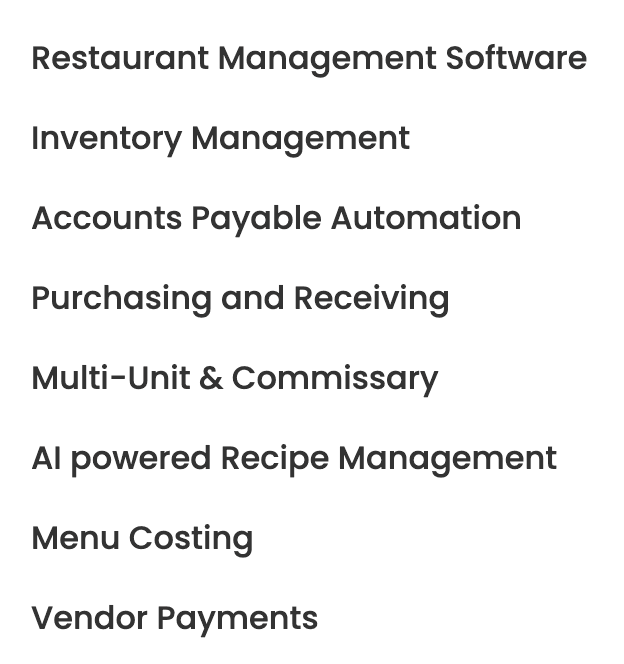
Key features: Inventory management, recipe & menu costing, purchase order automation, supplier management, waste tracking
What makes them stand out: Laser-focused on food cost control. MarketMan gives operators exact visibility into where every dollar of food spend is going.
Pricing: Plans start at approximately $239/month per location, with custom enterprise pricing for larger groups.
It's a great fit for: Restaurant groups looking to tighten food cost margins and reduce waste.
11. Apicbase
Website: Apicbase
Category: Inventory and Food Cost analytics
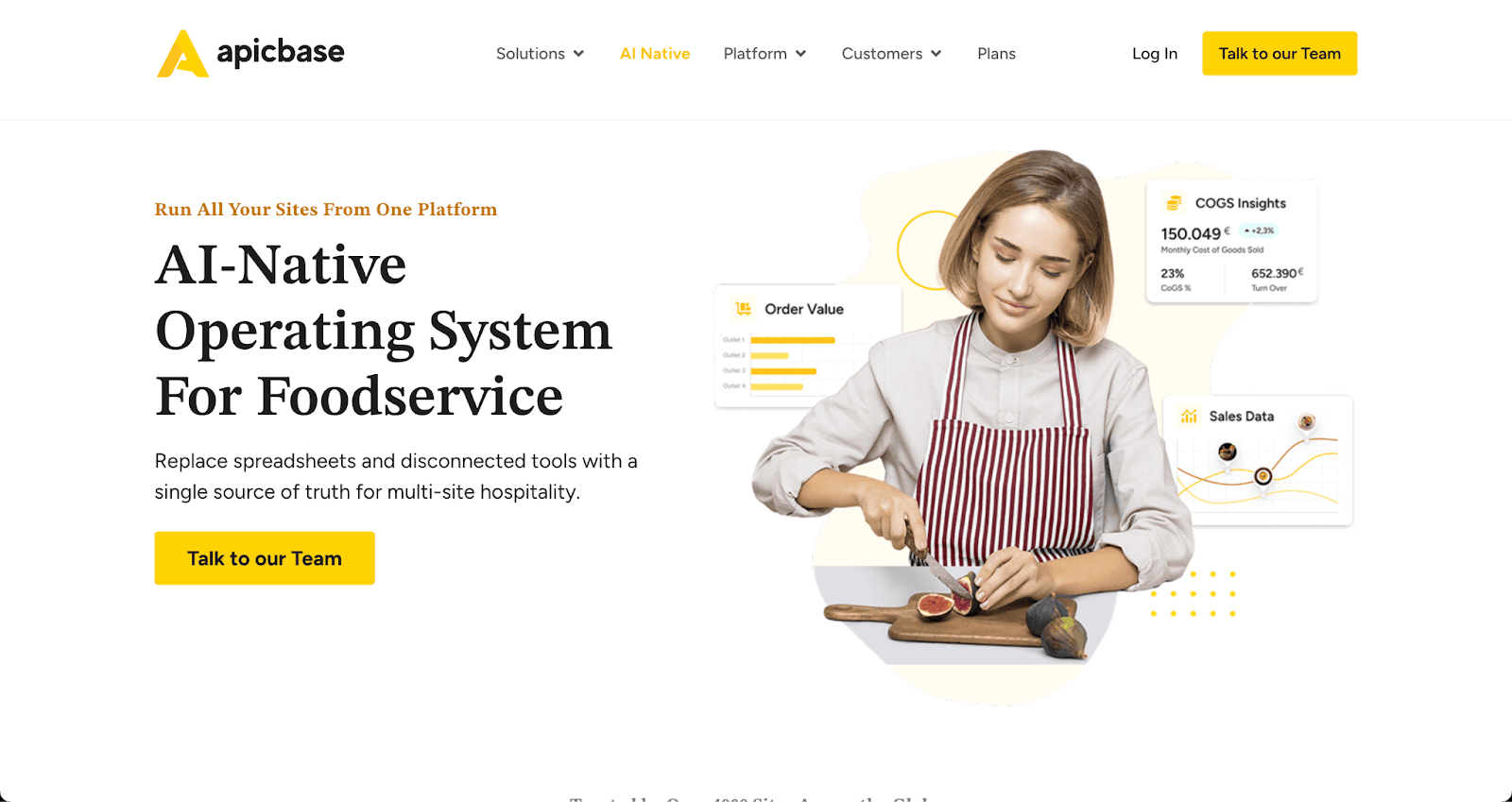
Apicbase is designed for professional kitchens and multi-unit operators who need tight control over recipes, inventory, and supplier management from a centralized system.
Key features:
Advanced recipe and ingredient costing
Inventory tracking with real-time stock visibility
Supplier management and purchasing automation
Portion control and waste tracking
Multi-location reporting and cost standardization
Pricing: Custom pricing depending on number of locations and modules selected; typically positioned for growing and enterprise restaurant groups.
12. MarginEdge
Website: MarginEdge
Category: Invoice automation & real-time food cost (Inventory)
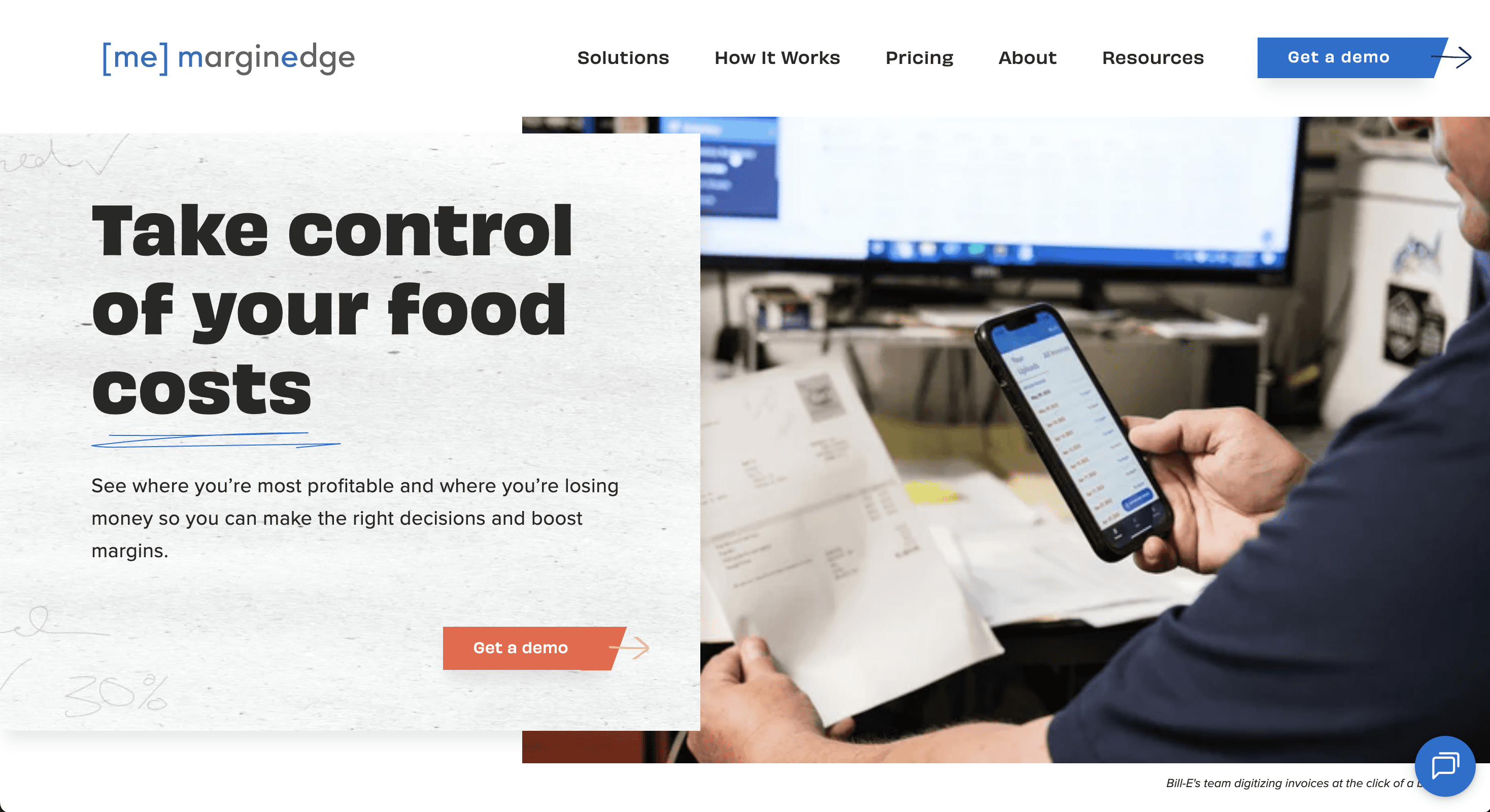
MarginEdge connects your POS and accounting system to automate invoice entry. It comes with analytics on daily P&Ls, live food costs, and recipe-level insights.
Some major customers of MarginEdge include Shake Shack, Clover Food Lab, and Old Ebbitt Grill & Clyde's.
Key features: Automated invoice processing, daily P&L, recipe and menu costing, bill pay, inventory counts
What makes them stand out: Cuts back-office paperwork to a few minutes a day and connects invoices straight to accounting.
Pricing: $350/month per location, or $500/month with Freepour.
It's a great fit for: Operators from single units to franchise groups who want food cost and accounting connected.
What Tools To Automate Tasks In A Restaurant?
Guest Experience & Customer Support: Momos
Ordering & Drive-Thru: Presto Automation, ConverseNow, SoundHound AI, Deliverect, Otter, Hi Auto, Valyant AI
Kitchen & BOH: Miso Robotics, Chef Robotics, Picnic
Inventory & Food Cost: Restaurant365, Jolt, MarketMan, Apicbase, MarginEdge, Craftable, xtraCHEF
Frequently Asked Questions
How Much Does Automation Software Cost for Growing Restaurant Chains?
Restaurant automation software typically costs $50–$500+ per location per month, depending on the type of automation, number of locations, and features. Larger restaurant chains may pay more for enterprise plans, integrations, and custom workflows.
What Are Some of the Best Kitchen Automation Software?
Some popular options include Otter, Deliverect, Toast, and KitchenHub. They can help automate tasks such as order management, kitchen workflows, delivery orders, and POS integrations.
What Are Some of the Best Restaurant Automation Software?
Popular restaurant automation software includes Momos, Toast, Restaurant365, 7shifts, and Deliverect. They cover areas such as customer service, operations, scheduling, ordering, and reporting.
What Are Some of the Best Restaurant Operations Automation Software?
Options include Restaurant365, Toast, 7shifts, Jolt, and Fourth. These tools can automate scheduling, inventory, payroll, task management, and other day-to-day restaurant operations.
 AI agents automate all guest interactions, 24/7, across all locations of your restaurant.

" transform="translate(3.219 19.212)" width="152.45224485148515px"/><path d="M 0 11.619 C 7.071 11.39 33.491 21.738 40.35 21.268 C 38.499 18.19 37.116 14.915 35.507 11.625 C 33.7 7.867 32.587 3.926 31.702 0" fill="transparent" height="21.28391189647101px" id="I9fuJaf7q" stroke-dasharray="" stroke-linecap="round" stroke-linejoin="round" stroke-width="4.97" stroke="rgb(0, 0, 0)" transform="translate(139.727 55.754)" width="40.34950693069311px"/></svg>)