In Southeast Asia, AI Isn’t Just Inevitable. It’s Local
Written By: Amanda Jacob
⟦embed:keyTakeaways⟧
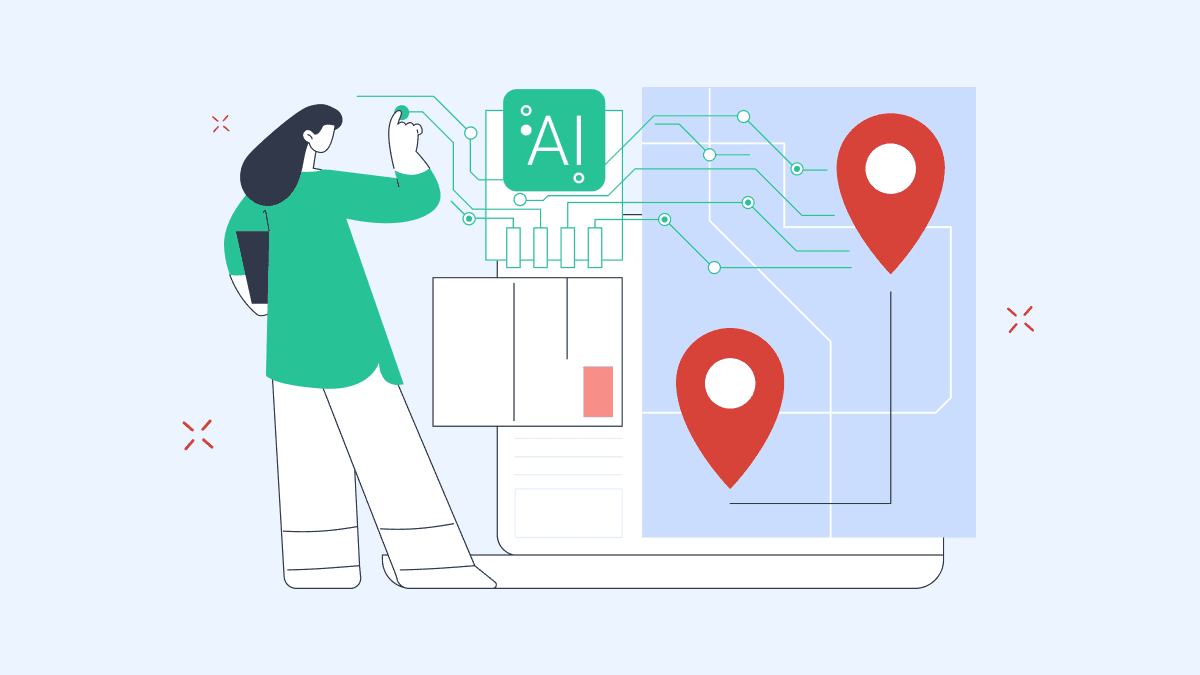
If Silicon Valley's scale shapes AI in the West, AI in Southeast Asia is shaped by something more powerful: context.
From hyper-local languages to dense urban sprawl, from informal economies to island-wide logistics—Southeast Asia doesn’t need AI that’s just powerful. It needs AI that understands where it’s operating.
As adoption across the region accelerates, one thing is becoming clear: the most successful AI deployments aren’t generic. They’re deeply local.
Local Relevance Is the Killer Feature
While the West debates the ethics of AI-generated novels, Southeast Asian brands are asking: Can your chatbot speak Tagalog? Can your delivery model navigate Jakarta’s traffic? Can your voice assistant understand Manglish?
This region’s AI needs aren’t theoretical. They’re transactional.
“It’s not about general intelligence. It’s about contextual intelligence.”
— CEO, AI startup in Manila
Take Grab, for example. It didn’t just build a ride-hailing AI. It built one that accounts for cash payments, poor connectivity, and localized route optimization—because those factors matter far more than just model precision in this market.
Why Local Matters More Here Than Elsewhere
Three reasons explain why localization isn't optional in Southeast Asia:
1. Multilingual and Multicultural Complexity
Over 1,000 languages are spoken across the region.
Customer service, marketing, and even compliance must adapt to diverse dialects and cultural norms.
Large Language Models (LLMs) trained on Western corpora just don’t cut it. Startups are now training multilingual AI on local content: Malay, Vietnamese, Thai, Khmer, and beyond.
2. Infrastructural Diversity
From 5G-powered Singapore to rural areas with low-bandwidth SMS as the norm, AI has to flex.
Smart brands are building hybrid interfaces—combining AI chat in apps with voice bots for call-in orders or WhatsApp-based commerce.
3. Informal and Mobile-First Economies
A majority of the population accesses the internet via mobile.
Informal markets dominate sectors like food, transport, and retail.
This means AI must be embedded in everyday, accessible formats—like QR code menus or AI-powered WhatsApp ordering—rather than enterprise SaaS tools.
⟦embed:bnDuo⟧
Examples of Local AI in Action
Malaysia: Boost AI enables conversational payments and personalized finance via Bahasa-first interfaces.
Philippines: AI call routing at Telco companies now distinguishes regional accents to reduce dropped calls.
Indonesia: Bukalapak and Tokopedia are investing in AI to improve delivery ETA predictions across island provinces.
Vietnam: ELSA Speak uses localized NLP to help Vietnamese users learn English with a cultural context built in.
Southeast Asia’s Edge: Fast Feedback Loops
Localization isn’t just about language—it’s about iteration.
In Southeast Asia, AI development benefits from direct access to:
Dense urban testing grounds (e.g., Bangkok, Ho Chi Minh City)
Close government-private partnerships in smart city initiatives
An abundance of user behavior data across mobile commerce, social media, and ride-hailing
These conditions allow startups and enterprises to ship, learn, and re-train faster than in slower-moving economies.
⟦embed:bnAlfiePeek⟧
What Businesses Need to Do Differently
If you’re building or expanding AI in Southeast Asia:
Think Local First: Don’t assume Western-trained models will translate—linguistically or contextually.
Build for Bandwidth: Optimize your models and UI for mobile-first, sometimes offline environments.
Use Local Data Responsibly: Be transparent about training data, especially where data privacy laws are still emerging.
Find Local Partners: From NLP startups to regional dev shops, there’s deep talent already solving for these challenges.
Final Take
AI in Southeast Asia won’t be a carbon copy of what’s built in the US or China. It’s being built to fit—and shape—the local reality.
And that’s a competitive advantage. Because when AI reflects the people and places it serves, it doesn’t just work better. It gets adopted faster.
For every business decision-maker eyeing this region, the question is no longer if Southeast Asia will embrace AI. It’s whether your AI will embrace Southeast Asia.
AI in Southeast Asia: FAQ
Why does AI need to be localized in Southeast Asia?
The region's languages, infrastructure and economies vary so much that a generic model often misses the context. Customer service, marketing and even compliance have to adapt to diverse dialects and cultural norms. AI that understands where it's operating tends to work better and gets adopted faster.
Do Western-trained AI models work well in Southeast Asia?
Often they fall short, because models trained mostly on Western content struggle with local languages and context. That's why startups are training multilingual AI on local content in Malay, Vietnamese, Thai, Khmer and other languages. If you're deploying AI in the region, it's worth testing how well a model handles the dialects your customers actually use.
How does mobile-first behavior shape AI in Southeast Asia?
Since most people go online through their phones and informal markets dominate sectors like food and retail, AI has to live in everyday, accessible formats. Think QR code menus, AI-powered WhatsApp ordering or voice bots for call-in orders. Models and interfaces also need to work in low-bandwidth or sometimes offline conditions.
What are some examples of local AI in Southeast Asia?
Grab built ride-hailing AI that accounts for cash payments, poor connectivity and local route optimization. In Indonesia, Bukalapak and Tokopedia are investing in AI to improve delivery time predictions across island provinces. In Vietnam, ELSA Speak uses localized language processing to help people learn English with cultural context built in.
How should a business approach AI when expanding into Southeast Asia?
Start by thinking local first and don't assume a Western-trained model will translate linguistically or culturally. Build for mobile and limited bandwidth, be transparent about your training data where privacy laws are still emerging, and work with local partners. The region already has deep talent in language technology and regional development shops.



 AI agents automate all guest interactions, 24/7, across all locations of your restaurant.


" transform="translate(3.219 19.212)" width="152.45224485148515px"/><path d="M 0 11.619 C 7.071 11.39 33.491 21.738 40.35 21.268 C 38.499 18.19 37.116 14.915 35.507 11.625 C 33.7 7.867 32.587 3.926 31.702 0" fill="transparent" height="21.28391189647101px" id="I9fuJaf7q" stroke-dasharray="" stroke-linecap="round" stroke-linejoin="round" stroke-width="4.97" stroke="rgb(0, 0, 0)" transform="translate(139.727 55.754)" width="40.34950693069311px"/></svg>)