16 Best AI For Improving Restaurant Workflows
Escrito por: Vincent Nguyen

If you're running a restaurant, you probably know how much smooth day-to-day operations shape your bottom line.
When you're a single location, keeping orders accurate, shifts covered, and guests happy is manageable. But as you scale into a multi-location business or a franchise, speed and consistency get much harder to maintain across every store, every shift, and every channel at once.
That's exactly where AI tools for improving restaurant workflows shine through.
What To Look For In An AI To Improve Your Restaurant Workflow?
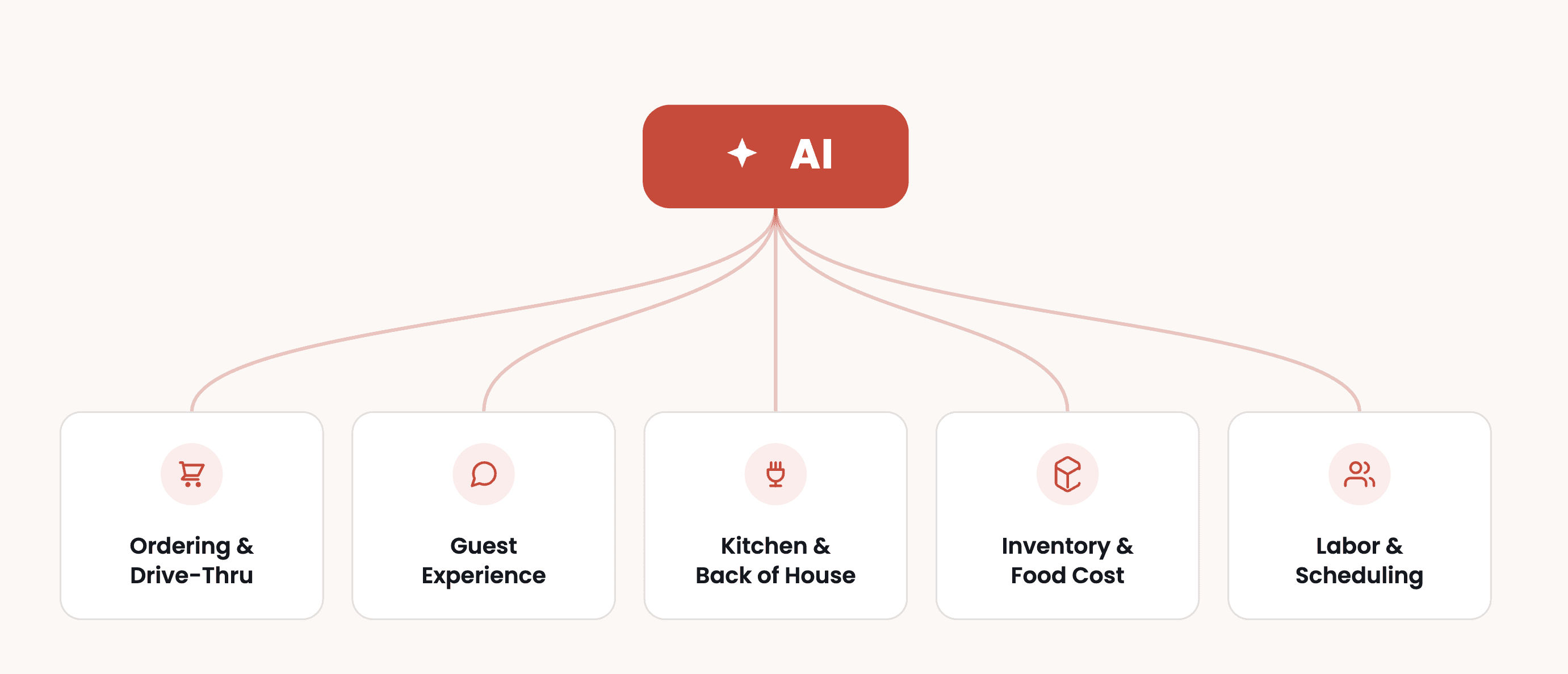
AI is a general-purpose tool, which means it can be applied to any aspect of your restaurant operations.
What makes an AI deployment successful or not is the implementation i.e. did you solve the right problem with AI?
Here are some ideas of how AI can help your restaurant workflow:
Ordering and voice AI. Voice assistants take drive-thru and phone orders in parallel, so no staff member is stuck on a headset during a rush. They confirm items and catch errors before they reach the kitchen, cutting the wrong and missing orders that drive the most complaints.
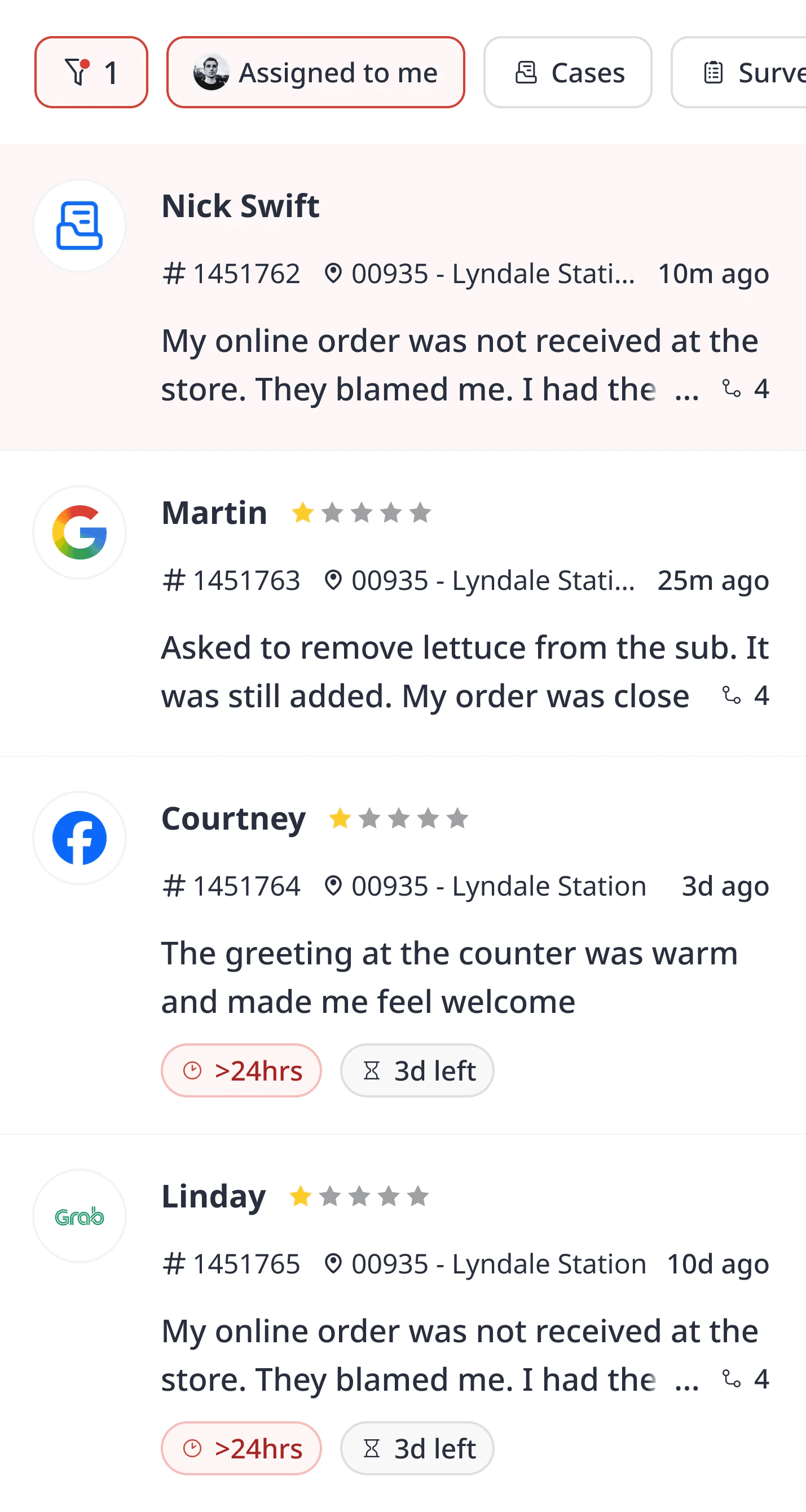
Guest experience and reputation. AI responds to reviews, messages, and questions across every channel and location instantly, so guests get answers without managers doing it by hand. It reads feedback at scale and surfaces which locations have a service or quality issue before it spreads across the brand.
Labor and scheduling. AI reads your sales history to forecast demand, then builds schedules that match staffing to actual traffic. That keeps you from over- or understaffing a shift, and frees managers from hours of manual schedule work every week.
Inventory and food cost. AI matches ordering and prep to forecasted demand, so you stock what actually sells instead of over-producing. That trims the food waste eating into thin margins and keeps fast-movers from running out mid-shift.
With that being said, here are 16 AI tools best suited for improving restaurant workflows, categorized by their use cases:
1. Momos
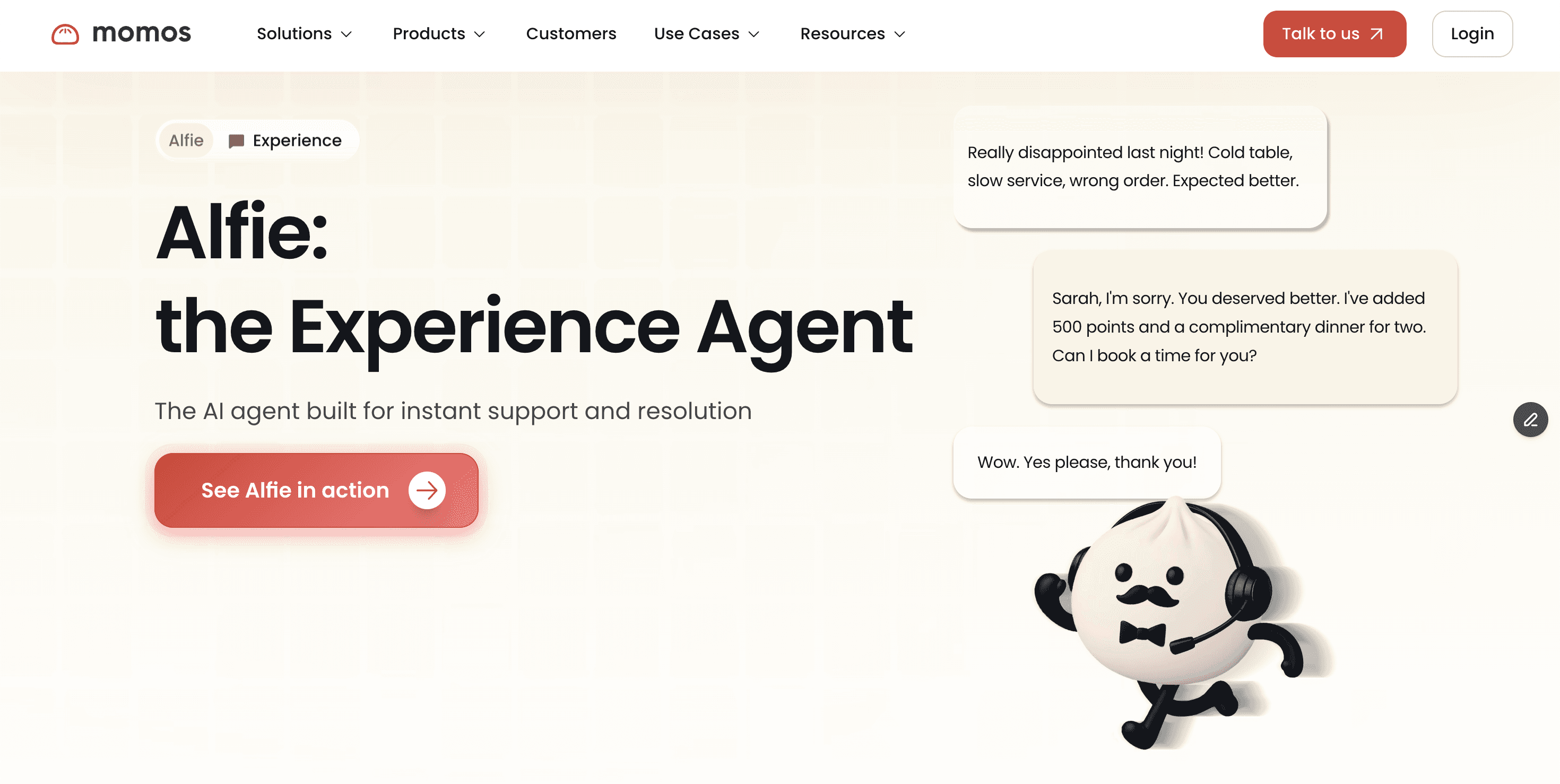
Momos is an AI-powered chatbot solution built only for restaurants. It has helped leading enterprise brands like Burger King, Papa Murphy's, and Shake Shack scale Customer Support across their 30,000+ store locations around the world.
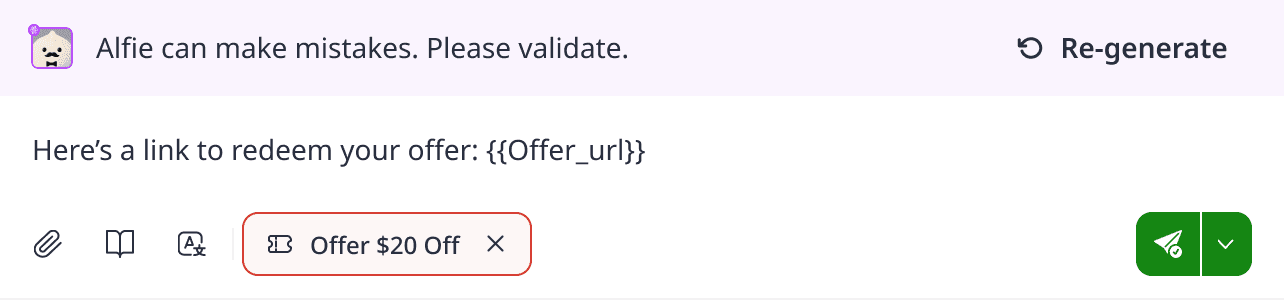
The chatbot feature of Momos is known as Alfie - The Experience Agent.
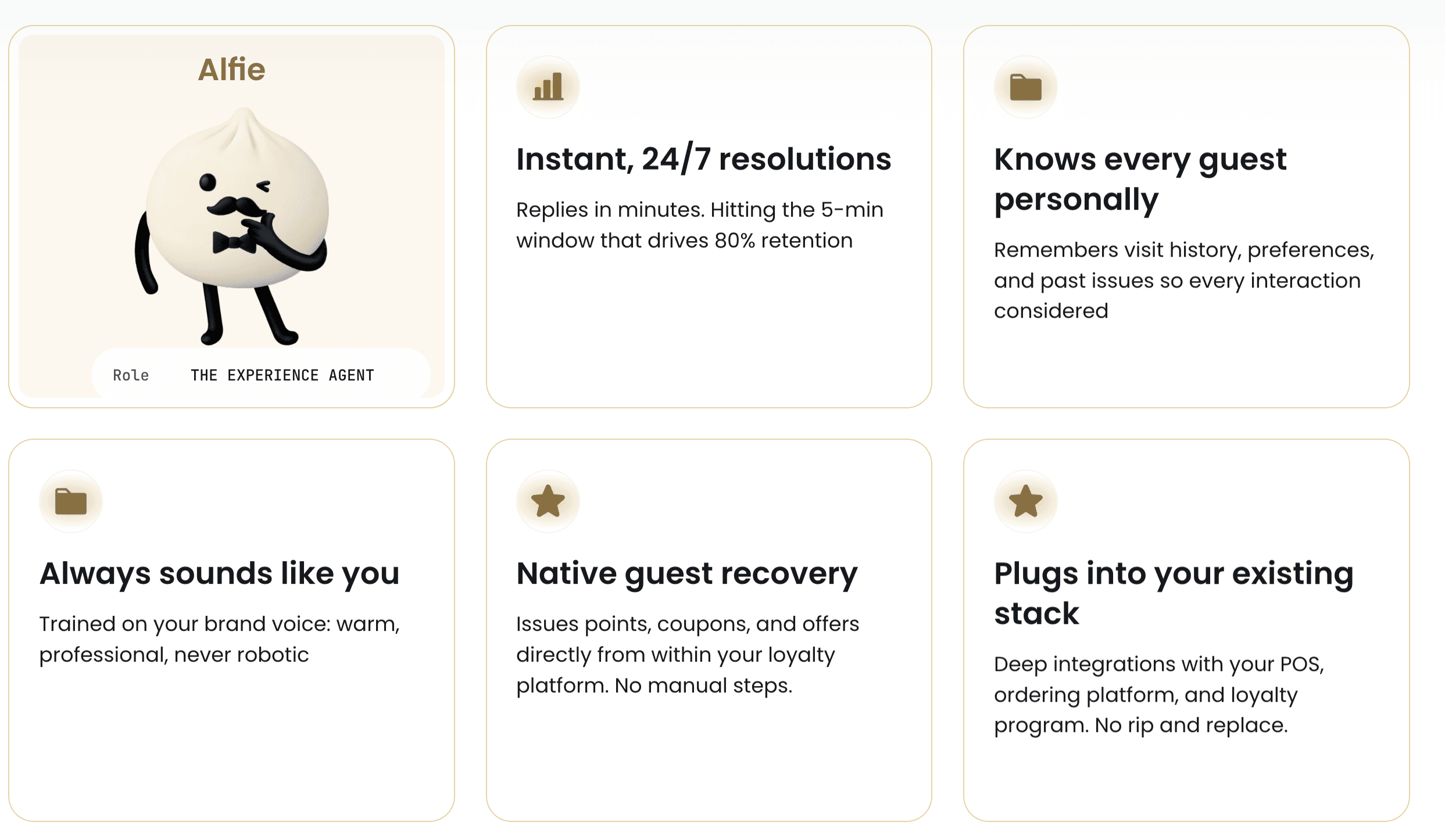
What he does is:
Analyze guest emotion based on the review wording, visit history, preferences
Craft an on-brand, empathetic, personalized reply to every single review within minutes
It even issue points, coupons, and offers directly from within your preferred loyalty platform
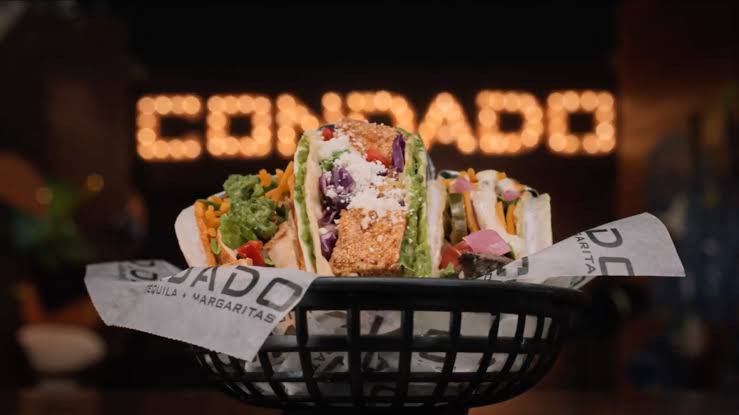
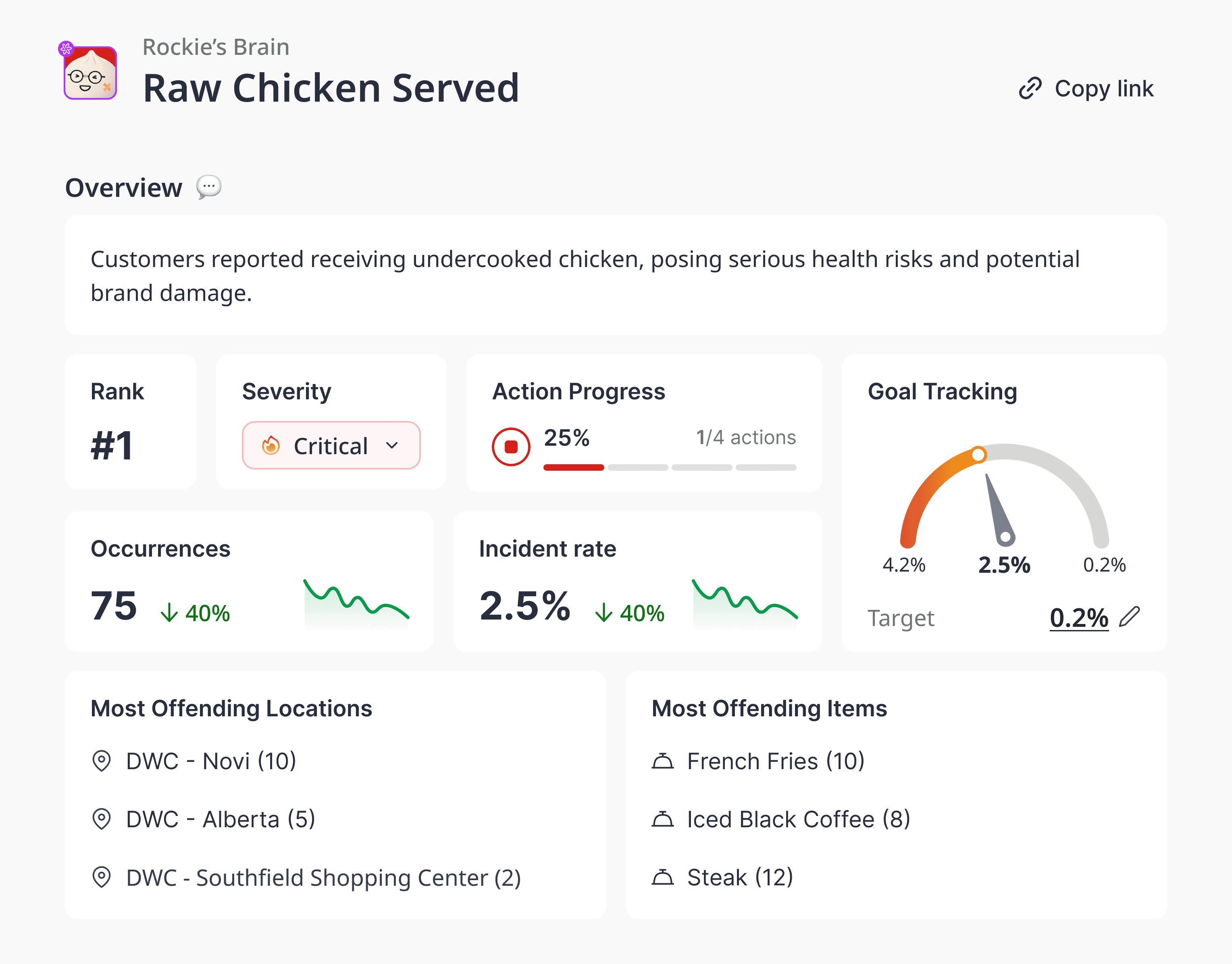
Condado Tacos, the Columbus-born build-your-own taco brand, needed a system that could scale their guest experience standard as they grew. With Momos, they unified every review, survey, and support ticket into one view, categorized incidents with AI, and turned peak holiday traffic into a staffing benchmark — going from reactive complaint handling to proactive, data-driven operations in 90 days.

2. Soundhound AI
Category: Voice AI for ordering & drive-thru
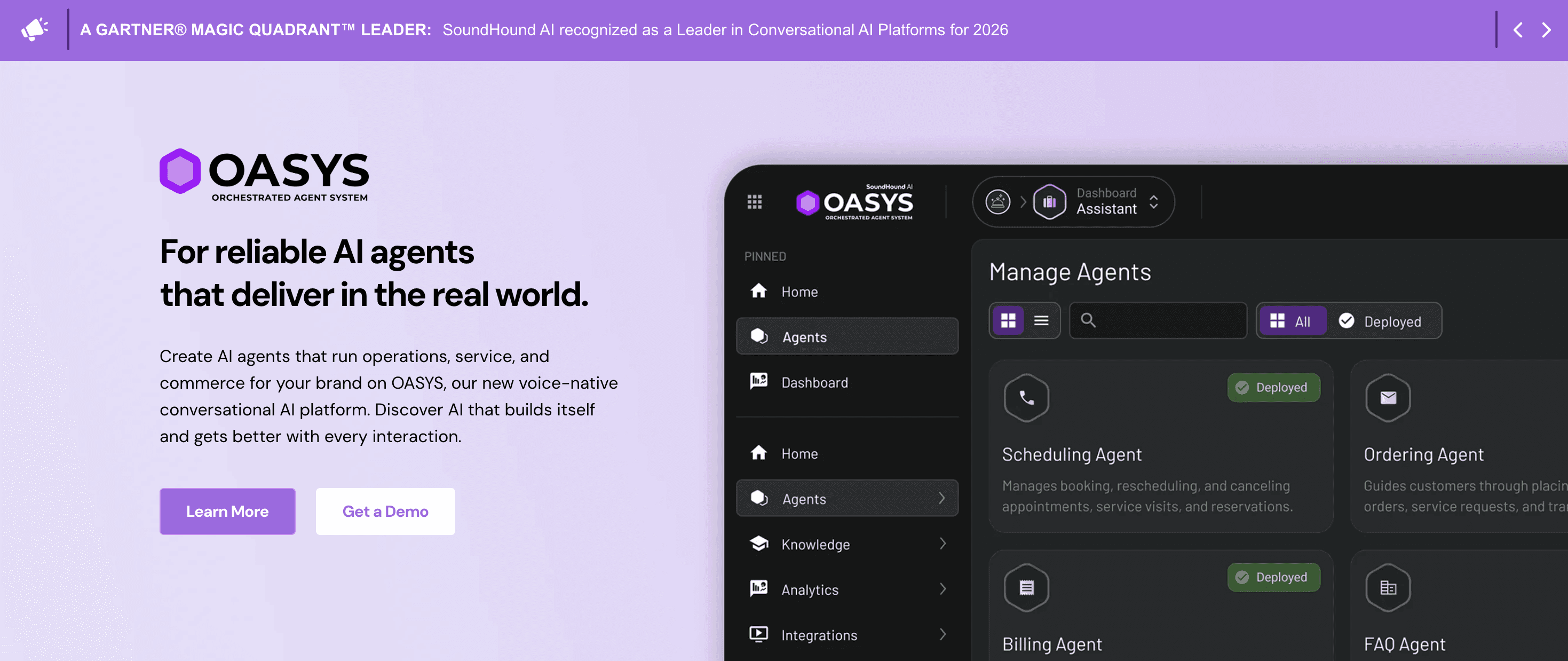
SoundHound AI gives restaurants a fully automated voice assistant that takes orders at the drive-thru, over the phone, and even through in-car systems, with no human in the loop. It is one of the most widely deployed voice ordering platforms in the industry.
Some major clients of SoundHound include Chipotle, Church's Texas Chicken, Jersey Mike's, and White Castle.
Key features: Drive-thru voice ordering, phone/call-to-order, text and scan-to-order, multilingual support, POS integration
What makes them stand out: End-to-end AI with no human agents, so it scales consistently across locations and channels.
Pricing: Custom pricing based on locations and channels; enterprise-oriented.
It's a great fit for: High-volume QSR brands that want to automate the drive-thru and phone lines at scale.
Website: SoundHound AI
3. ConverseNow
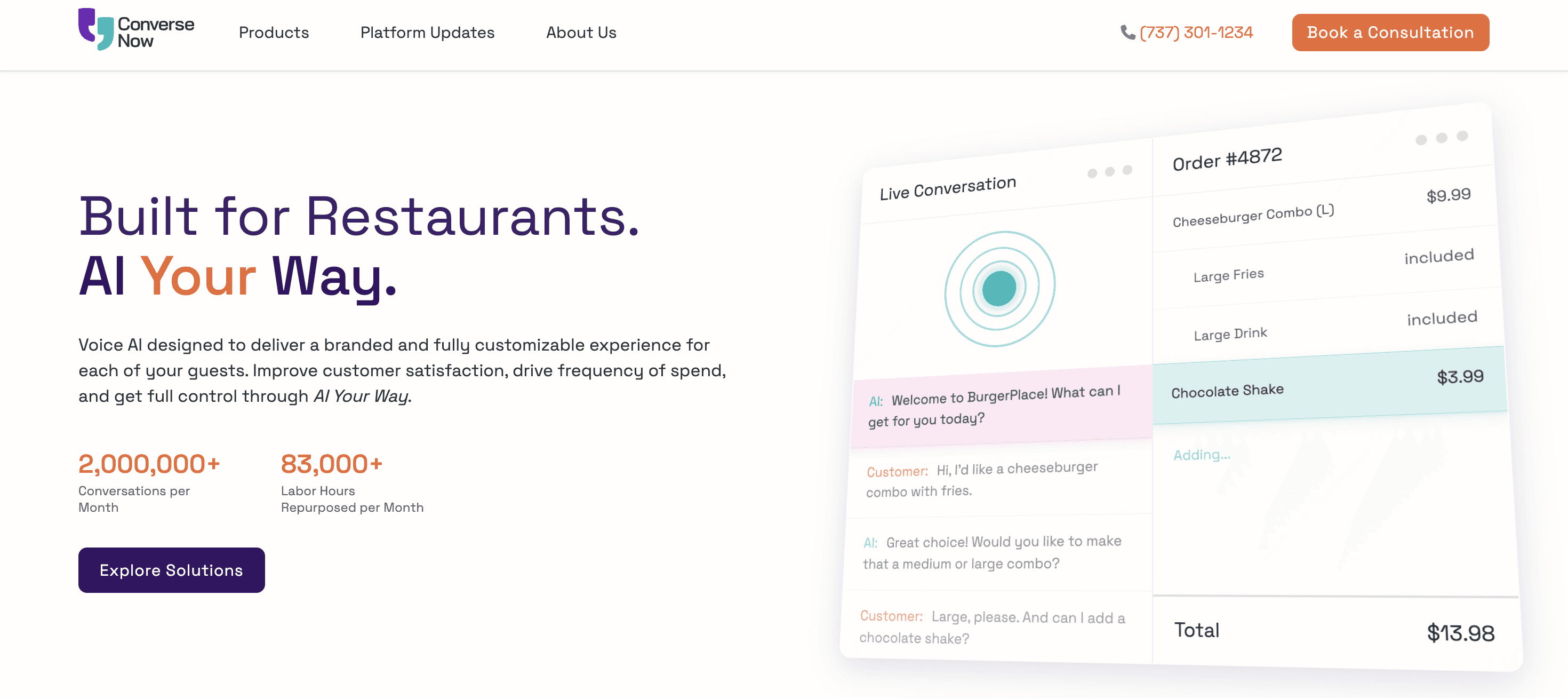
Category: Conversational voice AI for phone & drive-thru
ConverseNow deploys virtual ordering assistants that handle phone and drive-thru orders in natural, conversational language, pushing orders straight into your POS so staff need no extra training.
Some major clients of ConverseNow include Domino's, Wingstop, Fazoli's, Blake's Lotaburger, and Anthony's Coal Fired Pizza.
Key features: Conversational phone and drive-thru ordering, dynamic upsell, POS integration, English and Spanish support
What makes them stand out: Natural, LLM-powered conversation that has measurably lifted guest satisfaction scores.
Pricing: Custom pricing based on locations.
It's a great fit for: Pizza and QSR brands where phone ordering is a big share of revenue.
Website: ConverseNow
4. Presto
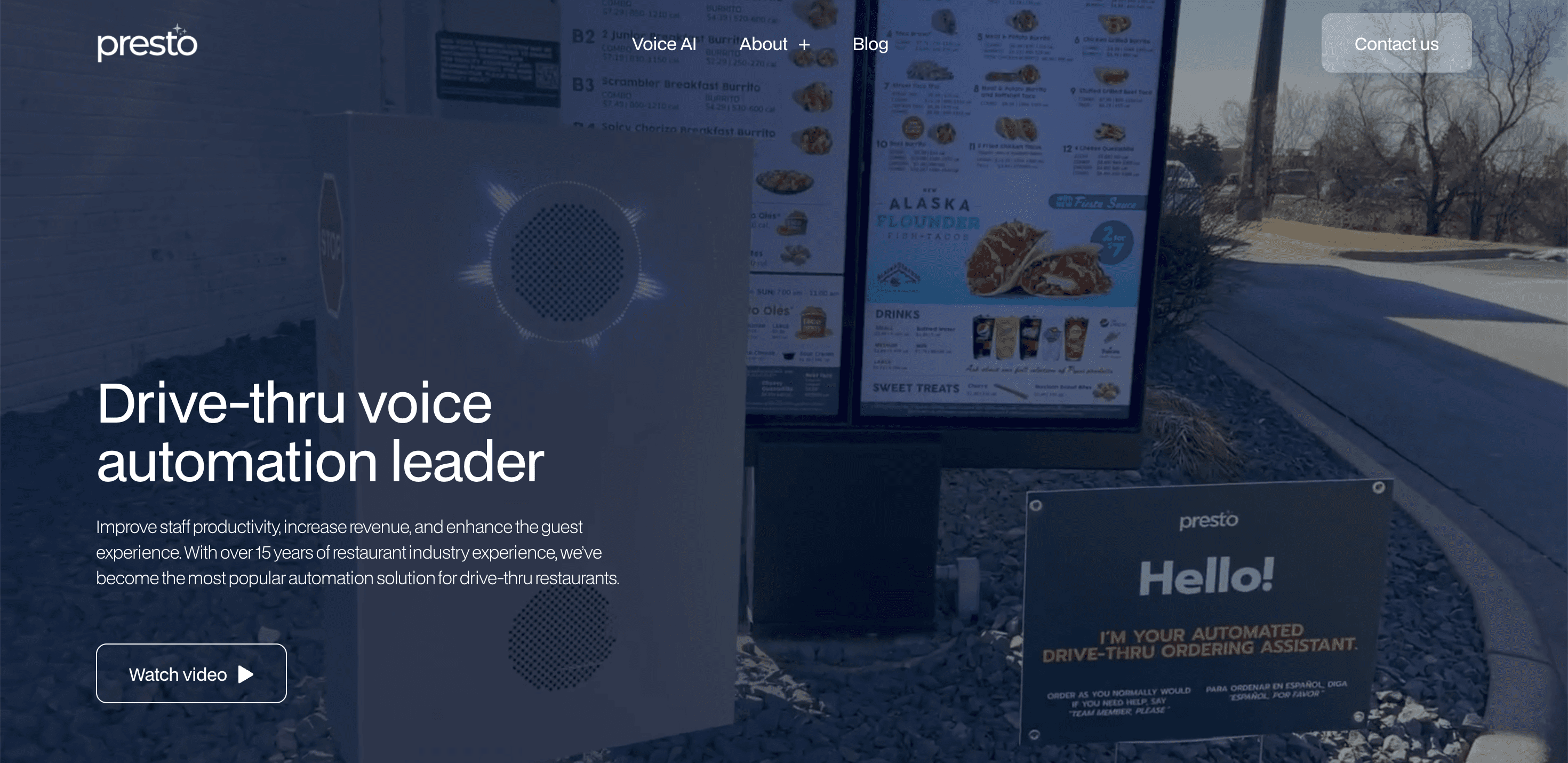
Category: Drive-thru voice AI
Presto builds AI voice assistants that take drive-thru orders automatically. It helps free up staff during peak rushes and adding consistent upsell to every order.
Some major clients of Presto include Carl's Jr., Hardee's, Del Taco, and Checkers.
Key features: Drive-thru voice automation, automated upsell, POS and kitchen display integration, 24/7 availability
What makes them stand out: One of the earliest at-scale drive-thru voice deployments, with a deep QSR feature set.
Pricing: Custom pricing based on locations.
It's a great fit for: QSR drive-thru operators who want to reduce labor pressure at the speaker box.
Website: Presto
5. Loman
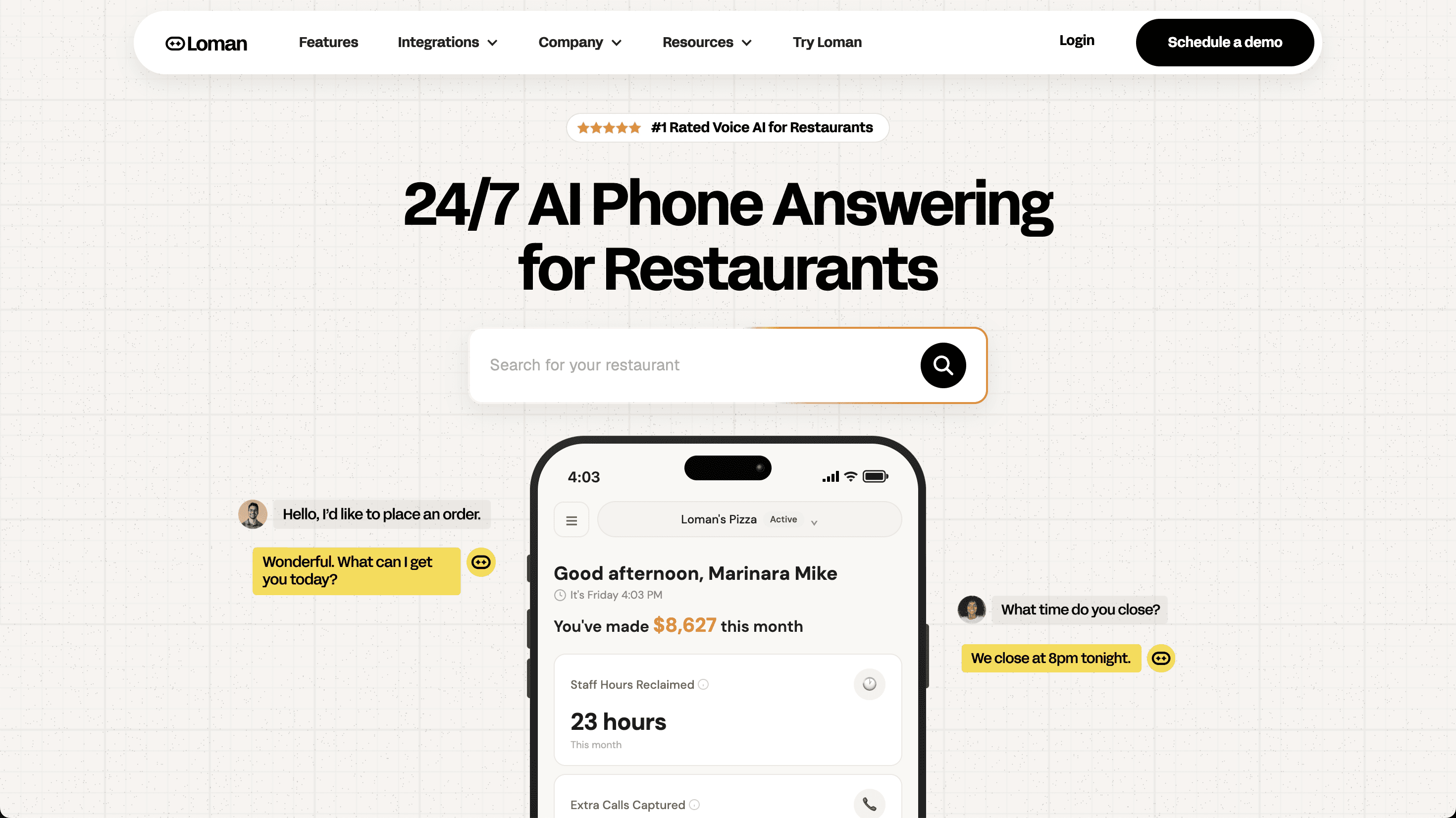
Category: Phone-order voice AI
Loman builds an AI phone assistant that answers every inbound call and takes orders automatically. It helps restaurants stop losing revenue to missed calls during peak hours, since roughly 30% of restaurant calls go unanswered when the line is busy. Loman is positioned for independents and small multi-unit operators who want a fast, POS-connected setup rather than an enterprise rollout.
Key features: 24/7 phone answering, order capture synced directly to POS, reservation and inquiry handling, multilingual support, live handoff to staff
What makes them stand out: Fast, SMB-friendly setup with broad POS compatibility, built for the phone channel where missed calls quietly cost orders.
Pricing: Flat monthly rate per location, typically starting in the low hundreds.
It's a great fit for: Independents and small chains that want to recover missed-call revenue without expanding staff.
Website: Loman
6. Toast
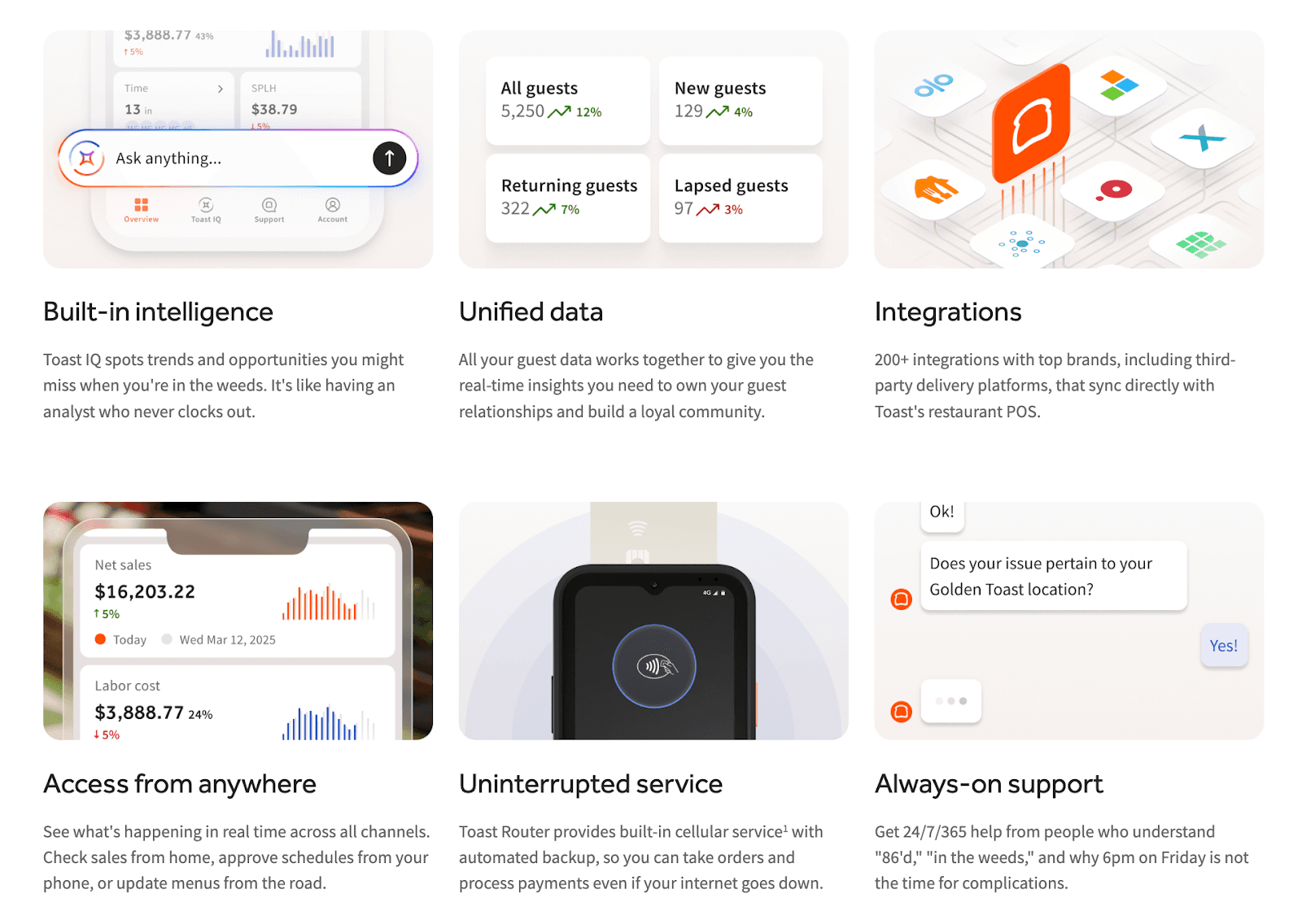
Category: Restaurant point of sale (POS) & operations software
If you're running a restaurant, you should have heard of Toast. From the POS terminal on your counter to the tablet in your server's hand, Toast has quietly become the backbone of how thousands of restaurants take orders and run their business day-to-day.
With Toast, you get a full-stack restaurant operating system: POS, online ordering, payroll, scheduling, inventory, and guest marketing all built natively on one platform. It is the fastest-growing restaurant technology company in the industry, now serving over 100,000 restaurant locations across the United States.
Some major clients of Toast include Nobu, Jamba, and Bartaco, alongside hundreds of thousands of independent operators.
Key features: Point of sale, online ordering, delivery management, payroll & scheduling, inventory tracking, guest CRM & loyalty, reporting & analytics
What makes them stand out: Toast is built exclusively for restaurants. Unlike generic POS systems, Toast removes the need to stitch together multiple vendors across your tech stack.
Pricing: Starts at $0/month for single-location operators on the Starter plan, scaling to $165+/month for more advanced features. Hardware and installation costs apply separately.
It's a great fit for: Any restaurant from single-location independents to large enterprise chains.
Website: Toast
7. 7Shifts
Category: Labor & Workforce Performance Analytics
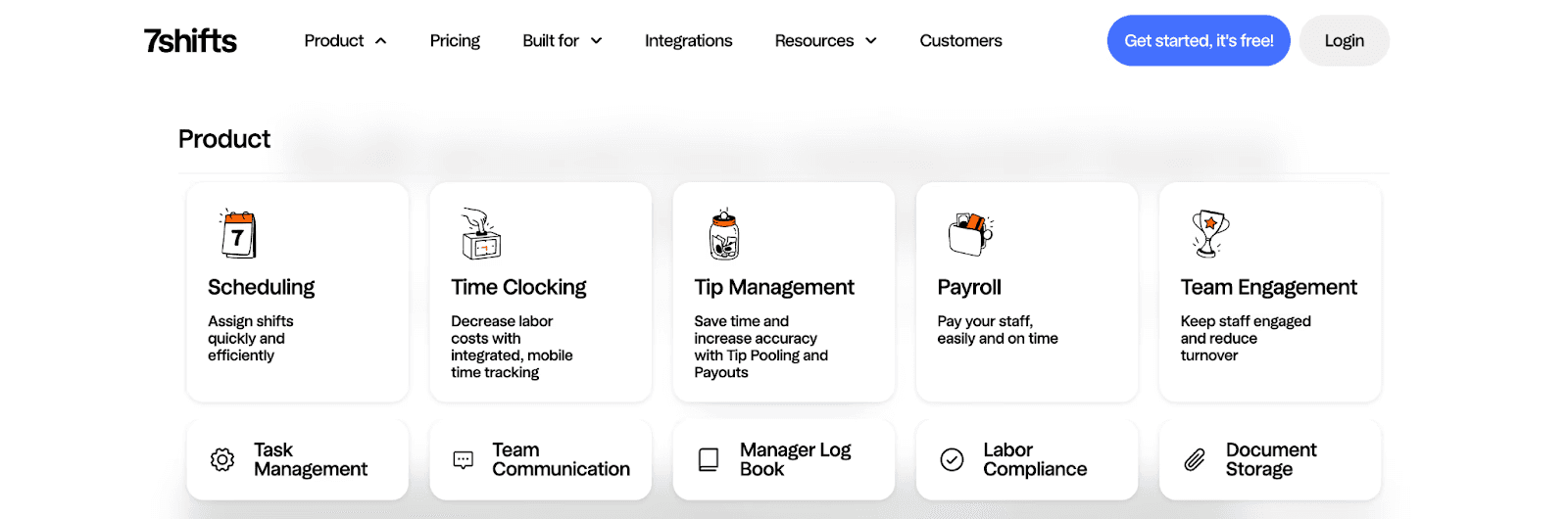
7shifts is a restaurant-focused workforce management and analytics platform built to help operators optimize labor scheduling, control workforce costs, and improve performance using real-time sales data.
Key features:
Automated employee scheduling with drag-and-drop builder
Real-time labor cost tracking vs. POS sales
Labor forecasting based on historical revenue data
Time clocking with payroll integrations
Overtime alerts and compliance monitoring
Labor performance dashboards across locations
Pricing: 7shifts offers a free plan for small teams. Paid plans typically start around $29–$69 per location per month depending on features and integrations, with advanced forecasting available in higher tiers.
Website: 7Shifts
8. Fourth
Category: Labor forecasting & workforce management
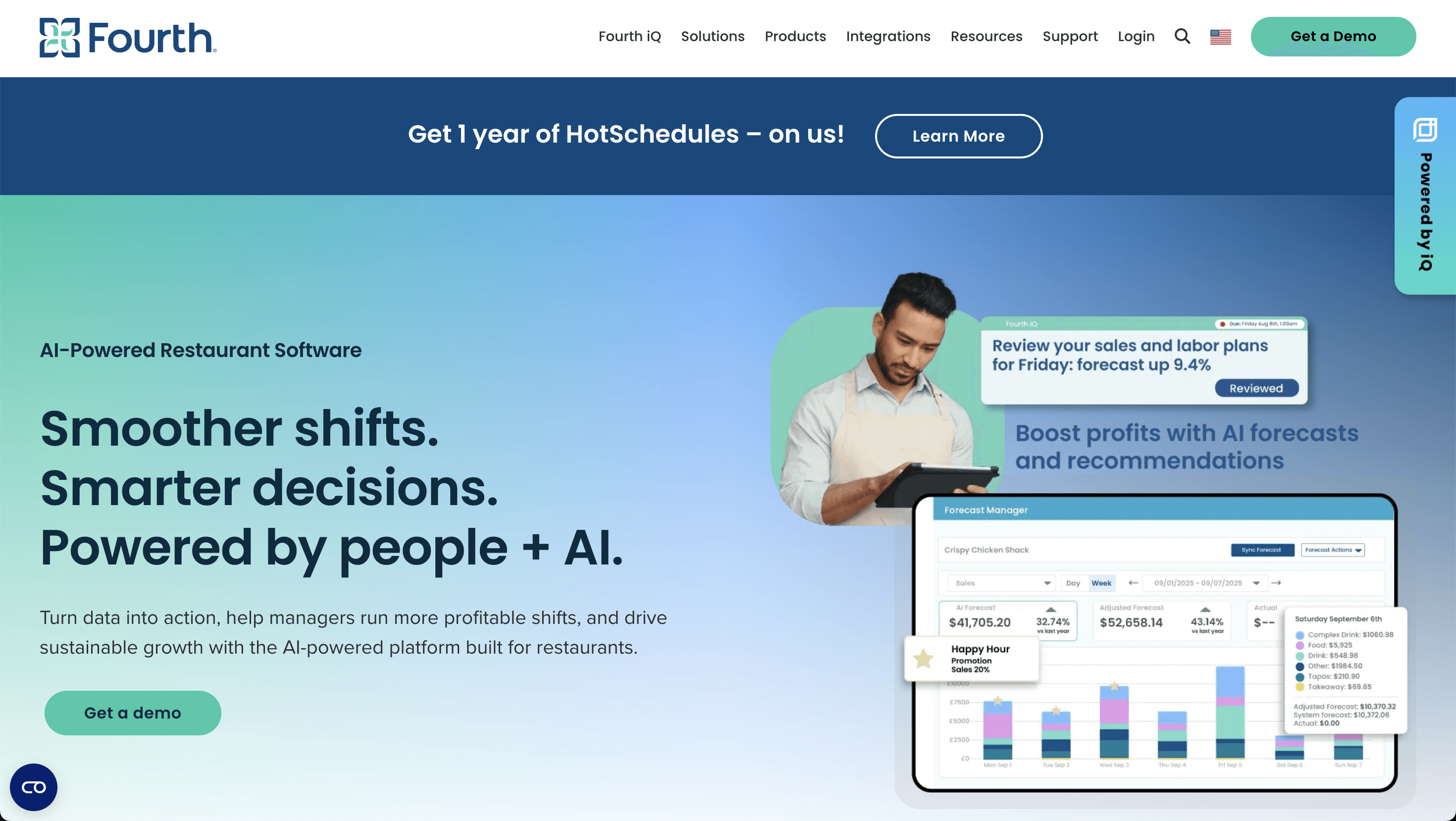
Fourth is an AI-driven workforce and inventory management platform built for restaurant and hospitality operators. With Fourth, you get demand forecasting, scheduling, payroll, and inventory in one back-office suite, with its Fourth iQ engine using machine learning to predict staffing needs from sales history and external factors.
Some major clients of Fourth include Chili's, Whataburger, Qdoba, and Smokey Bones.
Key features: AI demand-based labor forecasting, automated scheduling, time & attendance, payroll and HR services, inventory management
What makes them stand out: Fourth iQ turns historical sales and external signals into accurate labor forecasts. Chili's reported a 20% improvement in scheduling accuracy after adopting it.
Pricing: Custom pricing based on number of locations and selected modules. Positioned for mid-sized to enterprise restaurant groups.
It's a great fit for: Multi-unit and enterprise operators that want to cut labor costs through accurate forecasting and eliminate over- and understaffing.
Website: Fourth
9. Restaurant365
Category: End-to-end restaurant management software
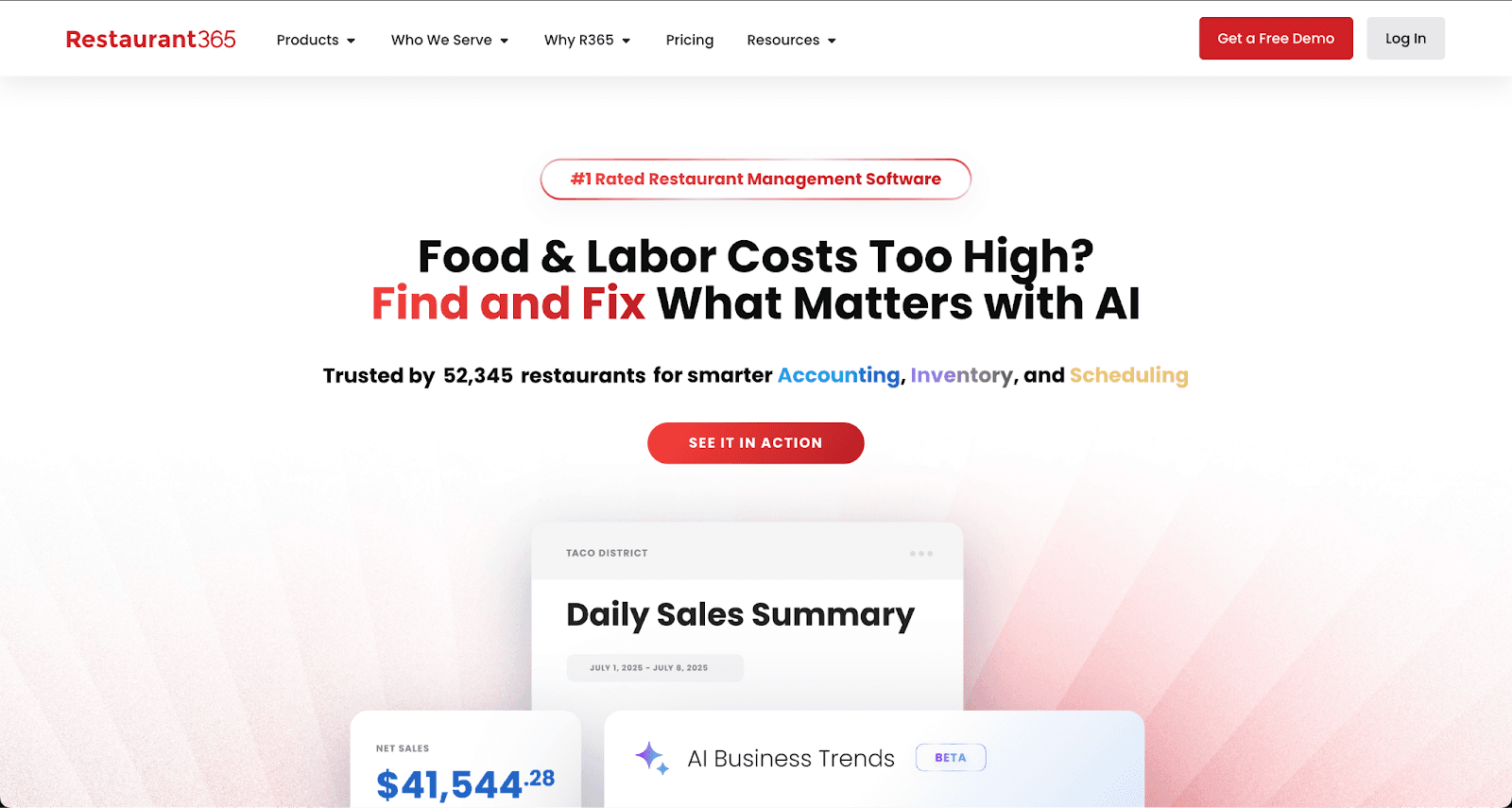
Restaurant365 is an all-in-one restaurant management platform built specifically for multi-unit operators.
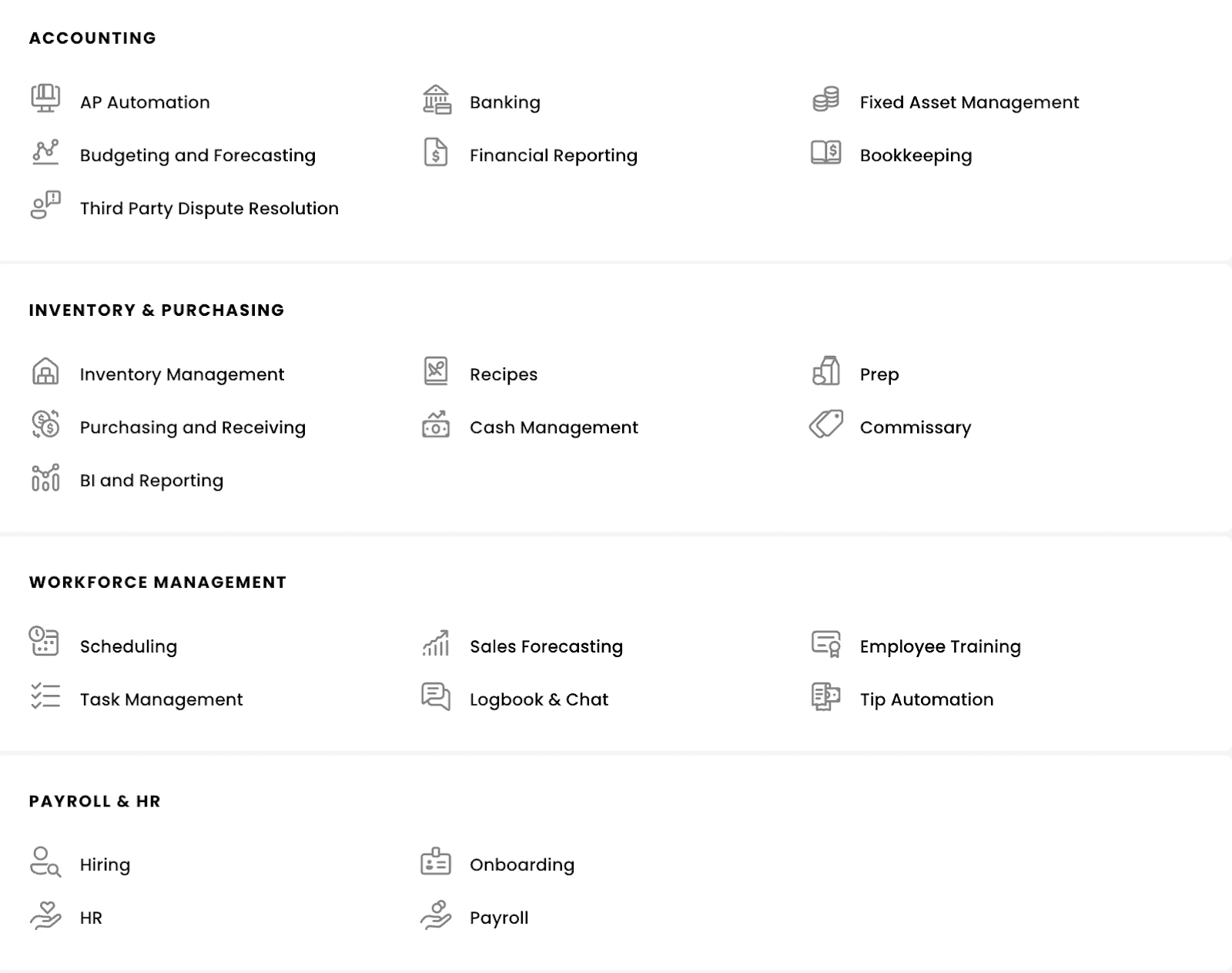
With Restaurant365, you get accounting, inventory, scheduling, and payroll combined into a single system. It is the most comprehensive restaurant management solution on the market.
Some major clients of Restaurant365 include Portillo's, Walk-On's Sports Bistreaux, and Newk's Eatery.
Key features: Accounting, inventory management, workforce scheduling, reporting & analytics
What makes them stand out: The only platform that natively combines restaurant accounting with operations. No integrations, no data gaps.
Pricing: Custom pricing based on number of locations. Typically starts around $400–$500/month for smaller operators, scaling up for enterprise deployments.
It's a great fit for: Multi-location restaurant groups that want to consolidate their back-office operations into one system and reduce administrative overhead.
Website: Restaurant365
10. Lineup.ai
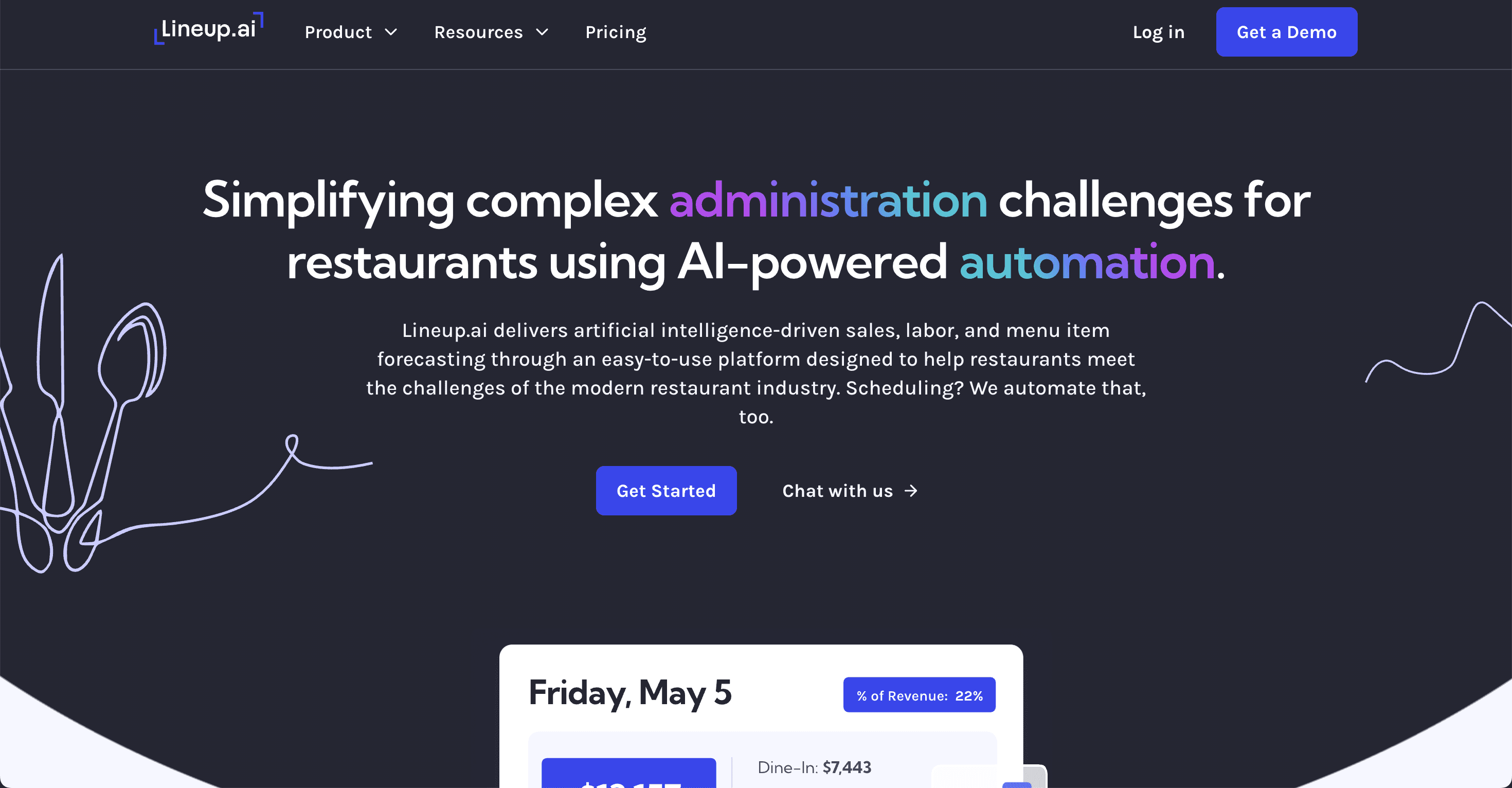
Category: AI demand forecasting (Labor & Scheduling)
Lineup.ai forecasts sales by the hour, day, and week using your POS history plus weather and local events, then translates that into staffing and prep recommendations.
A featured client of Lineup.ai is Cabo Bob's, the Austin-based fast-casual burrito chain.
Key features: AI sales forecasting, labor planning, automated scheduling, menu-item forecasting, analytics dashboard
What makes them stand out: Forecasting the company positions as as accurate as (or better than) your best GM.
Pricing: Custom monthly pricing by location.
It's a great fit for: QSR and fast-casual operators who want prep and staffing driven by real demand, not guesswork.
Website: Lineup.ai
11. MarketMan
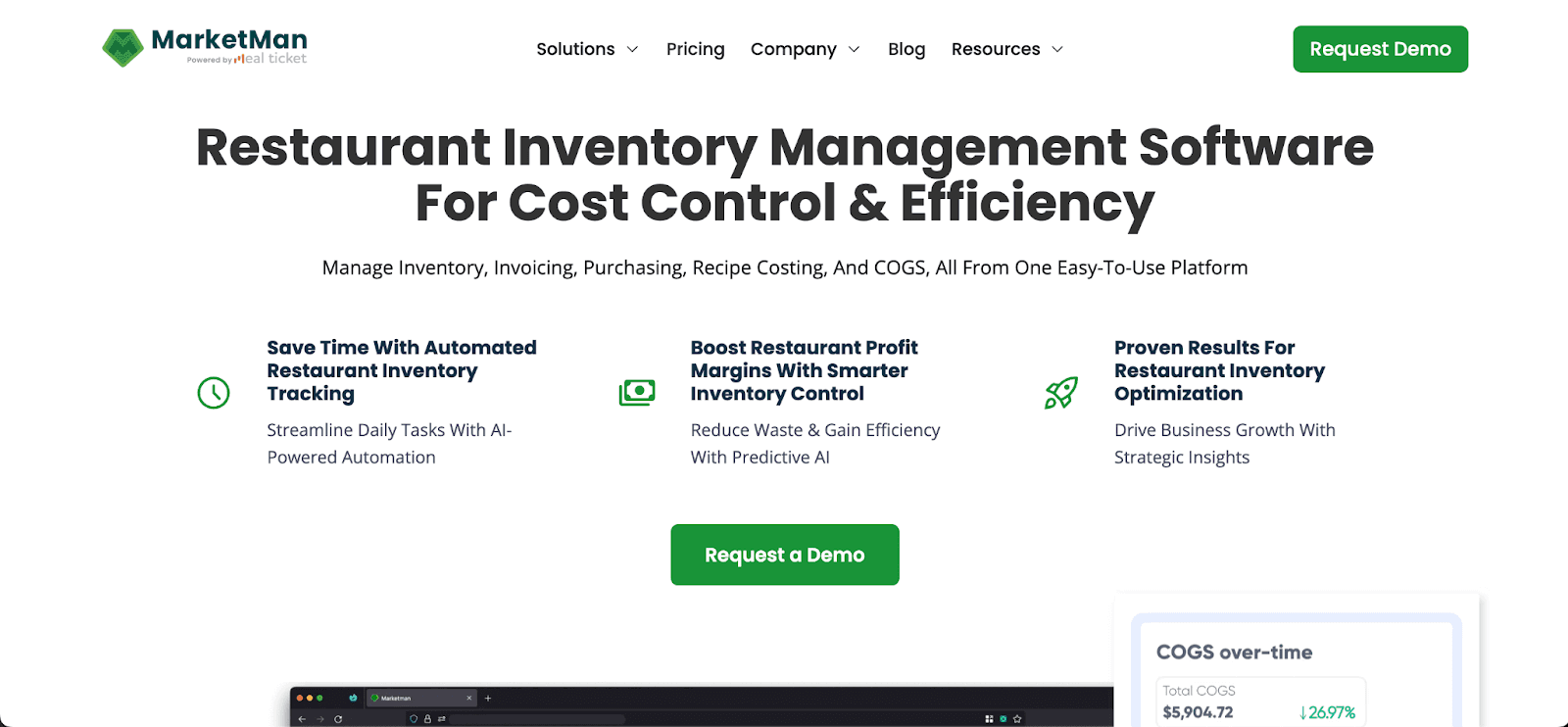
Category: Restaurant inventory & food cost management software
MarketMan is an inventory and food cost management platform purpose-built for restaurant operators.
With MarketMan, you get real-time inventory tracking, automated purchase orders, recipe management, and vendor invoice management, all in one place:
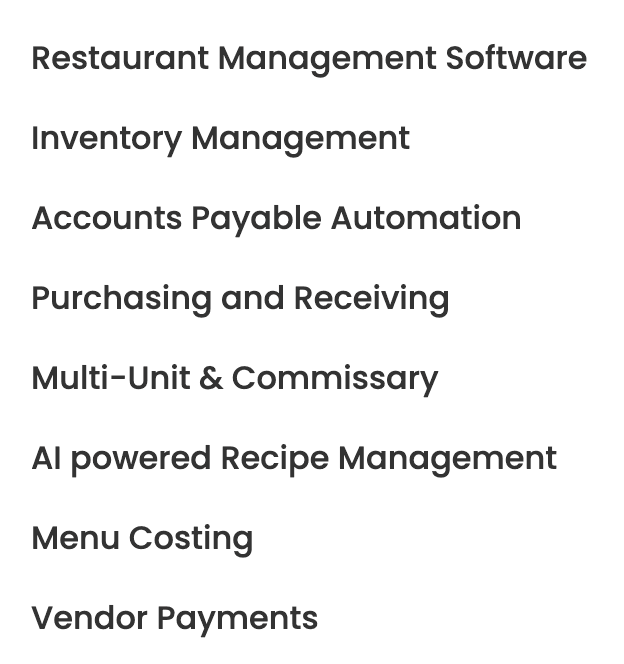
Some major clients of MarketMan include Bareburger, Dickey's Barbecue Pit, and Thunderbird Food & Drink.
Key features: Inventory management, recipe & menu costing, purchase order automation, supplier management, waste tracking
What makes them stand out: Laser-focused on food cost control. MarketMan gives operators exact visibility into where every dollar of food spend is going.
Pricing: Plans start at approximately $239/month per location, with custom enterprise pricing for larger groups.
It's a great fit for: Restaurant groups looking to tighten food cost margins and reduce waste.
Website: MarketMan
12. clearCOGS
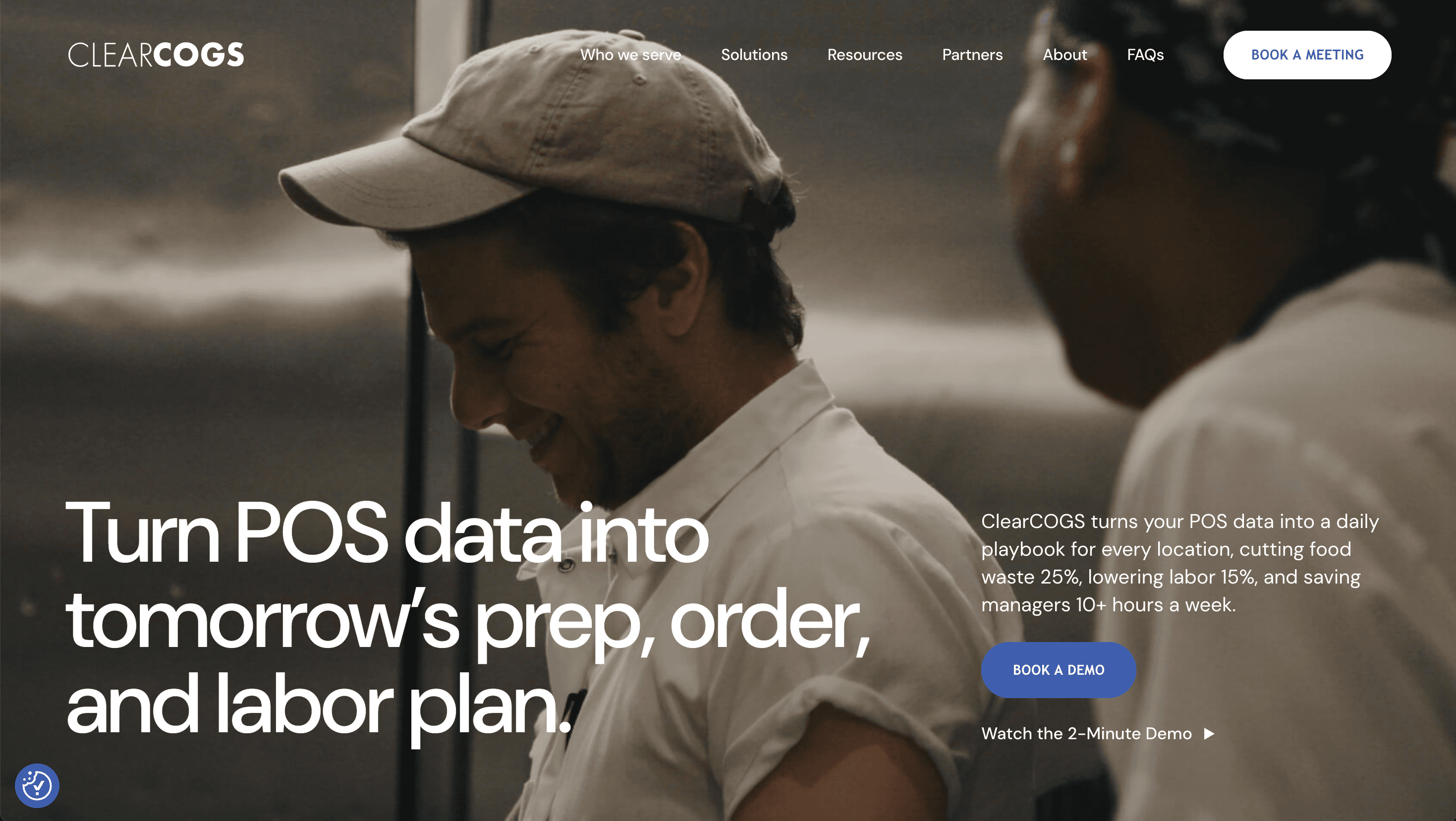
Category: AI inventory & waste reduction
ClearCOGS is an AI-powered demand forecasting platform built to help restaurants cut food waste and tighten ordering. With ClearCOGS, you get demand-based inventory planning that reads your sales trends and tells you how much to prep and order.
Key features: AI demand forecasting, prep and par-level recommendations, predictive ordering, sales-trend analysis, POS integration
What makes them stand out: It turns your own sales data into daily prep and order guidance, catching waste patterns before overproduction and spoilage eat into margin.
Pricing: Custom pricing, typically a monthly subscription that scales with number of locations.
It's a great fit for: Restaurants and multi-unit groups losing money to overproduction, spoilage, and guesswork in daily prep and ordering.
Website: ClearCOGS
13. SevenRooms
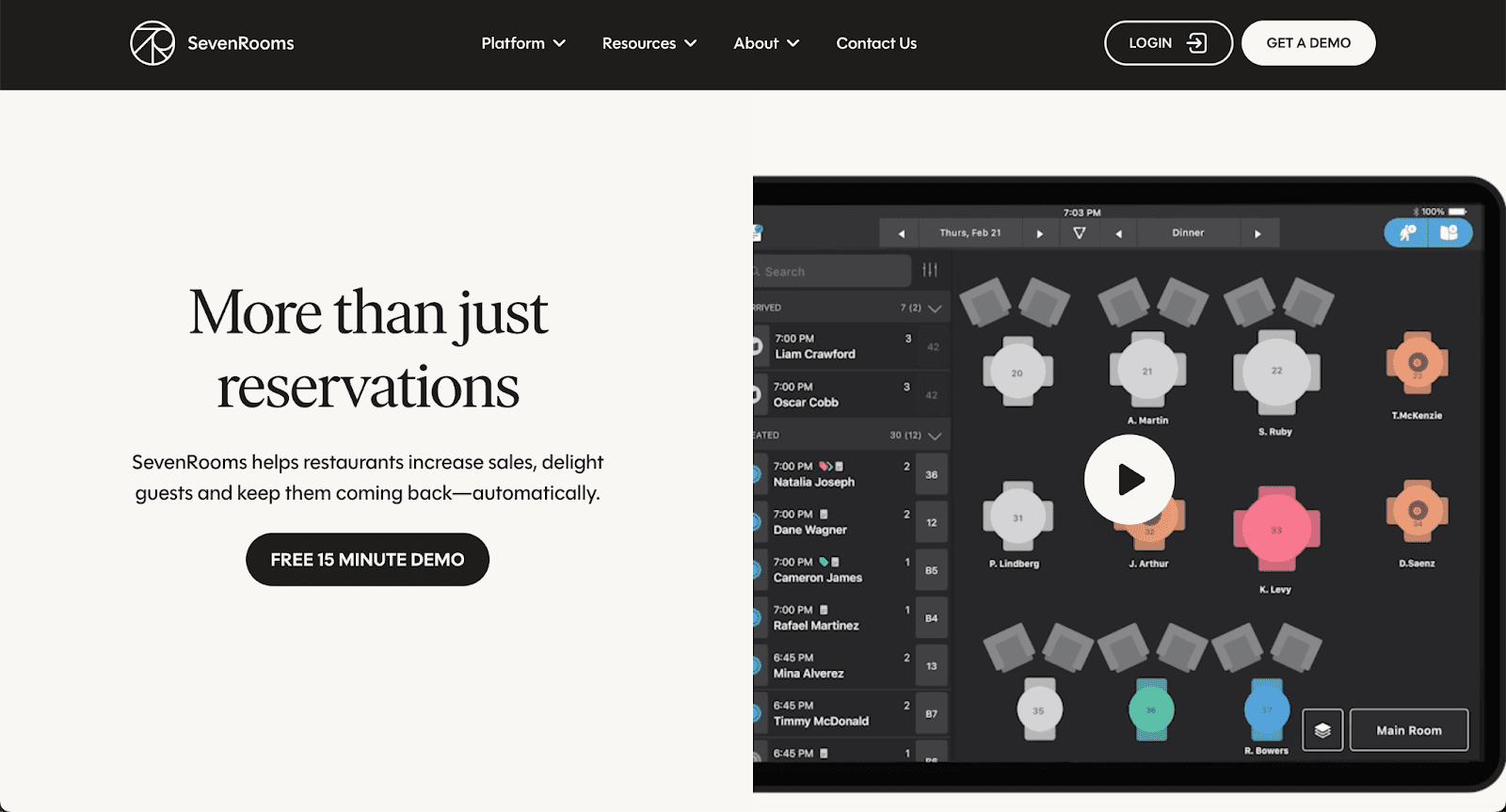
Category: Restaurant guest experience & retention software
SevenRooms is a guest experience and retention platform that goes far deeper than bookings. It can create incredibly rich guest profiles, dining preferences, allergies, special occasions, and visit history, and putting all of that context in front of your team before the guest even walks through the door.
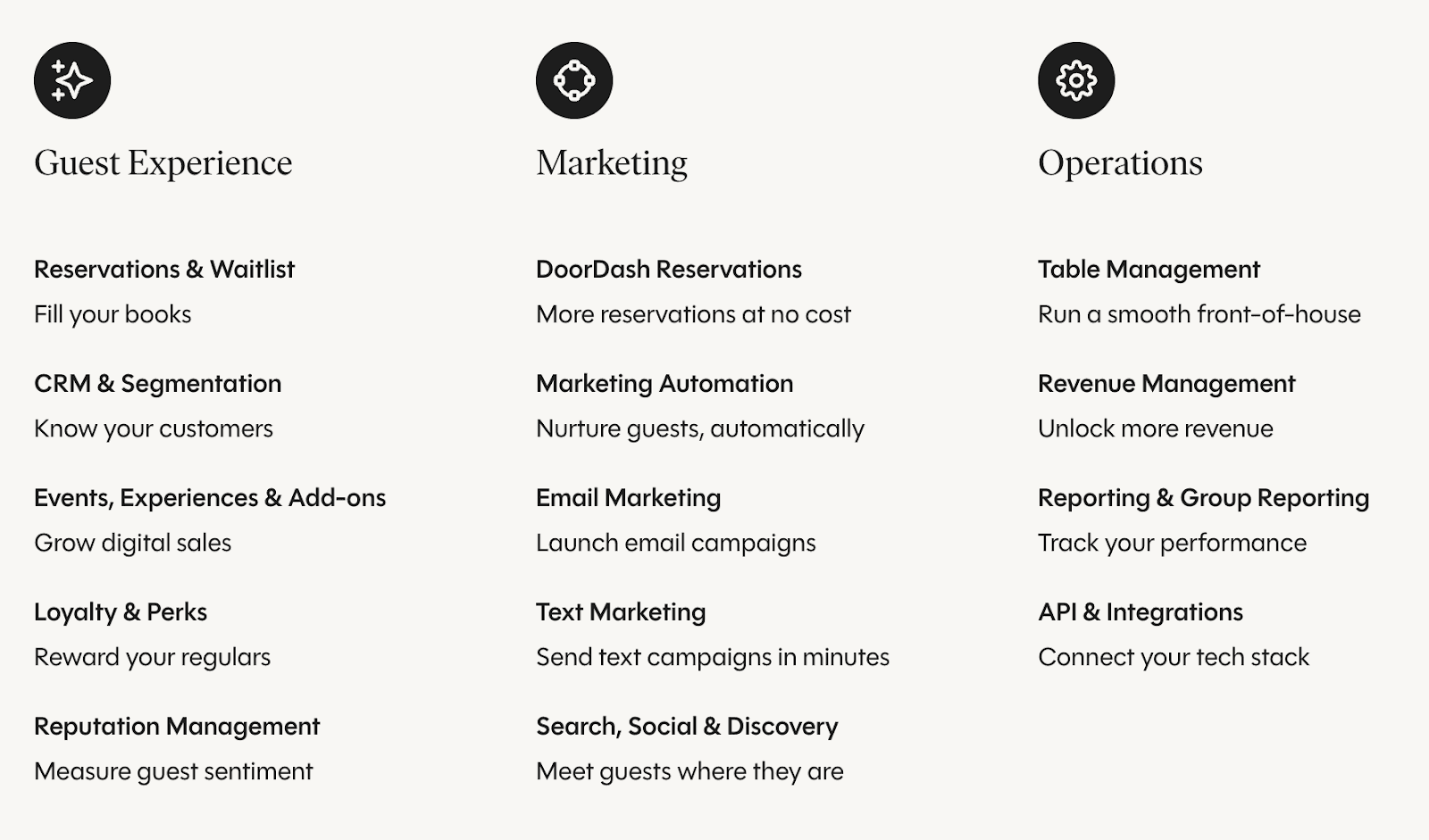
It is one of the fastest-growing hospitality CRM platforms in the industry, backed by investors including L Catterton and trusted by some of the most guest-obsessed operators in the world.
Key features: Reservations & waitlist management, guest CRM & profile building, automated marketing & segmentation, loyalty & rewards, online ordering, review aggregation, and post-visit feedback tools
What makes them stand out: SevenRooms is built around one core belief — that guest data is the most valuable asset a restaurant owns. While other platforms focus on filling seats, SevenRooms focuses on what happens after the guest sits down, and every time they come back.
Pricing: Custom pricing based on venue type and number of locations. Typically positioned as a mid-market to enterprise solution.
It's a great fit for: Full-service restaurants, hotel F&B outlets, and hospitality groups that are serious about guest retention, personalization, and turning one-time diners into lifelong regulars.
Website: SevenRooms
14. Popmenu
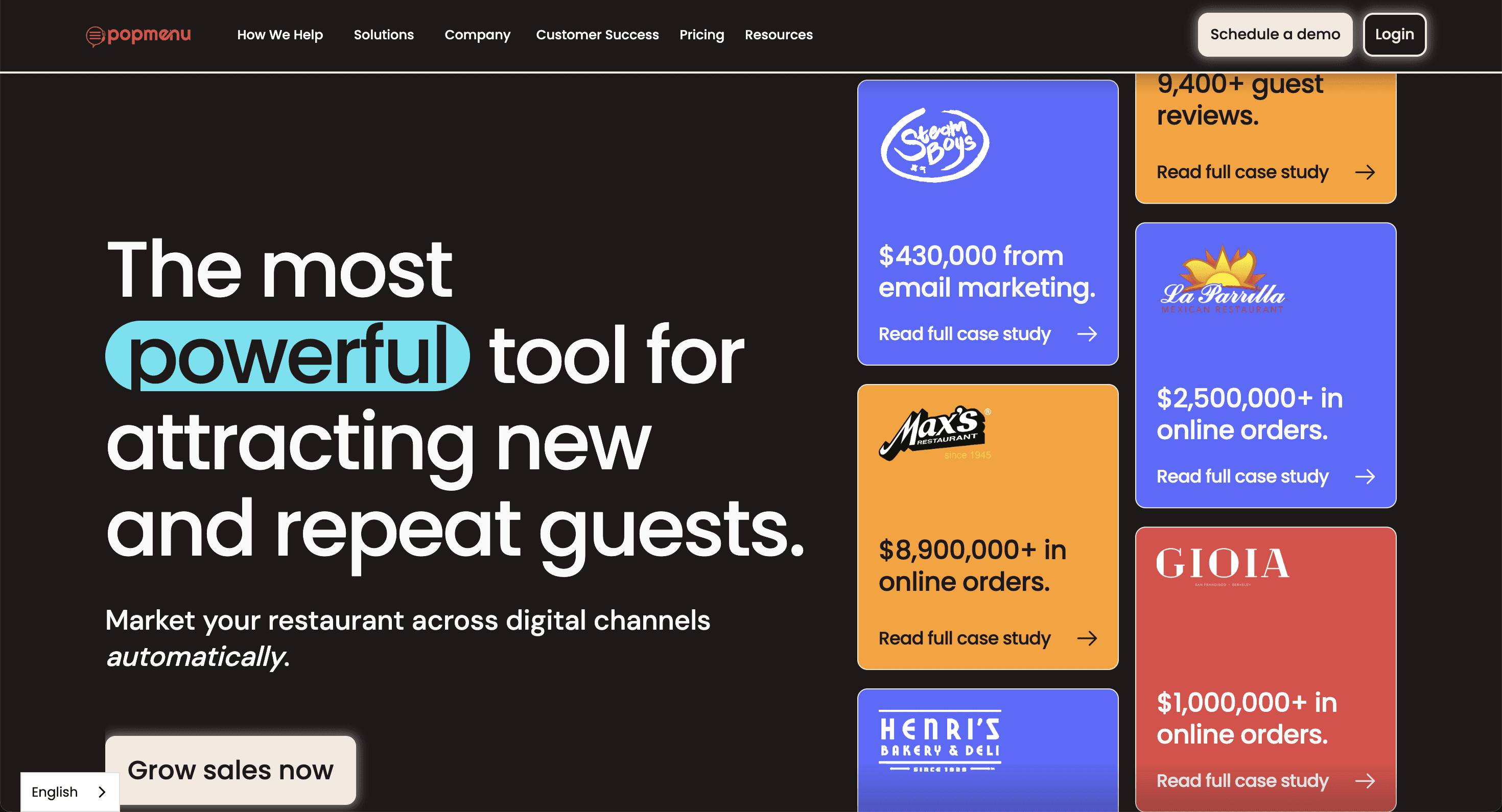
Popmenu is an all-in-one restaurant marketing and AI platform built specifically for independent and multi-location restaurants.
Unlike general chatbot tools, Popmenu is designed from the ground up to support restaurant operations, helping brands improve guest communication, automate responses, and drive more revenue.
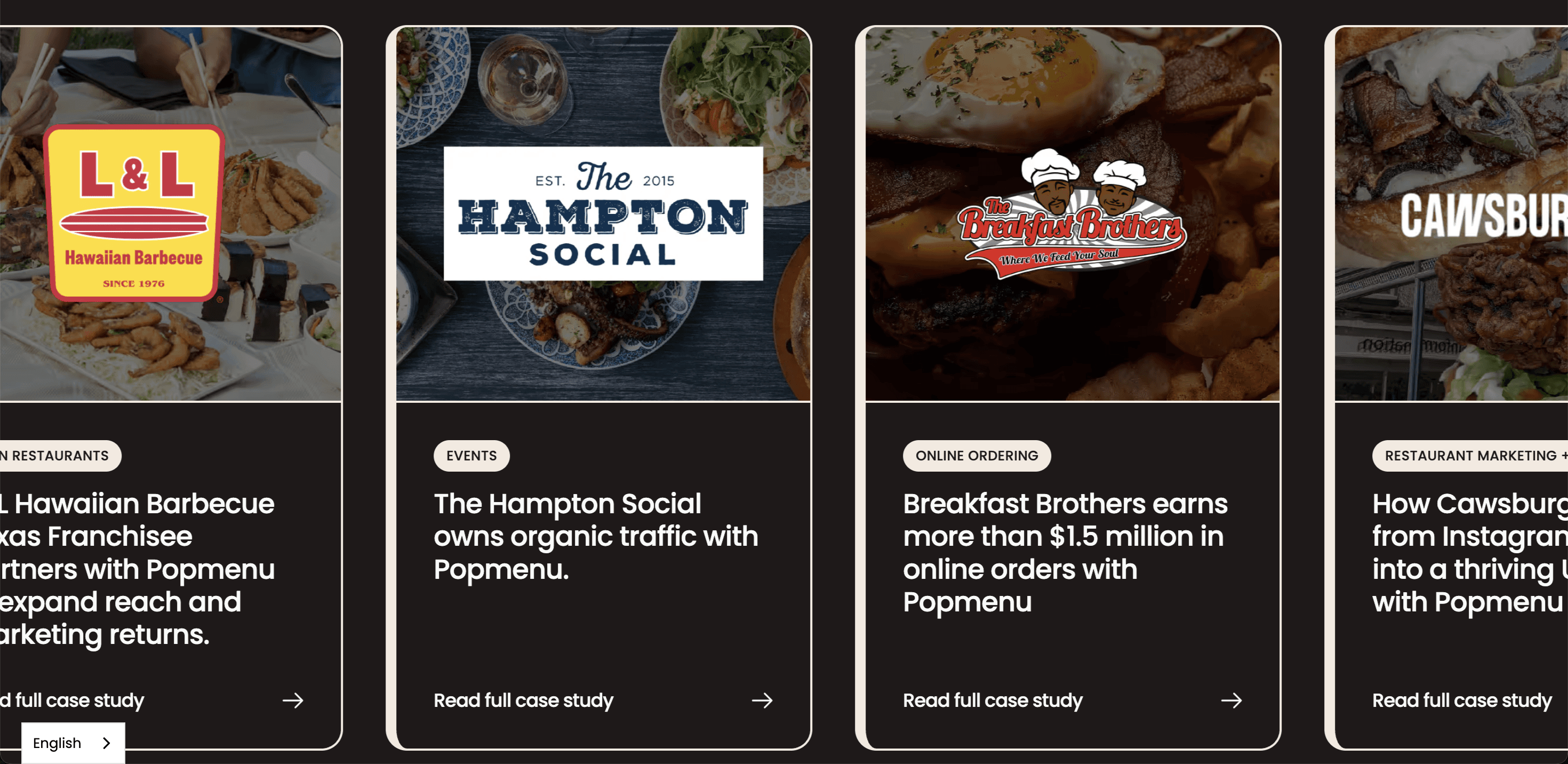
What you can do with Popmenu:
Use AI-powered answering to handle guest calls and respond to common questions.
Automate customer interactions around menus, orders, reservations, and restaurant information.
Improve online ordering and marketing efforts across multiple locations.
Centralize guest engagement while maintaining a consistent brand experience.
Why Popmenu stands out: Popmenu is purpose-built for the restaurant industry, combining AI tools with marketing and customer engagement features. It helps restaurant teams reduce manual work, capture more revenue opportunities, and deliver better guest experiences at scale.
It's best for: Independent restaurants and multi-location restaurant brands looking for an AI platform to improve operations and customer engagement.
Pricing: Contact Popmenu for pricing.
Website: Popmenu
15. Jolt
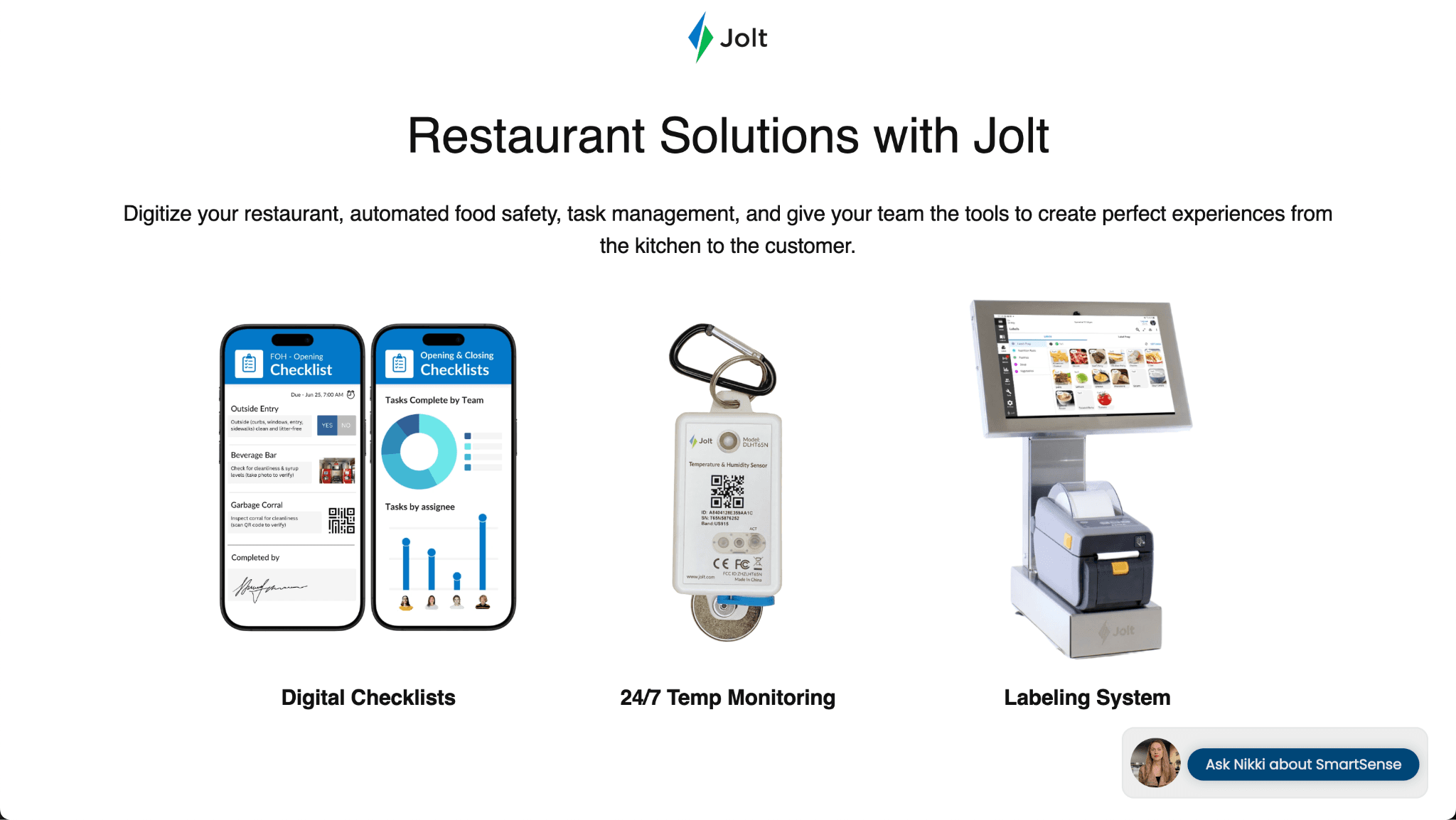
Jolt is an operations execution platform built for restaurants and multi-location businesses that need to replace paper processes with digital accountability across every shift.
Used by over 300,000 deskless workers globally, Jolt has completed more than 700 million tasks on its platform. It holds a 4.7/5 rating on Capterra and earns particularly strong marks for ease of use and compliance tools.
Notable restaurant clients include McDonald's, Smoothie King, Jimmy John's, and Buffalo Wild Wings.
Key features: Digital checklists & task management, food safety logs & temperature monitoring, date code labeling, employee scheduling, time & attendance, training library, information hub, performance tracking, and team communication
What makes them stand out: Jolt was founded by a franchise owner who built the tool to solve his own operational problems, and that origin shows in how the platform is designed. It is one of the most intuitive options on this list, with staff and managers typically adopting it with minimal training.
Pricing: Starts at approximately $90/month. A free demo is available.
It's a great fit for: Restaurant franchise groups that want an easy-to-deploy, shift-level operations tool with strong food safety compliance and frontline accountability built in.
Website: Jolt
16. Marqii
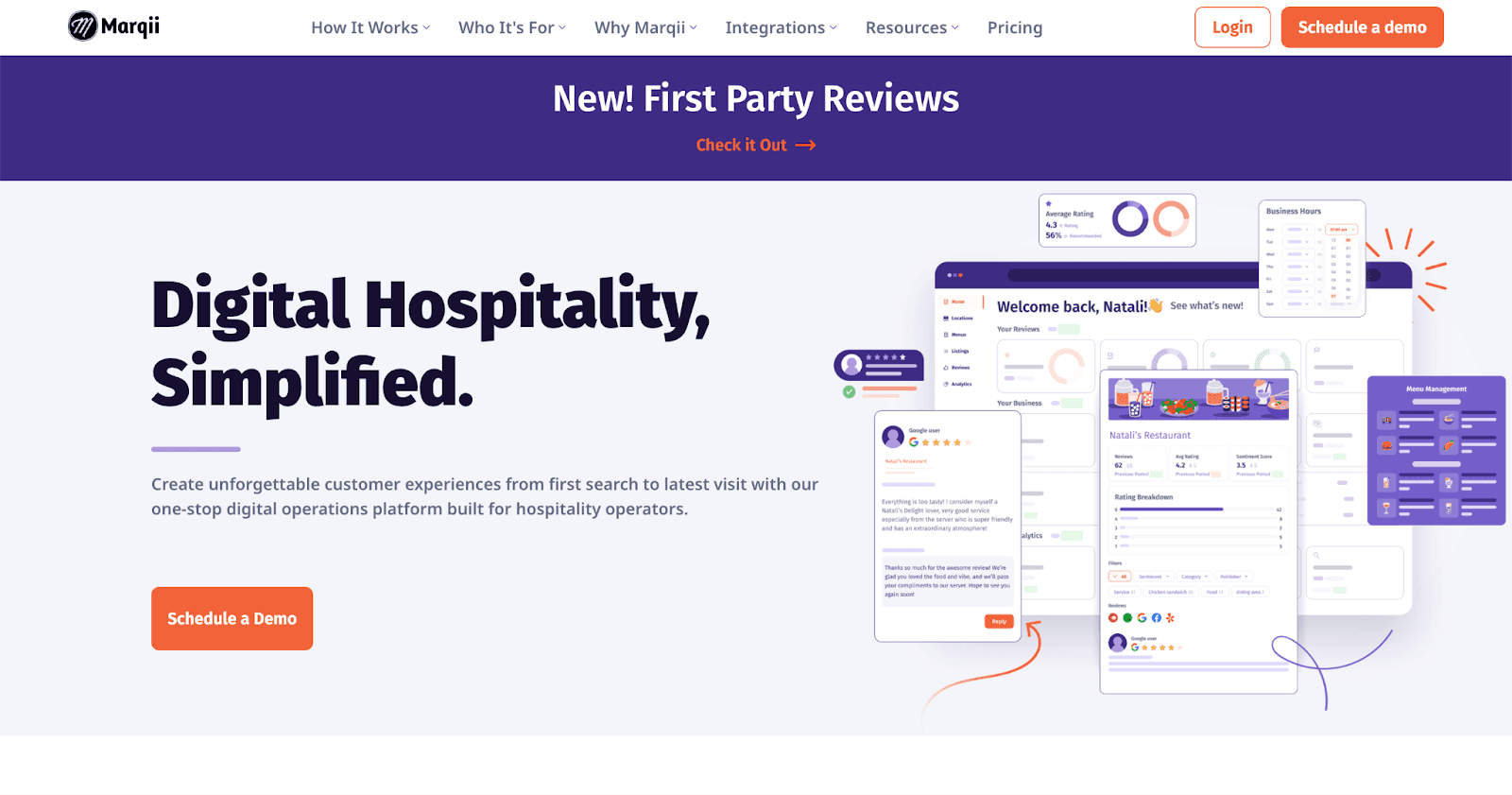
Marqii is a digital operations platform built for restaurants and hospitality brands. It's designed so operators don't have to jump between multiple apps to keep their online presence accurate and up to date.
Key features
Review monitoring and response across Google, Yelp, Facebook, OpenTable, Uber Eats, and more
Automatic menu syncing from your POS to all major platforms
Listings management for hours, photos, and contact info across the web
AI-generated review reply drafts to speed up your team's workflow
Why businesses choose Marqii
If keeping menus and listings accurate across every platform is eating up your team's time, Marqii automates most of that work. It's a particularly strong fit for multi-location restaurants juggling delivery platforms and frequent menu changes.
Pricing
Marqii does not publish pricing. Contact their team for a custom quote.
 Los agentes de IA automatizan todas las interacciones con los clientes, 24/7, en todas las ubicaciones de tu restaurante.

" transform="translate(3.219 19.212)" width="152.45224485148515px"/><path d="M 0 11.619 C 7.071 11.39 33.491 21.738 40.35 21.268 C 38.499 18.19 37.116 14.915 35.507 11.625 C 33.7 7.867 32.587 3.926 31.702 0" fill="transparent" height="21.28391189647101px" id="I9fuJaf7q" stroke-dasharray="" stroke-linecap="round" stroke-linejoin="round" stroke-width="4.97" stroke="rgb(0, 0, 0)" transform="translate(139.727 55.754)" width="40.34950693069311px"/></svg>)