

Review Response Rate
Review response rate is the percentage of reviews a business replies to in a given period, usually tracked by platform, location and star rating.
| Review Response Rate at a glance | |
|---|---|
| Measures | The share of reviews that receive a public reply from the business |
| Formula | Reviews replied to ÷ reviews received × 100 |
| Unit | Percentage, from 0% to 100% |
| Usually broken down by | Platform, location, star rating and period |
| Common variants | Negative review response rate, response rate within 24 or 48 hours, location response rate |
| Companion metric | Response time, the hours between a review and its reply |
| Owner replies introduced | Yelp in 2009, Google in 2010 |
| Common target | Every negative review, plus as many others as your team can answer personally |
Key takeaways
- Your review response rate is the number of reviews you replied to divided by the number you received in the same period, multiplied by 100.
- It's one of the few reputation metrics fully under your team's control, which makes it a direct measure of attentiveness at each location.
- A brand-wide average can hide locations that rarely reply, so breaking the rate down by location, platform and star rating is where the insight lives.
- Answering every negative review quickly matters most, because future guests read how you handle criticism before they decide to visit.
- The rate counts replies without judging them, so pairing it with response time and a regular read of your replies keeps quality high.
What is Review Response Rate?
Review response rate is the share of your online reviews that receive a reply from your business. If a location receives 100 Google reviews in a month and the team answers 82 of them, that location's review response rate for the month is 82%.
It's one of the few reputation metrics your team controls completely. Guests decide what they write and how many stars they give, while the decision to answer sits entirely with you. That makes response rate a clear measure of how attentive your brand is, location by location.
Every reply is read by two audiences: the guest who wrote the review and every future guest who scrolls past it.
For a multi-location brand, review response rate is also an operating metric. A 90% brand average can hide a handful of locations where nobody has replied in weeks, which is why most teams track it per location, per platform and per star rating as part of their review management routine.
How to calculate review response rate
The formula compares replies with reviews over the same period:
Review response rate = reviews replied to ÷ reviews received × 100
A reply counts toward the period in which the review arrived. A review posted on March 30 and answered on April 2 is a March review that received a reply, which keeps each month's figure stable once it closes.
Suppose your brand has three locations that received 240 Google reviews last month between them:
| Location | Reviews received | Reviews replied to | Review response rate |
|---|---|---|---|
| Downtown | 120 | 114 | 95.0% |
| Airport | 80 | 52 | 65.0% |
| Suburban | 40 | 20 | 50.0% |
| Brand total | 240 | 186 | 77.5% |
The brand's review response rate is 186 ÷ 240 × 100 = 77.5%. If you averaged the three location rates instead, you'd get (95.0 + 65.0 + 50.0) ÷ 3 = 70.0%, because the small suburban location would count as much as the busy downtown one.
Both views are useful. The pooled 77.5% tells you how many guests overall received a reply, and the location rates show where to focus. Here, the suburban team leaves half of its reviewers without an answer, which a location-level operator report would surface straight away.
Review response rate calculator
Enter your reviews for one period, such as last month. You'll see your overall response rate, the rate for negative reviews and how many reviews were answered within 24 hours.
The negative review rate and the 24-hour share are often more revealing than the headline figure. A team can reach 80% overall by thanking every 5-star guest while leaving its toughest reviews unanswered.
Types of review response rate
Overall review response rate
The overall rate covers every review in the period, across all platforms and star ratings. It's the simplest figure to report to leadership and the easiest to compare month to month.
Because it blends very different reviews, the overall rate works best as a starting point. The breakdowns below explain what drives it.
Negative review response rate
This variant counts only 1- and 2-star reviews; some brands include 3-star reviews too. It's arguably the most important version, since unanswered criticism is exactly what a hesitant guest notices.
A reply that acknowledges the problem and offers to put it right also opens the door to recovering the guest.
Time-bound review response rate
A time-bound rate counts only replies sent within a target window, such as 24 or 48 hours. It combines coverage and speed in one number, which suits a service-level target for location managers.
It pairs naturally with median response time. The median is usually more informative than the average, because a few reviews answered weeks late can pull an average far from what most guests experience.
Review response rate by platform
Google, Yelp, Tripadvisor, delivery apps and booking platforms each have their own reply tools, and teams often check some more often than others. Breaking the rate down by platform shows where reviews are slipping through.
Some platforms limit or don't offer public replies for certain review types. Leaving those reviews out of the calculation, and noting the rule in your report, keeps the comparison fair.
Review response rate by location
For a restaurant group, the location view is usually the most actionable. It shows which managers need support, and it connects reply habits to each location's star rating and sales.
Why review response rate matters
Published research suggests replies influence both the reviewer and the readers who come after. Beyond the Proserpio and Zervas findings above, Yang Wang and Alexander Chaudhry studied hotel reviews in a 2018 Journal of Marketing Research paper, When and How Managers' Responses to Online Reviews Affect Subsequent Reviews.
They found that replies to negative reviews were followed by more favorable ratings from later reviewers when those replies were visible to them. Replies to positive reviews showed the opposite effect, and tailored replies strengthened both patterns.
A 2018 Marketing Science study by Judith Chevalier, Yaniv Dover and Dina Mayzlin, Channels of Impact, adds a further nuance. It found that management responses stimulated more reviewing, particularly negative reviewing, because guests who see a business listening feel their feedback can change things.
Taken together, the research points to a practical conclusion for restaurants: answering criticism carefully and specifically tends to pay off, and the quality of each reply matters as much as the coverage. Most of these studies looked at hotels, so results for restaurants may differ.
There's also an operational case. Each unanswered negative review is a guest you haven't tried to win back.
What is a good review response rate?
No independent body publishes a restaurant benchmark for review response rate, so any single target is a rule of thumb. Tripadvisor's own guide on choosing which reviews to respond to says you don't need to answer every review and suggests prioritizing negative and detailed ones.
Many restaurant brands set targets by review type, along these lines:
| Review type | Common internal target | Reasoning |
|---|---|---|
| 1–2 stars | 100%, within 24 hours | Future guests read how you handle criticism |
| 3 stars | 100%, within 48 hours | Mixed reviews often contain the most specific feedback |
| 4–5 stars with written comments | As many as you can answer personally | A specific thank-you encourages return visits |
| Star-only ratings | Optional | There's little to respond to, though a short thanks is fine |
High rates are achievable at scale. EN Group, for example, achieved a 98% customer response rate, and Poke Theory reached 90% response rates across channels.
Review response rate vs. other review metrics
| Metric | What it measures | Who controls it |
|---|---|---|
| Review response rate | Share of reviews that receive a reply | Your team |
| Response time | How long guests wait for a reply | Your team |
| Review velocity | How many new reviews arrive per week or month | Guests, encouraged by your invitations |
| Review recency | How fresh your latest reviews are | Guests, encouraged by your invitations |
| Star rating | Average score from reviewers | Guests, shaped by your operations |
| Reputation score | A composite of several review metrics | Mixed |
Response rate and response time are the levers your team pulls directly. Velocity, recency and rating reflect what guests do, which is why changes there take longer to show up.
How to measure review response rate
- Choose the period and stick to it. Monthly reporting suits most brands, with a weekly view for location managers.
- Decide which reviews count. Many teams count only reviews with written text and exclude platforms without public replies.
- Gather reviews from every platform. A unified inbox or review aggregation tool saves exporting from each site by hand.
- Attribute each review to a location. Multi-location brands need the location view to find gaps.
- Record when each reply was sent. This gives you response time and the time-bound rate from the same data.
- Report by star rating, platform and location. Customizable dashboards, such as the hero metrics in Momos, keep these breakdowns in front of the right people.
Limitations of review response rate
- It counts replies without judging them. A copy-pasted "Thanks for your feedback!" counts the same as a thoughtful answer, so the rate can rise while quality falls.
- Definitions vary. Whether star-only reviews or certain platforms count changes the figure, which makes comparisons between brands unreliable.
- It says little about the outcome. A reply is the start of a recovery, and the rate doesn't tell you whether the guest came back.
- It can be gamed. Answering easy 5-star reviews lifts the headline number, which is why the negative review rate deserves its own line.
- More replies can mean more reviews. As Chevalier and colleagues found, responsiveness can encourage more negative reviews, which is worth expecting and treating as useful feedback.
How to improve review response rate
Bring every review into one place. When reviews from Google, Yelp, delivery apps and booking platforms land in one queue, nothing depends on someone remembering to check each site.
Give each location clear ownership. Response rates climb when each review has a named owner, whether that's the general manager, a central guest experience team or both. Collaboration permissions let franchise brands decide who can reply where.
Prioritize by severity. Alerts for 1- and 2-star reviews, and for keywords such as "sick" or "allergy", put the urgent reviews at the top of the list. Sentiment analysis can sort the rest by topic.
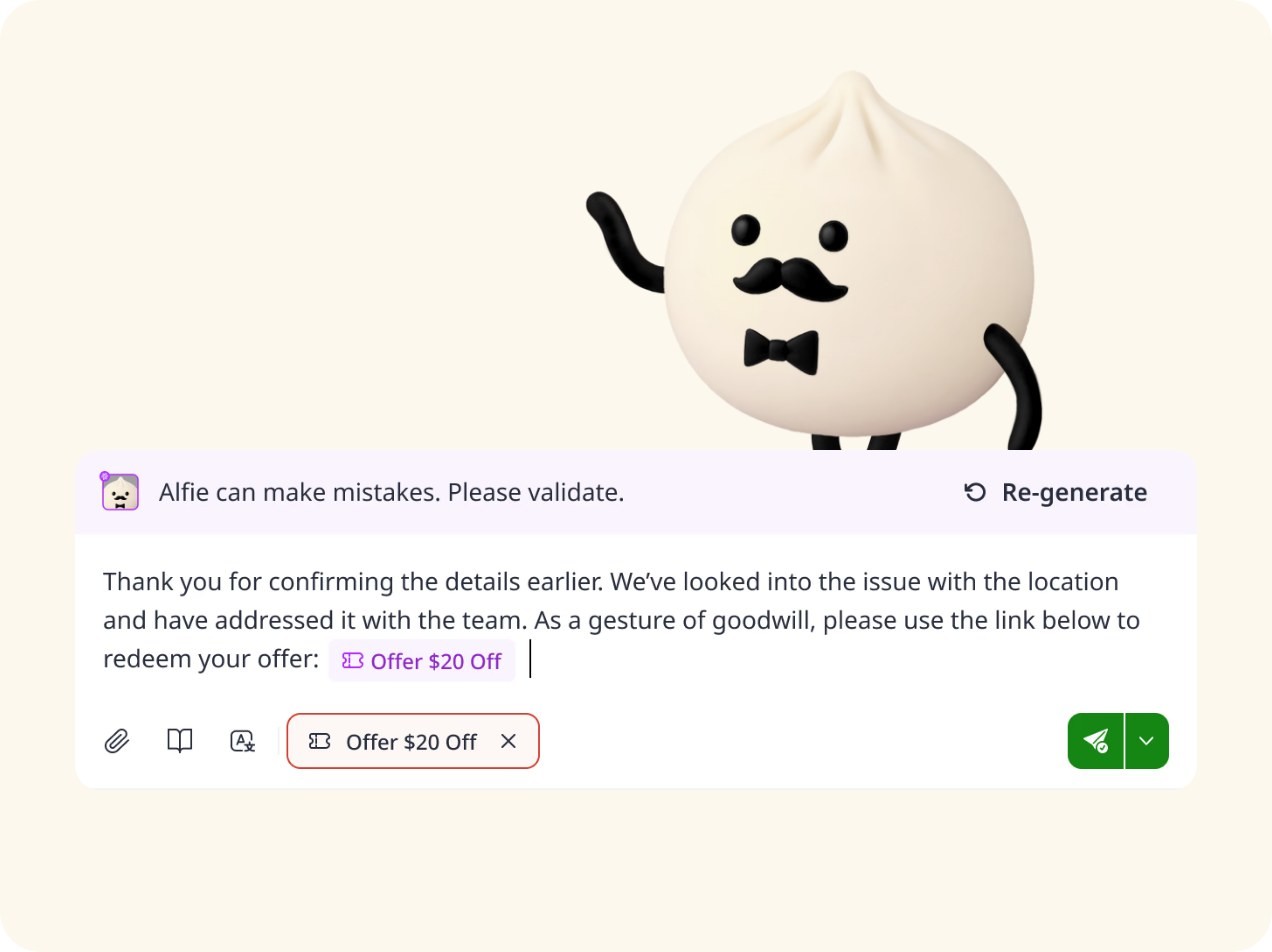
Let AI draft the first version. An AI copilot that drafts replies removes most of the effort, leaving the manager to check facts and add a personal detail. Replies stay consistent when the assistant is trained to sound like your brand at every location.
Report the rate where managers see it. A weekly location ranking turns response rate into a shared goal. Lee's Famous Recipe Chicken, for example, boosted review response rates by 24% with faster recovery and better feedback routing.
Speed tends to follow coverage. Hopdoddy cut its response time 82x across 49 locations.
Best review response rate tools
The most useful tools for improving review response rate pull every platform into one queue, show the rate by location and star rating, and make each reply fast to write without sounding generic. For franchise brands, approval workflows and permissions matter just as much.
| Tool | Best known for |
|---|---|
 MomosBest pick | Guest AI for multi-location restaurants. Reviews from Google, reservation and delivery platforms arrive in one Unified Inbox, the Alfie assistant in the AI review manager drafts and sends replies in your brand's voice, and reporting covers every location in one dashboard. |
 Birdeye | Reviews, listings and customer messaging for multi-location businesses |
 Reputation | Enterprise reputation management across reviews, listings and social media (formerly Reputation.com) |
 ReviewTrackers | Review monitoring and reporting across review sites for multi-location brands |
 Chatmeter | Local brand reputation management with review and sentiment analytics |
 Podium | Review requests and customer messaging for local businesses |
Each tool takes a different approach to coverage, AI drafting and reporting, so a short trial at a few locations is a reliable way to compare them.
Common review response rate mistakes
- Reporting only the brand average. A strong average can hide locations that rarely reply.
- Leaving negative reviews for later. These are the replies future guests read most closely, and they lose value with every day of delay.
- Using the same template everywhere. Guests notice identical replies, and generic answers do little for the reviewer or the reader.
- Changing the definition mid-year. Adding or removing star-only reviews makes your trend line meaningless.
- Measuring rate without time. Replying to every review three weeks late still leaves guests waiting.
- Ignoring delivery and booking platforms. Reviews there often go unanswered because nobody owns them.
History of review response rate
Review response rate became something you could measure once review platforms let businesses answer in public. Yelp introduced public owner comments in April 2009, and in August 2010 Google announced owner responses on Google Places for verified businesses.
Researchers soon began asking whether replies make a difference. In a 2017 Marketing Science paper, Davide Proserpio and Georgios Zervas compared the same hotels' reviews on TripAdvisor, where many hotels reply, with their reviews on Expedia, where hotels almost never do.
They found that hotels which started responding went on to receive 12% more reviews, and their ratings rose by an average of 0.12 stars. In their 2018 Harvard Business Review summary, Replying to Customer Reviews Results in Better Ratings, they noted that roughly one in three TripAdvisor reviews received a management response.
As reviews multiplied across Google, delivery apps and booking platforms, response rate became a standard line in online reputation management dashboards, usually next to response time. AI-drafted replies have since made high response rates achievable for brands with hundreds of locations.
Frequently asked questions
How do you calculate review response rate?
Divide the number of reviews you replied to by the number of reviews you received in the same period, then multiply by 100. If your locations received 240 reviews last month and you answered 186 of them, your review response rate is 77.5%.
What is a good review response rate for a restaurant?
There is no published industry standard for restaurants. Many brands aim to answer every 1- to 3-star review and most reviews with written comments. Your own trend, and the gap between your best and weakest locations, are usually the most useful comparisons.
Should I reply to every positive review?
Replying to positive reviews thanks loyal guests and shows readers that someone is listening. The research is mixed. In hotel data, Wang and Chaudhry (2018) found that visible replies to positive reviews were followed by less favorable ratings from later reviewers. A short, warm thank-you, with most of your effort going to negative and mixed reviews, is a sensible balance.
Does review response rate affect Google rankings?
Google's guide on how to improve your local ranking lists replying to reviews among its tips, alongside accurate business information and photos. Google doesn't say how much replies weigh in its rankings.
Do star-only reviews count in the response rate?
That's your choice, as long as you apply it consistently. Many teams count only reviews with written text, since a star-only rating leaves little to respond to. Whichever rule you choose, keeping it the same each month is what makes the trend meaningful.
What is the difference between response rate and response time?
Response rate measures how many reviews receive a reply, and response time measures how long guests wait for it. A team can reply to every review two weeks late, so tracking both gives the full picture. Black Rock Coffee Bar, for example, reduced its response time by 99%.
Can AI help improve review response rate?
Yes. AI assistants can draft replies in your brand's voice for a manager to approve or send automatically, which removes most of the effort behind each reply. Brands such as bb.q Chicken doubled their response rates after adding AI-powered review management.