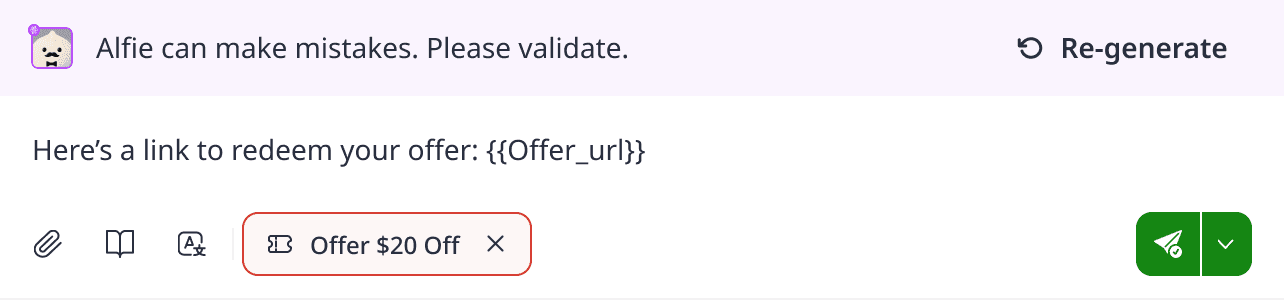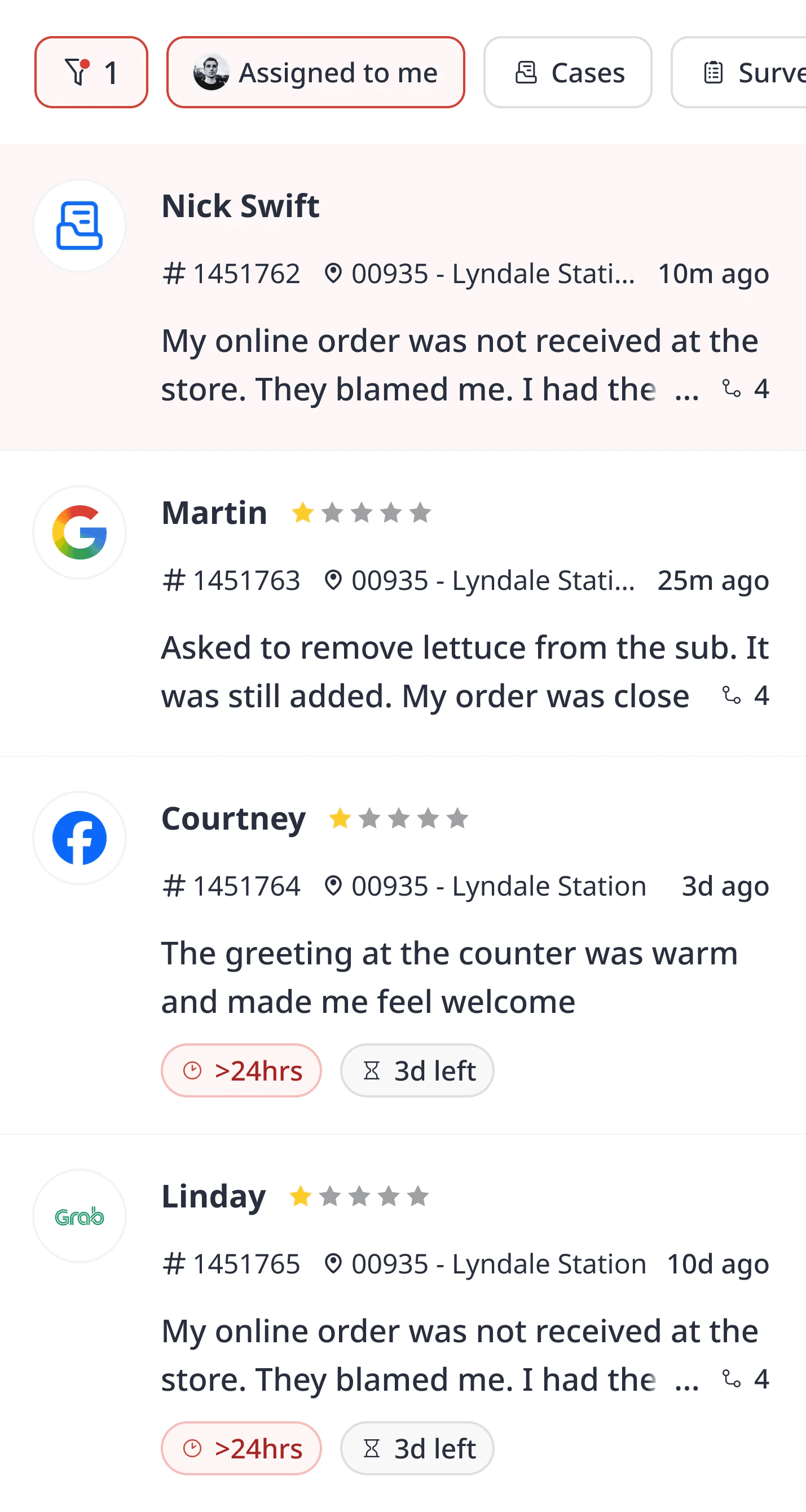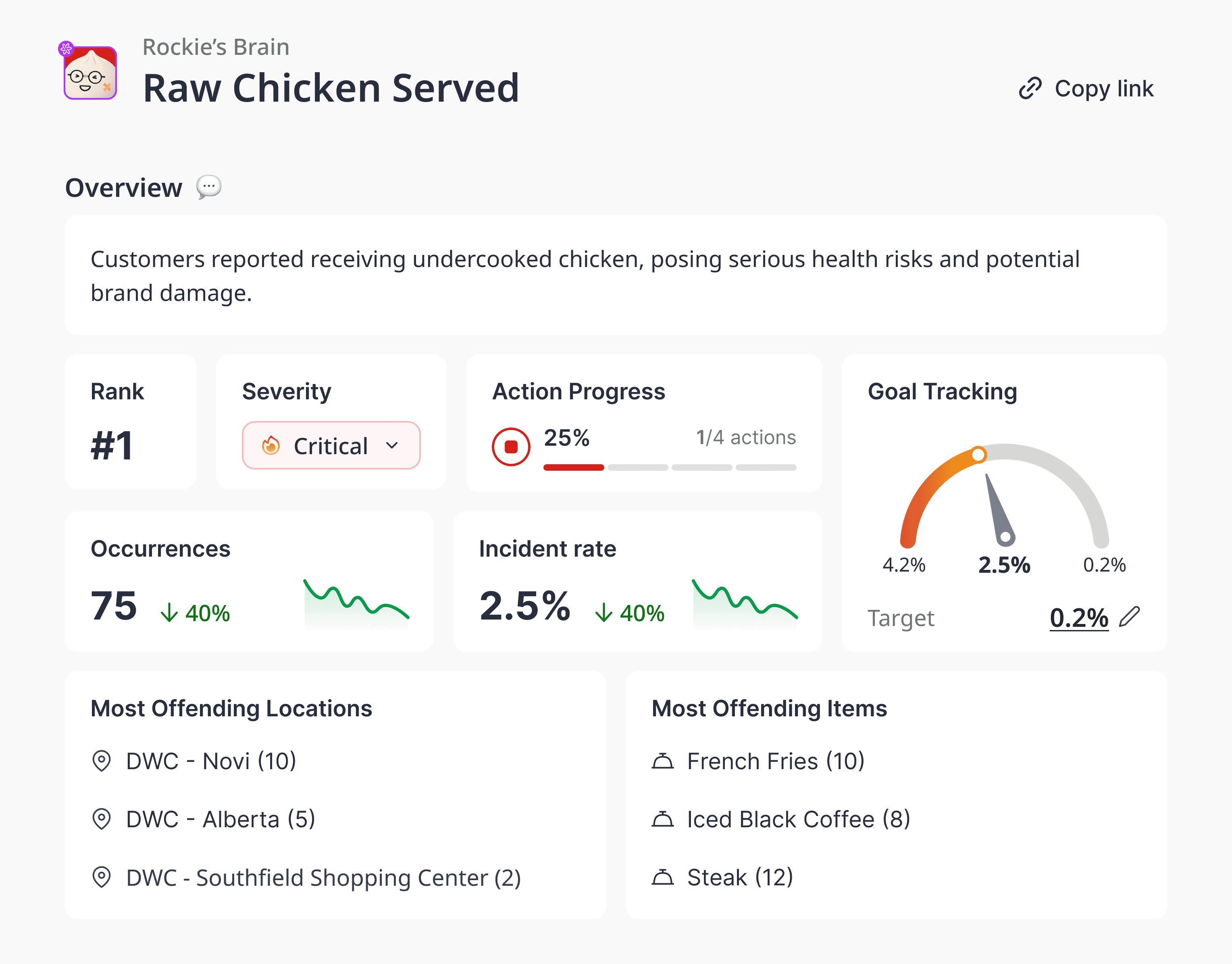
Brand is what people think before they ever walk in. Your ads, your logo, your social posts, the vibe your name gives off. The trap here is promising too much. If your marketing says "fast, friendly, and always fresh," every location now has to hit that bar every single day. Keep your messaging honest and only commit to what your stores can actually deliver every time.

Franchise Reputation Management: Definition, Trends, Best Practices
Written By: Vincent Nguyen
Most restaurant operators think about “reputation management” as a defensive activity. That's reactive reputation management.
Reactive reputation management costs you more than you think.
In F&B, reputation is your marketing engine. For franchises, one underperforming location drags down your entire brand. Guests don't deliberate between a 4.8 and a 3.9 — that star gap is a revenue gap.
From 700+ restaurant partnerships, here's what we cover:
What franchise reputation management is and why it's different from single-location management
How to manage reputation at scale across every location
How to respond to reviews consistently while keeping brand voice across franchisees
How to measure reputation by location and turn feedback into fixes
The best tools to manage franchise reputation without adding headcount
Let's get into it. ↓
What is Franchise Reputation Management?
Restaurant reputation management is the process of monitoring, responding to, and addressing feedback from many sources.
The more positive reviews a restaurant receives, the better the public perceives it. Everyone loves a 5-star.
On the flip side, nothing affects business like negative feedback. In fact, 22% of customers will not dine at a restaurant after reading a single negative review.
For restaurant franchises, the process of reputation management comes with several interesting challenges, such as:
Managing reviews across dozens (or hundreds) of locations at once
Maintaining a consistent brand voice across franchisees with different operators
Spotting which locations are underperforming before it becomes a bigger problem
Preventing one location's bad reputation from spilling over to the rest of the brand
Turning scattered guest feedback into actionable insights at the network level
9 Factors Affecting Franchise Reputation
Your reputation is more than just your branding or your food. Everything a guest experiences, before, during, and after buying from you, shapes what they say about you online.
That means there are so many factors that can affect your reputation:
1
Food quality2
Wait time3
Order accuracy4
Staff attitude and friendliness5
Cleanliness6
How you handle complaints publicly7
Listing accuracy across platforms8
Review recency and volume9
Delivery platform ratingsHere are some stats to show you why each of these factors actually matters:
| Factor | Stat | Insight | Source |
|---|---|---|---|
| Food quality | 80% of diners | more likely to visit a restaurant with positive food quality reviews | HungerRush |
| Wait time | 20–30% of guests | abandon during peak times, costing a typical restaurant ~$46,800/year in lost revenue | ScanQueue |
| Order accuracy | 26% of negative reviews | cite incorrect orders, the third most common complaint after service and food quality | HungerRush |
| Staff attitude | 57% of negative reviews | are triggered by poor service, making staff attitude the single biggest driver of bad reviews | HungerRush |
| Cleanliness | 75% of consumers | will not visit a restaurant after reading negative reviews about its cleanliness | Harris Poll / Cintas |
| Handling complaints | 61% of unhappy guests | will return if their issue is resolved quickly and publicly | Semrush |
| Listing accuracy | Affects local SEO | inaccurate name, address, or hours signal low credibility to Google, hurting search ranking across all locations | Birdeye |
| Review recency and volume | 73% of consumers | only trust reviews written in the last month — a newer review set can outrank higher-volume competitors | WiserReview |
| Delivery platform ratings | Affects order visibility | low ratings on Uber Eats or DoorDash push your listing down in search, reducing orders regardless of in-store reputation | Orders.co |
Core Pillars Of Franchise Reputation Management
There are three layers of reputation that you need to manage:
-
1
Brand — the promise you make
-
2
Delivery — what actually happens
This is the hardest layer. Every location runs a little differently depending on who's managing that day, how recent the last training was, and how much the staff cares. Customers don't blame the one bad location — they blame the whole brand. Regular check-ins, shared training, and catching struggling stores early are the most important things you can do to protect how people see you.
-
3
Feedback — what people say after
Reviews are what the next customer reads before deciding whether to show up. Use them as a map to find delivery problems — patterns in what people complain about tell you exactly which stores need attention. Reply to everything quickly and like a human. A good response to a bad review does more for the people reading it later than it does for the person who wrote it.
Want a tool to help you manage reputation?16 Best Restaurant Reputation Management Software
3 Practical Strategies To Manage Your Franchise' Reputation

Alfie tip
Let Alfie handle review responses for you. He is the AI agent for Customer Support from Momos that catches new reviews instantly and drafts smart, on-brand replies, so your team spends less time typing and more time serving guests.
Meet Alfie
3. Turn review insights into operational improvements
Every complaint about wait times, cold food, or a rude interaction is a data point. When aggregated and analyzed, those data points tell you exactly where your network is breaking down.
The challenge is that raw review volume makes this impossible to do manually. Across 50, 100, or 500 locations, you need a system that categorises, aggregates, and surfaces patterns automatically.
Here are the operational questions your review data should be answering:
-
1
Which locations are underperforming and why
A dropping rating at one branch is a symptom. The cause might be a staffing gap, a training issue, or a specific menu item. Review data categorised by theme tells you which it is.
-
2
Which complaint types are systemic vs. isolated
If wait time complaints appear at one location, that's a local problem. If they appear across twelve, that's a process problem. The distinction changes how you respond entirely.
-
3
How satisfaction scores shift over time
Tracking CSAT or OSAT trends week-over-week lets you measure whether an intervention actually worked and catch problems before they compound.
-
4
What's driving your best reviews
Positive patterns are just as actionable as negative ones. If a specific staff member, dish, or experience element keeps showing up in 5-star reviews, that's something to replicate and train toward.
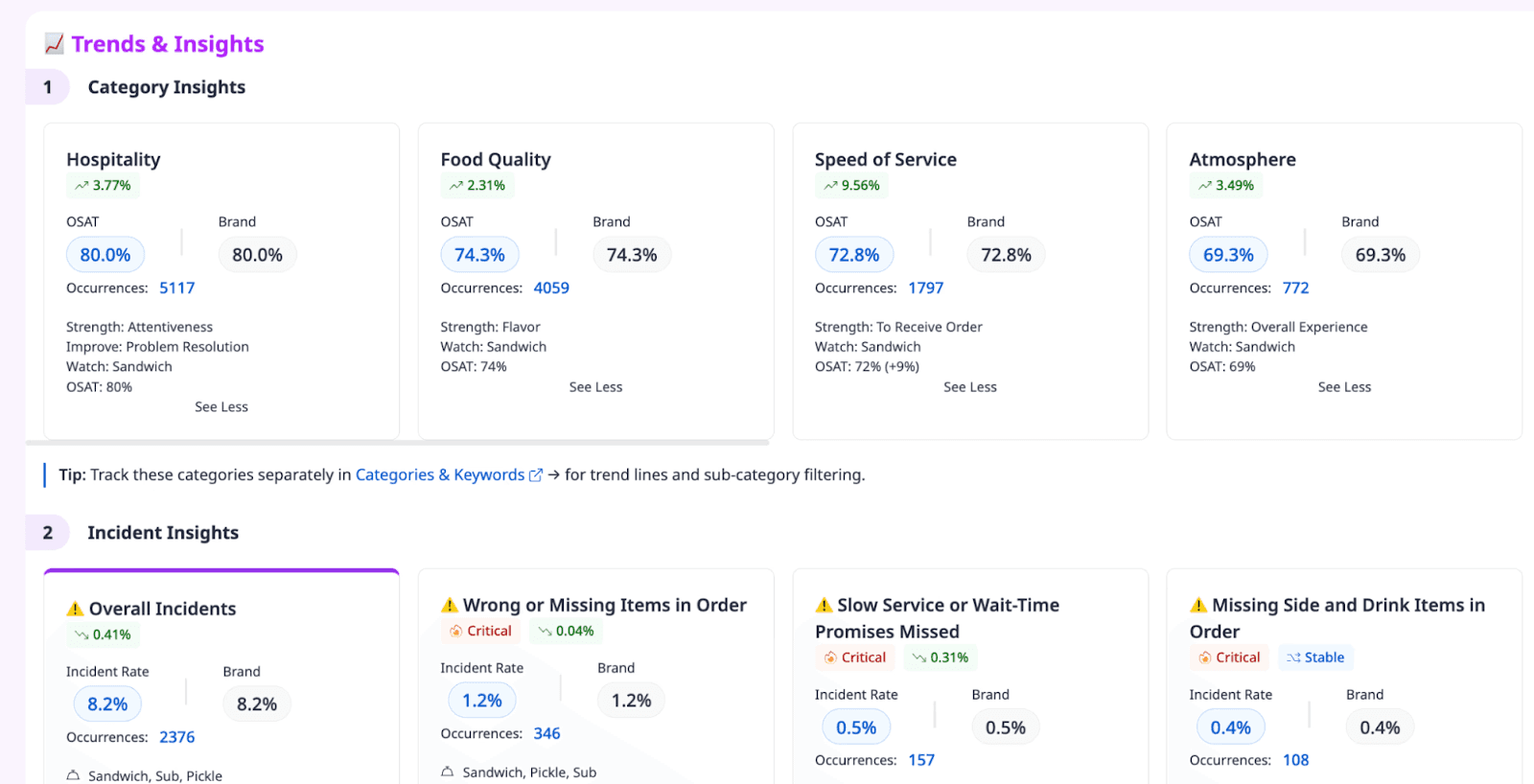
This is exactly what Momos Operational Insights is built for. Using AI categorisation across every review source, Momos builds dashboards that give you a bird's-eye view of operational health across all your stores — with the ability to drill down by location, incident type, time period, or satisfaction metric.
Momos Insights
A complete operational picture — across every location
In this dashboard, you can see OSAT broken down by category across a restaurant network, alongside the major incident types each location is experiencing. What used to take a regional manager days to compile is surfaced automatically, in real time.
With that level of visibility, the payoff compounds quickly. You can fix issues at one location before they spread across the network. Your operations team can prioritise training investment based on real evidence. And your marketing team can build campaigns around the experience qualities that are already driving loyalty — rather than guessing.
See how Momos turns guest feedback into
a real-time operational intelligence layer.
 AI agents automate all guest interactions, 24/7, across all locations of your restaurant.


" transform="translate(3.219 19.212)" width="152.45224485148515px"/><path d="M 0 11.619 C 7.071 11.39 33.491 21.738 40.35 21.268 C 38.499 18.19 37.116 14.915 35.507 11.625 C 33.7 7.867 32.587 3.926 31.702 0" fill="transparent" height="21.28391189647101px" id="I9fuJaf7q" stroke-dasharray="" stroke-linecap="round" stroke-linejoin="round" stroke-width="4.97" stroke="rgb(0, 0, 0)" transform="translate(139.727 55.754)" width="40.34950693069311px"/></svg>)