How To Improve Restaurant Service Quality?
Written By: Vincent Nguyen

Guests remember how your restaurant made them feel long after they've forgotten what they ordered.
Service quality is one of the few factors of restaurant operations that is fully within your control. Food costs may fluctuate, rent may fluctuate, but the systems and culture that shape how your team treats guests are entirely yours to build and improve.
In this guide, we'll cover 10 practical ways to raise the bar on your restaurant service quality.
Principles To Improve Restaurant Service Quality
1. Consistency over excellence
Guests return because they trust that every single time they come, the experience will be the same. A restaurant that delivers a reliably strong guest experience will always outperform one that occasionally delivers an exceptional one. Raising the floor matters more than raising the ceiling.
2. Culture drives service
No training program outperforms a strong culture. The way your team treats guests is a direct reflection of how leadership treats your team. Policies and scripts can set a baseline, but the culture you build determines how far above that baseline your team is willing to go.
3. You can only improve what you measure
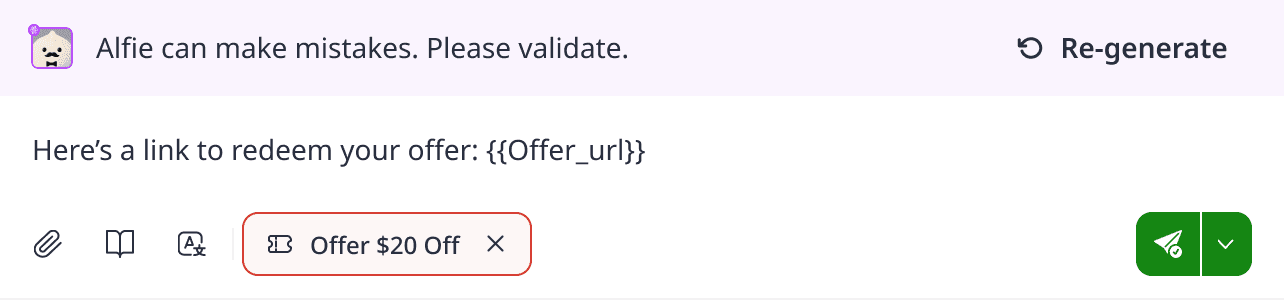
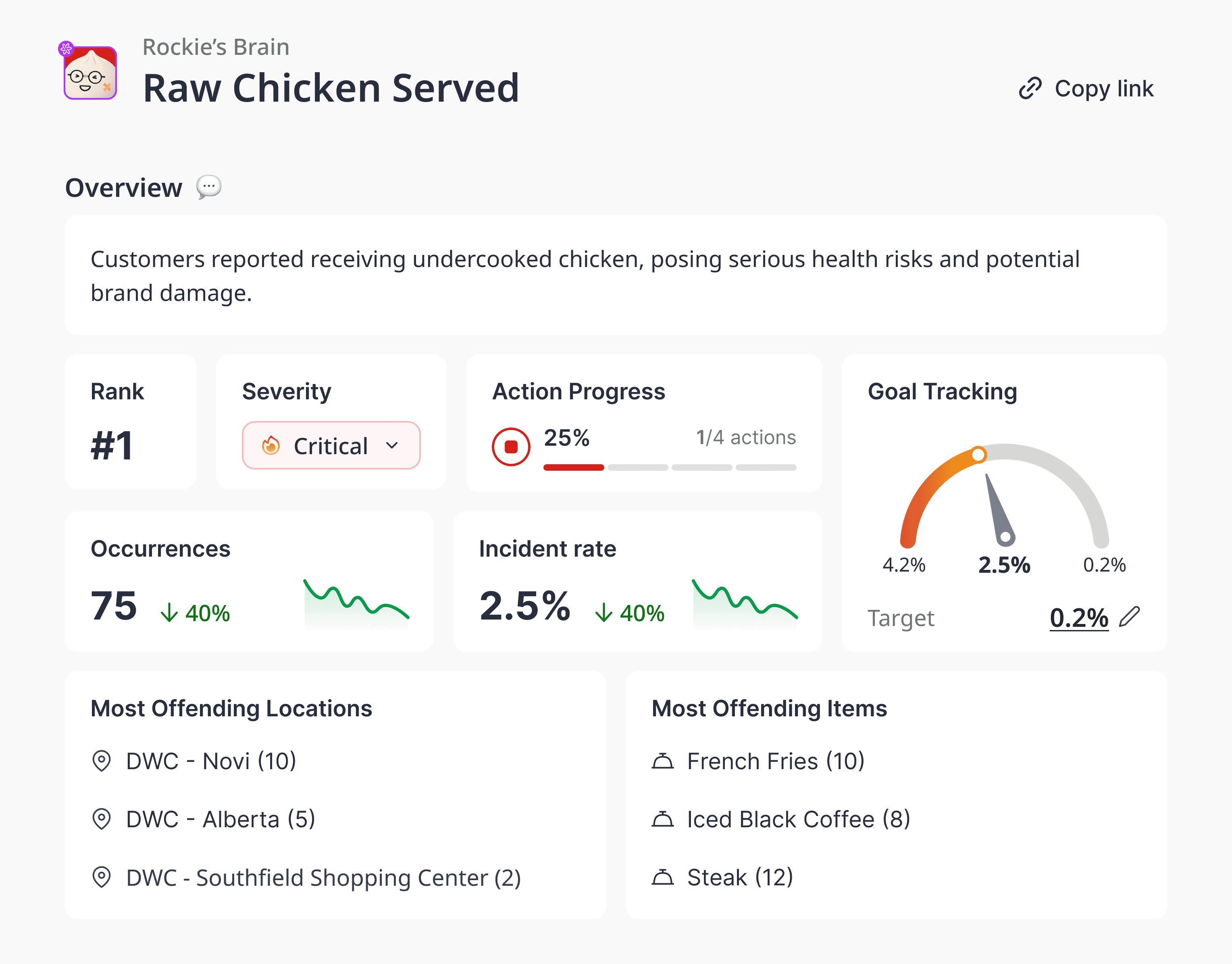
The restaurants that truly improve service quality over time are the ones that treat guest feedback as operational data. When all aspects of your restaurant are properly tracked, you can identify gaps in the operations that can be improved.
10 Tips To Improve Restaurant Service Quality
1. Define what good service looks like for your restaurant
Most service problems start with ambiguity. Your team can't deliver a consistent experience if they don't know what that experience is supposed to look and feel like.
That's why you need to document everything. Literally, write everything down:
What's the greeting when a guest walks in?
How quickly should a table be acknowledged?
What's the right response when something goes wrong?
Together, they form what is known as the "Standard Operating Procedure" (or, SOP). Once this standard exists, you can train to it, measure against it, and improve it over time.
After all, if you don't know what "good" looks like in a tangible sense, how can you achieve it?
2. Hire for attitude but train for skill
Technical skills are mostly teachable. It takes time, sure, but it is teachable.
On the other hand, attitude is pretty hard to teach, since it's ingrained in the personality. Warmth, attentiveness, and genuine care for guests are much harder to develop in someone who doesn't already have them in their heart.
When you're hiring front-of-house staff, pay attention to how candidates communicate, how they handle pressure in the interview, and how they treat people around them. A technically average server with a great attitude will outperform a skilled one who doesn't enjoy the work.
The culture you build starts at the hiring stage.
3. Treat your staff the way you want them to treat guests
If your team feels rushed, undervalued, or unclear on expectations, that energy will subtly impact guests. In fact, guests pick up on it faster than you think.
This doesn't mean over-managing or over-praising. It means that you should work to communicate clearly and provide your staff what they need to do their job well. As a restaurant manager, you must set the tone.
4. Use pre-shift briefings to set the tone
A five-minute briefing before service starts pays for itself quickly. It gives you a chance to flag anything unusual, remind the team of a standard that's slipping, and get everyone aligned before the first guest walks in.
It also signals that service is something you take seriously as a leader. That signal matters more than the content of the briefing itself.
Keep it short, specific, and consistent. The habit is the point.
5. Map the guest journey from arrival to departure
Walk through your restaurant as a guest would. From finding parking to reading the menu to waiting for the check. Every step is a touchpoint, and every touchpoint is an opportunity to either build trust or lose it.
Most service gaps aren't in the obvious places. They're in the handoffs, the wait between courses, the moment a guest tries to catch someone's eye and can't. Mapping the journey helps you find the gaps you've let slipped.
6. Resolve complaints on the spot
A guest who raises a complaint and gets it handled well often leaves more satisfied than one who had no complaint at all. The recovery matters as much as the original experience.
Train your team to take ownership of complaints rather than escalating everything to a manager. Give them clear guidelines on what they're empowered to offer, a comp, a replacement dish, a sincere apology. Speed and sincerity are what guests remember.
Complaints that get passed around or ignored are the ones that end up in reviews.
7. Pay attention to pacing
Bad pacing is one of the most common service failures, and one of the least discussed. A table that waits 40 minutes for a main course has a bad experience regardless of how good the food is. So does a table that feels rushed through their meal.
Pacing is a team effort. It requires communication between front and back of house, awareness of how long each table has been seated, and a server who reads the room rather than following a rigid sequence.
Teach your team to notice it. Most service staff focus on what to deliver.
8. Read and respond to your online reviews
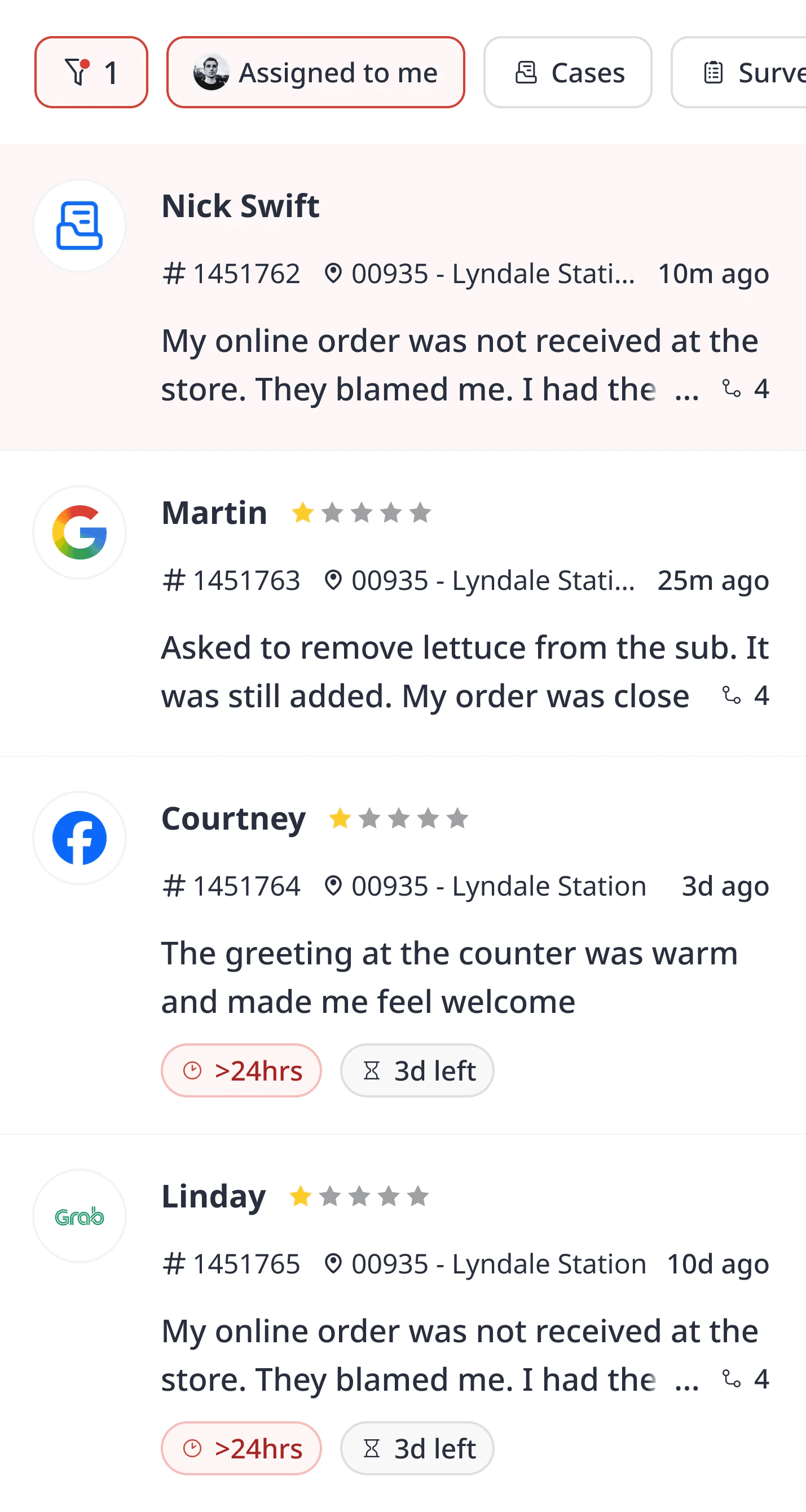
Your reviews are one of the most direct feedback channels you have. Guests who leave reviews are telling you exactly what moved them, positively or negatively. That's valuable data.
Read them with that lens. Look for patterns across multiple reviews rather than reacting to individual ones. If three different guests mention the same issue in a month, that's a signal, not a coincidence.
Responding publicly also matters. A thoughtful response to a negative review shows prospective guests that you take service seriously.
9. Track service metrics, not just revenue
Revenue tells you what happened. Service metrics tell you why
Restaurant performance metrics give you a clearer picture of where your service is strong and where it's slipping.
You don't even need a sophisticated system to start. A simple monthly review of your ratings across Google, Yelp, and any delivery platforms you use is enough to surface trends.
What gets measured gets managed. Pick two or three metrics and track them consistently.
10. Build a feedback loop with your team
Your staff see things you don't. They know which tables consistently complain, which menu items create confusion, which parts of the operation slow everything down. That knowledge is sitting in your restaurant right now.
Create a simple way to surface it. A standing question at the end of the week, a shared note where staff can flag recurring issues, a culture where raising a problem is welcomed rather than ignored.
The restaurants that improve over time are the ones where feedback moves in both directions. Not just from leadership down, but from the floor back up.
 AI agents automate all guest interactions, 24/7, across all locations of your restaurant.


" transform="translate(3.219 19.212)" width="152.45224485148515px"/><path d="M 0 11.619 C 7.071 11.39 33.491 21.738 40.35 21.268 C 38.499 18.19 37.116 14.915 35.507 11.625 C 33.7 7.867 32.587 3.926 31.702 0" fill="transparent" height="21.28391189647101px" id="I9fuJaf7q" stroke-dasharray="" stroke-linecap="round" stroke-linejoin="round" stroke-width="4.97" stroke="rgb(0, 0, 0)" transform="translate(139.727 55.754)" width="40.34950693069311px"/></svg>)