Local SEO For Restaurants: How-to, Trends, Best Practices
Written By: Vincent Nguyen
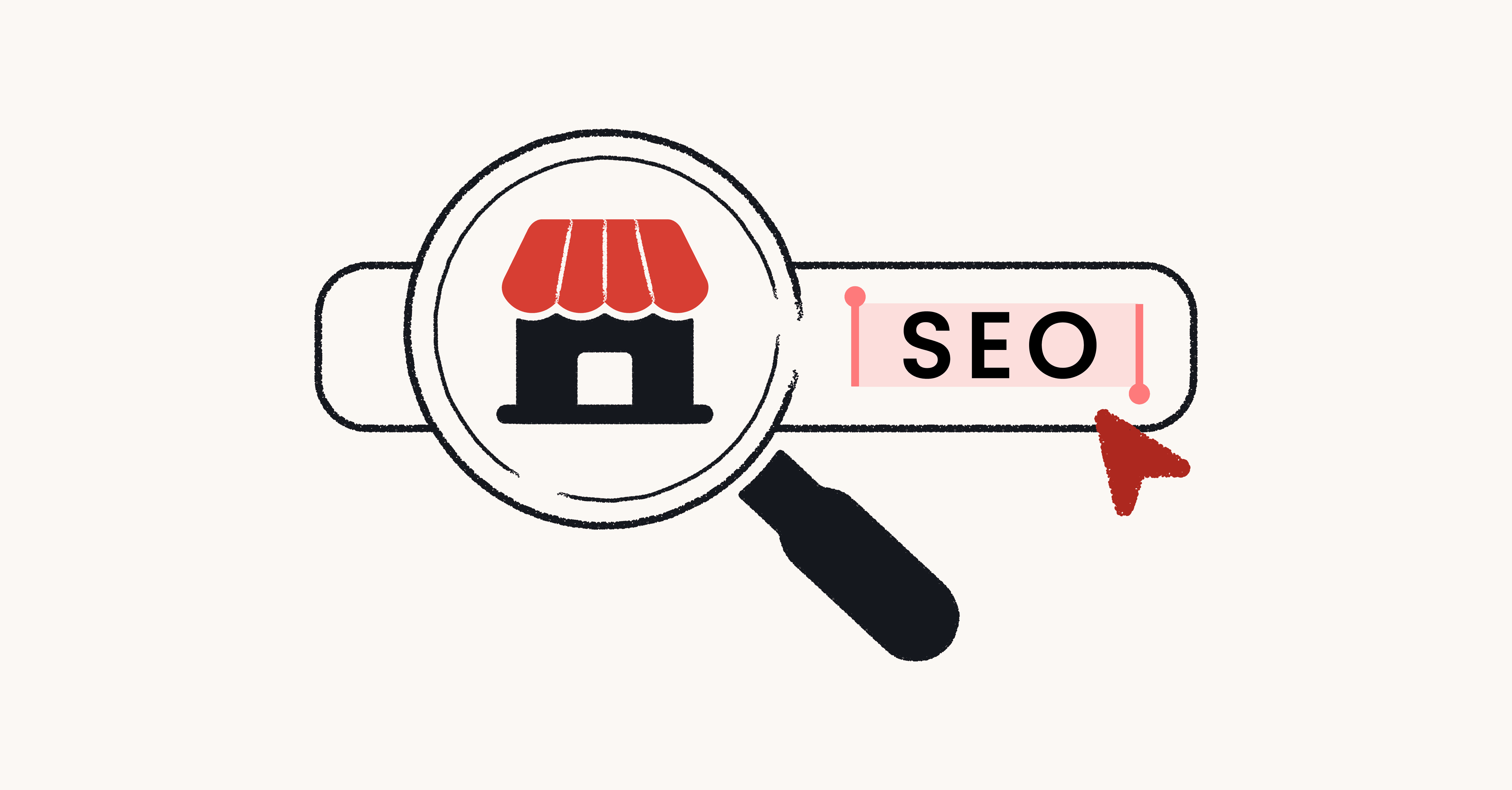
Local SEO is the most effective way to generate consistent guests for your restaurant.
If you think like a customer for a moment, you should see why:
They search, and they're ready to go. Someone nearby is hungry right now, and they type "best tacos near me" or "brunch spots open Sunday." If your restaurant isn't showing up in those results, that guest is walking into someone else's door.
They check your reviews before they decide. Once a guest finds you on Google, the first thing they do is read your reviews. A low rating, no recent feedback, or unanswered complaints can quietly turn them away. Guests trust other guests, so your reputation on Google is just as important as the food on your menu.
They look at your photos and make up their mind. Before clicking "Get Directions," most guests scroll through your images. A well-optimized Google profile with great visuals turns curious searchers into confirmed reservations.
What is Local SEO?
Local SEO helps your restaurant show up when nearby customers search for what you offer.
For example, when someone looks up “best Japanese buffet in San Jose,” your business can appear right when they’re deciding where to eat:
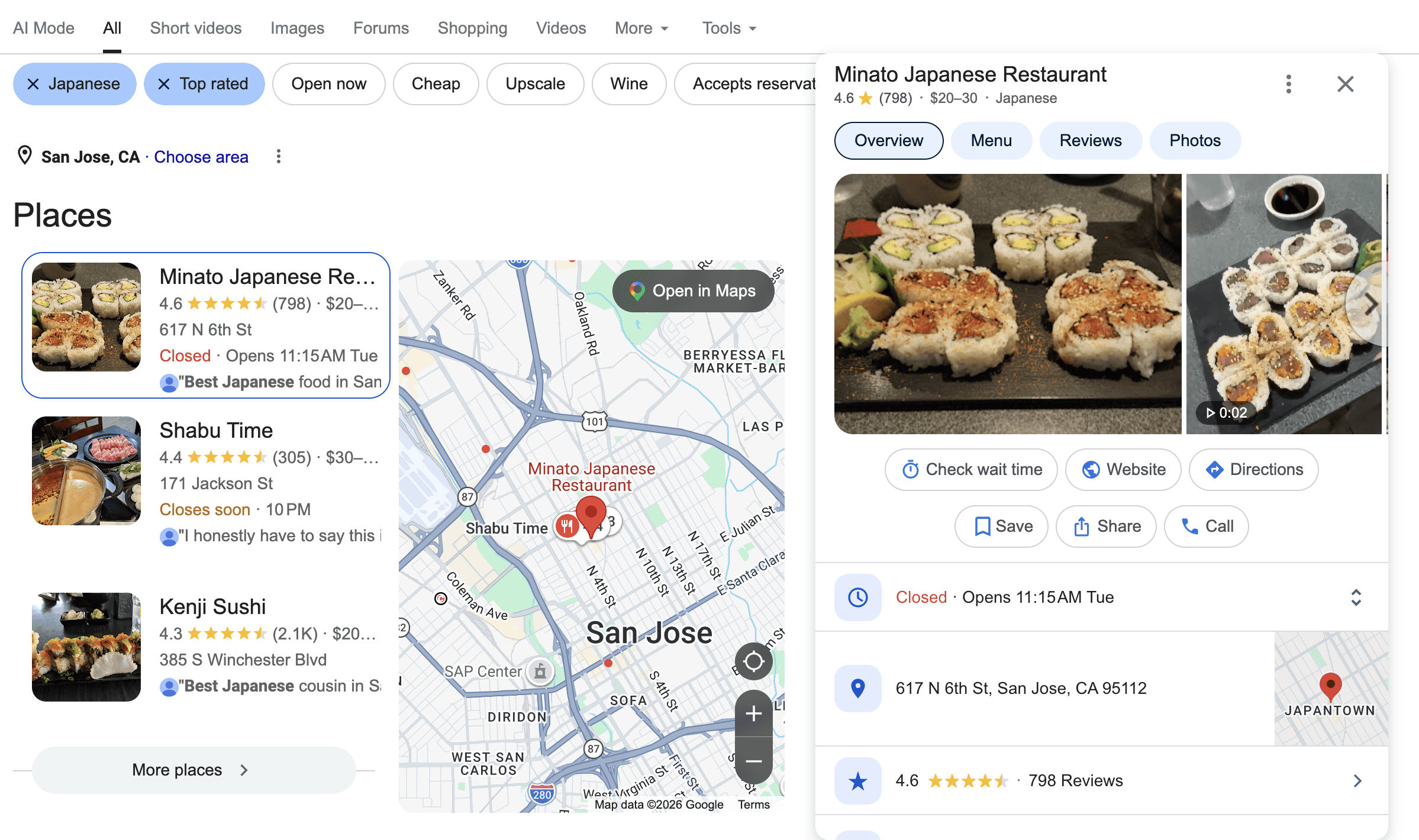
A strong online presence means more foot traffic, more calls, and more reservations from your local area—all by showing up in the right place at the right moment.
How Does Local SEO Work For Restaurants?
At a high level, SEO for restaurants works the same way as SEO in any other industry.
When someone searches on Google, the platform scans its index to deliver the most relevant results for that query.
So how does Google decide what counts as the “best” result? It evaluates a wide range of ranking signals to determine which pages deserve to appear first.
There are thousands of these signals, but here are the eight that we found to matter most:
Relevance: if your restaurant matches what the guest is searching for
Google Business Profile: if your listing is complete and up to date
Reviews and Ratings: if guests trust you based on your star rating and recent feedback
Local Citations: if your business info is consistent across the web
Backlinks: if other reputable sites are linking back to yours
On-Page SEO: if your website is properly optimized with the right keywords and structure
Page Experience: if your site loads fast and works well on mobile
Proximity: if your restaurant is physically close to the person searching
How Does Google Display SEO Results For Restaurants?
There are three ways in which Google shows your restaurants to searchers:
1. The Map Pack
When someone searches for a restaurant, Google shows a map with three business listings at the top of the results:
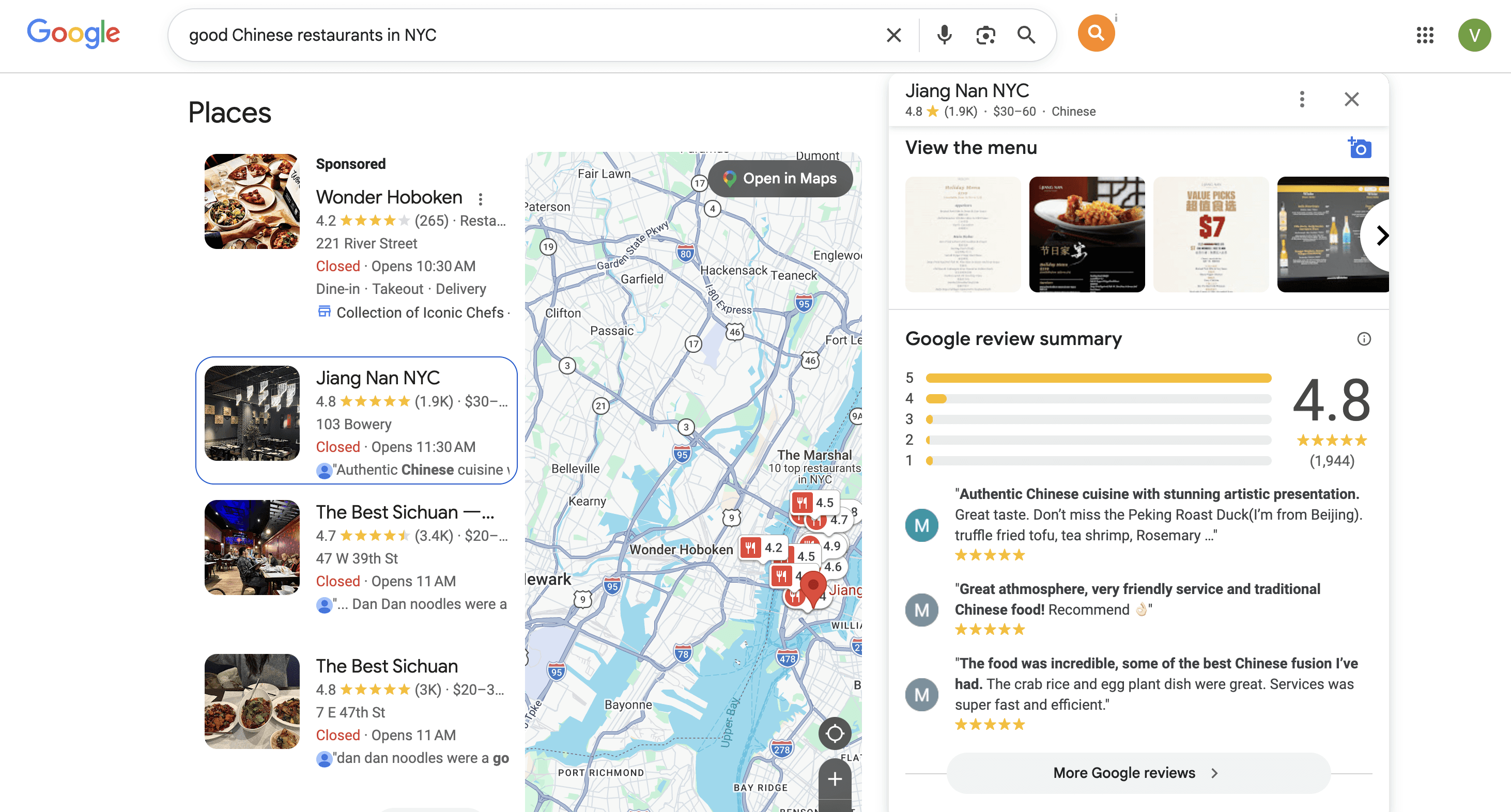
This is known as the “map pack” or “local pack.”
And ranking here is the main goal of the local SEO game. Remember, the higher you are listed, the large share of clicks you get. In fact, organically ranked results get an even higher share of click compared to paid ad results:
GBP Listing Type | CTR |
|---|---|
Local Pack Position #1 | 17.6% |
Local Pack Position #2 | 15.4% |
Local Pack Position #3 | 15.1% |
Local Service Ad Box – Left | 3.1% |
Local Service Ad Box – Middle | 2.8% |
Local Service Ad Box – Right | 2.5% |
In other words, ranking high on the Map Pack gives you traffic (often for free) without you having to spend a lot of money on paid ads, and you get even higher CTR compared to running ads.
2. AI Overview
In some cases, Google shows an AI-generated summary before the map pack.
For example, here I searched for "best restaurants in Noe Valley with a view", and AI has shortlisted a few restaurants in the area for me.
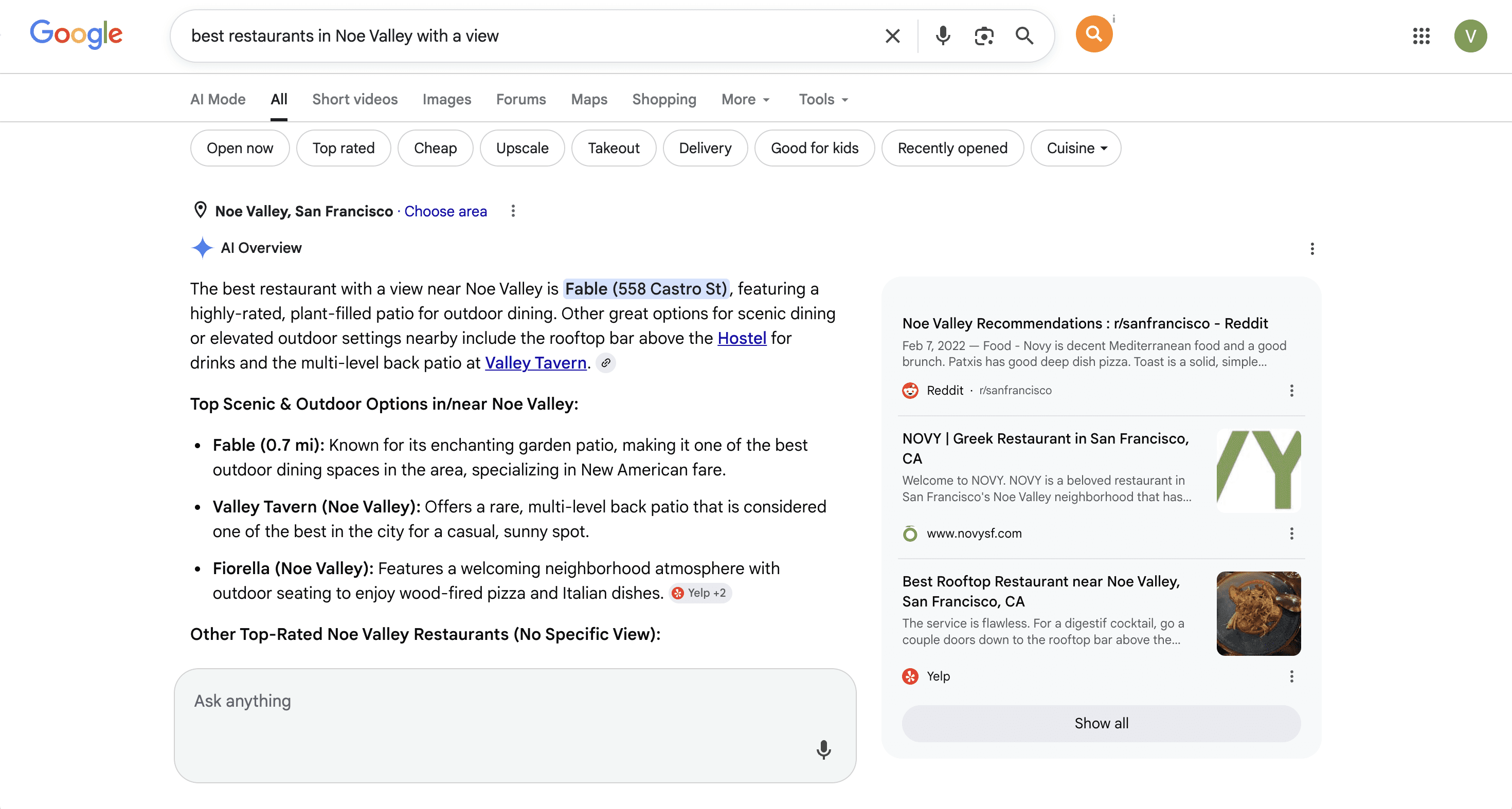
Traditional Map Pack usually can't provide information at such level of granularity. To maximize User Experience, Google needs to use AI to aggregate data for you and makes the most suitable recommendations.
The fundamentals behind ranking in AI Overviews are still very similar to traditional SEO. It ultimately comes down to earning visibility by being the most relevant, trustworthy, and useful source for the query.
3. Organic results
Just below the map pack, you’ll usually find the local organic results. This is the traditional SEO search result that leads to website.
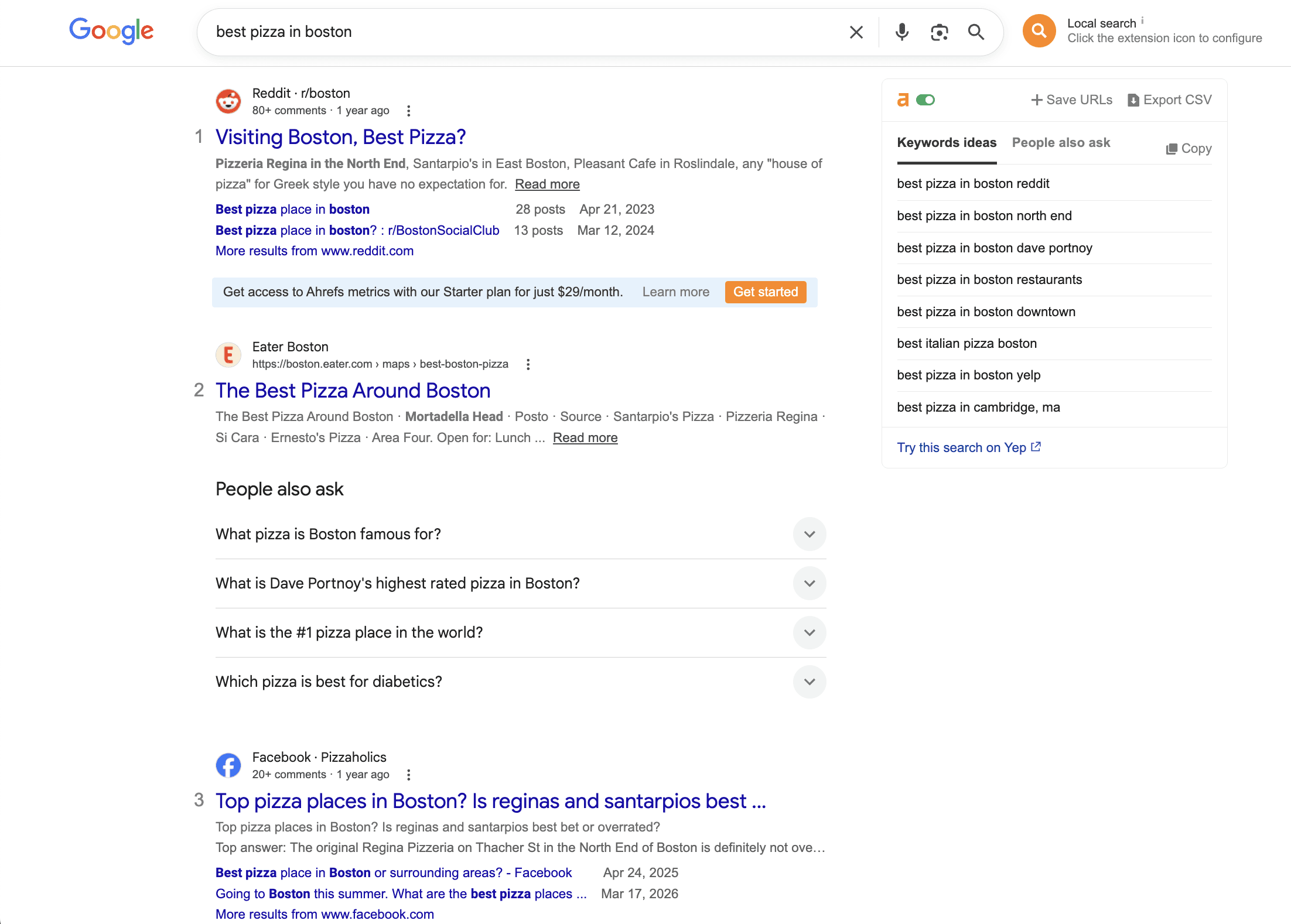
They may appear lower on the page, but they’re still a major driver of traffic and conversions for your restaurants.
6 Local SEO Best Practices For Restaurants
Want to appear in that Map Pack and improve the fame of your restaurant? Here are 6 actions you need to take:
Optimize your Google Business Profile completely
Manage your reviews (even the bad ones)
Use location-specific landing pages
Add your Menu
Build local backlinks
Monitor Your Progress and Rankings
1. Optimize your Google Business Profile completely
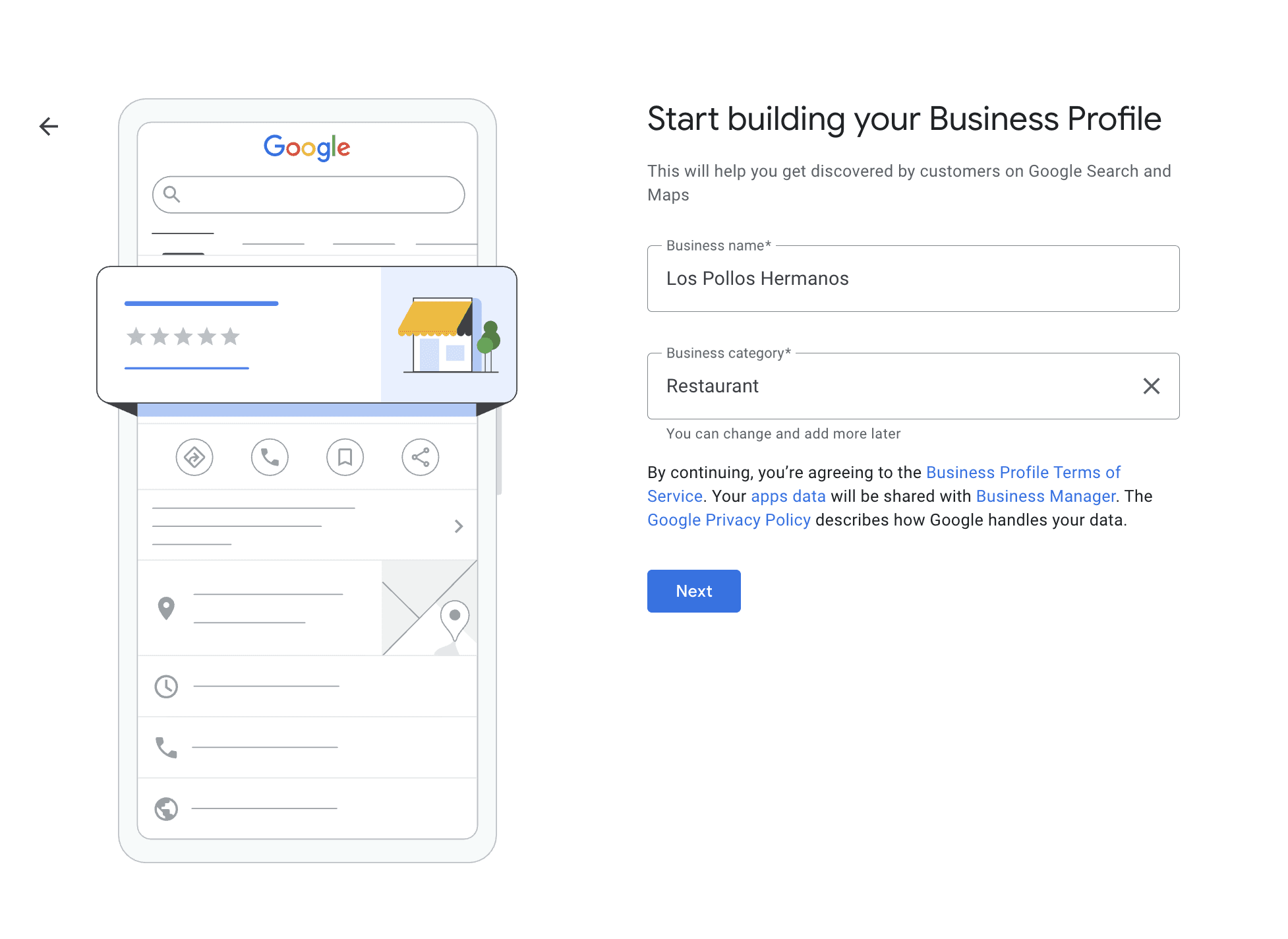
Your Google Business Profile is the most important asset for local SEO.
If you haven’t set up or optimized it yet, this step-by-step guide will walk you through everything you need to know:
Write a clear business description: Summarize what your business offers, who you serve, and where you're located. Include your relevant local keywords from Step 1 naturally, but avoid keyword stuffing.
Keep your NAP consistent: Your name, address, and phone number should match exactly across your GBP, website, and third-party listings.
Link to the right page: If you have multiple locations, link each profile to its dedicated location page, not your homepage.
Choose the right categories: Pick the most accurate primary business category and add relevant secondary ones to expand keyword coverage.
Add products and services: Use these sections to describe exactly what you offer, in your own words.
Upload high-quality photos: Showcase your team, space, and offerings to help users choose you over competitors.
Update hours and info regularly: Make sure hours, holiday closures, and other key info are always accurate to avoid confusion and negative reviews.
2. Manage your reviews (even the bad ones)
Google reviews are the foundation of any local business (including your restaurant) and they play a direct role in your local SEO performance.
Google looks at review signals like quality, quantity, and recency to decide how businesses rank in the Map Pack.
When you consistently meet these three factors, you increase your chances of showing up in search results and attracting more visitors—both online and in person.
In competitive markets, strong ratings can be the deciding factor between getting clicked or being overlooked.
Here’s what you can do to improve your Google ratings:
Step 1. Ask for reviews
Strong reviews don’t happen by chance—they come from a consistent, intentional system.
Ask consistently: Make review requests part of your post-dining flow, whether it’s on the receipt, in a follow-up text, or as part of a server’s closing line.
Time it right: Ask right after a great experience, while the meal is still fresh and guests are most likely to say yes.
Be specific: Instead of a generic “Leave us a review,” try something like, “Would you mind leaving a quick Google review about your experience with our [dish / brunch / private dining]?"
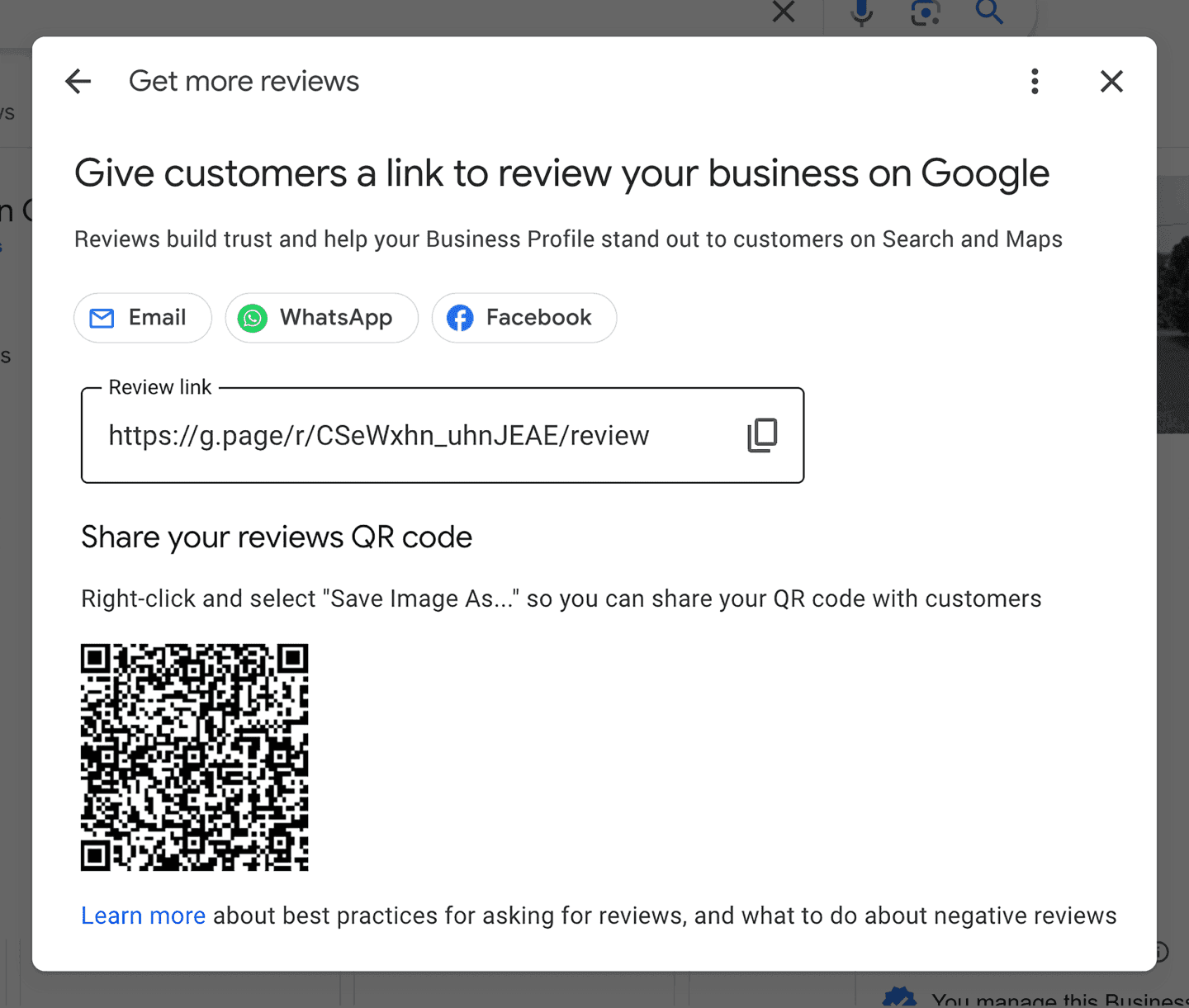
To create a QR code for guest to leave reviews:
Go to your Google Business profile
Select Read Reviews > Get more reviews
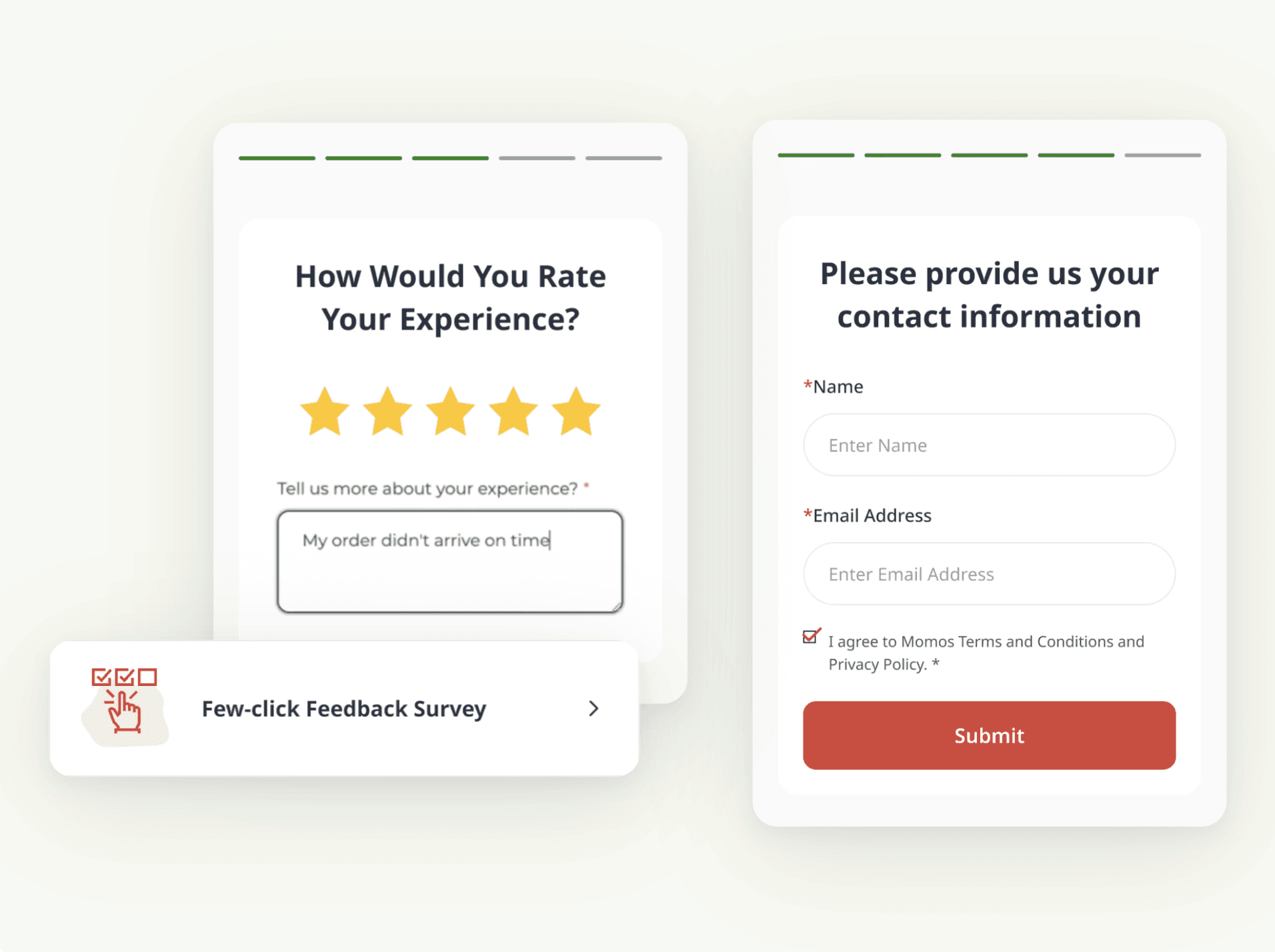
You can share the link or QR code directly or use the other options. For example, in survey software for restaurants, you can build a full survey to gather customer feedback and build out marketing campaigns based on that wealth of data.
Step 2. Respond to reviews
Google has confirmed that responding to reviews helps strengthen your local presence.
Momos’ customer data supports this as well. In a multi-year analysis of two enterprise restaurant chains, we found a clear pattern: the higher the reply rate, the higher the overall star rating.
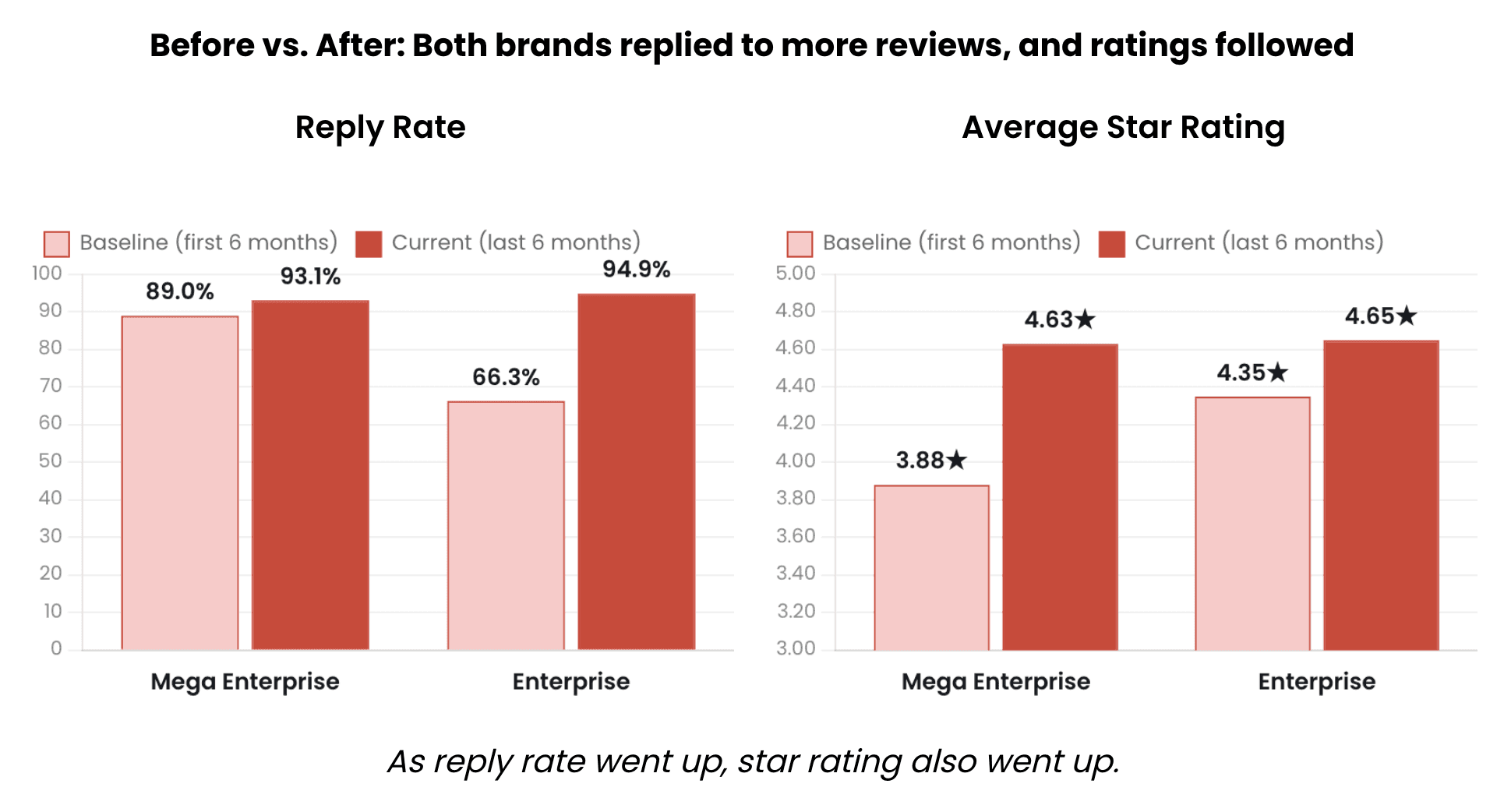
So, it's time that you start replying to those reviews, both the positive and negative ones.
How should you respond to those reviews? Here are some advice from Google itself:
Be professional and polite: Keep replies clear, warm, and on-brand. Like reviews, your responses need to follow Google's content guidelines.
Keep it short: Guests are busy. A concise, genuine reply lands better than a long one they won't finish reading.
Make replies count: Skip the copy-paste "thank you." Prioritize reviews where you can address a specific comment, answer a question, or acknowledge feedback. It shows you're actually paying attention.
Be conversational, not promotional: The guest already chose you. Use your reply to reinforce their experience and give them a reason to come back, not to pitch a deal or tout your specials.

3. Use location-specific landing pages
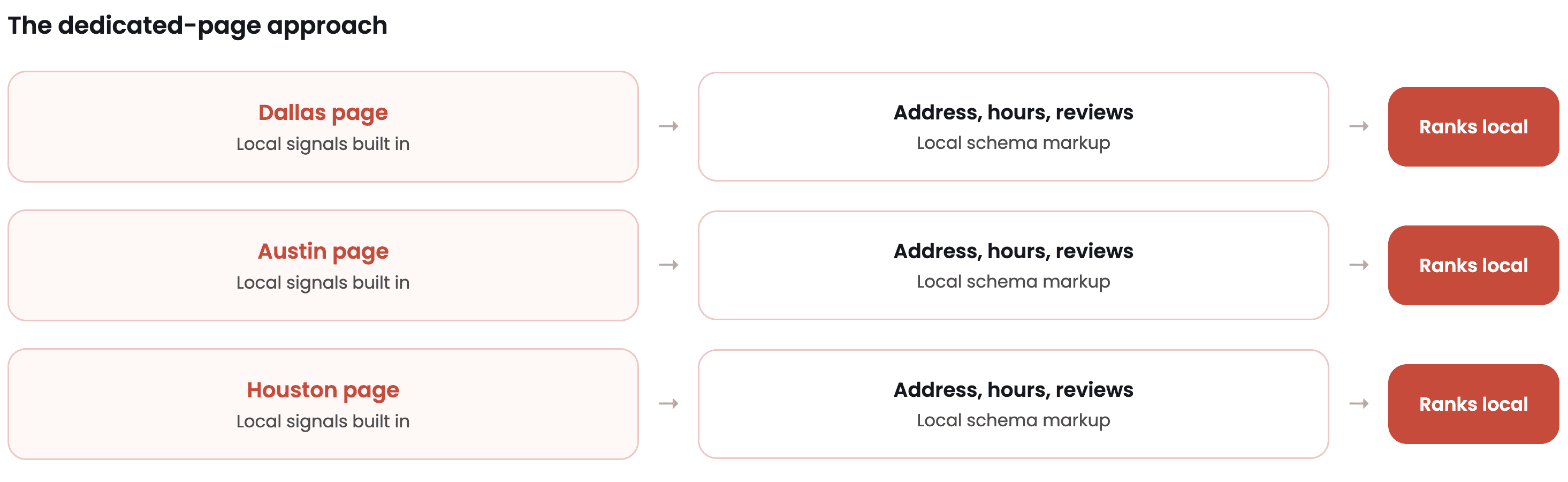
A single homepage can’t effectively rank for “near me” or city-specific searches across multiple locations.
Why? Because Google’s local algorithm favors pages that show clear, specific relevance to a particular area.
That’s why each restaurant location needs its own dedicated page.
Burger King is a great example. Even though it’s a global brand, every individual store still competes within its own local market, so each location has its own local SEO presence.
For instance, if I’m in San Mateo and search “Burger King near me,” the top result is the page for the closest store
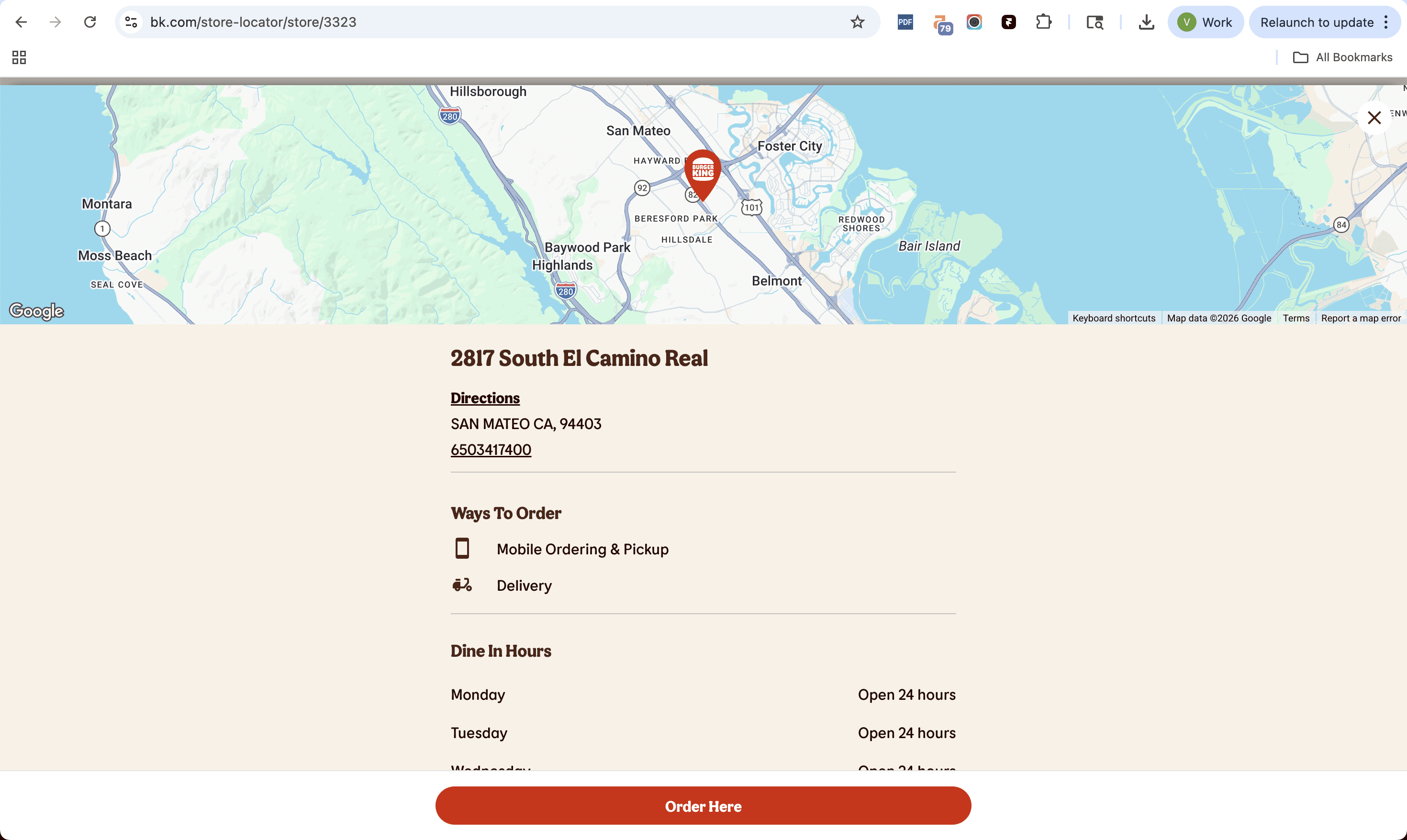
Search the same thing from Texas and you'll get a different page for a Burger King in Texas. The same principle applies whether you're in the US, the UK, Germany, or Bangkok.
And your restaurant can absolutely do the same thing.
As long as your content is unique and you genuinely serve that area, these location pages can help you rank in the local organic results and drive high-converting traffic from nearby customers.
4. Add your Menu
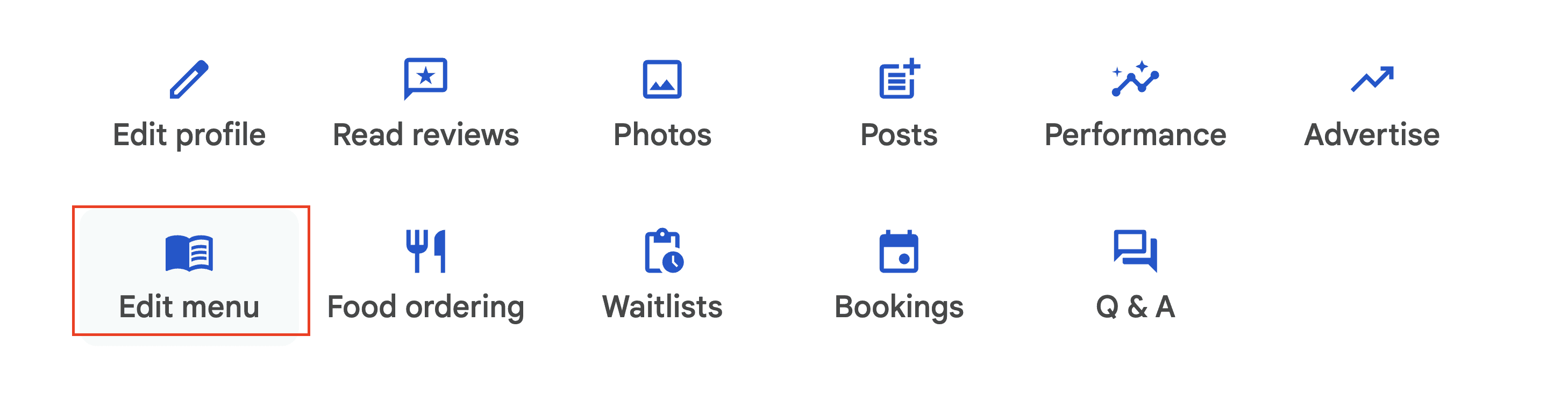
Only businesses in the F&B industry can add Menu, so let's use that to your advantage.
To add Menu, simply go to your Google Business Profile and choose "Edit Menu":
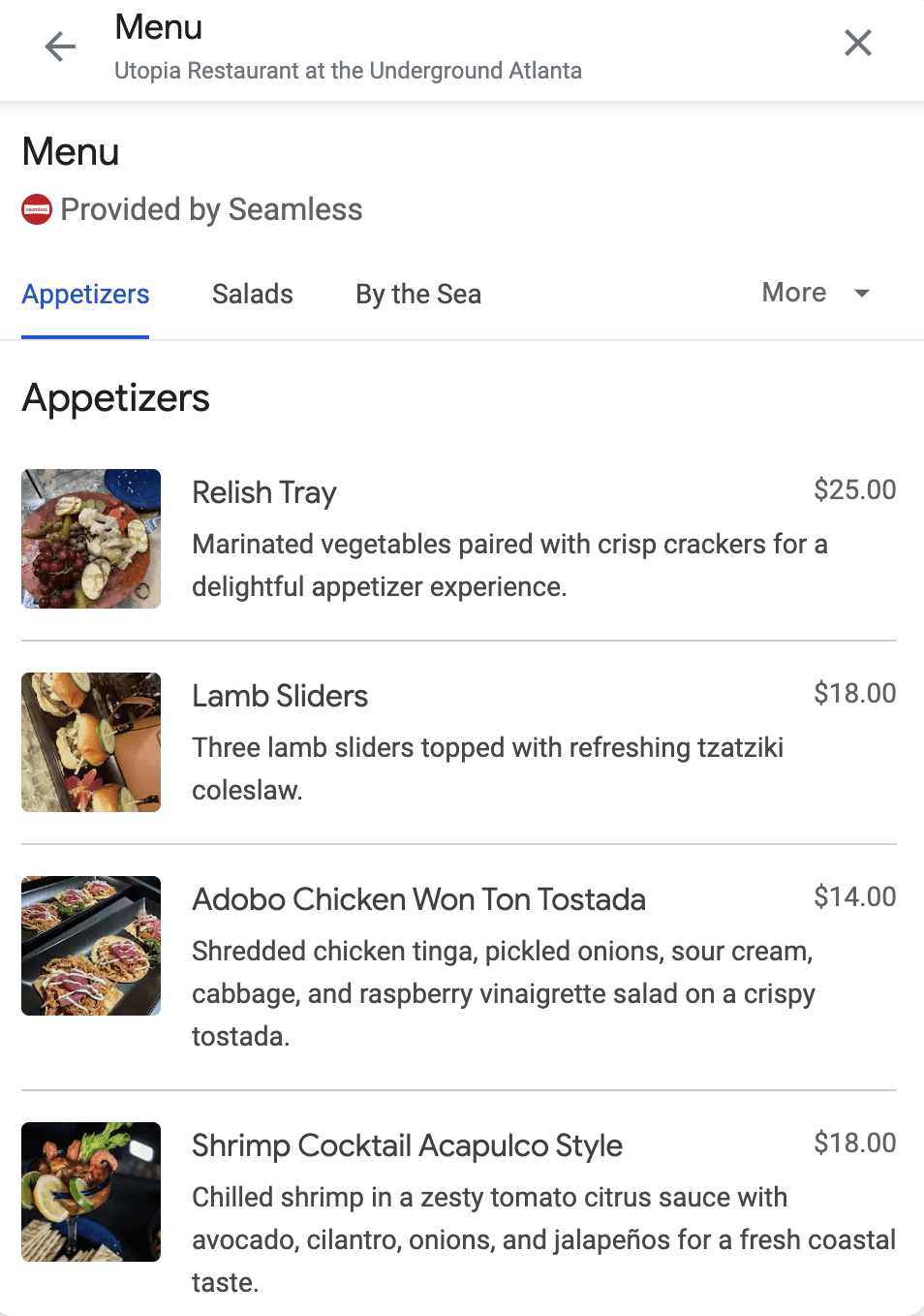
After that, simply add your items, with pricing, description, and high-quality images:
5. Build local backlinks
Think of a backlink is like a digital thumbs-up from one website to another. Every time another website links to your restaurant’s site, they’re saying, "Hey, check this place out, it's great!"
In fact, backlink is the backbone of Google's algorithm. It's important to have other websites linked back to you.
However, we highly recommend against buying backlinks. Let the links come to you naturally through activities that you do with others in the local area:
Submit to local directories: Search for free local business directories in your area and add your listing. Many are free and generate solid backlinks with minimal effort.
Pitch food bloggers and critics: Give local bloggers and food journalists a reason to write about you: a new dish, a notable regular, a unique story. A well-timed pitch usually earns a link back to your site.
Get local media coverage: Charity events, festivals, and community collabs give local journalists something to write about. Find the reporter whose beat fits yours and send a focused pitch.
6. Monitor Your Progress and Rankings
You've done some local SEO, which is great, but how do you know that it's working in your favor? You need to do some monitoring.
Your GBP dashboard is a good start. It tracks how often your listing appears in Search and Maps. And what actions people take next.
You can also use SEMRush's Map Pack Rankings.
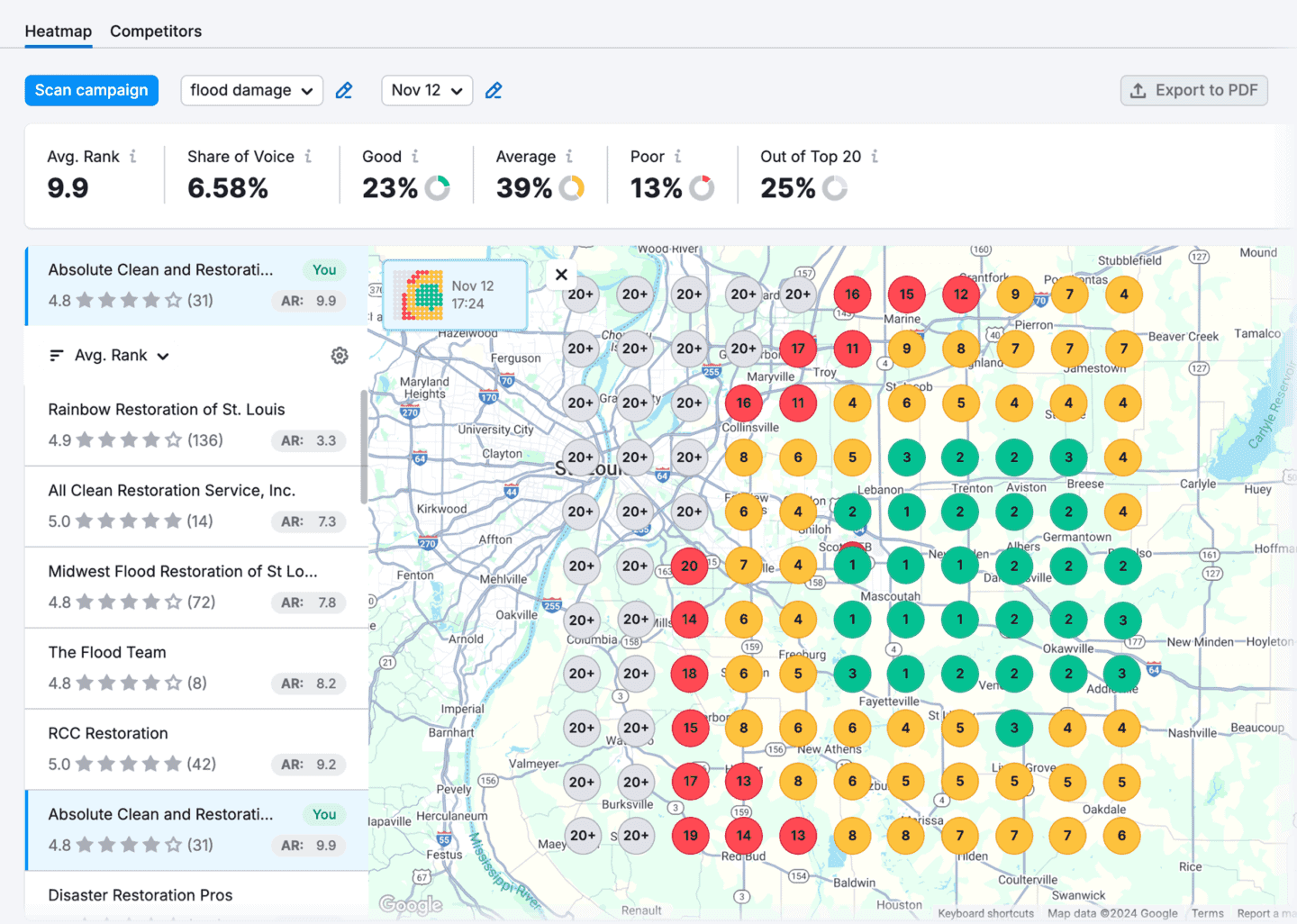
Each pin represents a local position on the map, color-coded based on where your business shows up for a specific keyword (e.g., position 1–3, 4–10, or not in the top 10 at all).
Conclusion
At the end of the day, local SEO is about good User Experience. Are you building a website that is genuinely useful, helpful, informative, and engaging for your visitors?
If the answer is yes, you've done good SEO.
Of course, having good reviews is a big part of that. To show reviews is to help your guests better understand your restaurant before they even visit your physical location.
 AI agents automate all guest interactions, 24/7, across all locations of your restaurant.


" transform="translate(3.219 19.212)" width="152.45224485148515px"/><path d="M 0 11.619 C 7.071 11.39 33.491 21.738 40.35 21.268 C 38.499 18.19 37.116 14.915 35.507 11.625 C 33.7 7.867 32.587 3.926 31.702 0" fill="transparent" height="21.28391189647101px" id="I9fuJaf7q" stroke-dasharray="" stroke-linecap="round" stroke-linejoin="round" stroke-width="4.97" stroke="rgb(0, 0, 0)" transform="translate(139.727 55.754)" width="40.34950693069311px"/></svg>)