Restaurant Reputation Management: Definition, Trends, Best Practices
Written By: Vincent Nguyen

Most restaurant operators think about “reputation management” as a defensive activity. It’s something you do only when a bad review shows up. That framing may be costing your bottom line more than you think.
For an industry with razor-thin margins like restaurant/F&B, your reputation is your marketing engine (and also your lifeblood).
If you think about it, if your guests have to choose between a 4.8-star restaurant and a 3.9-star restaurant, they definitely will go with the former. In other words, restaurant reputation management can be the difference between a new guest and a lost opportunity.
Having helped 700+ restaurants manage and improve their online reputation, we’re going to draw from our experience and share with you:
What restaurant reputation management truly is
How to manage online reputation
How to respond to online reviews efficiently
How to measure “reputation” and take actions to improve your operations
Best technology picks to help you manage reputation more effectively
Let’s dive right in!
What is Restaurant Reputation Management?
Restaurant reputation management is the process of monitoring, responding to, and addressing feedback from many sources.
The more positive reviews a restaurant receives, the better the public perceives it. On the flip side, nothing affects business like negative feedback. In fact, 22% of customers will not dine at a restaurant after reading a single negative review!
Management
What Affects Your Restaurant’s Online Reputation?
Your reputation is more than just having "good branding" or "good food". Everything a guest experiences, before, during, and after buying from you, shapes your reputation.
That means there are so many factors that can affect your reputation, including:
Food quality
Wait time
Order accuracy
Staff attitude and friendliness
Cleanliness
How you handle complaints publicly
Listing accuracy across platforms
Review recency and volume
Delivery platform ratings
Benefits Of Reputation Management For a Restaurant
Your reputation directly affects whether people walk through your door or walk past it. The data makes this hard to ignore.
92% of food consumers read online reviews before deciding where to eat. (ElectroIQ)
A one-star increase on a review platform can correlate with a 5–9% jump in revenue. (Harvard Business School)
Restaurants that respond to reviews see a 35% higher customer return rate. (MarketingLTB)
68% of diners are more likely to leave a review if the owner personally responds. (MarketingLTB)
Nearly 73% of diners will choose a competitor if a restaurant doesn't respond to messages. (Sprout Social)
61% of unhappy customers will return if their issue is resolved quickly. (Semrush)
Only 5% of businesses respond to their reviews, despite 89% of consumers expecting a response. (WiserReview)
Google reviews are where 46% of diners check ratings first, ahead of Yelp, TripAdvisor, and OpenTable. (Spokk)
The gap between what customers expect and what most restaurants actually do is enormous. That gap is where reputation management pays off.
Online Review Platforms Restaurants Need To Manage
Google Business Profile (GBP): Google is where most diners go first. A strong Google rating directly affects how often your restaurant appears in local search results and Google Maps, which means it affects foot traffic as much as it affects perception. If you only actively manage one platform, this is the one.
Yelp: Yelp has a loyal and vocal user base, particularly in North America. Its reviews tend to be longer and more detailed than other platforms, which means a single negative Yelp review can carry more narrative weight than a one-star rating elsewhere. Yelp also sometimes shows up in Google search results for restaurant queries.
TripAdvisor: TripAdvisor is the dominant platform for tourists and travelers deciding where to eat in an unfamiliar city. If your restaurant is in a high-footfall area or a tourist destination, your TripAdvisor ranking can be one of your most valuable acquisition channels.
Facebook: Facebook reviews are often overlooked, but your Facebook page is frequently the first thing that appears when someone searches your restaurant name directly. It is also where a significant portion of older demographics go to validate a business before visiting.
DoorDash: Delivery platform ratings operate differently from traditional review sites. A low DoorDash rating suppresses your visibility within the app's search algorithm, which directly cuts into order volume. Most operators underestimate how much their in-app rating affects discoverability.
OpenTable: OpenTable reviews come from verified diners who actually booked through the platform, which gives them credibility that open review sites lack. For full-service restaurants, a strong OpenTable presence builds trust with exactly the kind of guest who plans ahead and spends more.
Best Practices To Respond To Online Reviews and Manage Your Restaurant Reputation
There are three types of reviews: positive, negative, and fake reviews. Let’s explore how to handle each type.
Positive reviews
Who wouldn’t like a 5-star review? When you receive a positive review, really take the time to craft a response while your guest is still so happy with the experience.
Respond within 24-48 hours: Timely responses signal that you're attentive.
Use their name if it's available: Personalization turns a generic thank-you into a genuine moment.
Reference something specific they mentioned: For example, if they loved the pasta, mention it back. It shows you actually read it.
Apologize if something wasn’t right: Even positive reviews may come with some small complaints. Catching and addressing those micro-complaints publicly shows a level of care that most restaurants completely miss.
Invite them back: A simple "we can't wait to see you again" closes the loop and nudges a return visit.
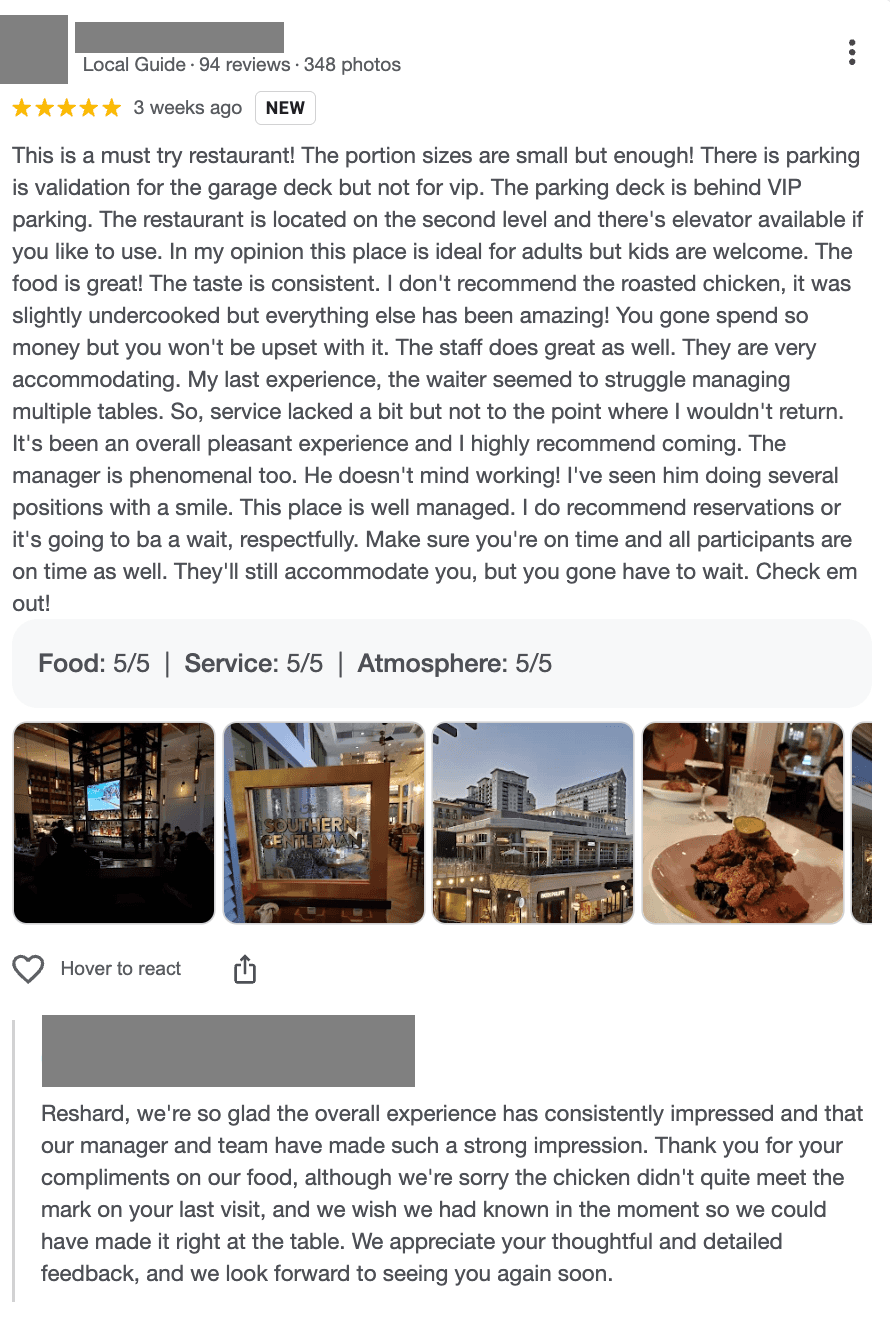
This is a perfect example of how you respond to a good review. It satisfies all 5 factors we’ve mentioned above. What’s great is that this kind of positive feedback can also be repurposed for social media:
Negative reviews
Nobody likes negative reviews, and unfortunately, they're left only when your guests are really dissatisfied. So, it’s critical that you handle it quickly and gracefully.
This is a good example of how to handle negative reviews for your restaurants:
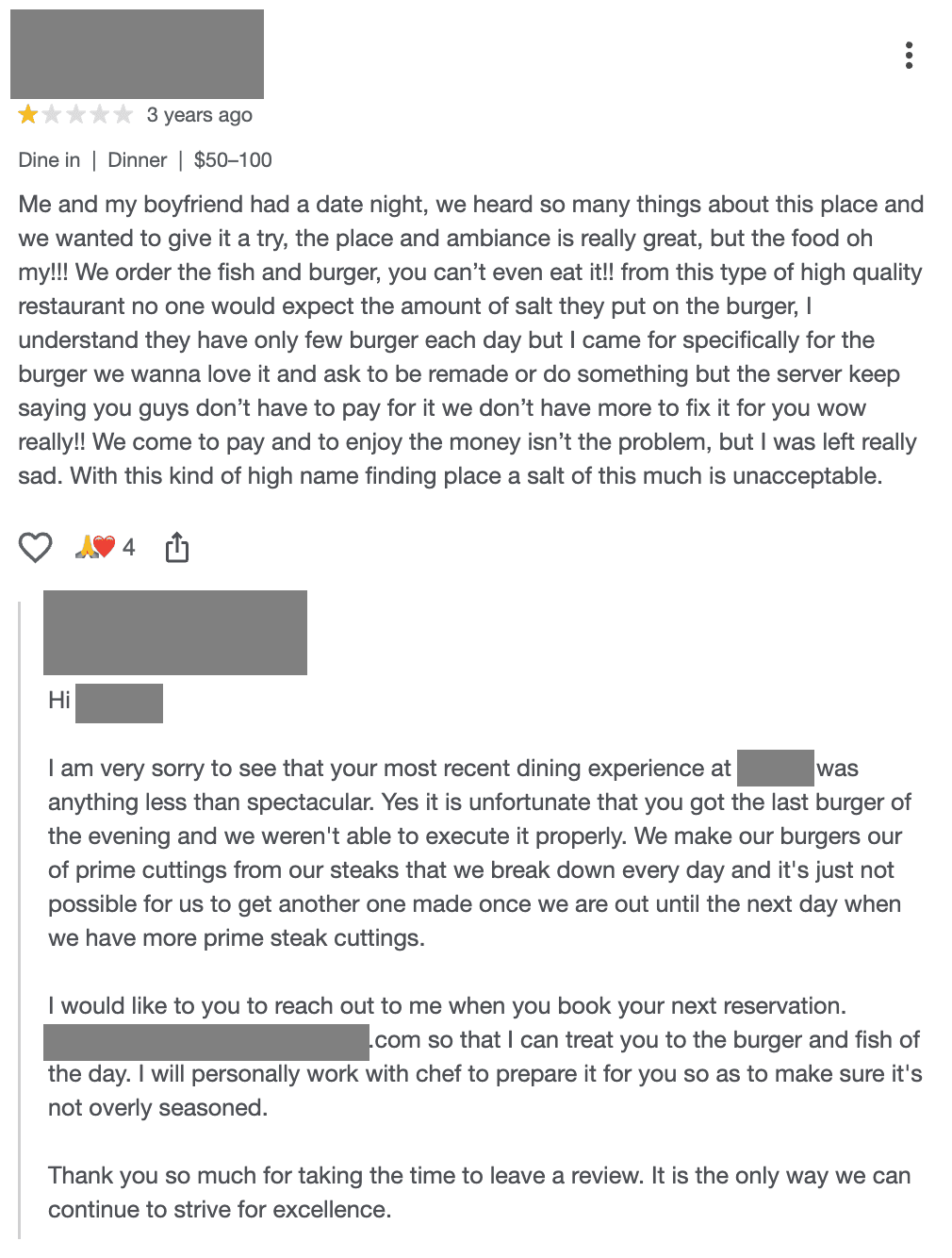
Here's exactly how that restaurant owner handled the negative review:
- Stay composed in your public response. Even if the review is completely fabricated, a defensive response makes you look worse than the review itself. Keep it short, professional, and factual. Something like "we have no record of this visit, but would love to connect directly to understand more" is enough. It signals to future readers that you take feedback seriously without validating a false claim.
- Never get into a public argument. The more you engage, the more visible the review becomes. Say your piece once, cleanly, and move on.
- Report it for removal. Every major platform has a process for flagging reviews that violate its content policies. Grounds for removal typically include reviews from someone who never visited, competitor attacks, reviews with hate speech or irrelevant content, and reviews posted for the wrong business. On Google, use the flag icon next to the review. On Yelp and TripAdvisor, you can use their dedicated reporting tools.
- Follow up if the platform doesn't act. A single flag often isn't enough. If your report is initially rejected, appeal it with more context. Document the review, explain why it violates policy, and escalate if needed. Platforms do remove fake reviews, it just sometimes takes persistence.
- Document patterns. If you suspect a coordinated attack, such as multiple fake reviews appearing in a short window, keep records.
Key Metrics and KPIs For Restaurant Reputation Management
You can't manage what you don't measure. Here are the numbers worth tracking.
Average star rating per platform and per location, not just blended
Review volume total reviews received over a given period
Review response rate percentage of reviews you've responded to
Average response time how quickly your team replies to new reviews
Sentiment score what guests are actually saying beyond the star rating
Net Promoter Score (NPS) how likely guests are to recommend you
Negative review rate percentage of reviews at three stars or below
Review platform distribution where your reviews are coming from
Guest recovery rate how many unhappy guests came back after outreach
Competitive rating gap your average rating versus nearby competitors
Explore further: 42 Best Restaurant Performance Metrics To Track
How To Turn Guest Feedback Analytics Into Actionable Insights?
Reviews are actually feedback about your restaurant operations, so you really should take some time to look into those reviews.
Every review your guests leave is a data point.
Taken individually, a complaint about slow service is just one person's bad night. Taken across hundreds of reviews over months, it becomes a pattern that tells you exactly which location has a kitchen bottleneck.
Here is how to turn that signal into action.
Categorize feedback by operational area. You should tag them by its topic, such as Food quality, wait times, order accuracy, staff behavior, cleanliness, packaging, etc. Once you start categorizing at scale, you should start to see patterns emerge.
Track by location. A 4.2 average across your portfolio can hide a 3.4 at one location. It's important to break every metric down to the location level and compare each to a benchmark.
Look for frequency. A single guest complaining about cold food could just be a bad day, but twenty guests across three locations mentioning it in the same month is a supply chain or kitchen process issue, and that warrants immediate investigation.
Connect reviews to shift data. If negative reviews spike on Friday nights, that's a staffing or volume management problem. If they cluster around a specific time period, something must have changed operationally. Cross-reference review timing with your internal data.
Share insights with the right teams. Operations managers need to see location-level complaint trends. Kitchen teams need to know which menu items are generating the most complaints. Marketing needs to know what guests love so they can amplify it. Reviews contain something useful for every department; you just need to route the data there.
Managing online reputation manually across platforms and locations is where most restaurant groups hit a wall.
Momos handles this automatically:
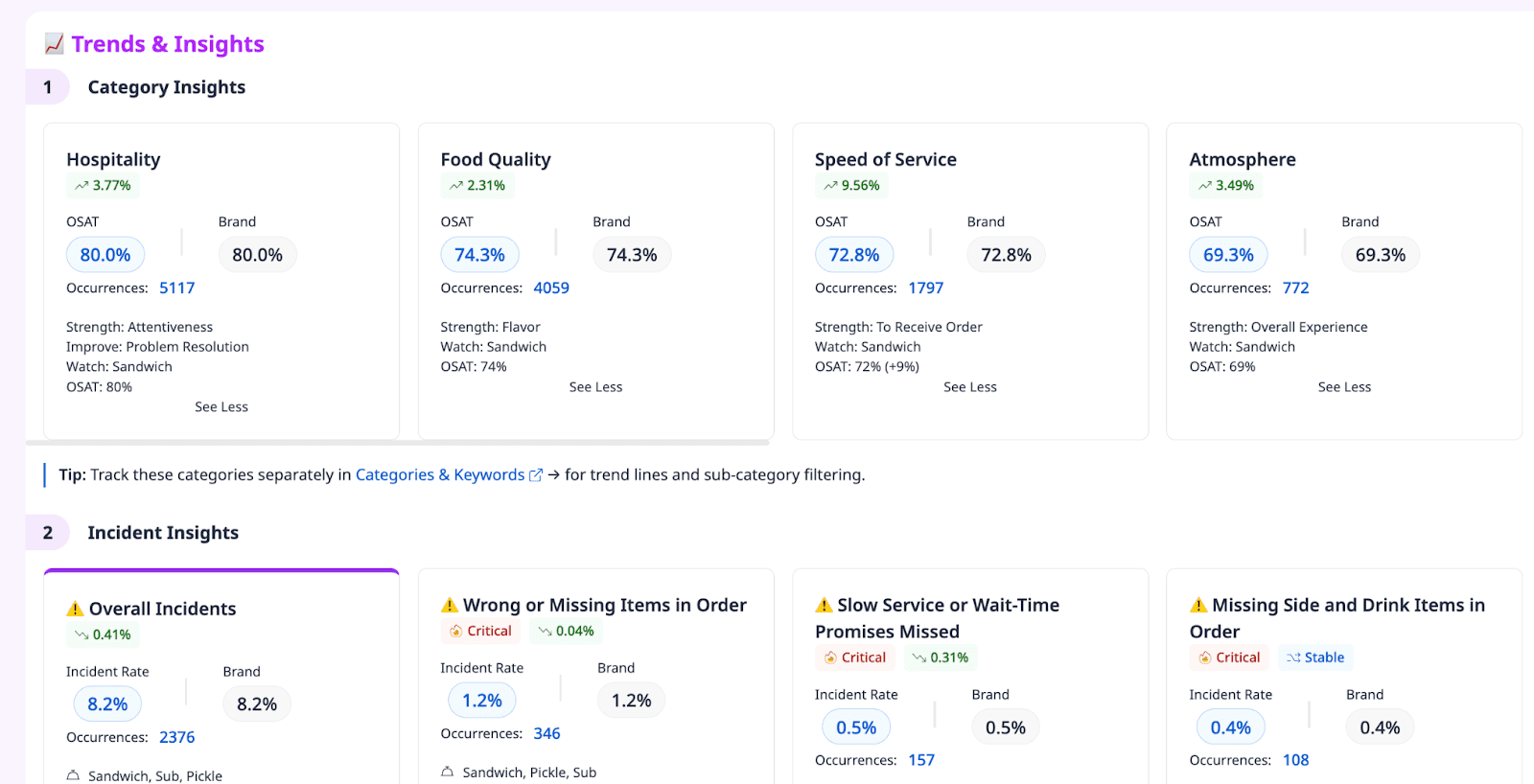
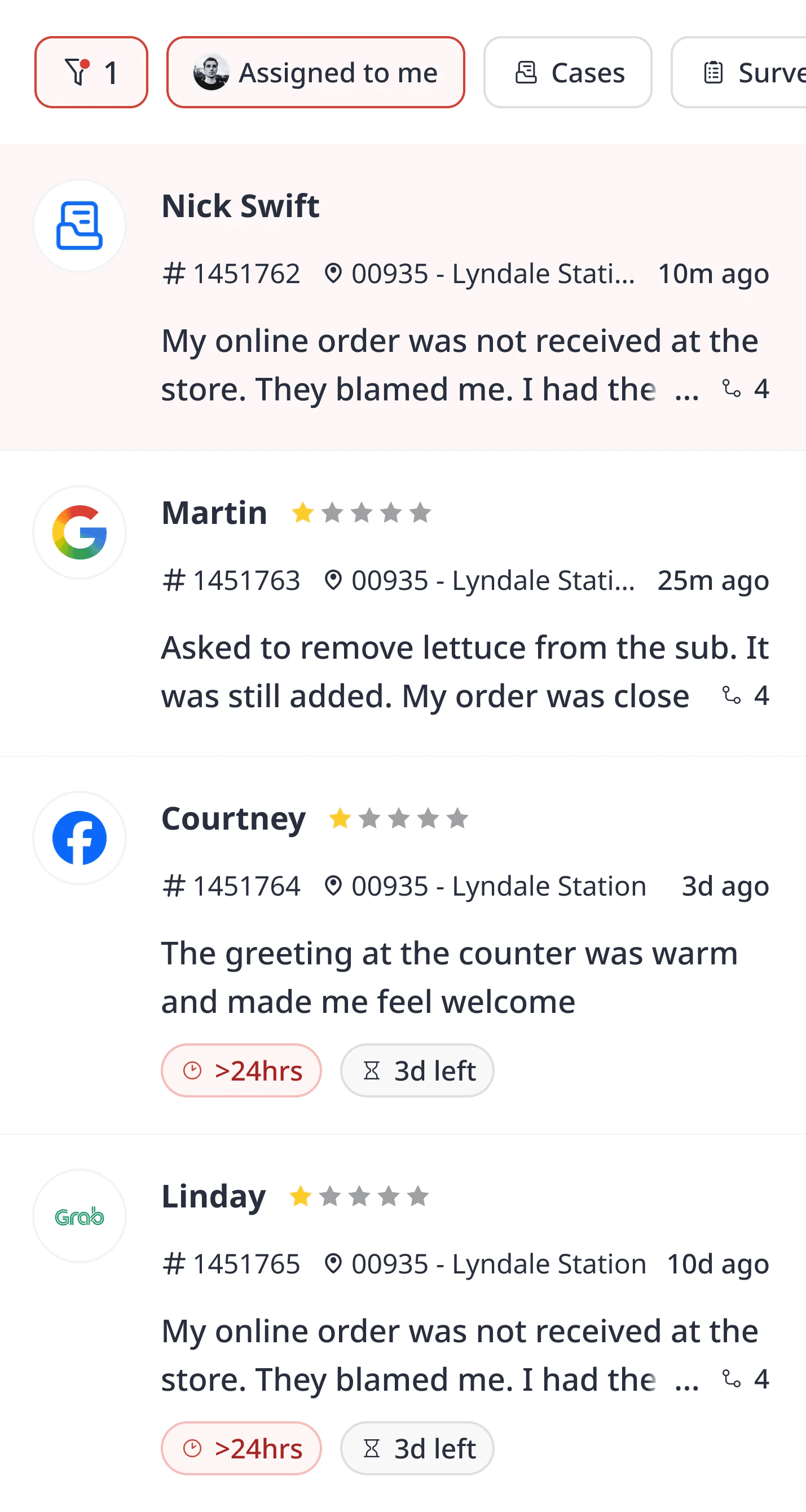
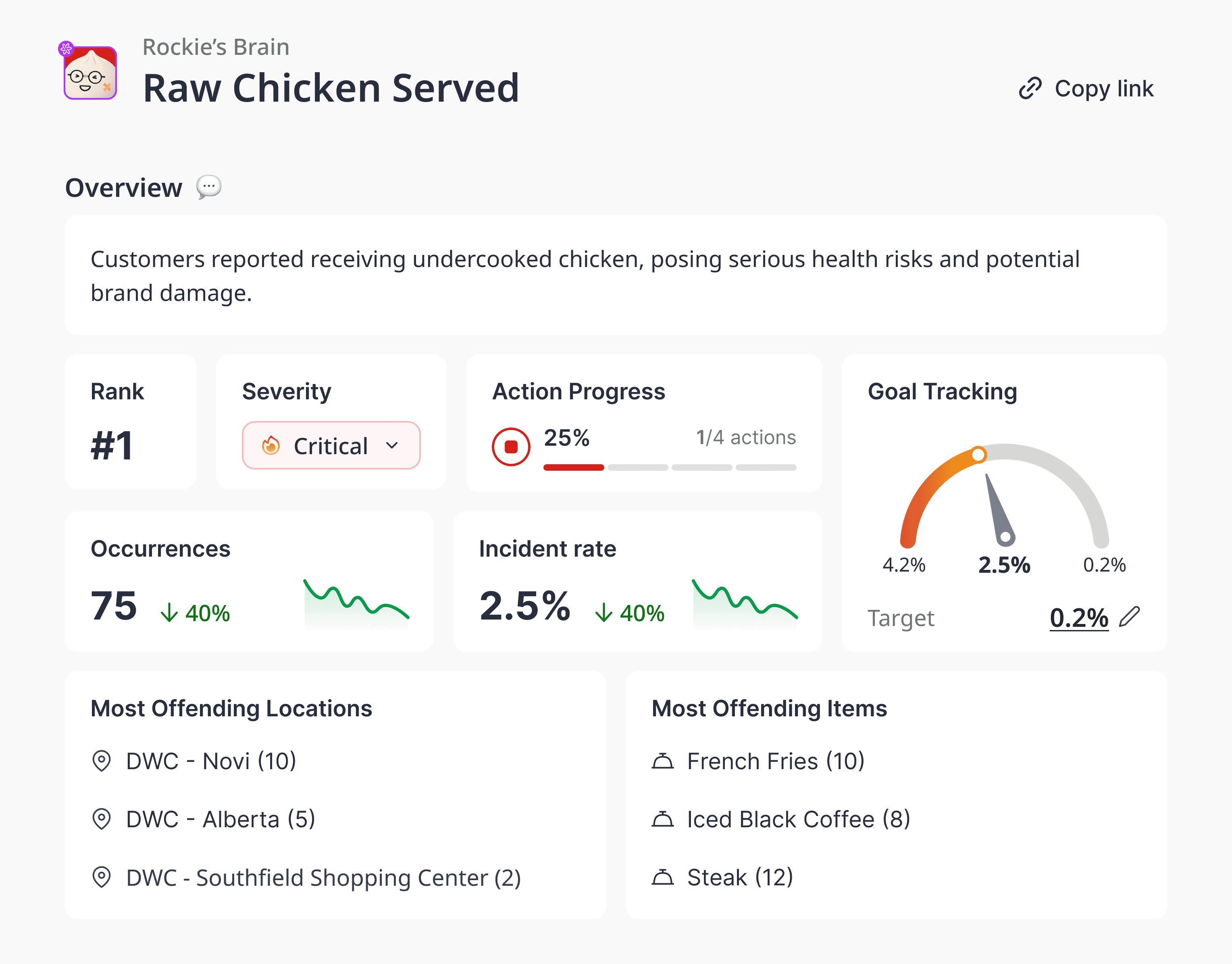
What Momos does is take every review across all your locations, read them with AI, and turn them into a dashboard your team can actually act on:
Tracks every review across all locations and platforms automatically
Categorizes feedback by topic: food, service, wait times, cleanliness, and more
Shows which locations are underperforming and why
Surfaces recurring issues before they spread across your portfolio
Tracks how guest satisfaction metrics change over time
Gives your operations team the data to fix problems at the root
Gives your marketing team the insights to build campaigns that actually resonate
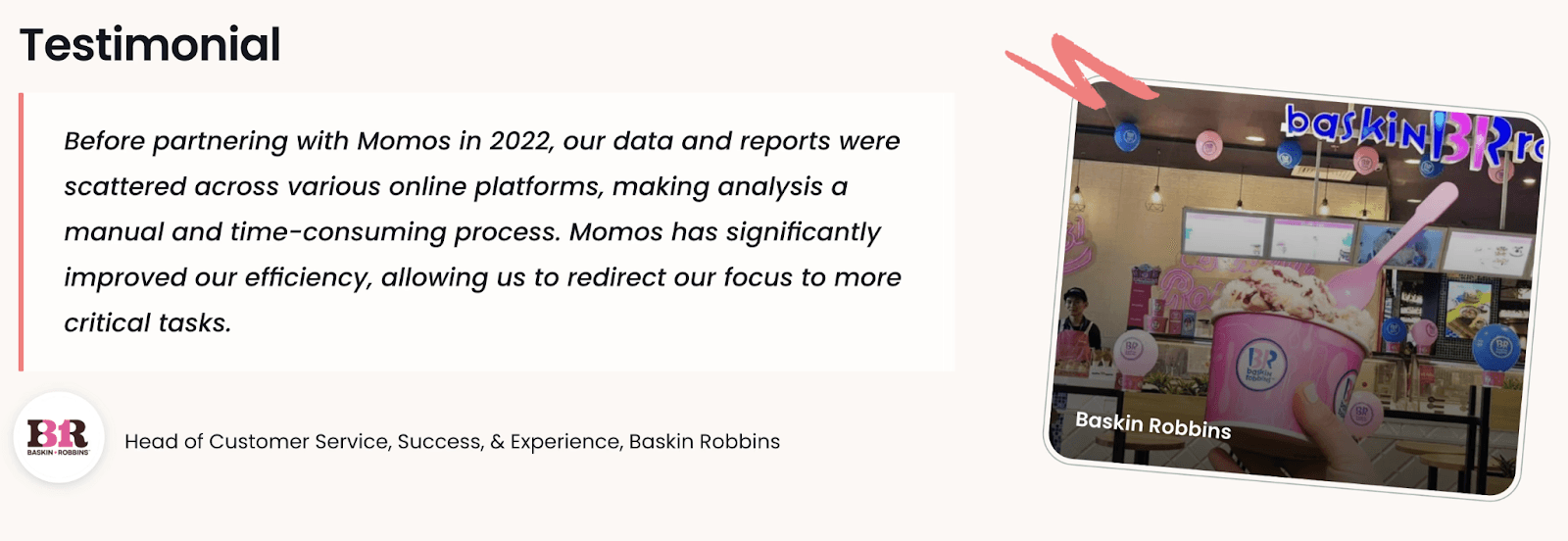
Momos is one of the fastest-growing guest experience platforms in the industry, trusted by over 600 enterprise brands including Baskin-Robbins and Papa Murphy's, all seeing significantly improved operational excellence thanks to the insights Momos brings.
 Visit Momos
 AI agents automate all guest interactions, 24/7, across all locations of your restaurant.


" transform="translate(3.219 19.212)" width="152.45224485148515px"/><path d="M 0 11.619 C 7.071 11.39 33.491 21.738 40.35 21.268 C 38.499 18.19 37.116 14.915 35.507 11.625 C 33.7 7.867 32.587 3.926 31.702 0" fill="transparent" height="21.28391189647101px" id="I9fuJaf7q" stroke-dasharray="" stroke-linecap="round" stroke-linejoin="round" stroke-width="4.97" stroke="rgb(0, 0, 0)" transform="translate(139.727 55.754)" width="40.34950693069311px"/></svg>)