Vincent Nguyen
Restaurant Guest Experience: A Practical Guide For 2026
Contents
Having helped ~700 global restaurant franchises deliver world-class guest experience, my team at Momos can confidently say that guest experience is the #1 success metric for Restaurant owners and managers.
Every single interaction a guest has with your business impacts their overall experience. To manage guest experience is to manage the perception of your brand, and ultimately, your revenue.
In this article, I’ll draw from the experiences of the Momos team to share with you:
What makes a good Guest Experience?
The 9-stage Guest Experience Journey
Best practices for Guest Experience Management
How can we improve and personalize the guest experience
Questions you can include in your Guest Experience Surveys
Best Guest Experience Management Software you should explore
Let’s dive right in!
What is Guest Experience?
Guest Experience is the sum total of how someone feels at every point of interacting with your brand as a guest.
From the moment they get to know about your brand and read reviews, guests have already developed opinions that affect their experience. Once your guest arrives at the restaurant, the experience continues throughout the interaction with your product and service.
A good guest experience is an important success factor for businesses in the Hospitality industry, especially restaurants and hotels.
Guest Experience in Restaurants
Guest Experience for restaurants is the sum total of how someone feels at every point of interacting with your restaurant.
It’s important to note that “good experience” is so much more than “good food”.
A restaurant doesn’t really sell food. It sells the experience of the food. Therefore, you should think of guest experience in restaurants as consisting of two parts:
The product experience: The food itself, including taste, presentation, consistency, portion, and how it meets guest expectations.
The human experience: Everything around the food, including service, atmosphere, timing, comfort, and how the guest feels while eating it.
To deliver a good guest experience, restaurants need to go beyond making just good food. They also need to make sure that the environment in which that food experience takes place is world-class.
Examples of Good Guest Experience at Restaurants
1. McDonald’s Guest Experience
McDonald's is the perfect example of an F&B chain revolutionizing the guest experience by industrializing the fast food experience.
McDonald's was so successful because it redefined what eating out meant. Before McDonald’s, restaurants optimized for ambience; after McDonald's, restaurants are optimized for speed and consistency.
Here’s how McDonald design their guest experience:
Speed first: Every part of their operation is optimized to get food to guests as fast as possible.
Consistency: The experience feels the same at every location, which creates familiarity no matter where you go around the world.
Low-friction ordering: Simple menus, affordable pricing, counter service, and drive-thrus all reduce effort for guests.
Predictable outcomes: Since guests know exactly what they’ll get, there are no surprises and no decision anxiety.
Repeatability at scale: The experience is systemized so it can be delivered millions of times a day. This also allows McDonald's to expand their franchise so quickly and effortlessly.
In short, the guest experience at McDonald's is centered around efficiency.
2. Sushi Omakase’s Guest Experience
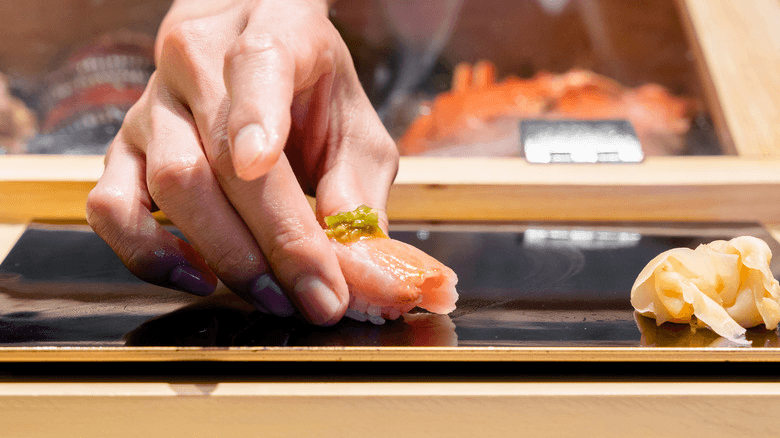
Guest experience at a sushi omakase counter is intentionally the opposite of fast food. It’s designed around intimacy and performance.
In omakase, the food is exquisite, but the real product is trusting the chef and being fully present with their craft. Here’s how Sushi Omakase elevates their guest experience:
No menu: Guests trust the chef to choose the course for them. This highlights the chef’s taste and expertise.
Performance-driven: Chef prepares food directly in front of guests, with minimal distractions to allow for higher focus on the food
Exclusivity: Limited seats bring a sense of exclusivity to the dining experience. Dishes are only served one at a time, at a slow pace, which adds to the atmosphere.
The guest experience of Sushi Omakase is centered around performance and personal attention.
What Makes a Good Guest Experience?
A good guest experience consists of two parts:
Good product experience: You deliver high-quality food that fits your guest’s taste, expectations, and occasion.
Good human experience: You design everything around the food: service style, ambience, pacing, lighting, music, tone. It’s the intangible layer that turns a meal into a memory.
For example, here is my table on Factors contributing to good Guest Experience for a QSR (Quick-service restaurant), broken down by two guest experience types:
| Experience Type | Factor | What it means |
|---|---|---|
| Product | Food taste & temperature | Hot, fresh, correctly assembled every time |
| Order accuracy | Right items, customizations, and packaging | |
| Consistency | Same quality across every visit and location | |
| Menu simplicity | Easy choices, clear combos, pricing clarity | |
| Value perception | Portions, bundles, and promotions that feel fair | |
| Packaging quality | Heat retention, portability, spill prevention | |
| Availability | Minimal out-of-stocks, no surprises at the counter | |
| Human | Ease of ordering | Fast counter flow, intuitive kiosks, smooth app ordering |
| Speed & pacing | Short, predictable wait times | |
| Communication & clarity | Confirmations, pickup instructions, status updates | |
| Staff tone & efficiency | Polite, fast, no-friction interactions | |
| Problem handling | Quick fixes, remakes, refunds with no debate | |
| Cleanliness & comfort | Dining area, counters, restrooms always on point | |
Why Does Good Guest Experience Deliver More Revenue?
A better guest experience has a rippling impact on all levels of your restaurant, from your brand reputation to the bottom line.
Here’s why:
Increase revenue: We all know the restaurant industry has razor-thin margins. You must seize every opportunity to increase revenue. Unsurprisingly, content customers are more willing to open their wallets. Harvard Business Review found that customers with the best past experiences spend 140% more than those with the worst.
Boost repeat business and customer loyalty: According to a study by the Temkin Group, loyal customers are 5x more likely to repurchase, 4x more likely to refer your restaurant to others, and 7x more likely to forgive a mistake.
Boost positive reviews and enhance reputation: 98% of guests read online reviews for local businesses, according to the Local Consumer Survey from BrightLocal. Online reviews are the online reputation of your brand, so you need to manage them carefully.
Get ahead of the competition: The restaurant industry is notoriously cutthroat. An enjoyable and unique experience for customers will stimulate repeat visits and increase the cost-per-order for loyal customers.
Save on costs: Once your restaurant is known for its exceptional customer experience, it may start to sell itself through online reviews and word-of-mouth. Once customers become organic promoters, you likely won’t need to invest as heavily in marketing and advertising, allowing you to reallocate funds to other areas or reduce costs.
9 Stages of Guest Experience Journey
You should look at guest experience as a continuous journey, which usually consists of nine stages:
Guest Experience Management Best Practices
Each restaurant has a different type of guest experience. Here are four best practices I recommend specifically for QSRs (quick-service restaurant):
Treat speed + accuracy as the North Star metric: In most QSRs, guest satisfaction is driven first by how fast and how standardized the experience is. Any new initiative (kiosks, mobile ordering, delivery integrations, upsells) should be evaluated on two questions: “Did this reduce wait time?” and “Did this reduce errors?”
Embrace AI technology for review responses but keep it human: AI agents can come in to help you answer customers at scale, but you still need human touch. I think the hybrid approach is the best: use AI for repetitive tasks but bring in your team for where it needs empathy.
Recover fast, generously, and confidently: Sometimes mistakes are inevitable. Listen to the guest’s concerns without interrupting, apologize sincerely, and offer a solution (either a coupon, dessert, or a drink). Good customer recovery technology helps you build loyalty more easily.
Add some personalization: Sometimes personalization is just little moments like remembering a regular’s order, or greeting by name on pickup, or a “thanks for coming back” receipt message. It’s simple but certainly can leave a strong impression in the customer’s heart.
Remember, what you consider to be the North Star metric of your guest experience may differ from these. It depends a lot on the type of restaurant you run, your guest preferences, or demographics, etc.
At the end of the day, I still believe that the deepest intention of all restaurants is to make their guests feel “heard” throughout the entire journey. From the moment they arrive to the moment they leave, they should feel welcomed, respected, and cared for.
How To Improve Guest Experience?
Now you understand that Guest Experience is crucial to your business, how do you start to improve it? The answer: look at reviews.
Reviews are the most unfiltered reflection of your brand reputation. They come from real customers sharing their genuine experiences.
A lot of people leave reviews in emotional moments, for better or worse. What matters is what you learn from the reviews and how you respond to them.
Here are some of my recommendations to improve your guest experience based on insights from guest feedback:
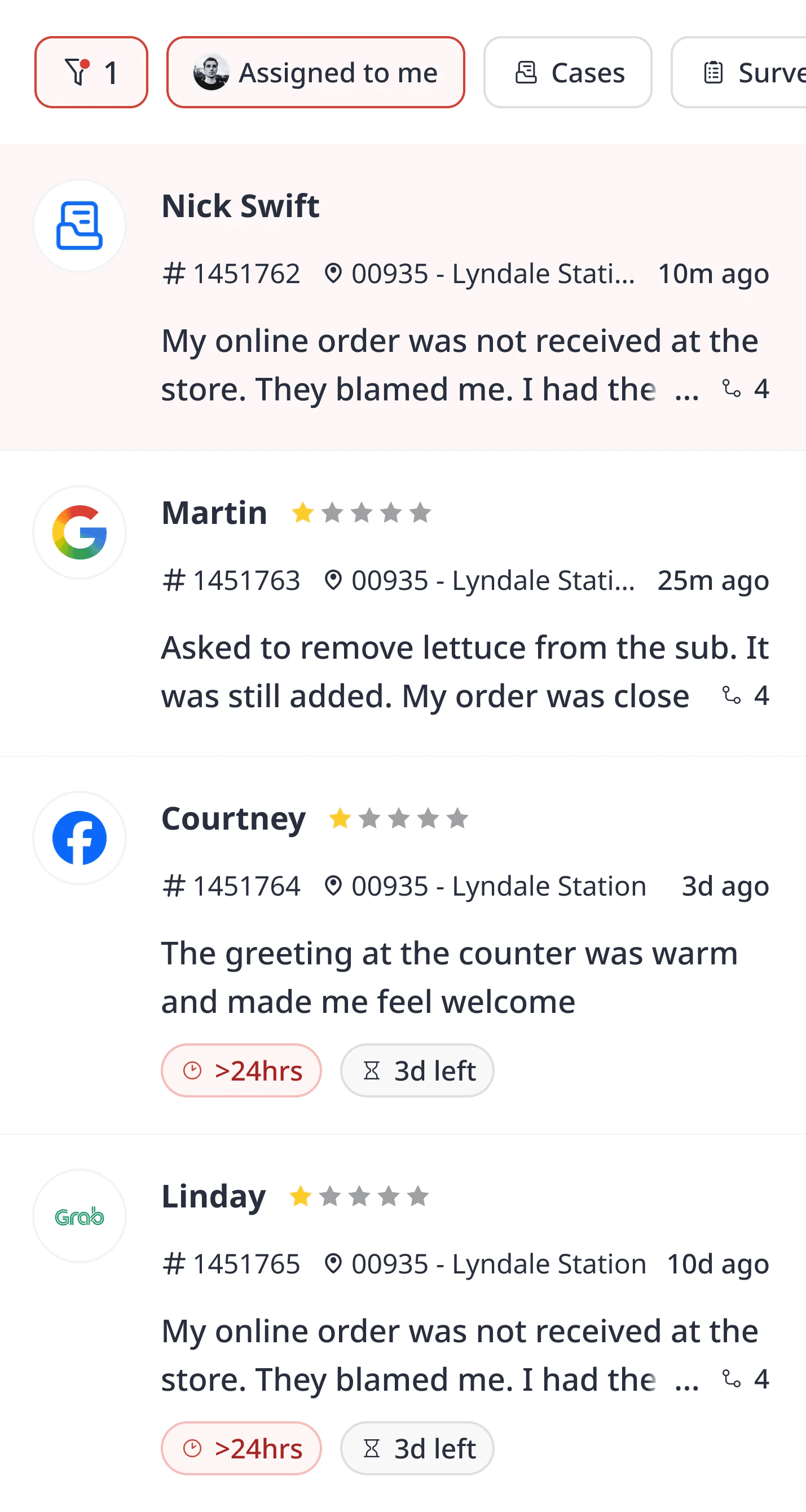
Audit and unify reviews: There are probably thousands of reviews for you to keep track of (if you’re a multi-location restaurant/franchise). It’s important to have someone periodically checking reviews and filtering out the ones that genuinely provide actionable insights. Having a Unified Inbox helps a lot.
Look for recurring patterns and turn them into actions : we all know you can't make 100% of people happy, so expect negative reviews once in a while. However, if you start to see multiple reviews of specific problems like slow, rude, not friendly, lack of awareness from staff, then action needs to be taken. You can leverage AI to categorize feedback (service, food, wait time, cleanliness).
Respond quickly with structured, brand-aligned replies: all reviews should be replied to with a custom message that aligns with your brand personality. To optimize for efficiency, you can use AI to automate customer interactions.
Run special events and promotions: After you’ve established an excellent guest experience with consistency, layer in themed promotions, events, and community engagement to add variety. This will give regulars an excuse to visit and attract new guests. Loyalty programs are a great way to make interacting with your restaurant feel fresh to repeat guests.
Make your restaurant a Great Place To Work: Treat your staff well, and they are more likely to act as advocates for your restaurant. Prioritizing the well-being of your employees can create a positive experience for your customers as well. Happiness is contagious!
Questions you can include in your Guest Experience Surveys
A survey is an amazing tool to gauge guest satisfaction.
One easy way restaurant owners can collect feedback is by offering quick post-order surveys. For in-house, a lot of places have a QR code on the receipt or table that links to a simple survey. For digital orders, surveys are embedded into the flow. A small incentive like a discount on the next visit can really boost responses.
Your goal is to make the survey as frictionless and intuitive as possible. Ideally it should be done within a few clicks.
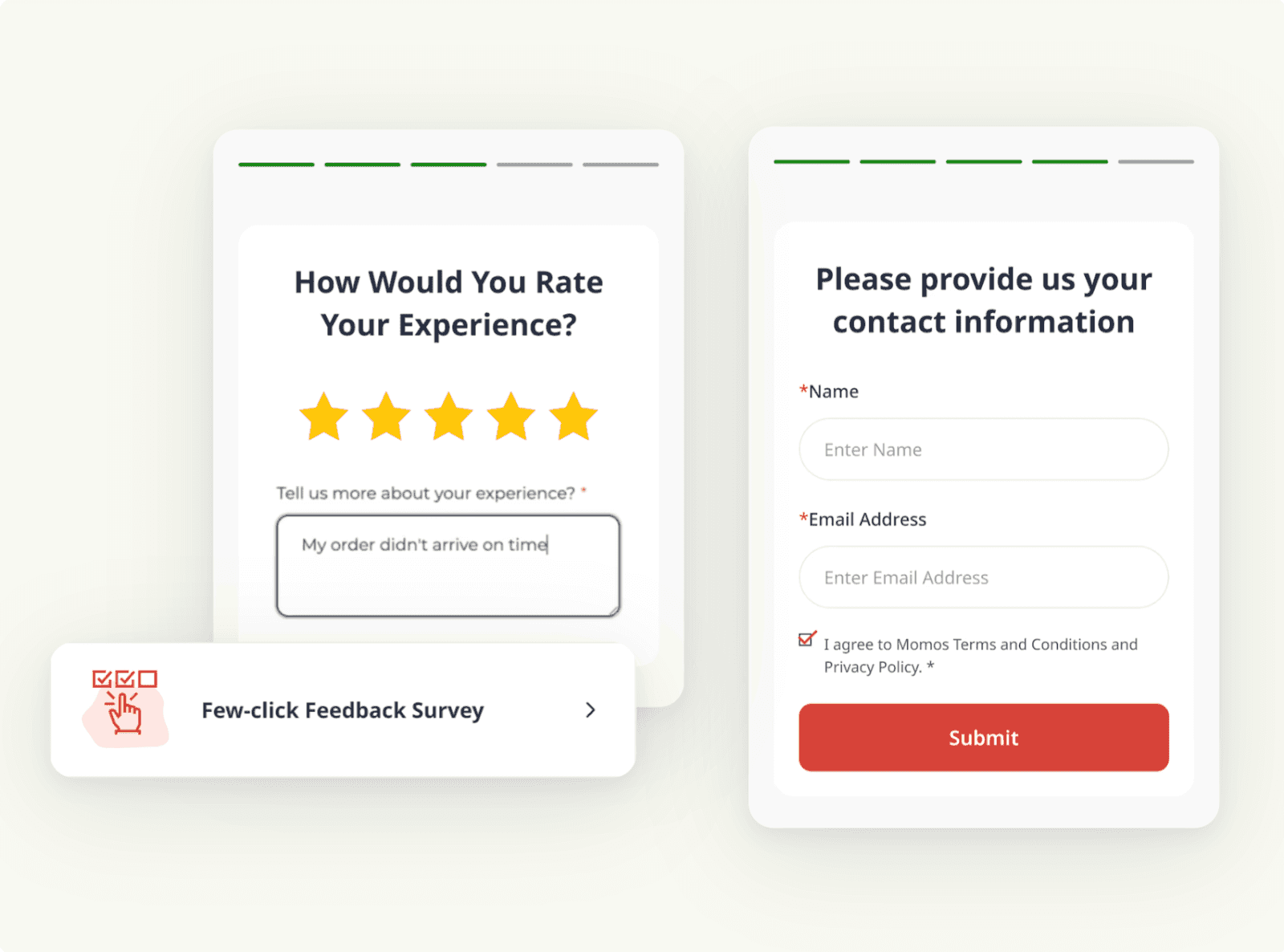
There should also be some conditional logic in your survey form. For example, if your guest left a 4 or 5-star, great; if they left from 1 to 3-star, the form should pop up questions to investigate the reason why and offer discounts if needed.
Here are some questions I recommend:
How satisfied are you with the overall experience? (1-5 star rating)
How did you place your order (Custom flow for in-house orders vs online orders)
How satisfied are you with the taste of the food?
How satisfied are you with the temperature of the food?
How satisfied are you with the accuracy of your order?
How satisfied are you with the speed of service?
How satisfied are you with the friendliness & hospitality of the crew?
How satisfied are you with the cleanliness of the restaurant?
How satisfied are you with the overall price you paid?
Did your order contain a Beverage or Dessert that you personally enjoyed? What is it?
How satisfied were you with the following items? (Specific rating for each item)
How likely are you to order from us in the future?
How easy was it to find and order the items you were looking for on the website/app?
What is the primary reason for your visit? (Friend & family recommendation, Convenience, Advertisement, App, Prior positive experience, or Coupon)
Is it likely for you to return to our restaurant in the next 30 days?
Would you like to enter the sweepstakes?
Recommendations for Best Restaurant Guest Experience Software
I think the ideal approach is to let technology take care of the monotonous tasks so that your staff can focus on the high-value interactions that truly define hospitality.
So, here are three of my recommendations for the best software you can use to improve restaurant guest experience:
Momos
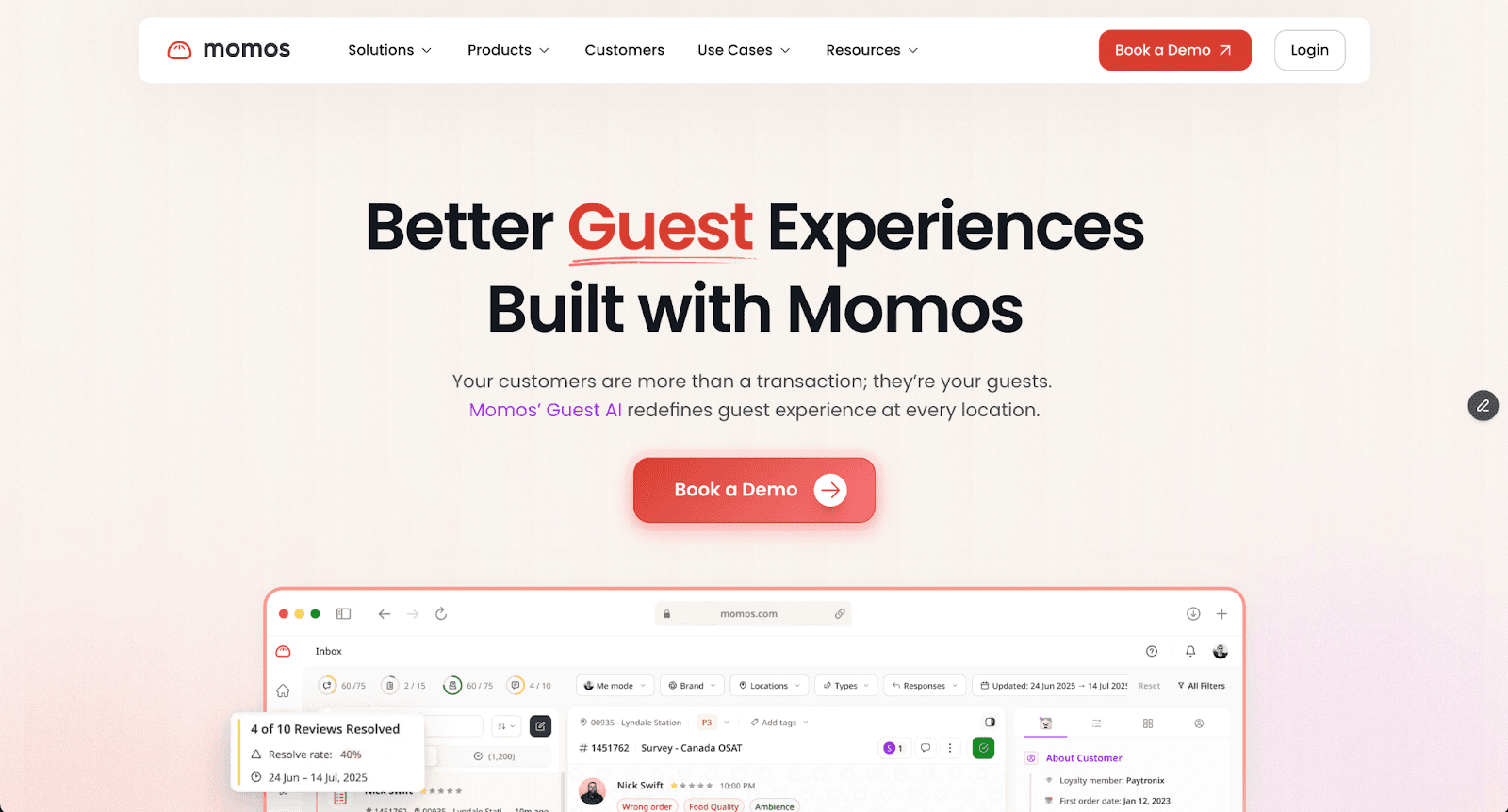
What it is: Momos is a comprehensive guest experience platform that empowers your team to deliver customer service 24/7 with AI, see guest experience analytics, and launch local marketing campaigns.
What Momos does:
Unify reviews across all locations and review platforms in one place.
Leverage AI to understand those reviews and see what guests think about your restaurant.
Respond to every single customer with deep personalization, all while maintaining a consistent brand voice.
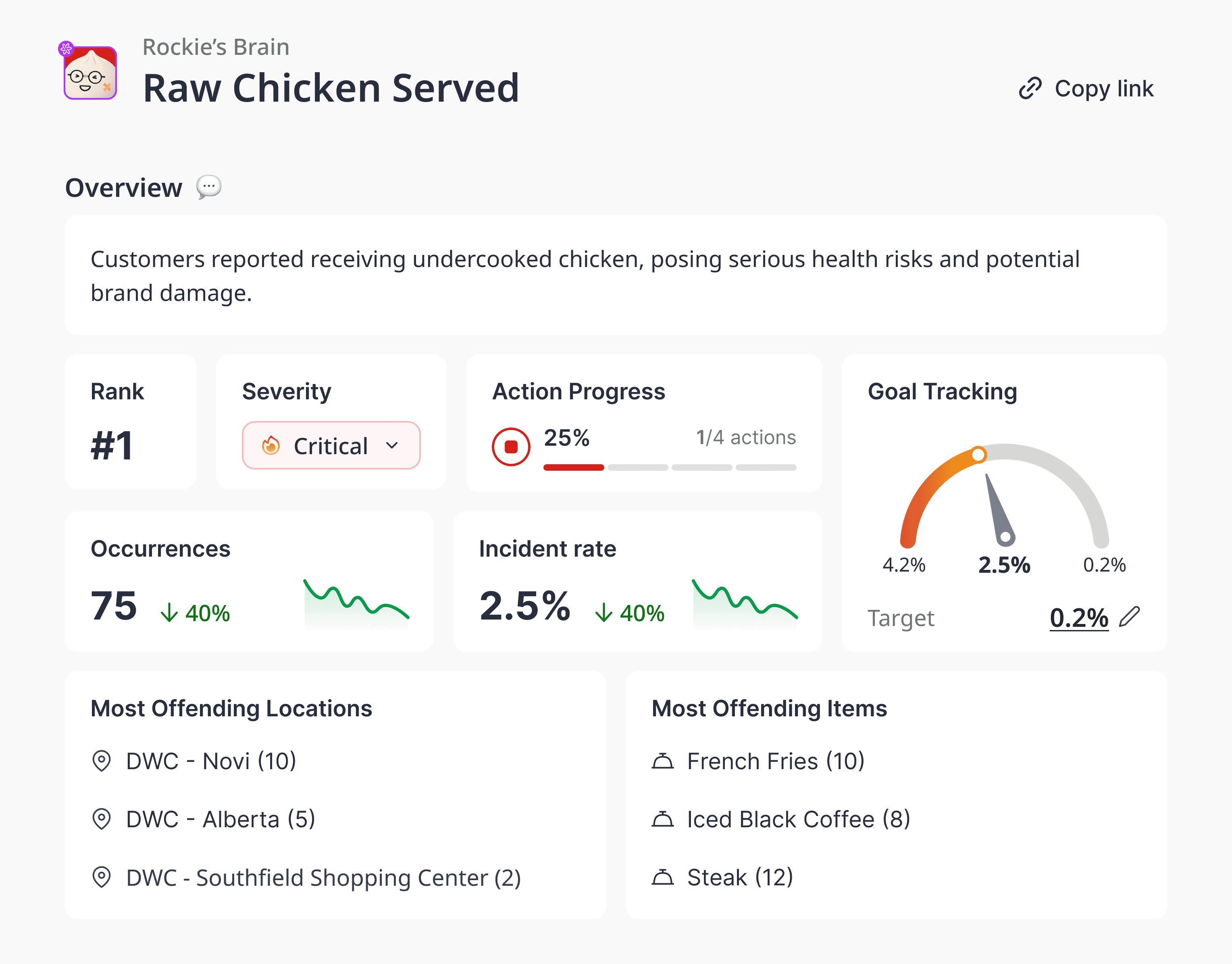
Build dashboards to show guest experience and operational excellence insights
Send surveys for customers to leave 5-star reviews as effortlessly as possible. More reviews mean better SEO rankings, which ultimately drives more revenue.
Pricing: Custom pricing depending on your feature needs and the number of your restaurant locations
Ovation
Ovation is another great restaurant guest feedback and reputation platform. It’s designed to help restaurants capture guest sentiment while the experience is still fresh so that issues can be resolved before they turn into bad reviews.
What Ovation does:
Ovation lets restaurants collect real-time guest feedback via SMS, QR codes, online ordering platforms, and many other integrated channels.
Negative feedback is flagged immediately so managers can intervene while the guest still has a chance to be won back.
Positive experiences can be routed toward public review sites to help generate more 5-star reviews.
Pricing: Custom
Tattle
Tattle is a customer feedback and reputation management platform aimed mainly at restaurants and hospitality businesses.
What Tattle does:
See all your customer reviews from Google, Yelp, delivery sites, etc., in one place
Reply to reviews quickly from the Tattle dashboard without logging into many different sites.
Collect private feedback from guests through surveys sent after transactions.
Pricing: Tattle’s pricing isn’t publicly shown; you have to contact the company for a quote.
Conclusion
If you’re reading this, I hope you’ve learned a thing or two about guest experience management and can apply it to improve your restaurant guest operations. If you like the insights, don’t forget to share this article with fellow CX leaders and restaurant owners!
I have also compiled a list of the best guest experience management software that brings to your team:
A unified view of customer feedback and reviews
Sentiment analysis with actionable recommendations
AI agents to analyze sentiment and address reviews
Location-specific operational insights to make informed decisions
Or, you can just go with Momos, the #1 guest experience management software.
" transform="translate(3.219 19.212)" width="152.45224485148515px"/><path d="M 0 11.619 C 7.071 11.39 33.491 21.738 40.35 21.268 C 38.499 18.19 37.116 14.915 35.507 11.625 C 33.7 7.867 32.587 3.926 31.702 0" fill="transparent" height="21.28391189647101px" id="I9fuJaf7q" stroke-dasharray="" stroke-linecap="round" stroke-linejoin="round" stroke-width="4.97" stroke="rgb(0, 0, 0)" transform="translate(139.727 55.754)" width="40.34950693069311px"/></svg>)