AIは飲食店にどのようなメリットをもたらすのでしょうか?
執筆者:ヴィンセント・グエン

⟦embed:keyTakeaways⟧
AI is a fascinating technology that has completely transformed the world. The Hospitality world is no exception.
Restaurant operators all around the world are embracing AI to improve operations, minimize costs, and maximize margin. The key to successful AI implement is understanding where AI is genuinely strong, and leverage that in the right areas of your restaurant.
In this article, we're going to share:
Where AI is heading for the restaurant industry based on Deloitte's research
Which areas of restaurant operations benefit the most from AI implementation
Approaches to AI transformation in restaurants
Where AI is Heading In The Restaurant Industry?
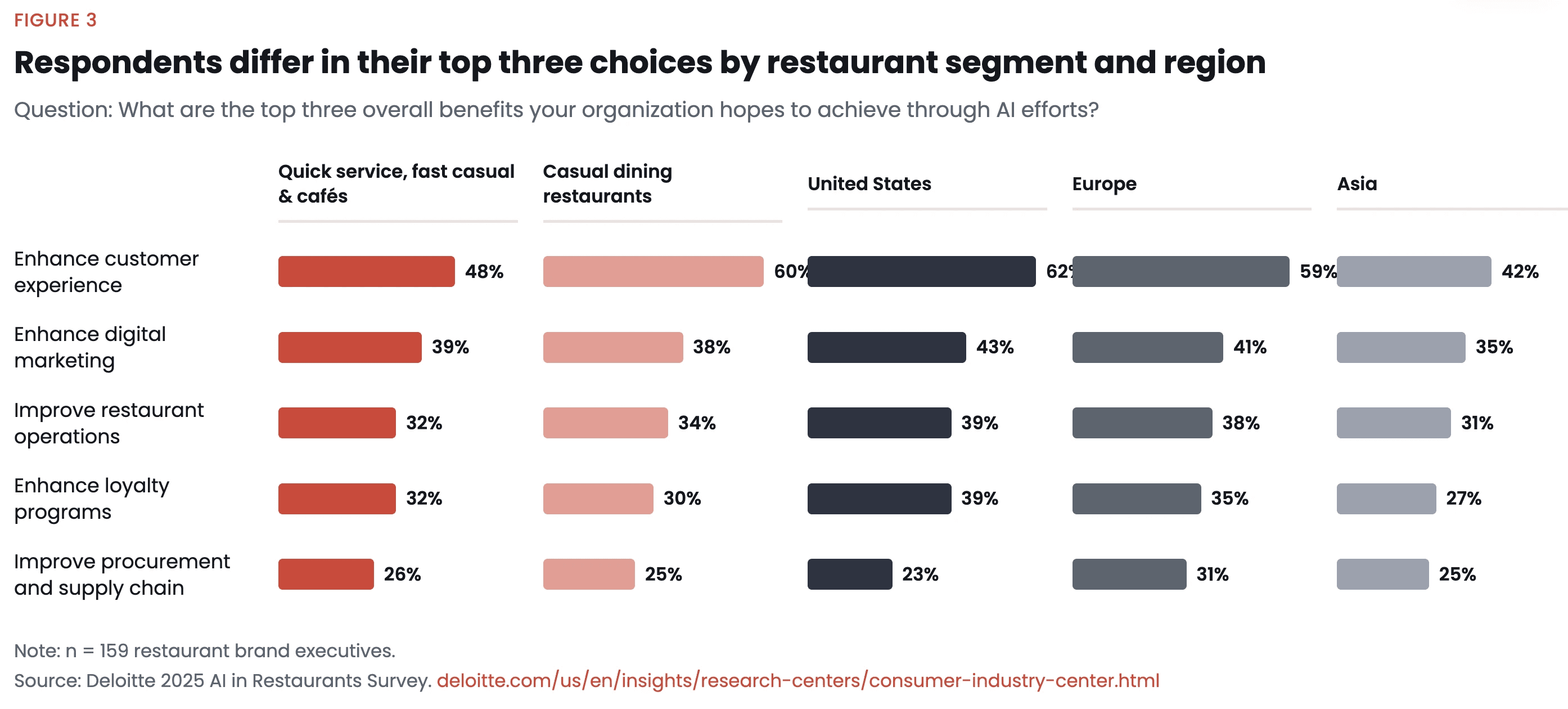
The Deloitte 2025 AI in Restaurants Survey interviewed 150 restaurant brand executives about the state of AI in the restaurant industry. Several key insights stand out from this report:
Restaurants are already seeing results from AI: AI agents are heavily used for customer service and inventory management are widely adopted and already generating economic value.
Investment is concentrated in high-impact, scalable AI technologies: The most common focus areas include Conversational AI (chatbots), Machine Learning, and Intelligent Automation.
Identifying the right use cases and managing risks are the top challenges: Other barriers to AI deployment include limited technical talent, regulatory compliance concerns, and insufficient governance frameworks.
Most feel underprepared for AI adoption: Across all brands, most respondents say their organizations lack readiness in strategy, operations, technology infrastructure, and other enablers; Asia stands out as the most AI-ready region.
Which Areas Benefit The Most From AI Implementation?
The restaurant areas that typically benefit the most from AI are those with high transaction volume, repetitive tasks, large amounts of data, or labor-intensive workflows:
Customer service & guest communication: AI can handle FAQs, reservations, order questions, feedback, and messaging across channels.
Order taking & drive-thru: Voice AI can take orders, upsell items, reduce wait times, and improve order accuracy.
Marketing & personalization: AI can segment customers, personalize offers, automate campaigns, and identify high-value guests.
Reputation management" AI can monitor reviews, identify recurring issues, draft responses, and track sentiment across locations.
Demand forecasting: AI can predict sales by day, location, menu item, weather, season, and other factors.
Staff scheduling & labor management: AI can forecast staffing needs and optimize schedules based on expected demand.
Inventory & purchasing: AI can predict ingredient requirements, automate replenishment, and reduce stockouts.
Food waste reduction: AI can identify waste patterns and forecast how much food each location actually needs.
⟦embed:bnDuo⟧
Approaches To AI Implementation For Restaurants
There are 2 major approaches to AI implementations for restaurants:
Build AI agents in-house: Big franchises can totally develop proprietary AI agents tailored to their restaurant's specific workflows and tech stack. This is exactly what Yum! Digital & Technology team is doing. They have a team that builds AI-powered proprietary SaaS solutions for the franchise. This approach gives them maximum control and customization, but, of course, they need A LOT of technical resources and ongoing maintenance.
Leverage vendor AI solutions: A more effective solution for smaller brands is to adopt existing AI-powered restaurant software from specialized vendors. This provides faster implementation, lower upfront costs, and access to proven technology without having to build and maintain the AI infrastructure themselves.
In fact, for most restaurant operators, leveraging existing vendor solutions is the most practical starting point. Large restaurant groups with strong technical teams and highly specialized workflows may benefit more from a hybrid or in-house approach.
3 AI Recommendations For Restaurants
With that being said, here are our recommendations for the best AI that restaurant should leverage to streamline operations in 3 different categories:
1. Momos
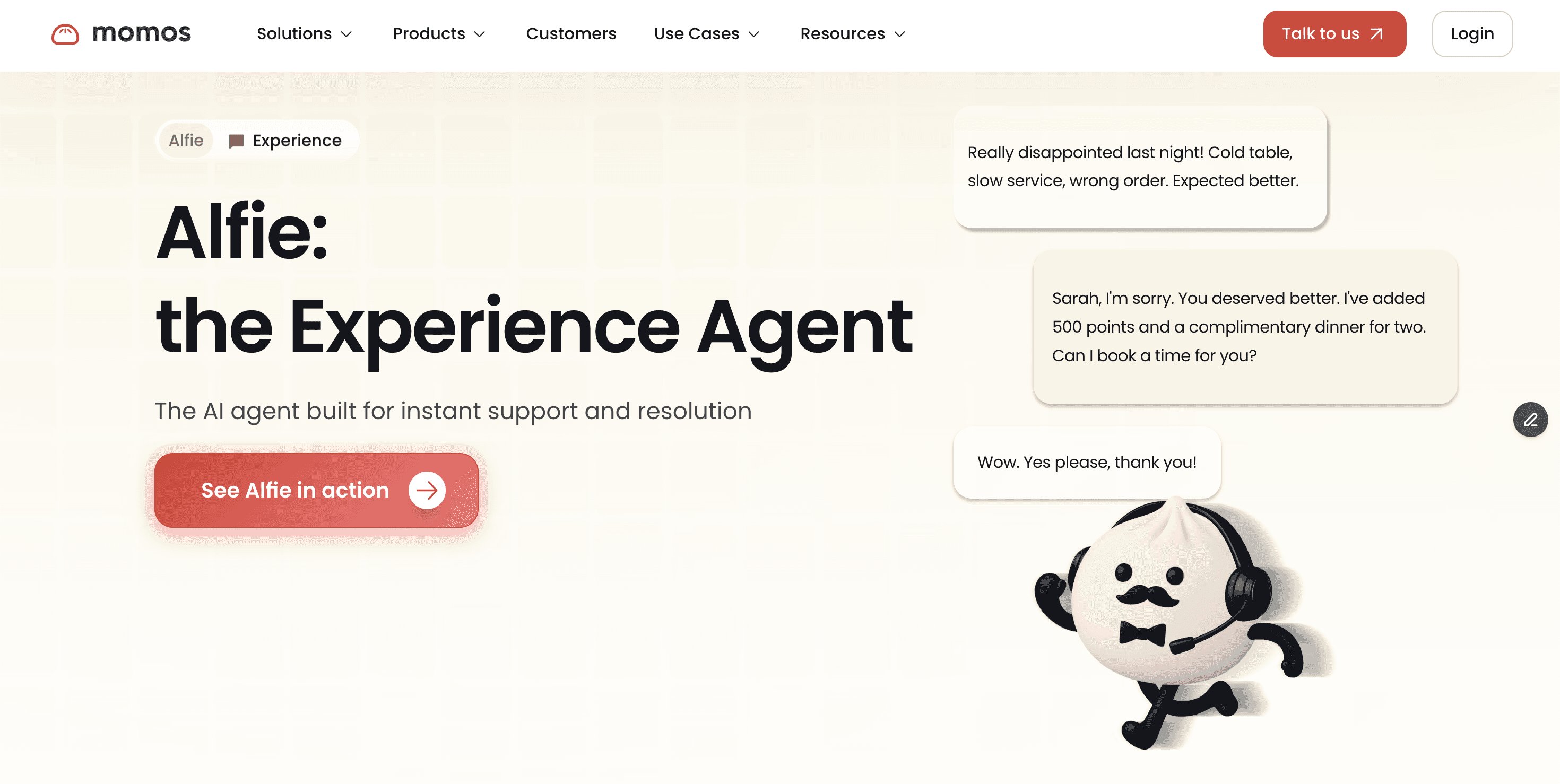
Momos is an AI-powered guest experience solution built for fast food restaurants. It has helped leading enterprise brands like Burger King, Papa Murphy's, and Shake Shack scale customer support across 30,000+ store locations worldwide.
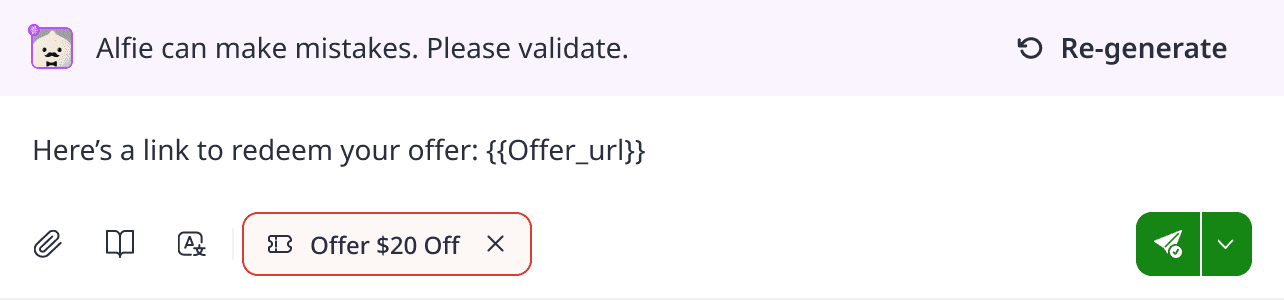
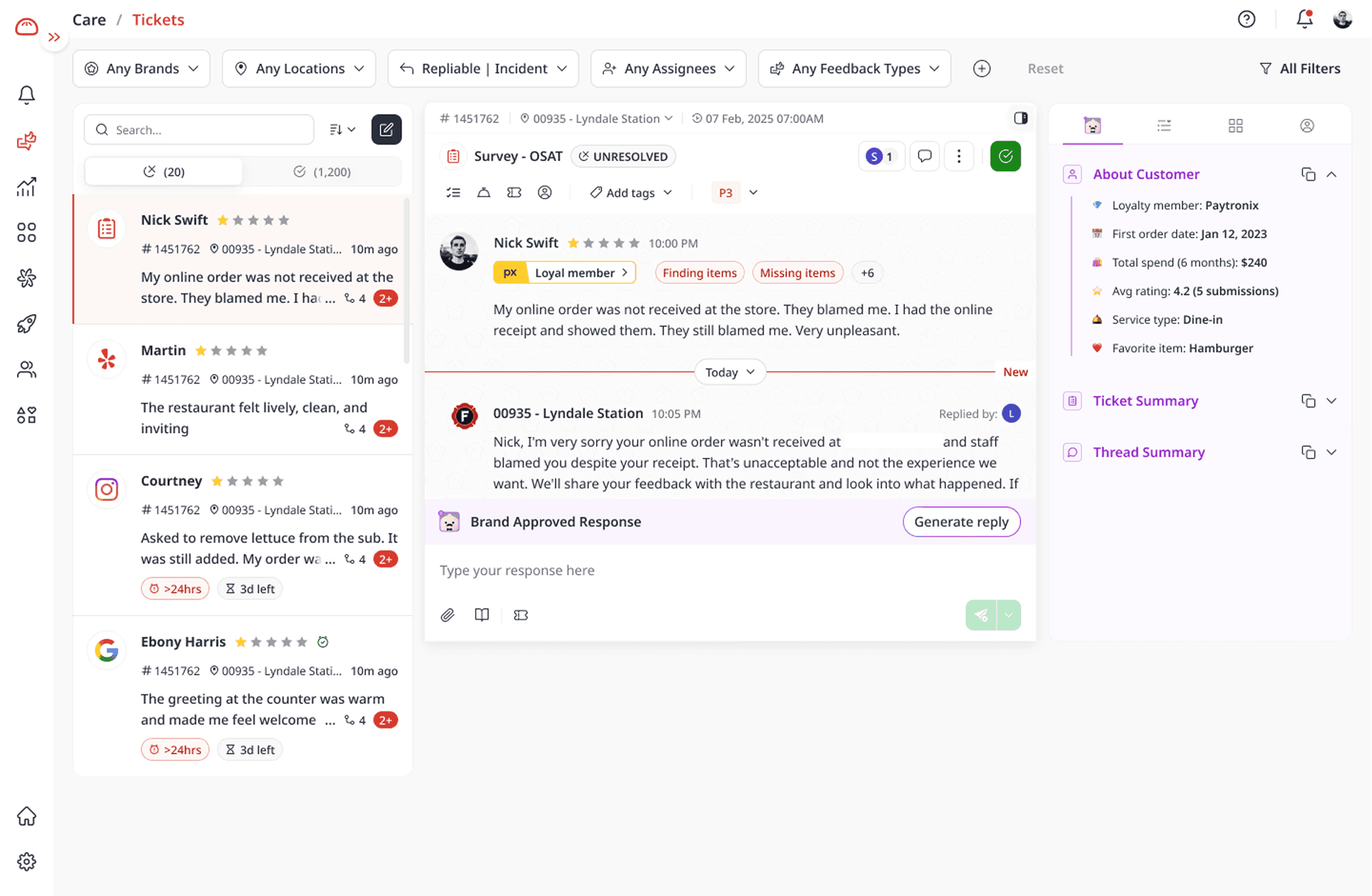
Let's meet Alfie firts. Alfie is Momos AI agent for instant support. Whenever a ticket/review comes in, Alfie immediately reads it, categorizes, and crafts an on-brand response within minutes.
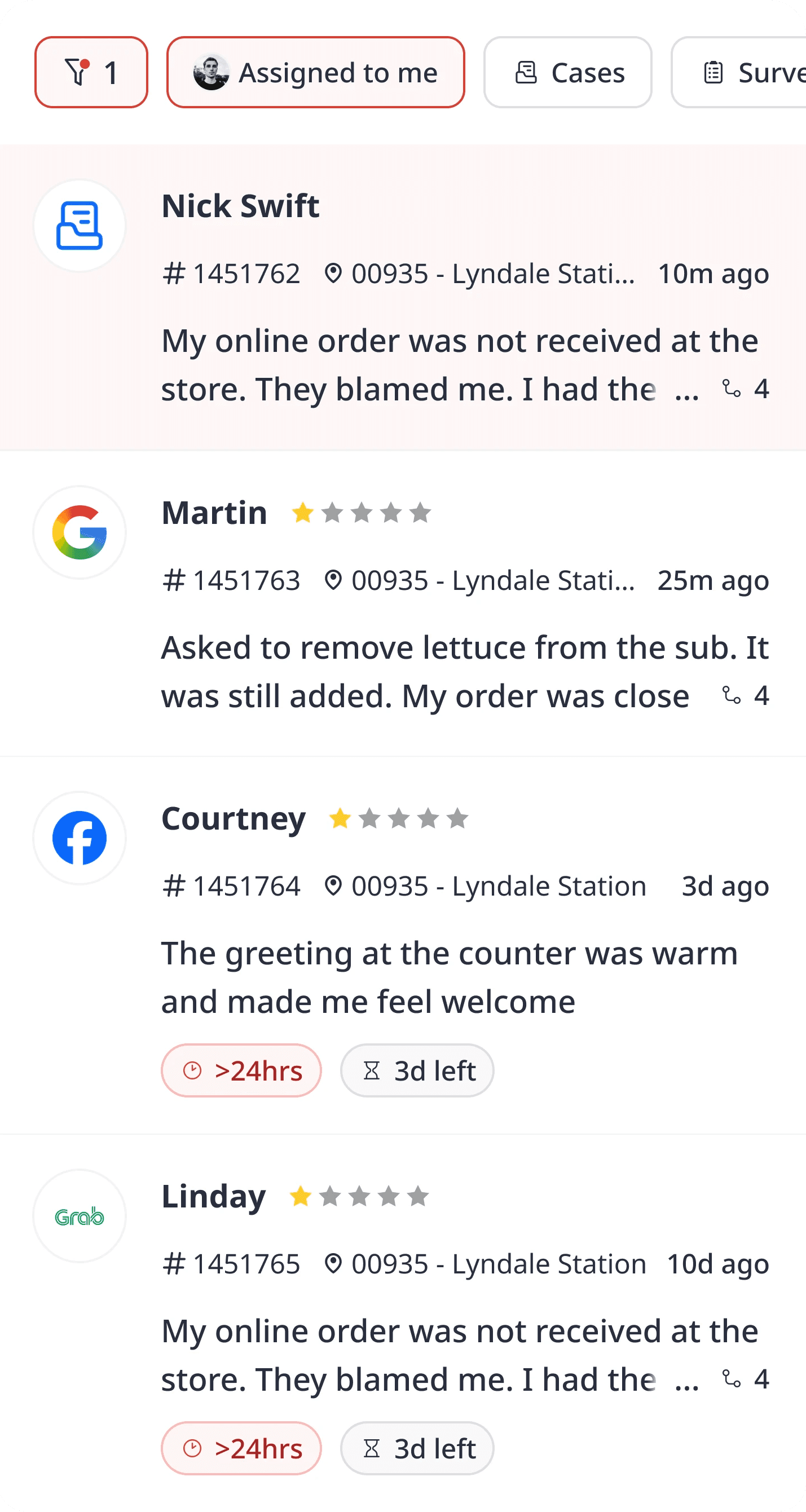
For example, as you can in the Unified Inbox here, Alfie has organized all reviews from Google, Yelp, Instagram, and more into one place. He has crafted a response to a 1-star review from Nick Swift.
After that, Rockie, the Intelligence Agent for operational insights, steps in.
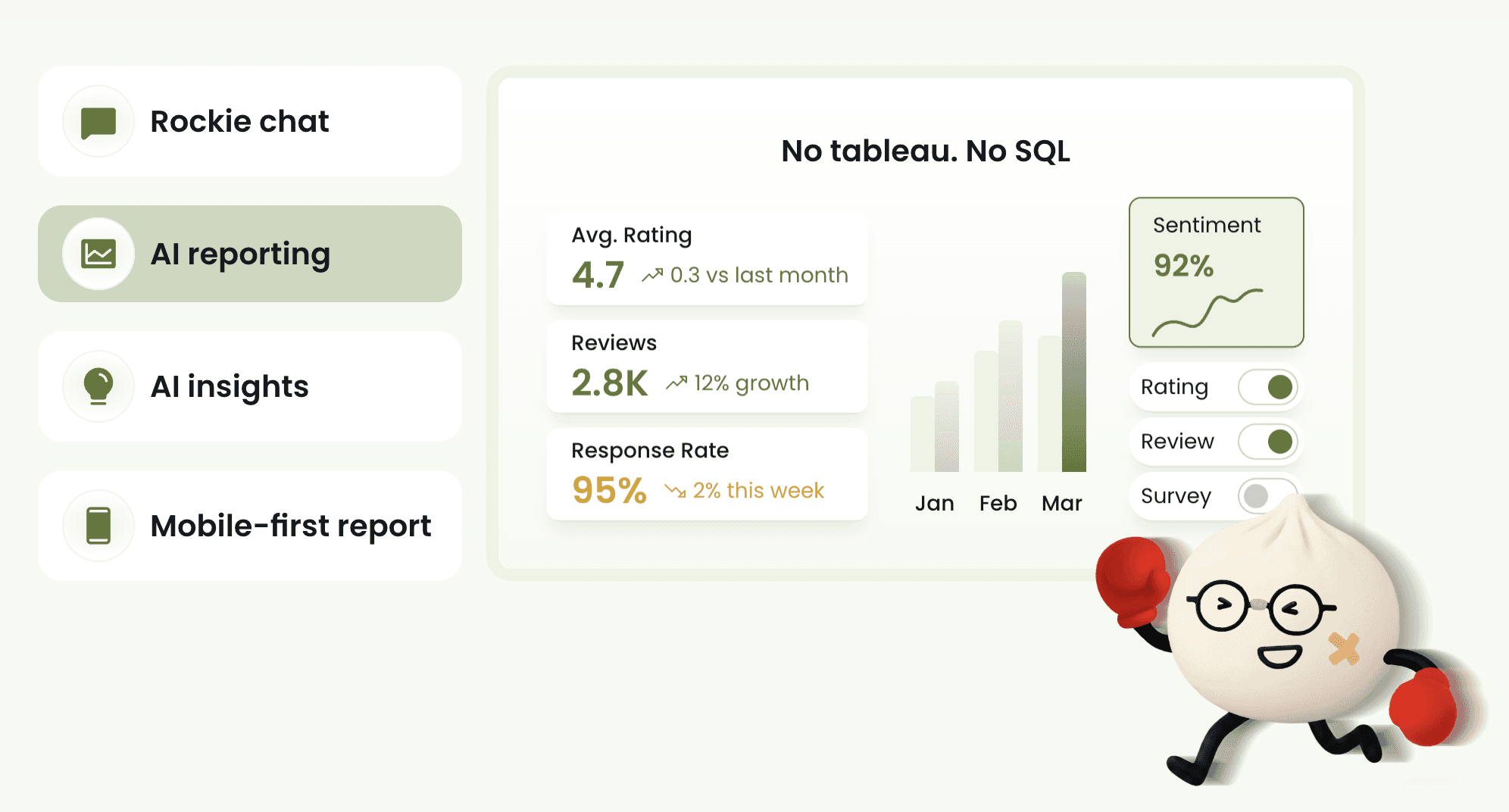
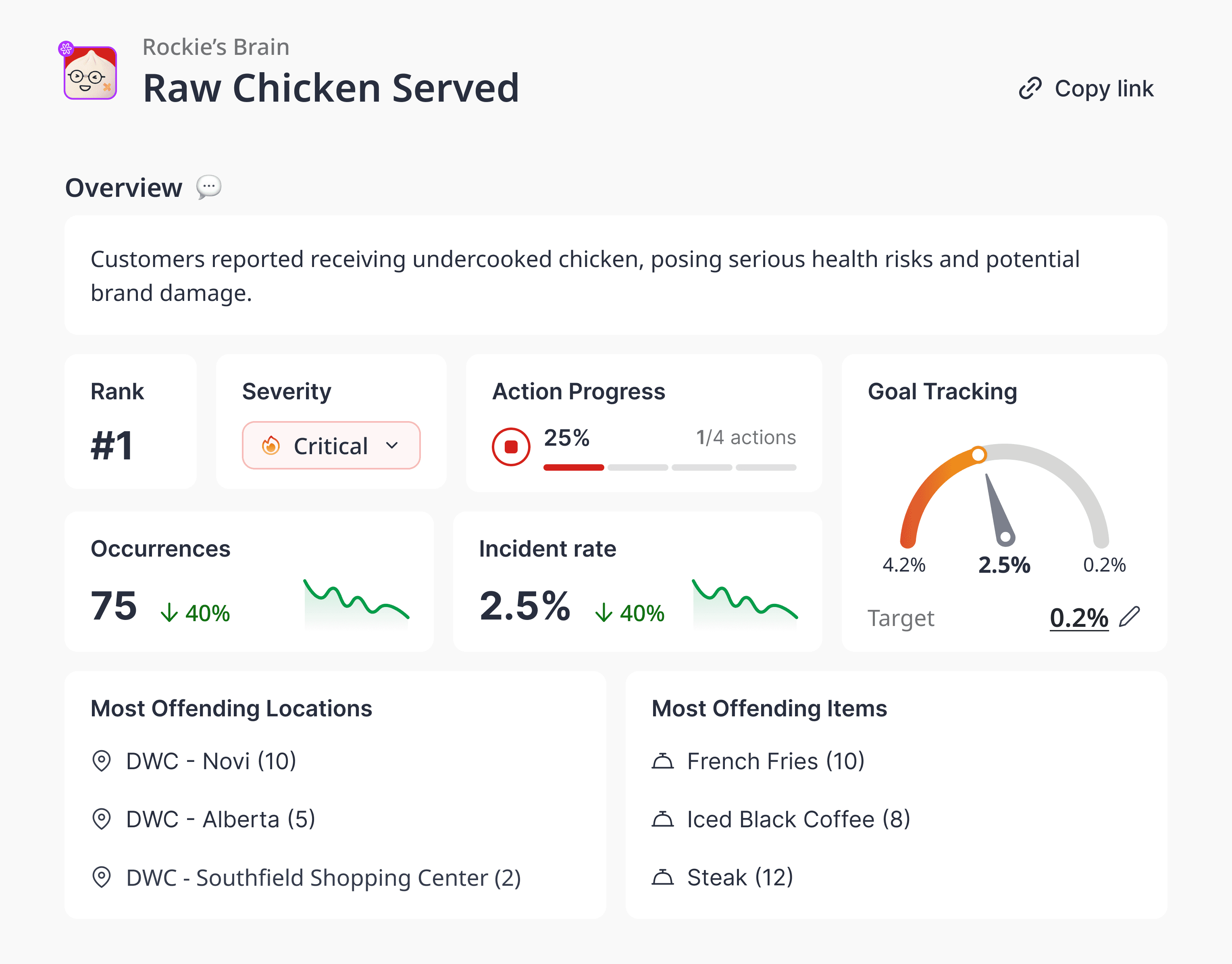
Rockie can read guest sentiments from all of those reviews and surfaces trends.
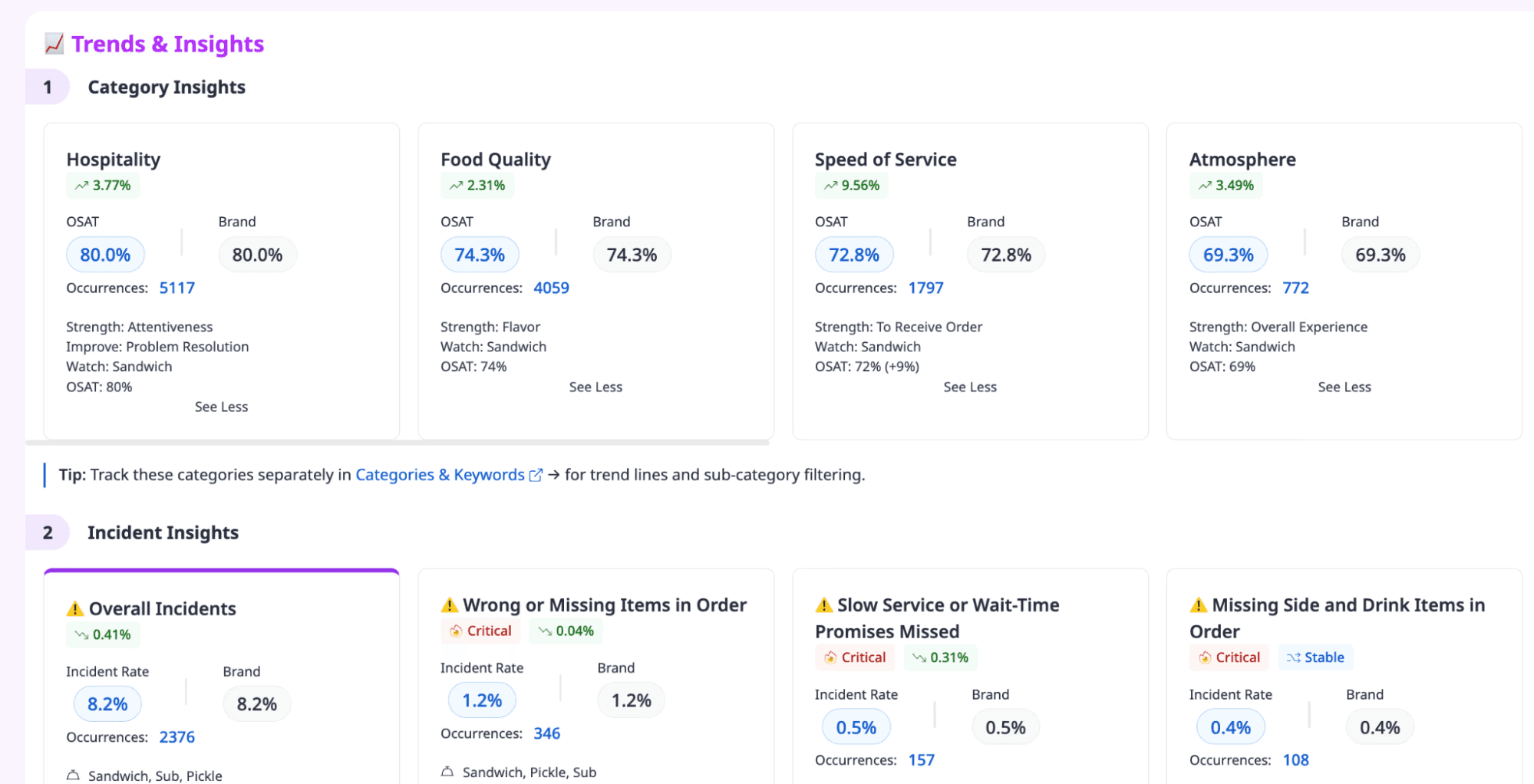
From his dashboard, you immediately know which location delivers good guest experience and which doesn't. He even ranks locations against brand standards so HQ knows where to focus.
For example, this is a dashboard from a global fast food franchise (we're sure you heard their name before 😉). They have pretty good OSAT (Overall Satisfaction) score across 4 areas of Hospitality, Food Quality, Speed of Service, and Atmosphere. There are incidents here and there, and you can see it all reported in the dashboard:
2. MarketMan
Website: MarketMan
Category: Restaurant inventory & food cost management software
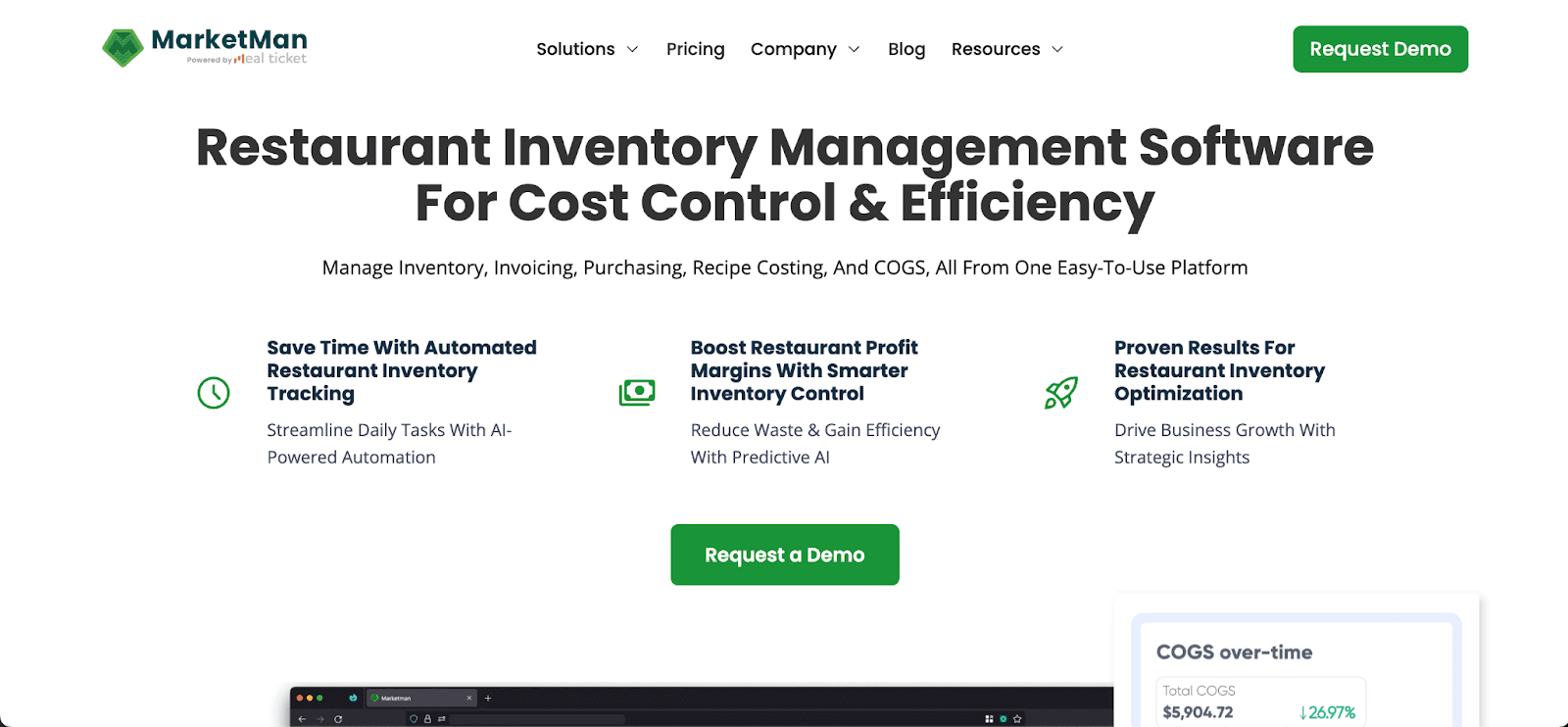
MarketMan is an inventory and food cost management platform purpose-built for restaurant operators.
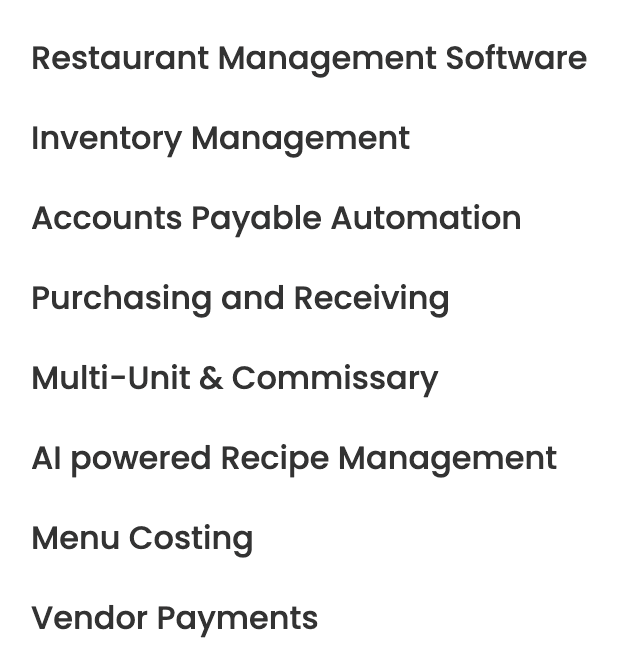
With MarketMan, you get real-time inventory tracking, automated purchase orders, recipe management, and vendor invoice management, all in one place:
Some major clients of MarketMan include Bareburger, Dickey's Barbecue Pit, and Thunderbird Food & Drink.
Key features: Inventory management, recipe & menu costing, purchase order automation, supplier management, waste tracking
What makes them stand out: Laser-focused on food cost control. MarketMan gives operators exact visibility into where every dollar of food spend is going.
Pricing: Plans start at approximately $239/month per location, with custom enterprise pricing for larger groups.
It's a great fit for: Restaurant groups looking to tighten food cost margins and reduce waste.
3. SevenRooms

Category: Guest experience & CDP
SevenRooms is a guest experience platform and CDP strong in reservations and full-service hospitality. You build profiles from booking, dining, and marketing data to personalize every visit.
Key features:
Guest profiles from reservations, dining, and marketing data
Reservation, waitlist, and table management
Automated email and SMS marketing
Segmentation by visit history and preferences
Review and feedback tracking tied to profiles
Reporting on guest retention and revenue
Pricing: Custom pricing based on service level and locations.
Website: SevenRooms
AI in Restaurants: FAQ
How is AI used in restaurants today?
Restaurants use AI most where there's high volume, repetitive work or lots of data. Common uses include answering guest messages, taking drive-thru orders, personalizing marketing, monitoring reviews, forecasting demand, scheduling staff and managing inventory. Customer service and inventory management are among the areas already showing results.
What are the main challenges of adopting AI in a restaurant?
The biggest challenges are picking the right use cases and managing the risks that come with them. Many brands also run into limited technical talent, regulatory concerns and a lack of clear governance. In Deloitte's 2025 survey, most executives said their organizations weren't fully ready for AI.
Should a restaurant build its own AI or buy software from a vendor?
For most restaurant operators, buying AI-powered software from a specialized vendor is the most practical starting point. It's faster to set up, costs less upfront and avoids maintaining your own AI infrastructure. Large groups with strong technical teams and very specialized workflows may get more from an in-house or hybrid approach.
Can AI help a restaurant reduce food waste?
Yes, AI can spot waste patterns and forecast how much food each location actually needs. It does this by predicting sales by day, location, menu item, weather and season. Those forecasts feed into purchasing, so you order closer to real demand and run out less often.
How does AI help restaurants manage reviews and guest feedback?
AI can monitor reviews across platforms, flag recurring issues, draft replies and track sentiment by location. Momos, for example, gathers reviews into a Unified Inbox where its Alfie AI agent drafts on-brand responses, and its Rockie agent surfaces trends and ranks locations against brand standards. That shows headquarters where to focus.
 AIエージェントが、貴店の全店舗におけるすべてのお客様対応を年中無休・24時間体制で自動化します。


" transform="translate(3.219 19.212)" width="152.45224485148515px"/><path d="M 0 11.619 C 7.071 11.39 33.491 21.738 40.35 21.268 C 38.499 18.19 37.116 14.915 35.507 11.625 C 33.7 7.867 32.587 3.926 31.702 0" fill="transparent" height="21.28391189647101px" id="I9fuJaf7q" stroke-dasharray="" stroke-linecap="round" stroke-linejoin="round" stroke-width="4.97" stroke="rgb(0, 0, 0)" transform="translate(139.727 55.754)" width="40.34950693069311px"/></svg>)