Los 16 mejores softwares de gestión de comentarios de restaurantes basados en IA (2026)
Escrito por: Vincent Nguyen

⟦embed:keyTakeaways⟧
If you're running a restaurant, you probably know the tremendous value of listening to your guests.
It's easy to stay on top of feedback when you're just a small food store. However, as you scale to a multi-location business, it becomes increasingly harder to do so, because:
Feedback is scattered across reviews, surveys, support tickets, social media, and delivery apps, making it nearly impossible to keep track of everything in one place.
Even when you do track it, crafting thoughtful responses to win back churned customers eats up serious time and effort.
Without deep analysis of what guests tell you, you never really know how they feel about their experience or where things went wrong.
That's exactly where restaurant feedback management software earns its keep. In this article, you'll find:
16 best restaurant feedback management tools
What makes each one stand out
Who each tool is best suited for
Pricing estimates for each
What Should A Restaurant Feedback Management Software Do?
Restaurant feedback management is the ongoing process of collecting, responding to, and learning from everything guests tell you about your restaurant. Good restaurant feedback management should involve four major activities:
Capturing every guest signal across reviews, surveys, support tickets, and social the moment it comes in
Responding to each guest quickly and personally, so no one feels ignored
Recovering unhappy guests by addressing complaints in a timely, transparent way before they churn
Acting on feedback patterns to fix the service or quality issues that keep coming up
The 16 Best AI-Powered Restaurant Feedback Management Software You Should Know
With all those criteria laid out, here’s our recommendation list of the 16 best feedback management software for your restaurant:
⟦embed:WRxwHIfmv⟧
1. Momos
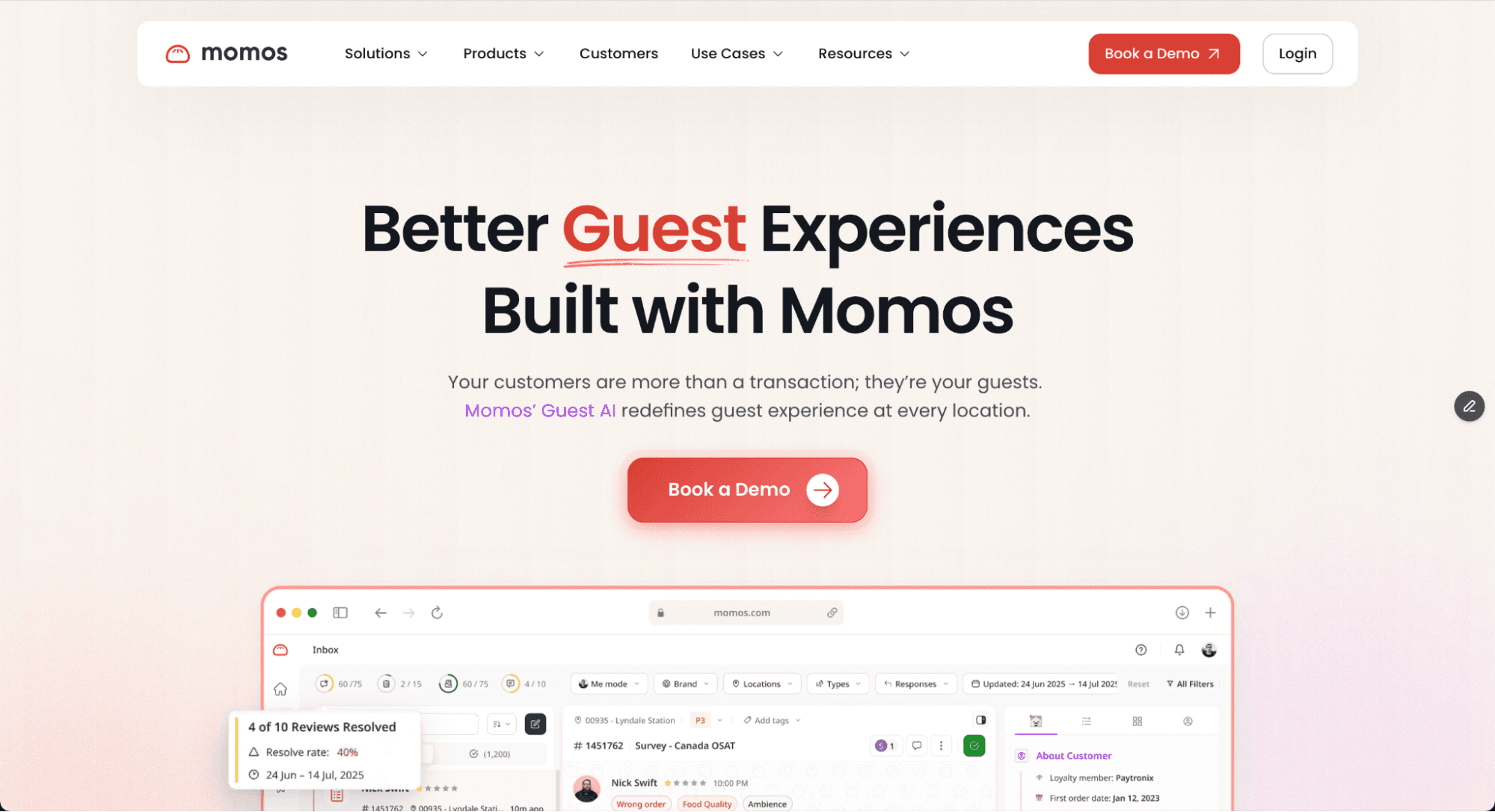
Momos helps restaurant brands with many locations collect, answer and learn from guest feedback in one platform. Post-visit surveys, reviews, app comments, social messages and delivery-app feedback flow into a shared inbox, where an AI agent replies and analytics group complaints by type and store.
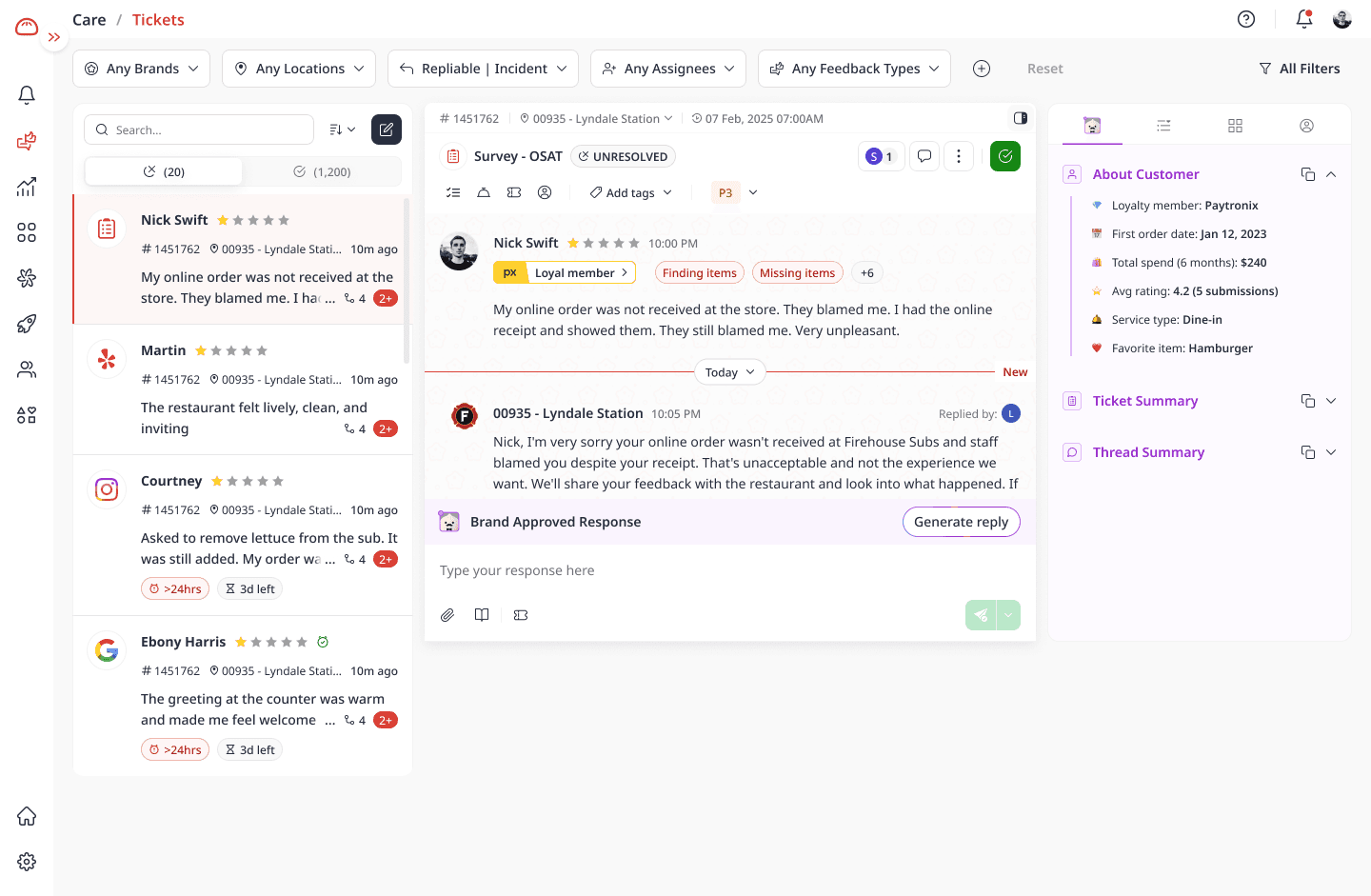
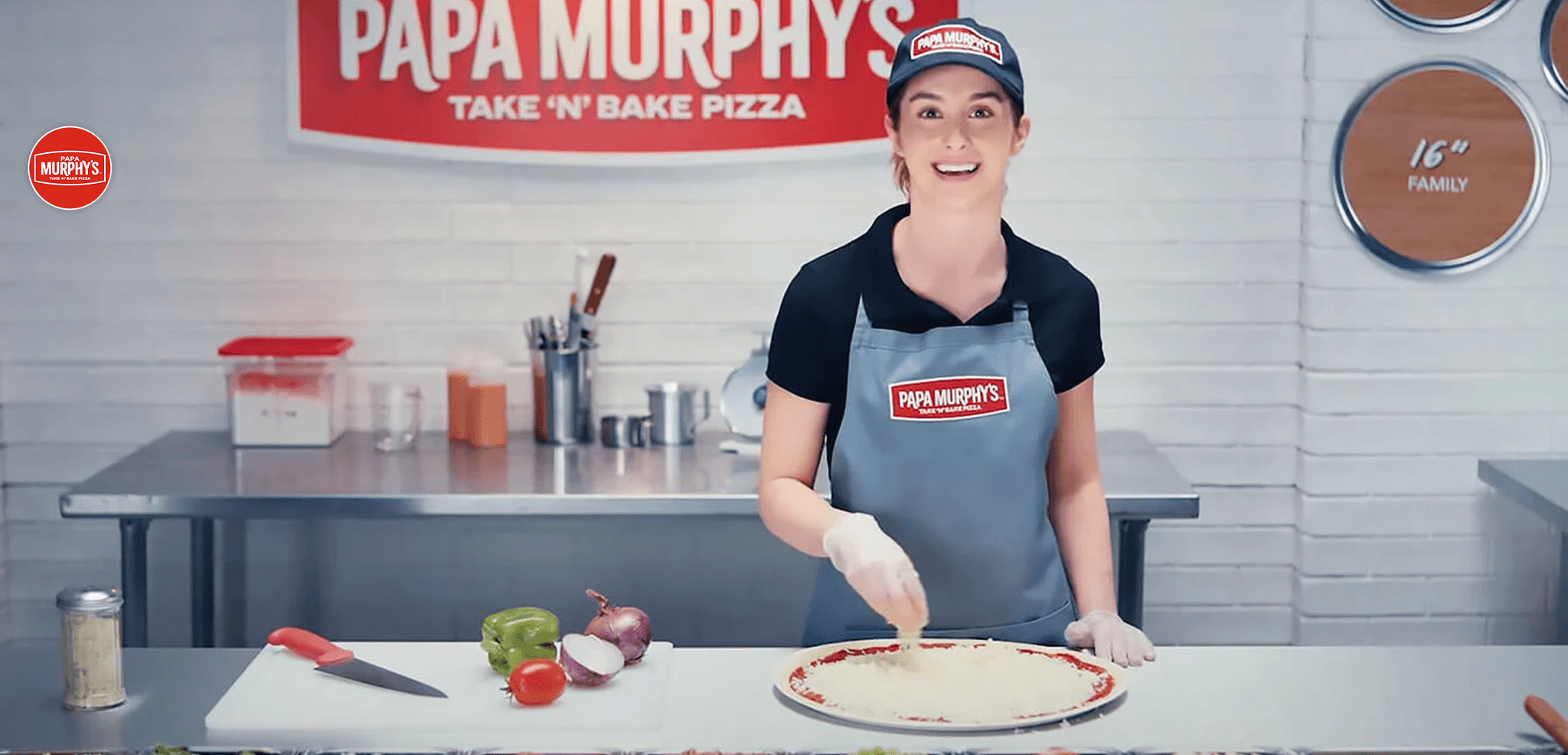
It also counts among the AI-powered reputation management platforms for restaurants, since public reviews run through the same workflow as private feedback. Papa Murphy's collected 571,946 survey submissions in its first year on Momos and saw its incident rate drop 45%.
Key features
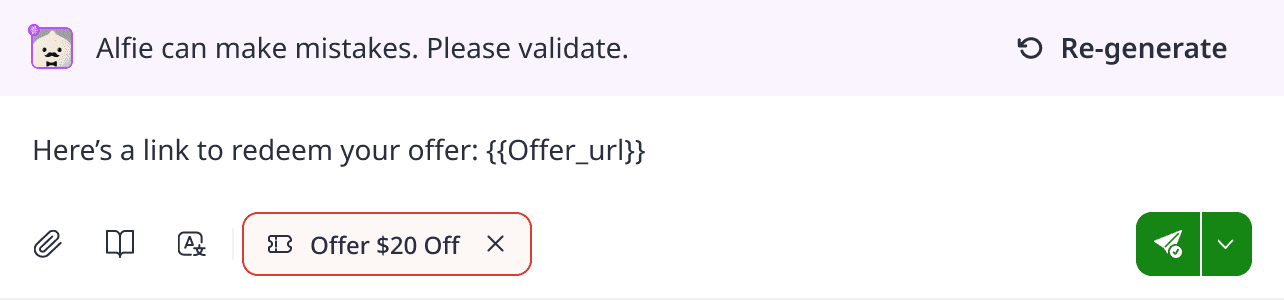
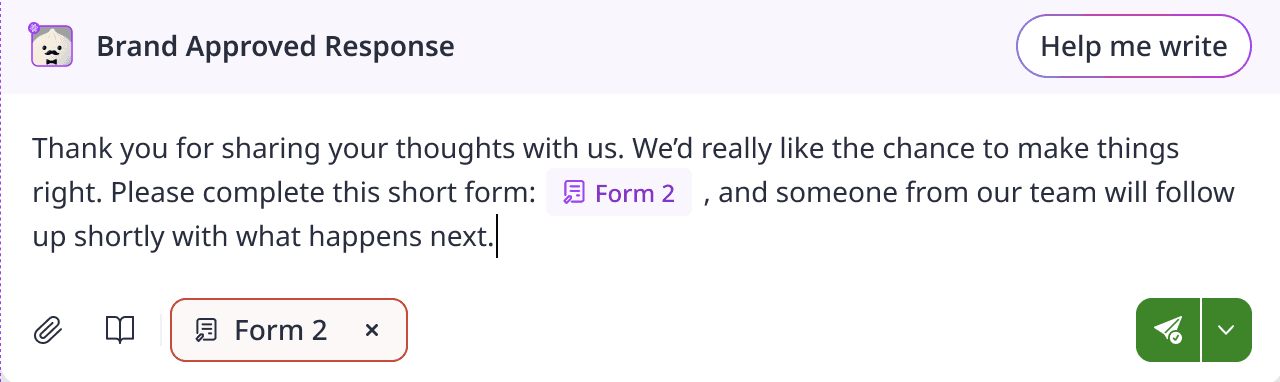
Surveys that resolve issues: Alfie sends customizable post-visit surveys in real time and follows up right away when a guest reports a problem.
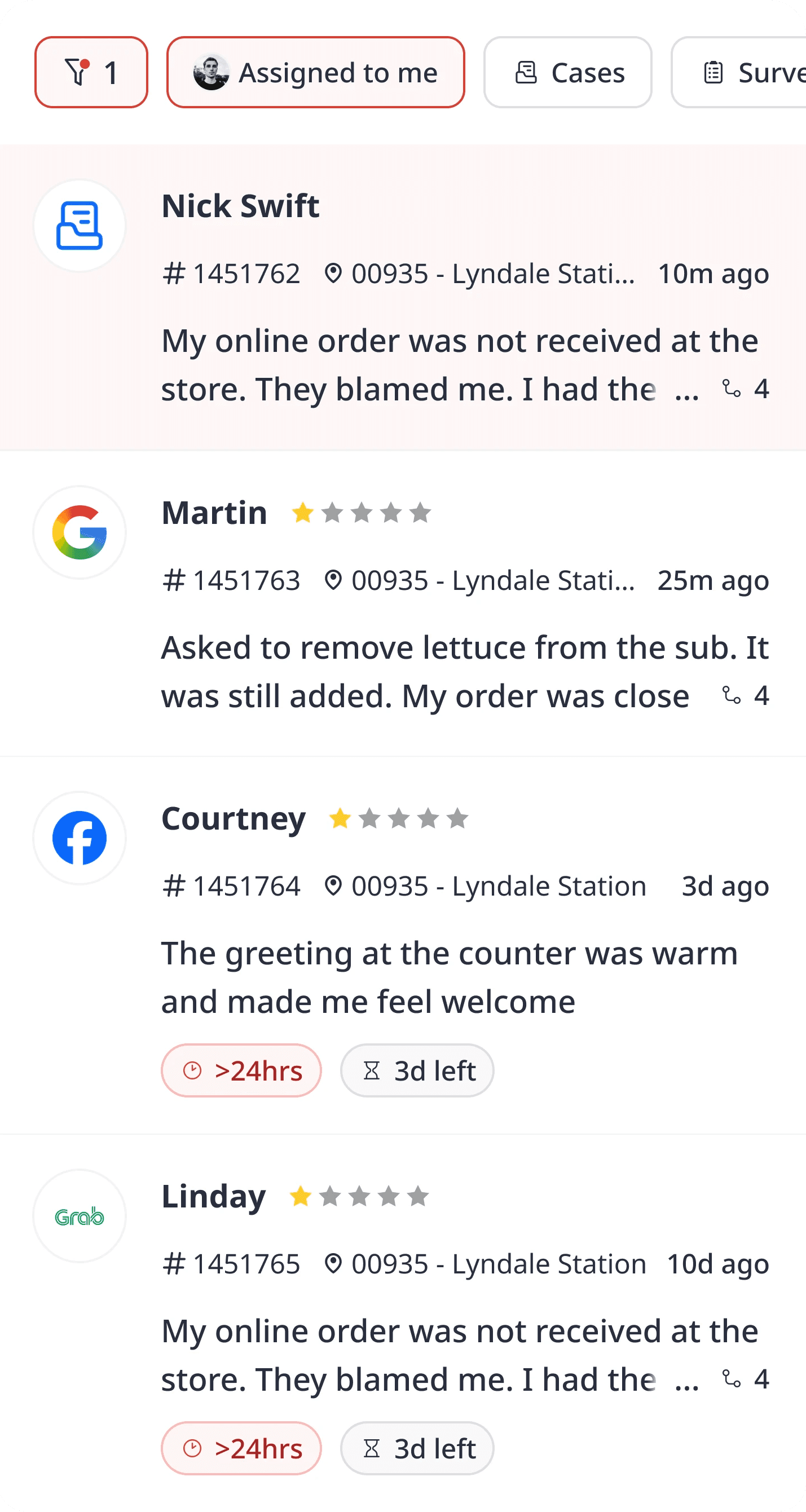
Feedback from every source: The Unified Inbox takes in survey answers, Google reviews, social DMs and App Store comments, and AI triage routes each item to the right location.
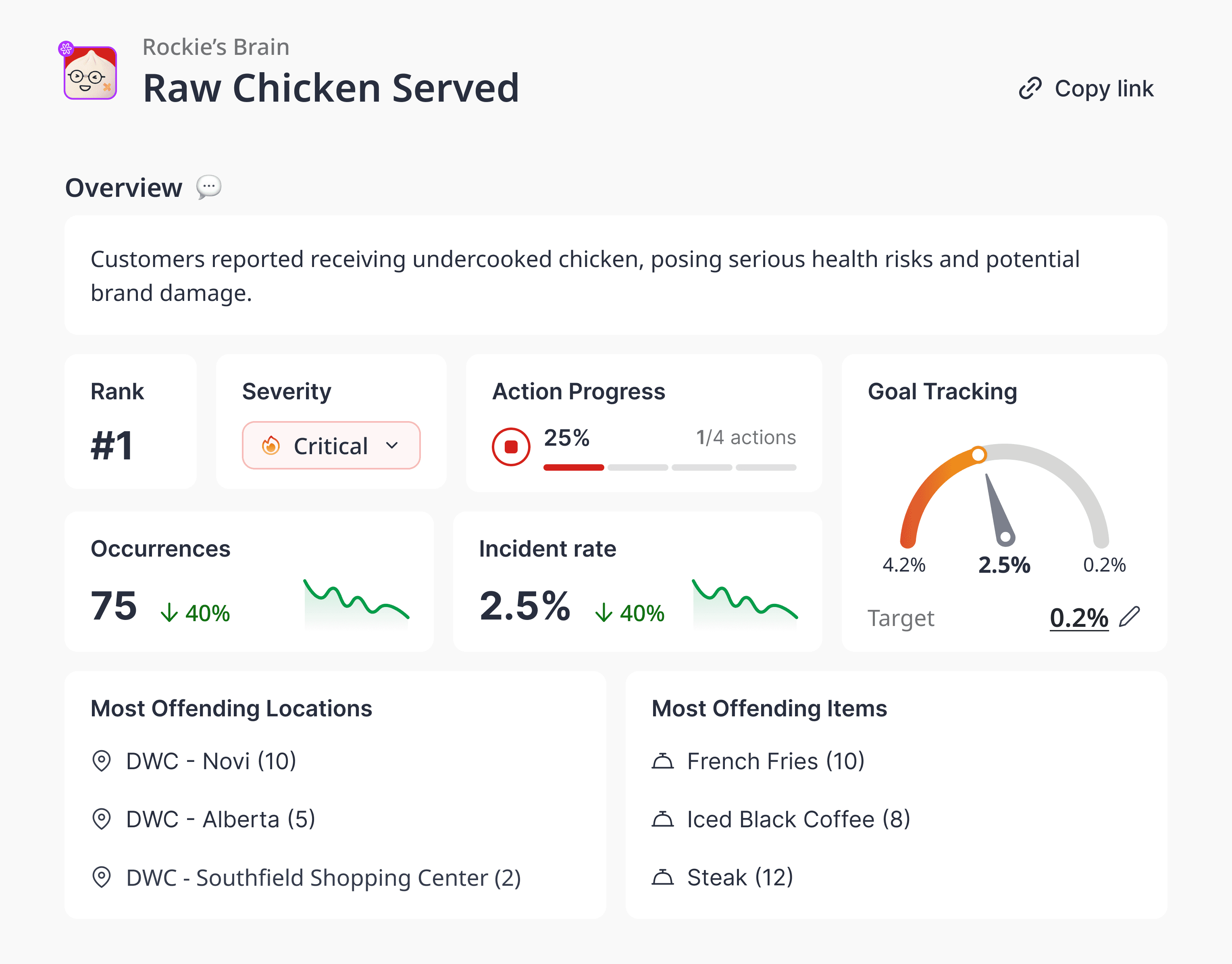
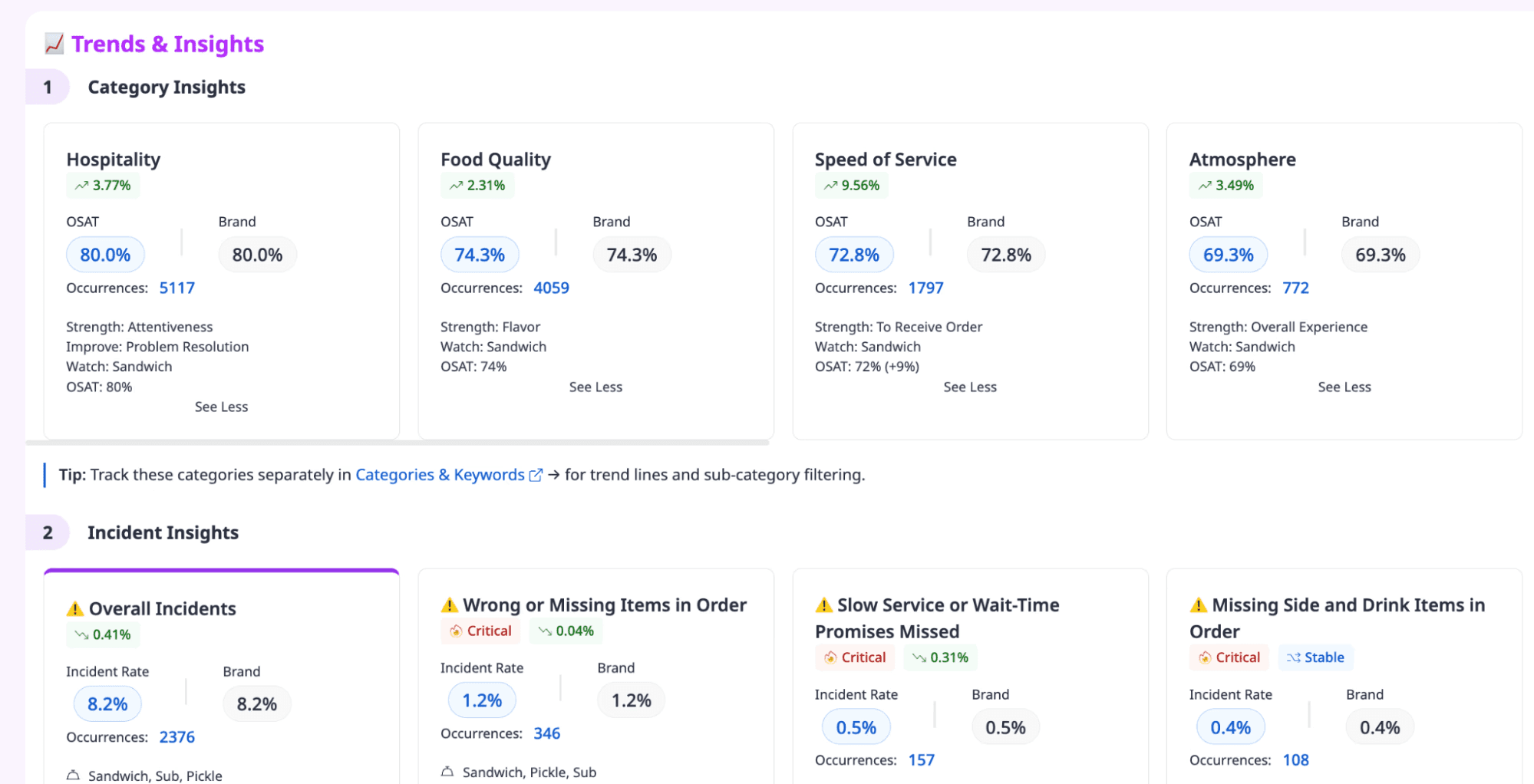
Complaints sorted by type: AI tags each complaint, such as order accuracy, wait time or service quality, so a pattern across stores shows up quickly.
A reply for every guest: Alfie writes back in your brand's tone with each guest's visit history in view, and hands cases to your team when a person should step in.
Delivery and app feedback: Comments from delivery apps such as Uber Eats and DoorDash, and from your own app, land in the same place.
Pros
One loop from survey to fix: Feedback, replies, recovery offers and incident analytics share one system, so nothing falls between tools.
Time back for managers: Because Alfie works as an AI agent for customer support, store managers can focus on cases that need a call or a visit.
Insight by location: Topic and incident analytics show what matters most to guests at each store, so you can work on the parts of the guest experience that count.
Translation built in: A store can answer a survey comment or review in the guest's own language.
Cons
Pricing on request: Quotes follow a demo, and there's no free trial.
Chain-sized: A single restaurant collecting a few surveys a week may not need a platform of AI agents.
Onboarding first: Your first automated replies go out after a guided setup that runs about a week.
Price and plans
Momos doesn't publish prices; you get a custom quote after a demo, which you can book on the Momos website.
⟦embed:JY4e1wfZ6⟧
2. ReviewTrackers
ReviewTrackers turns public reviews into feedback a restaurant group can act on. It gathers what guests write across review sites, sorts comments by topic and sentiment, and gives store managers approved replies so each guest hears back.
At heart it's a reputation management platform, owned by InMoment since 2022 and part of the Press Ganey Forsta group since May 2025. Ted's Montana Grill is one of the restaurant brands featured in its case studies.
Key features
Topic and sentiment analysis: Comments are grouped into themes, so you can tell whether slow service or food temperature drives more complaints at a given store.
Feedback requests: Automated emails and texts invite guests to share how their visit went, which adds fresh comments for quieter locations.
One feed for every site: Google, Facebook, TripAdvisor and many smaller platforms land in a single dashboard, with alerts for anything new.
Replies in your voice: Smart Response templates and AI-drafted answers help managers close the loop quickly.
Store-level reporting: Each owner and area manager sees the feedback for the restaurants they run.
Pros
Feedback in one place: Review data can sit inside InMoment's customer experience platform next to your survey results.
Restaurant references: Its case studies include a restaurant chain, Ted's Montana Grill.
Light work for store teams: Templates let a general manager answer in a few clicks while head office keeps control of wording.
G2 rating: Users give it 4.6 out of 5 on G2, from 161 reviews.
Cons
Theme analysis on Essential: Experience analysis and competitor insights aren't part of the Starter plan.
Changing ownership: Two acquisitions since 2022 mean some new features, such as AI replies, are announced under the InMoment name.
Unlisted prices: You need a meeting to find out what your locations would cost.
Price and plans
ReviewTrackers doesn't publish prices; the plans page asks you to book a meeting for a quote. Pricing is per location, per month and paid annually, across Data Only, Starter and Essential.
3. Chatmeter
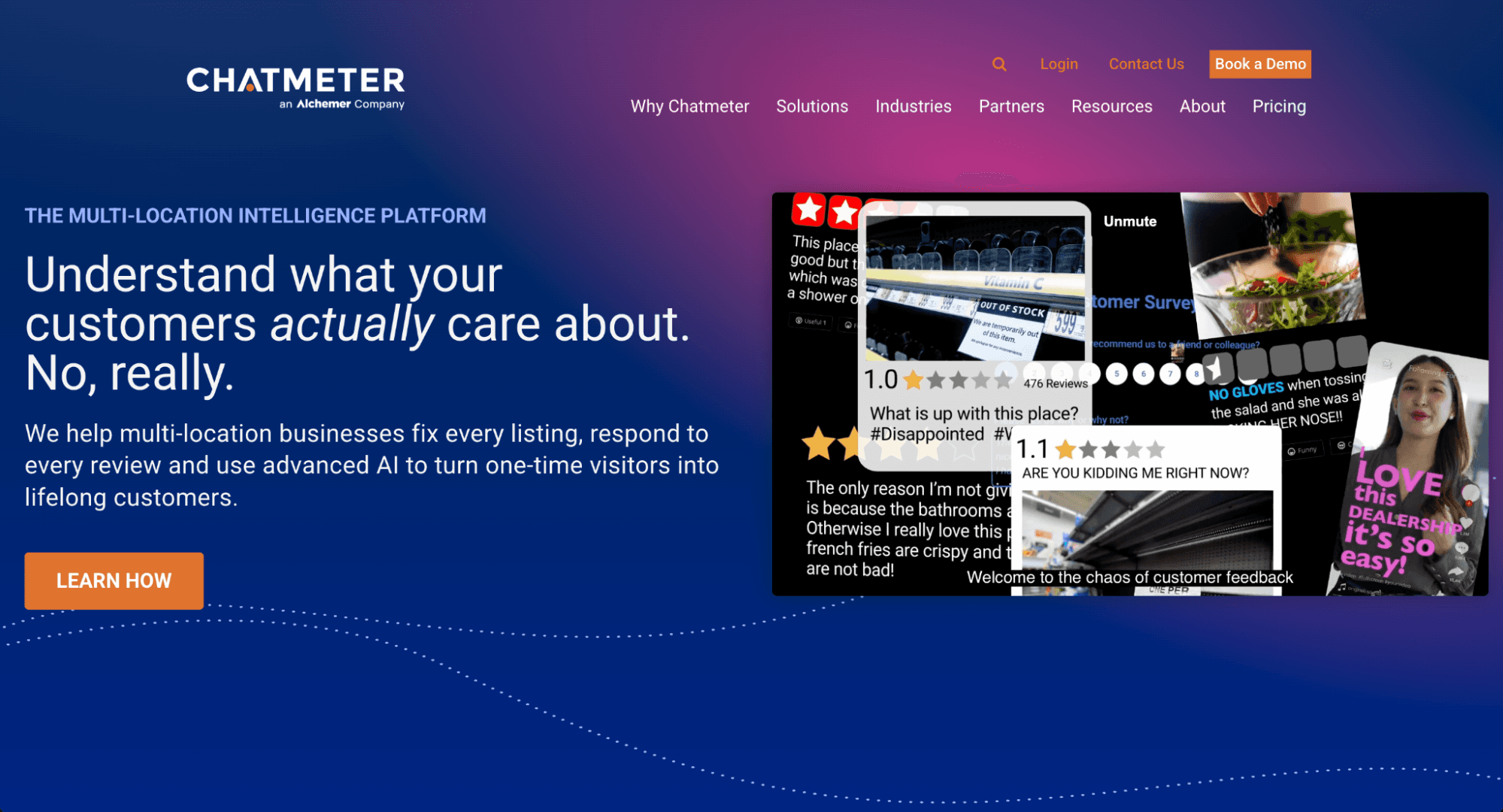
Chatmeter is a review, listings and local search platform for multi-location brands, with AI that turns guest reviews into brand intelligence for each location. Since Alchemer acquired it in September 2025, it has been sold as Alchemer Reputation Management, next to Alchemer's survey software.
That pairing matters for feedback management, because what guests write in public and what they tell you in a survey can be analyzed together. If you're building a wider feedback program, our guide to restaurant intelligence explains how the pieces fit.
Key features
Feedback from 100+ review sites: New reviews for every store arrive in one dashboard, so a regional manager can scan them in a single pass.
Pulse Ai: Signals: Ask about reviews, social posts or survey answers in everyday words, then narrow the answer to a location, region or provider.
Surveys through Alchemer: Collect direct feedback with Alchemer's survey tools and set it beside public ratings.
Delivery app reviews: Ratings from Uber Eats, DoorDash and Grubhub appear with Google and Yelp, useful when off-premise orders are a large share of sales.
AI Auto-Responder: Routine reviews get an on-brand reply under rules you write, while sensitive ones wait for a person.
Pros
Public and private feedback together: Reviews and survey answers come from one vendor, which makes it easier to spot a problem both channels mention.
Questions in plain language: Operators can query their feedback without building a report first.
Reads review photos: Pulse Ai includes the pictures guests attach, so comments about how a dish or dining room looked become part of the analysis.
Rated 4.5 on G2: Reviewers on G2 score Alchemer Reputation Management 4.5 out of 5.
Cons
Price on request: There's no published price for reputation management; Alchemer's price list covers survey licenses only.
Demo before testing: You see the product in a 30-minute personalized demo, with no self-serve trial.
Sized for chains: A single restaurant may find the platform larger than its feedback program needs.
Price and plans
Alchemer doesn't list Chatmeter prices; contact its sales team for a quote.
4. Superorder
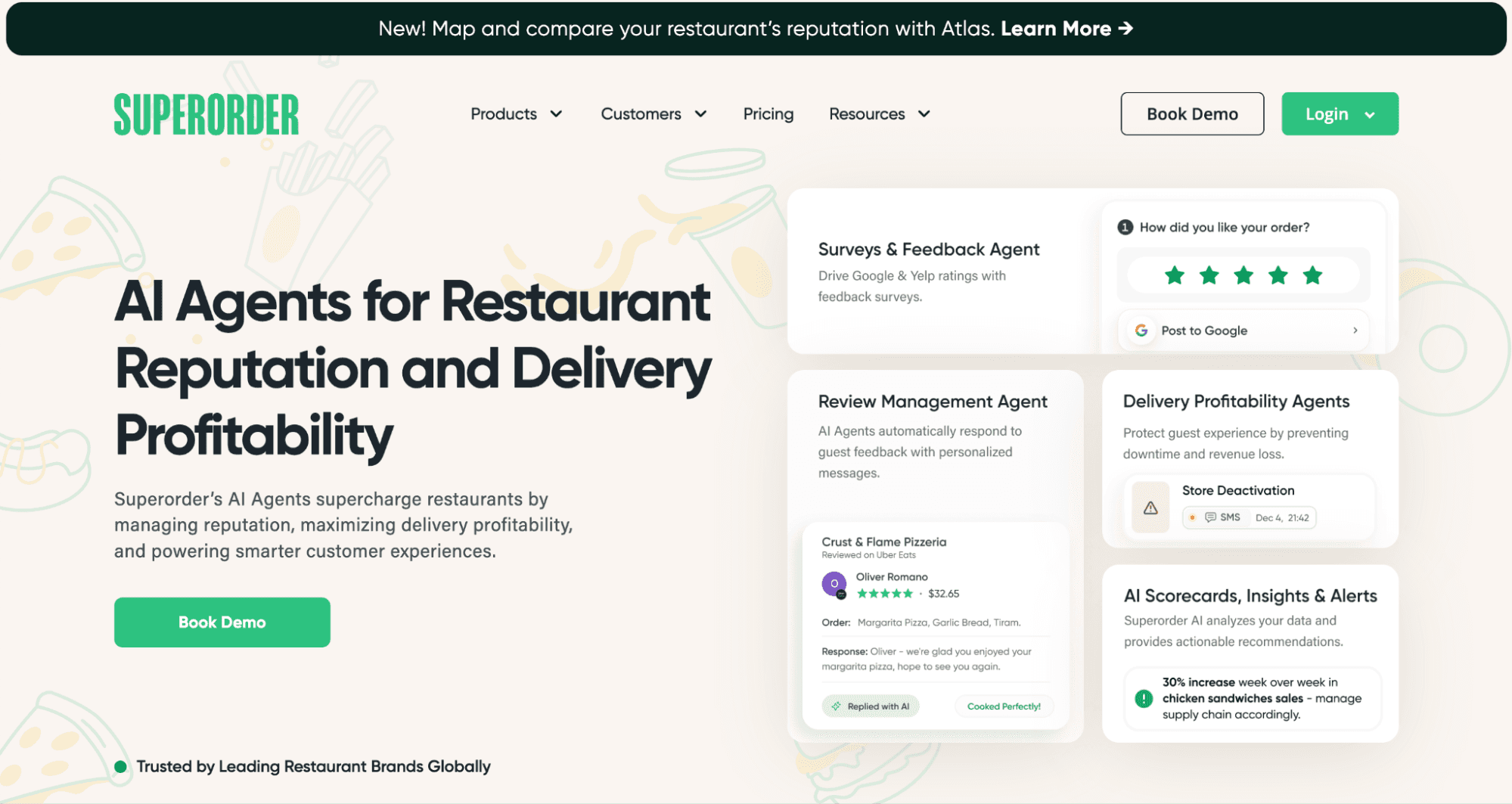
Superorder is an AI agent platform for restaurant chains that covers restaurant reputation management, post-order surveys, delivery profitability and location scorecards. Known as Forward Kitchens until 2023, it now centers on agents that collect feedback, answer reviews and win back unhappy guests.
For feedback management, its strength is timing: a survey reaches the guest right after an order, while the details are fresh. Turning Point Restaurants partnered with Superorder in June 2025 to gather post-order feedback across its 32 East Coast locations, and our guide explains why answering reviews pays off for restaurants.
Key features
Surveys & Feedback Agent: AI sends a survey after each order, so problems reach you privately before they turn into public reviews.
Recovery offers: Guests who report a poor experience can receive tailored compensation automatically, which gives them a reason to order again.
Insights and alerts: AI reads feedback and operating data together to flag trends, sentiment shifts and guest issues in real time.
AI scorecards: Locations are compared side by side, so you can see which stores need attention first.
Review Management Agent: Reviews from Google, Yelp and delivery platforms land in one dashboard, with AI-written replies that reference each guest's order.
Pros
Feedback from off-premise orders: Post-order surveys reach delivery and takeout guests, who never see your dining room or your servers.
A closed loop: Surveys, recovery offers and review replies run in one system, so an unhappy guest can be heard and compensated without manual steps.
Enterprise support: The plan includes unlimited users, a dedicated account manager and a 24-hour support response SLA.
Cons
Quote only: Superorder doesn't publish prices, so you'll need a demo to learn the cost.
No free trial: A 30-day money-back guarantee stands in for a trial period.
Delivery-first design: Much of the platform targets delivery and takeout, so a dine-in independent may never use the delivery agents.
Price and plans
Superorder doesn't publish prices; you get a quote for its Enterprise plan after a demo. Pricing is store-based and billed monthly, and a 30-day money-back guarantee takes the place of a free trial.
5. Tattle
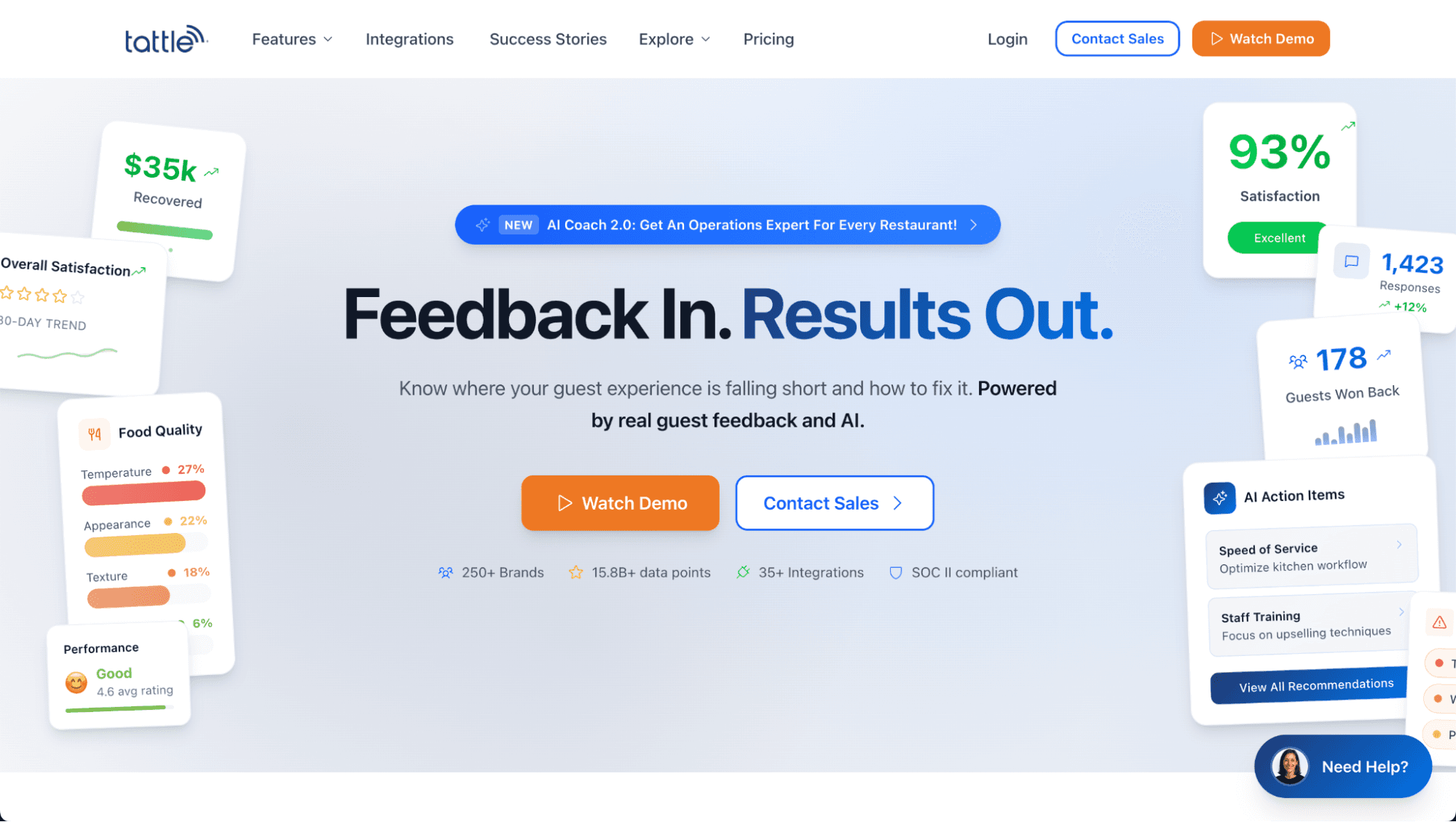
Tattle is a restaurant guest feedback platform that collects short post-order surveys through the ordering, loyalty and POS tools you already run. Its AI reads the answers location by location and ranks the change that would raise each store's scores most, while public reviews are tracked in the same place.
Among restaurant feedback management software, Tattle is built around structured surveys: every answer is tied to a part of service a manager can coach. Kung Fu Tea chose it in January 2026 to follow guest sentiment across its channels.
Key features
Surveys after every order: Toast, Olo, Punchh, Paytronix, Thanx and Square trigger a survey automatically, so you hear from a steady share of everyday guests.
Feedback by operating area: Answers are scored on speed, accuracy, food quality and hospitality, and item-level ratings flag specific dishes.
Ranked to-do list: AI Coach names the improvement with the most expected impact at each location, with monthly goals.
Store comparisons: Trend dashboards track top box score and recovery rate for every location over time.
Guest recovery: Workflows route unhappy guests to a quick follow-up.
Manager app: Surveys and reviews share one inbox on iOS and Android, with push alerts for serious incidents.
Pros
Steady feedback flow: Automatic triggers bring in answers from regular guests with no comment cards or staff prompts.
Structure a GM can use: Because answers are tagged to operations, a manager can see which part of the shift needs attention.
Guided onboarding: Every plan includes a setup specialist and custom survey design, and Tattle says most customers collect feedback within 1 to 2 weeks.
Published prices: Per-location rates are listed on Tattle's site, so you can budget before a call.
Cons
Review management costs extra: Responding to and growing reviews across platforms comes with a Reputation Management add-on whose price isn't listed.
Built for chains: Pricing tiers begin at 5 locations, so single-unit operators sit outside the published plans.
Survey-first scope: Tattle centers on surveys and reviews, so listings or guest messaging would need a separate tool.
Price and plans
Tattle publishes per-location pricing, billed per month, and the rate falls as you add locations. There's no free trial listed.
5 to 10 units: $125 per location, per month.
11 to 20 units: $100 per location, per month.
21 to 50 units: $85 per location, per month.
51 to 200 units: $65 per location, per month.
201+ units: Custom pricing.
6. Qualtrics
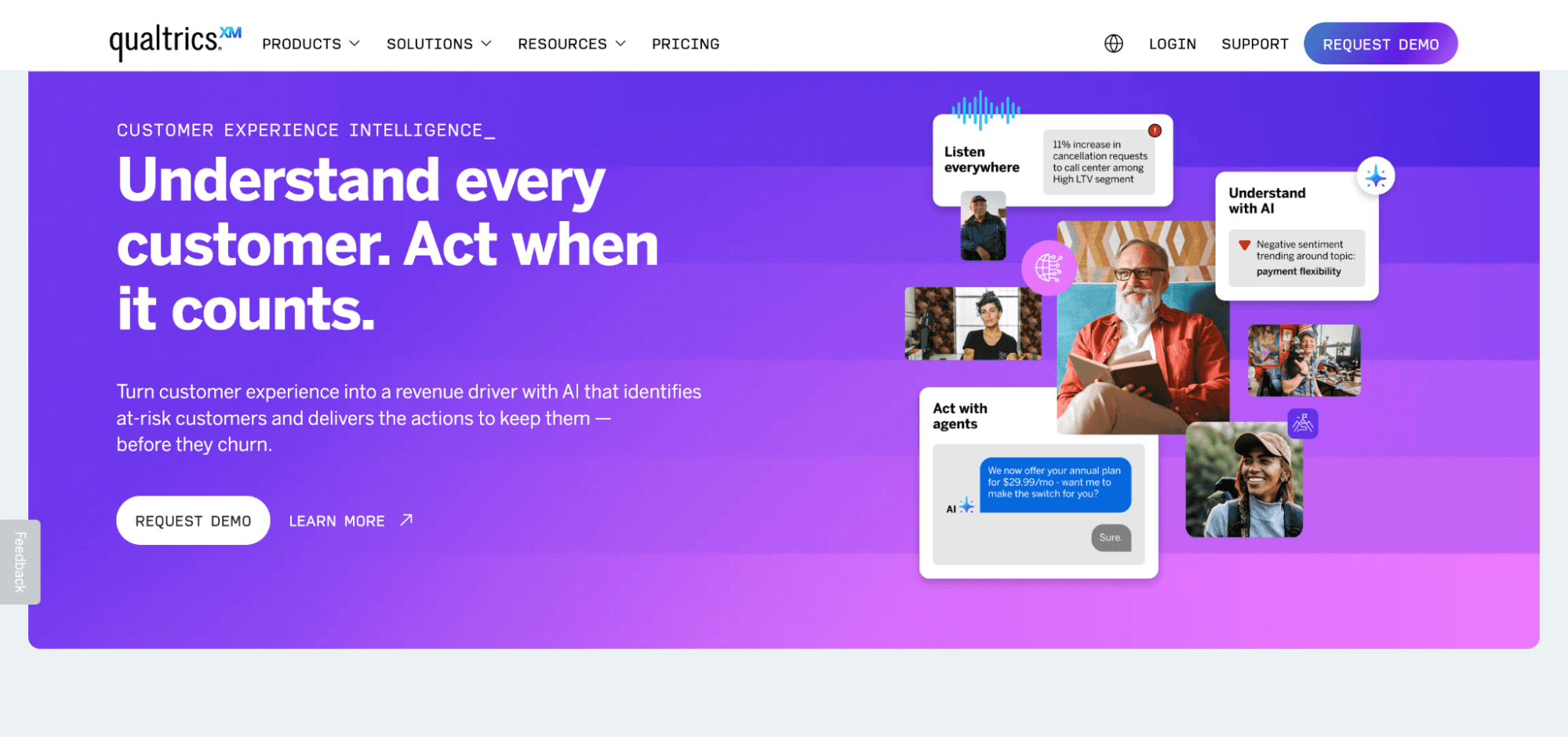
Qualtrics builds feedback programs for large brands around an idea it calls experience management (XM), covering guests, employees and brand perception. Restaurant chains use it to collect post-visit surveys, read public reviews beside them, and send the results to each location.
KFC and Shake Shack both appear in its customer stories. The newest piece is Experience Agents, AI that reacts to feedback as it comes in; Qualtrics told its X4 audience in March 2026 that paying customers now use them.
Key features
Post-visit surveys: Guests can answer by text, email, your app, a website intercept, chat or a QR code.
Closed-loop follow-up: An Experience Agent can pick up a low score the moment it lands and begin making things right with that guest.
Dashboards by role: A store manager sees one restaurant, an area leader sees a market, and executives see the whole brand.
Comment analysis: AI clusters open-ended answers into themes with sentiment, so managers read patterns rather than every response.
Driver analysis: Predictive models show which parts of the visit move satisfaction most.
CRM and call-center feeds: Connectors for Salesforce, Genesys and NICE carry guest feedback into the systems your service team already uses.
Pros
Research depth: Survey design, text analytics and predictive modeling are built for professional researchers, so an insights team rarely outgrows them.
Staff and guests together: Employee experience surveys run on the same platform, so team and guest feedback can be read side by side.
Proven at chain scale: Restaurant brands the size of KFC run their guest feedback on it.
Cons
Interaction-based quotes: CX plans are priced by interactions, which Qualtrics defines as data records it collects or processes, and no prices are listed.
Demo before access: The pricing page offers no free trial or free plan.
Needs analysts: The platform pays off when an insights or CX team runs it; a lean operations team may find it more than it can manage.
Price and plans
Qualtrics doesn't publish prices. Its CX plans, including one for location-based industries such as restaurants, are priced by interactions, and you get a quote after a demo.
7. Marqii
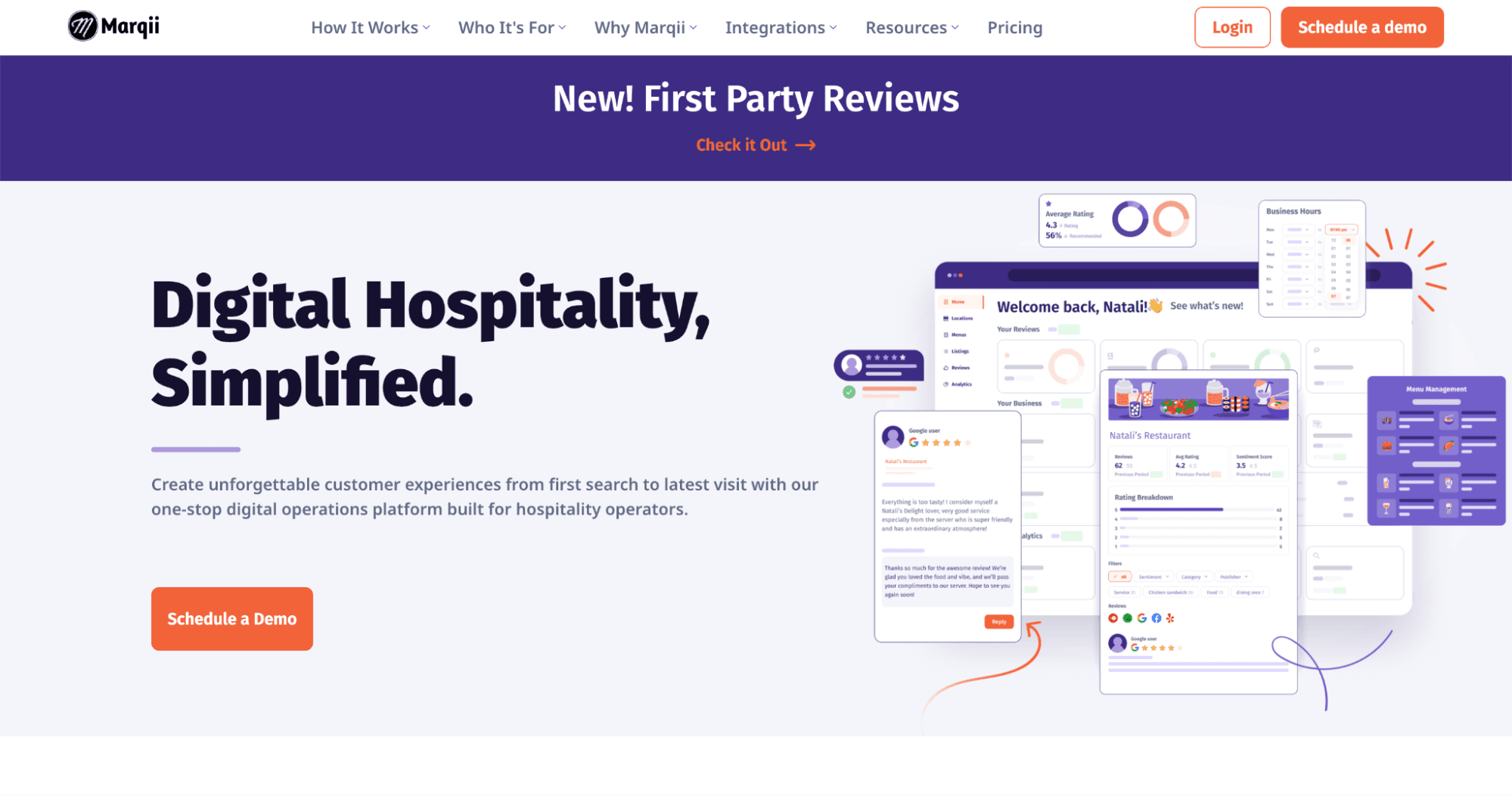
Marqii is a restaurant platform for menus, listings, reviews and social posts. Its feedback tools gather public reviews from search and delivery sites, add sentiment analysis and AI summaries, and ask guests for reviews through branded forms and texts.
It fits best when most of your guest feedback arrives as online reviews and you want to read it alongside the menu and listing details guests see before they visit.
Key features
Review insights: Sentiment analysis and AI summaries surface recurring praise and complaints, location by location.
First Party Reviews: Branded forms reach guests by link, QR code or an embed on your website, and their answers feed Marqii's insights.
Review Generation: After a guest orders through a Marqii partner, a templated text asks about the experience and links to the review site you choose.
Custom notifications: Alerts let your team know when new reviews land, and the managed team flags urgent ones to you directly.
Monthly check-ins: Managed Review Response customers go through sentiment, response trends and keywords with Marqii's team each month.
Pros
Every channel in one place: Feedback from DoorDash, Uber Eats and ezCater sits beside your Google, Yelp and Facebook reviews, which makes channel comparisons easier.
Owned and public feedback: Branded forms collect comments under your own name, while texts point guests toward public review sites.
Accurate menus: POS menu sync keeps dishes and prices current online, so guests see what you actually serve.
Cons
Texts need a partner order: Review requests by text go only to guests who order through a Marqii partner, so other guests need the form or QR code.
Add-on costs: Below Scale, Review Generation carries a $100 monthly platform fee per brand, plus $15 per 1,000 texts.
Yearly terms: Each location is billed under an annual contract, and there's no free trial.
Price and plans
Marqii doesn't offer a free trial or free plan; you can book a free demo. Plans are priced per location, per month, on an annual contract, and managed replies cost extra, from $100 a month for 50 reviews.
Base: $90 per location, per month (listings and menus).
Growth: $145 per location, per month (adds review monitoring and replies).
Scale: $180 per location, per month (adds AI-suggested replies, review generation and social).
Marqii Package: $250 per location, per month (adds Host location pages).
8. Reputation
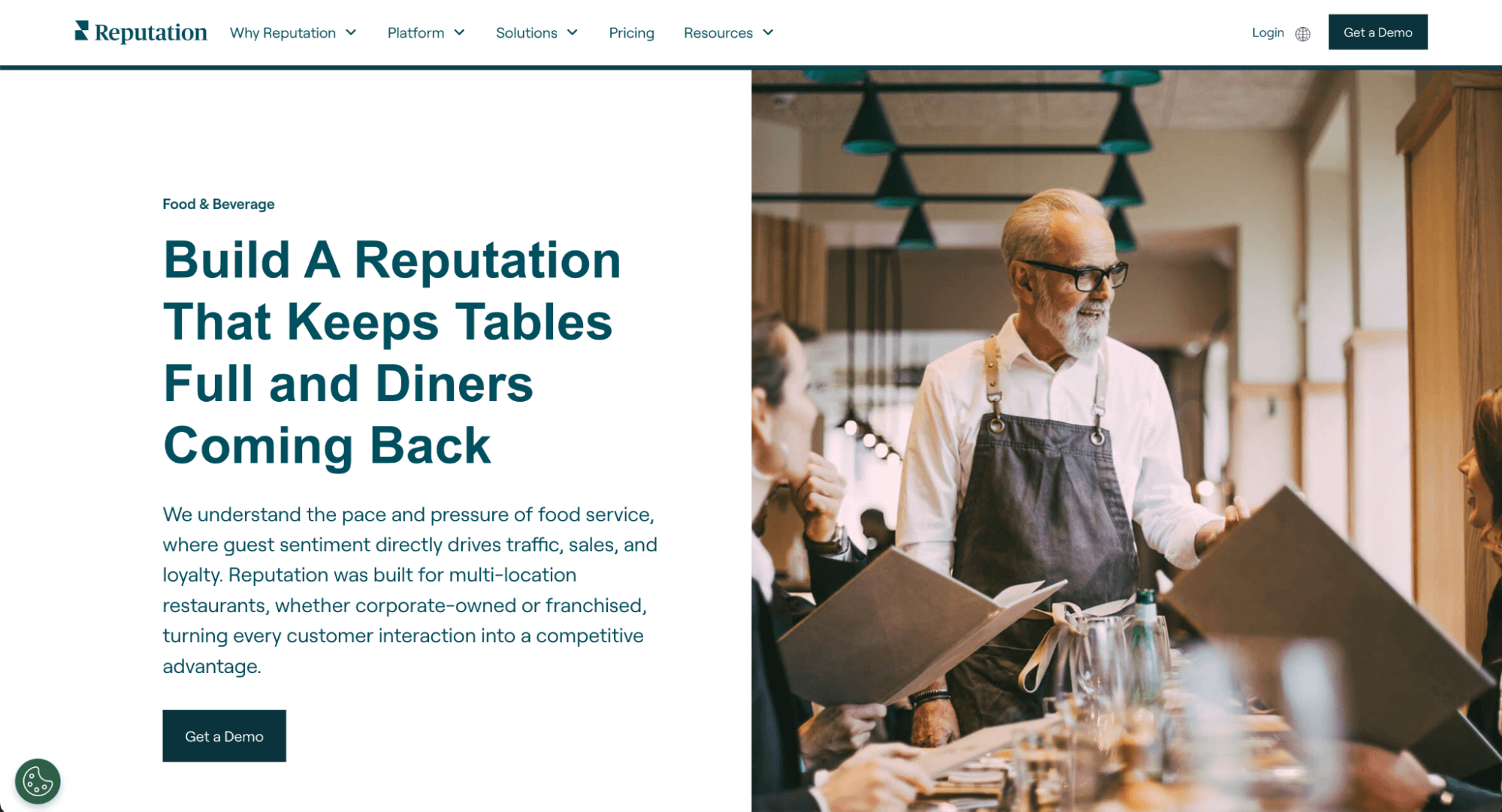
Reputation is an enterprise feedback and reputation platform for multi-location companies; it dropped the ".com" from its brand but kept the reputation.com address. It puts private surveys beside public reviews, listings and social, then analyzes all of that feedback by theme and sentiment.
For feedback management, the plan matters: surveys come in steps, from one basic template on Rep Core + Pulse to six advanced templates and email survey requests on Rep Core + Surveys. The company, based in San Ramon, California, marked 20 years in business in March 2026.
Key features
Surveys next to reviews: Private answers and public star ratings sit side by side, so you can check whether both point to the same problem.
Sentiment and text analytics: Comments from reviews and surveys are grouped into themes such as service and cleanliness across all your sites.
Rep Score: Every reputation signal is rolled into one number, with journey insights on the Pulse plan.
Outreach campaigns: The Surveys plan adds targeted outreach alongside survey invitations by email.
Reputation IQ: You ask questions of your feedback in plain English and get an answer without building a report.
Pros
Private and public in one view: Head office sees survey results and review trends in the same system.
Clear survey tiers: The published price list shows which survey features each plan includes before you talk to sales.
Order-based review requests: Dine-in, delivery or POS events can trigger an invitation by SMS, email or QR code.
Well reviewed: G2 users rate it 4.5 out of 5 from 2,470 reviews.
Cons
Full surveys on the top plan: Rep Core has no surveys, so a complete feedback program needs Rep Core + Surveys at $150 per location per month.
Many industries: Healthcare, automotive, real estate, financial services and retail share the platform with food and beverage, so it's less tailored to restaurants than specialist tools.
Add-ons on request: Ticketing, social and competitive insights cost extra, and their prices aren't listed.
Price and plans
Prices are listed per location, per month. Enterprise plans are custom.
Rep Core: $80 per location, per month.
Rep Core + Pulse: $115 per location, per month.
Rep Core + Surveys: $150 per location, per month.
Enterprise: Custom pricing for 125+ locations.
9. Eat App Review Management

Eat App is a Dubai-based restaurant reservation, table management and guest CRM platform, and its review management tools sit inside it. Reviews from Google, Facebook and other sites collect in one searchable dashboard, where staff can reply, track response times and read AI sentiment analysis.
Because reviews live next to bookings and guest profiles, you can see a regular's visit history beside what they wrote. That makes it a practical choice if you already use Eat App as your restaurant guest experience platform, or plan to.
Key features
Searchable review feed: Filter reviews by keyword, platform or star rating, with a time-stamped activity feed that shows when each one arrived and when your team replied.
AI sentiment and summaries: Eat App's AI highlights trends in guest satisfaction and summarizes reviews so managers can focus on what changed.
Smart rules: Set rules that automate responses, flag important feedback and alert the team when someone needs to act.
Post-dining surveys: Custom surveys go out after a reservation to collect private feedback, starting on the Core plan.
Review at table: On Pro, a QR code on tables or receipts lets guests leave a review, see your offers, book again or fill in a survey.
Pros
Feedback meets guest data: Reviews sit in the same CRM as reservations, so each guest's booking history is in the same system.
Easy to test: Prices are published, and you can try any paid plan free for 14 days.
Well rated: G2 users give the Eat App platform 4.7 out of 5, based on 40 reviews.
Cons
Sold with reservations: Review management comes with the Core plan ($199 per month, or $159 billed yearly) and higher.
Google-centered replies: The plan comparison describes replying to Google reviews; other sites appear only as "Facebook and more."
QR reviews need Pro: Review at table and the loyalty suite are part of the Pro plan at $389 per month, or $299 billed yearly.
Two systems if you book elsewhere: If your reservations run on another platform, you'd be running Eat App alongside it.
Price and plans
Review management comes with Eat App's Core, Pro and Enterprise plans. A free plan covers up to 100 guests a month without review tools, and you can try any paid plan free for 14 days. Prices below are in US dollars.
Core: $199 per month, or $159 per month billed yearly.
Pro: $389 per month, or $299 per month billed yearly.
Enterprise: Custom pricing for groups with 8 or more venues.
10. Cloutly

Cloutly is a review and messaging platform for businesses with several locations, from salons and clinics to restaurants. It asks customers for reviews by text and email, collects reviews and messages in one inbox with AI reply drafts, and counts what reviewers keep raising at each location.
For restaurants, a request can go out when the bill closes in Square or Clover, so each review is credited to the location where the guest ate. Cloutly names Merivale, Sorsi e Morsi and Francesca's among its restaurant users.
Key features
Requests from the till: Texts and emails go out after service on a delay you choose, follow-ups stop once a review lands, and recent reviewers are skipped.
QR codes for walk-ins: A code on the bill folder or table reaches guests whose number you don't have.
Shared inbox: Google and Facebook reviews, plus 39 review sites from Essentials, sit beside Messenger, Instagram DMs and texts, filtered by location.
Draft with AI: Replies are written from the review itself in a Friendly, Professional or Playful tone, and you decide when to send.
Feedback counts: Ask, on the Growth plan, answers plain-English questions with exact counts, and Signals tallies negative mentions against ten hospitality themes per restaurant.
Pros
Transparent pricing: Per-location prices are published, and you can try it for two weeks without entering a card.
Location-level setup: Each location gets its own campaigns, review page and QR codes, and head office sees them side by side.
Works with common systems: Square and Clover trigger requests, and the REST API is on every plan.
Answers with evidence: Ask shows the reviews behind each number, which helps you decide what to fix first.
Cons
Starter covers two sites: Only Google and Facebook reviews are included until Essentials.
Insight tools cost more: Ask, competitor tracking and listings management are only on Growth.
SMS caps: Each location gets 50, 100 or 200 SMS credits a month; more need a pay-as-you-go pack.
Signals on request: The Cloutly team switches on the restaurant themes, since the platform serves many kinds of service business.
Price and plans
Cloutly has a 14-day free trial with no credit card. Prices are per location, per month, billed monthly; yearly billing is paid upfront with a month free.
Starter: $39 per location, per month.
Essentials: $55 per location, per month.
Growth: $69 per location, per month.
Enterprise: Priced after a pilot; ten or more locations book a rollout call.
11. Pluspoint

Pluspoint is a London-based platform for multi-location businesses that covers review requests and replies, listings, surveys, messaging campaigns and social posts in one subscription. It publishes a flat price per location, and several of its case studies come from European restaurant groups.
For feedback management, the useful part is the private channel: QR code surveys collect NPS and satisfaction scores, so a kitchen or service issue reaches the manager before it becomes a public review. Portugal's Starfoods Group, with 60+ restaurants, is one of its customers.
Key features
NPS and CSAT surveys: Guests rate their visit through a QR code survey, and results are benchmarked venue by venue.
Negative feedback alerts: Real-time notifications flag a poor score or review so a manager can follow up quickly.
Review requests on four channels: Invitations go out by SMS, email, WhatsApp or a QR code on the table or receipt.
Shared inbox with AI drafts: Google, Facebook and other reviews arrive together, with AI-written replies your team can edit and publish.
Sentiment by location: Analytics break down sentiment and the keywords guests use most for each restaurant.
Win-back campaigns: Messaging campaigns and coupons reach guests whose contacts came in through surveys and reviews.
Pros
Clear budgeting: One published price per location includes surveys, reviews, listings and social posting, so adding a site has a known cost.
Messaging-app reach: WhatsApp requests help with guests who answer chat messages faster than email.
Easy to try: The 14-day free trial starts without payment details.
Restaurant references: European groups such as Starfoods Group, Paprica Burger and SushiCafé Group have published case studies with Pluspoint.
Cons
Three-location minimum: The smallest subscription is $87 a month on monthly billing, which rules out a single restaurant.
Capped AI credits: The account includes 50 AI credits a month, and extra credits cost $0.49 each.
Directory sync costs extra: Pushing listings beyond Google and Facebook needs the Listings Sync add-on.
Price and plans
Pluspoint has one plan with every feature, billed per location, and a 14-day free trial that needs no payment details. Annual billing charges 10 months for 12.
Pluspoint: $29 per location, per month ($24.17 billed annually), minimum 3 locations, with 3 users and 50 AI credits a month.
Listings Sync add-on: $39 per location, per month, billed annually.
Extra users and credits: $19 per user, per month; $0.49 per AI credit.
Custom: A quote above 30 locations or 30 users.
12. Malou

Malou helps restaurant groups turn online reviews into feedback they can act on. Based in Paris, it reads reviews for recurring themes, flags sensitive complaints and drafts replies, and the same platform handles local SEO, listings and social posts.
Its analysis works on the reviews your restaurants receive across platforms. Groups that want hands-on help can add Copilot, a dedicated expert who sends monthly recommendations, on top of the self-serve MalouApp.
Key features
Recurring themes: Semantic analysis groups what guests write, so a slow-service problem appears as a pattern across many reviews.
Sensitive complaint alerts: Reviews about hygiene, discrimination and similar subjects are flagged for a manager.
Consistent replies: AI drafts follow your brand guidelines and adapt to whether the guest was happy or unhappy.
Customer insights: Every plan includes insights reporting, with advanced performance insights on Growth and Full.
Multi-location dashboard: Compare feedback across restaurants in English, French, Italian or Spanish.
Pros
Made for restaurants: Malou works only with restaurants, so you don't sort through features built for other industries.
Reply coaching: A quality score with tips from Google's best practices shows where an answer falls short.
Expert help: Copilot suits groups without a marketer to act on what the reviews say.
Cons
No published pricing: Quotes depend on how many locations you manage.
Full plan for social: Social media management and Google menu sync are only in the top plan.
Limited independent reviews: G2 lists one MalouApp review, too few to give it a rating.
Price and plans
Malou quotes on request. Its three plans (Essential, Growth and Full) are priced by location count, with Store Locator and Boosters as add-ons.
13. OvationUp

Ovation collects restaurant guest feedback with a two-question text message sent right after an order. Built for multi-unit brands, it alerts a manager to unhappy answers in real time, groups written comments by theme, and since late 2025 also covers public reviews and listings.
Short surveys suit busy guests, and Ovation says its texts bring in far more responses than long-form surveys. Taziki's Mediterranean Cafe, Dave's Hot Chicken and Curry Up Now are among the brands with published case studies.
Key features
Post-order text surveys: Your POS or online ordering system sends two questions once the guest pays, and dine-in guests can scan a QR code at the table.
Real-time recovery alerts: A poor score reaches the manager straight away, with AI-suggested responses to help win the guest back.
Feedback categories: Comments are sorted into 35+ categories such as food quality, speed and cleanliness, with heat maps and custom dashboards.
Menu item reports: Sentiment linked to order data shows which dishes draw the most complaints.
Reviews and listings: Public reviews from Google, Yelp and Facebook sit beside survey answers, and listings stay current across 50+ directories.
Winback texts: Text marketing campaigns invite guests back, written in the tone you set with Brand Voice.
Pros
Light for guests: Two questions by text ask very little, and longer follow-up surveys tied to the order are there when you need more detail.
Tied to real orders: Over 50 POS, ordering and loyalty integrations connect responses to the orders behind them.
Built for restaurant groups: Location filters, theme categories and menu reports reflect how multi-unit operators review performance.
Funded by its users: Nearly a dozen restaurant customers put $3 million into the company in February 2026.
Cons
Custom pricing only: You need a quote before you can compare costs with other feedback tools.
No self-serve trial: The pricing page offers a demo and a quote, with no free trial to test it on your own.
Few independent reviews: G2 shows only a couple of user reviews, so there's little outside feedback to compare.
Price and plans
Not listed publicly. Ovation builds a quote for each account, counting brick-and-mortar sites and ghost kitchens, and larger groups get a volume discount.
14. Birdeye

Birdeye is a platform for multi-location brands that gathers guest feedback from reviews and surveys, measures sentiment and acts on it with AI agents. It also manages listings, messaging and social, so feedback sits next to the rest of your local marketing.
For feedback management, the most relevant piece is Robin, the customer experience Coworker launched in September 2026, which runs agents for surveys, sentiment analysis, ticketing and insights. Restaurant brands using Birdeye include Black Bear Diner and The Saxton Group, a McAlister's Deli franchisee.
Key features
Guest surveys: Run surveys and read the results beside public reviews from Google, Yelp, Facebook and industry sites.
Insights AI: Sentiment is scored across reviews and surveys and reported at the location, district and region level.
Ticketing: Each negative review becomes a ticket assigned to the manager of that location, so follow-up has a clear owner.
Feedback requests: SMS and email invitations ask recent guests to share their experience, giving you more responses to learn from.
Competitor benchmarks: See how your locations compare with nearby competitors.
Pros
Feedback and action together: Surveys, review monitoring, ticketing and replies run in one place, which shortens the path from a complaint to a fix.
Area roll-ups: District and region reports help multi-unit operators spot where guest sentiment is slipping.
Agent support: AI agents draft or post review replies, which frees managers to deal with the issue behind a complaint.
G2 rating: Birdeye scores 4.7 out of 5 on G2.
Cons
Custom quotes: Birdeye publishes no prices and quotes based on your locations.
Broad platform: It's built for multi-location brands across industries, so a group that mainly wants surveys may find it more than it needs.
Price and plans
Birdeye doesn't publish prices; you get a custom quote after sharing your number of locations.
15. Yext

Yext is a digital presence platform for multi-location brands, listed on the NYSE as YEXT. In a feedback program, it handles the public side: it gathers reviews from many sites, helps you answer them, invites more guests to rate their visit and keeps hours and menus accurate so guests aren't caught out by wrong details.
Because Yext centers on listings and public reviews, brands that want structured post-visit surveys usually pair it with a survey tool. Popmenu expanded its Yext partnership in April 2026, so restaurants can sync menus and respond to reviews on 70+ platforms.
Key features
Reviews in one feed: Feedback from Google, Facebook, Yelp and 80+ industry sites arrives in one dashboard, with alerts so a complaint at one location doesn't slip by.
Response drafts: AI suggests a reply to each review, and a manager approves it or sets rules for posting automatically.
More feedback where it counts: Requests by email, text or QR code reach guests when they're likely to respond, spread across the review sites that weigh most in search.
Sentiment beyond review sites: Scout tracks how Google, Bing and AI assistants describe your brand next to competitors.
Correct facts at the source: The Knowledge Graph sends updated hours and menus to Google, Apple Maps, Bing and Facebook.
Pros
Many review sources: With 80+ sites covered, you see public feedback from far beyond Google and Yelp.
Consistent details: Fixing hours or a menu once updates every listing, so guests read the same information wherever they look.
Head office approvals: Approval workflows let a central team check replies from franchise locations before they go live.
G2 rating: Yext scores 4.4 out of 5 with G2 reviewers.
Cons
Surveys may need another tool: Private guest surveys aren't Yext's focus, so a full feedback program likely needs a second platform.
Custom quotes: Yext sets a price for each brand based on locations and products, with no public figures to compare.
No trial period: There's no free tier or standard trial, so evaluation happens in a demo.
Price and plans
Yext doesn't publish prices; you get a quote after a demo. Pricing depends on location count and the solution you choose, and billing is typically annual.
16. SOCi

SOCi is a local marketing platform for franchise systems and restaurant chains, run largely by AI agents that learn each brand's rules. On the feedback side, its reputation agent brings public reviews, review requests and customer surveys together, and it can answer reviews for every location within limits set by head office.
It fits when your feedback program has to cover hundreds of locations at once. WOWorks, which owns six restaurant brands, and Lee's Famous Recipe Chicken are customers, and a Punchh integration puts ratings from loyalty feedback next to public reviews.
Key features
Customer surveys: Built-in surveys collect first-party feedback that you can read against what guests post in public.
Voice of Customer: Sentiment reporting turns review text from every store into trends, so you can see which locations are improving and which need a visit.
Review solicitation: Requests to recent guests keep a steady flow of fresh reviews coming in.
Loyalty and delivery feedback: The Punchh connection brings loyalty ratings into SOCi, and Grubhub review ratings can be monitored there too.
Automated responses: The Genius Reputation Agent replies on brand and hands delicate cases to staff.
Pros
Private and public feedback side by side: Survey answers and reviews sit in the same platform, which helps you catch a problem before it reaches your star rating.
Human review of sensitive cases: Complaints that need care are flagged for a person instead of getting an automatic answer.
Access for every manager: With no per-user fees, each general manager can read their own location's feedback.
G2 score: Reviewers on G2 rate SOCi 4.5/5.
Cons
Pricing on request: SOCi lists no prices, so budgeting starts with a sales conversation.
No trial period: Every deployment is scoped through a demo, so you can't run a pilot on your own first.
Made for large systems: Brands with hundreds or thousands of sites are the target, and an independent restaurant would pay for reach it doesn't need.
Price and plans
SOCi doesn't publish prices and has no free trial. Each quote is based on your location count and the Genius Agents and skills you deploy, with no per-user or per-listing fees.
Restaurant Feedback Management: FAQ
What is restaurant feedback management?
Restaurant feedback management is the ongoing process of collecting, responding to and learning from everything guests tell you. It covers four activities: capturing every guest signal, responding quickly and personally, recovering unhappy guests and acting on recurring patterns. Software helps you do all four across many locations.
Why is guest feedback hard to manage at multiple locations?
Feedback arrives through reviews, surveys, support tickets, social media and delivery apps, so it's scattered across many places. Writing thoughtful replies to win back unhappy guests takes a lot of time. Without proper analysis, you also can't see how guests really feel or where things went wrong.
How do I collect more feedback from restaurant guests?
Make it as easy as possible for guests to respond. Short SMS surveys, QR codes on receipts or tables and automated email or SMS requests after a visit all lower the effort. Short surveys tend to pull higher response rates than long-form ones.
How can I recover unhappy guests before they leave a bad review?
Catch negative feedback early with real-time alerts, then reach out to the guest while the experience is still fresh. Many tools route unhappy guests into a private conversation with your team and send happy guests toward public review sites. A quick, personal response gives you a chance to win the guest back.
How much does restaurant feedback management software cost?
Prices vary a lot. Some tools publish monthly plans per location, and a few offer free or low-cost entry plans for small restaurants. Many platforms built for multi-location brands use custom quotes, so you'll need to contact sales.
Which feedback management software is built for multi-location restaurants?
Momos is built for multi-location restaurants and hospitality businesses. It brings reviews, surveys, social messages, email and delivery platform feedback into one Unified Inbox and reads each one for context, sentiment and topics like food quality or wait time. Its AI agent Alfie writes on-brand replies, and its analytics show where incidents happen most.

 Los agentes de IA automatizan todas las interacciones con los clientes, las 24 horas, los 7 días de la semana, en todos los locales de tu restaurante.


" transform="translate(3.219 19.212)" width="152.45224485148515px"/><path d="M 0 11.619 C 7.071 11.39 33.491 21.738 40.35 21.268 C 38.499 18.19 37.116 14.915 35.507 11.625 C 33.7 7.867 32.587 3.926 31.702 0" fill="transparent" height="21.28391189647101px" id="I9fuJaf7q" stroke-dasharray="" stroke-linecap="round" stroke-linejoin="round" stroke-width="4.97" stroke="rgb(0, 0, 0)" transform="translate(139.727 55.754)" width="40.34950693069311px"/></svg>)